The Best ETF for Long-Term Growth: Top Picks for 2026 and Beyond
For the modern retail investor, the path to wealth is no longer paved with high-priced stock brokers or complex hedge fund strategies. Instead, it is built on the back of low-cost, high-efficiency Exchange-Traded Funds (ETFs). Searching for the “best ETF for long-term growth” can feel overwhelming, given the thousands of options available on the market today. However, the secret to building a multi-million dollar portfolio isn’t about finding a “unicorn” stock; it’s about identifying diversified funds that capture the compounding power of the global economy while keeping fees to an absolute minimum. As we look toward 2026, the landscape of investing continues to shift toward lean, aggressive, and tech-forward portfolios. Whether you are a hands-off investor or a tactical trader looking for a core holding, understanding how to minimize expense ratios while maximizing capital appreciation is the key to outperforming the market over the next decade.
1. Defining the Criteria: What Makes a Growth ETF “The Best”?
Before diving into specific tickers, it is essential to establish the metrics that separate a mediocre fund from a powerhouse. For retail investors focusing on cost-efficiency, two primary factors reign supreme: the **Expense Ratio** and **Tracking Error**.
The expense ratio is the annual fee you pay to the fund provider. While a 0.50% fee might sound small, over a 30-year horizon, it can eat away hundreds of thousands of dollars in potential gains compared to a fund charging 0.03%. In the current competitive landscape, there is rarely a reason to pay high fees for broad-market exposure.
Beyond cost, we look at the **Underlying Index**. A growth ETF should ideally capture companies with high earnings potential, strong balance sheets, and a history of reinvesting profits into innovation. Furthermore, **Liquidity** is vital for traders. A high average daily volume ensures that you can enter and exit positions without being punished by wide bid-ask spreads. As we prepare for the economic environment of 2026, we prioritize funds that balance “Big Tech” dominance with “Next-Gen” innovators in sectors like healthcare, fintech, and green energy.
2. The Core Foundation: Broad Market and S&P 500 ETFs
For many investors, the best ETF for long-term growth is one that tracks the entire market. While “growth” often implies high-tech volatility, the S&P 500 has historically been one of the greatest wealth generators in history.
* **Vanguard S&P 500 ETF (VOO):** With an expense ratio of just 0.03%, VOO is the gold standard for cost-conscious investors. It tracks 500 of the largest U.S. companies. Because the S&P 500 is market-cap weighted, it is naturally tilted toward growth sectors like Technology and Consumer Discretionary.
* **Vanguard Total Stock Market ETF (VTI):** If you want exposure not just to the giants, but also to mid- and small-cap companies that have the potential to become the giants of 2030, VTI is the answer. It provides “total market” exposure with the same rock-bottom 0.03% fee.
The advantage of using these as your growth engine is diversification. While a tech-heavy fund might drop 30% in a correction, a broad market fund often provides a smoother ride, preventing emotional selling—the number one killer of long-term returns. For those looking toward 2026, these funds remain the “bedrock” of any serious portfolio.
3. High-Octane Growth: Targeting the Nasdaq and Innovation
If your risk tolerance is higher and your time horizon is at least 10 years, you may want to look beyond the broad market into funds that specifically target innovation. The Nasdaq-100 index has consistently outperformed the S&P 500 over the last decade, driven by the digital revolution.
* **Invesco NASDAQ 100 ETF (QQQM):** Many traders are familiar with the famous QQQ. However, for long-term holders, **QQQM** is the superior choice. It tracks the exact same index as QQQ but carries a lower expense ratio (0.15% vs. 0.20%). It is essentially “QQQ for long-term investors.” It excludes financial companies and focuses heavily on technology, communication services, and healthcare.
* **Schwab US Growth ETF (SCHG):** This is one of the most underrated growth ETFs on the market. With an expense ratio of only 0.04%, it selects companies from the Dow Jones U.S. Large-Cap Growth Total Stock Market Index. It offers a portfolio of high-growth companies like Microsoft, Apple, and Nvidia, but at a fraction of the cost of many “active” growth funds.
These funds are ideal for investors who believe that the digital transformation of the global economy is still in its early innings. As AI, cloud computing, and automation continue to mature into 2026, these ETFs are positioned to capture the lions share of the gains.
4. Sector-Specific Growth: Semiconductors and Technology
For traders and investors who want to “tilt” their portfolio toward the most aggressive growth sectors, thematic ETFs offer a way to bet on specific industries. However, this comes with higher volatility.
* **Vanguard Information Technology ETF (VGT):** This fund offers concentrated exposure to the tech sector with a very low 0.10% expense ratio. Unlike the Nasdaq-100, which includes companies like Pepsi or Starbucks, VGT is “pure play” technology. It includes hardware, software, and IT consulting.
* **VanEck Semiconductor ETF (SMH):** Semiconductors are the “oil” of the 21st century. Everything from your smartphone to the data centers powering AI requires chips. SMH tracks the 25 largest US-listed semiconductor companies. While more volatile than a broad index, the growth trajectory of the semiconductor industry remains unparalleled as we approach 2026.
When using sector-specific ETFs, the key is to use them as “satellite” holdings—perhaps 10-15% of your total portfolio—while keeping your “core” in the broader market funds mentioned earlier. This minimizes the risk of a single sector downturn derailing your entire retirement plan.
5. Dividend Growth: The Power of Compounding Income
A common mistake retail investors make is equating “growth” only with “stock price appreciation.” Long-term wealth is often built through **Dividend Growth**. These are funds that invest in companies that not only pay dividends but consistently increase them year after year.
* **Schwab US Dividend Equity ETF (SCHD):** SCHD has become a cult favorite among retail investors. It doesn’t just look for high yields; it looks for quality companies with sustainable growth. With a 0.06% expense ratio, it provides a perfect balance of capital appreciation and increasing income.
* **Vanguard Dividend Appreciation ETF (VIG):** VIG focuses on “dividend aristocrats” and companies that have raised their dividends for at least 10 consecutive years.
By 2026, many of the high-flying tech companies of today will likely have matured into the dividend payers of tomorrow. Including a dividend growth ETF in your strategy ensures that you have a “defensive growth” component that can provide cash flow during market volatility, which can then be reinvested to buy more shares at a discount.
6. Strategic Implementation: Minimizing Costs and Maximizing Gains
Choosing the best ETF for long-term growth is only half the battle. How you manage your investment determines your ultimate success. For the cost-conscious retail investor, three strategies are non-negotiable:
**1. Dollar-Cost Averaging (DCA):** Instead of trying to time the “perfect” entry for 2026, invest a fixed amount every month. This lowers your average cost per share over time and removes the emotional stress of market swings.
**2. Tax-Efficiency:** ETFs are inherently more tax-efficient than mutual funds because of the “in-kind” redemption process, which minimizes capital gains distributions. To further maximize growth, hold your high-dividend funds (like SCHD) in tax-advantaged accounts like an IRA or 401(k), while keeping your broad growth funds (like VOO or SCHG) in taxable brokerage accounts.
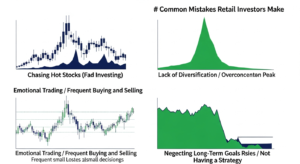
**3. Avoid “Chasing Performance”:** It is tempting to look at the ETF that returned 50% last year and pour all your money into it. However, sectors rotate. The top performer of 2024 might be the laggard of 2026. A diversified approach across the categories mentioned above—Core, High-Growth, and Dividend Growth—provides the most reliable path to long-term wealth.
Frequently Asked Questions (FAQ)
#
1. What is the single best ETF for a 20-year time horizon?
For most retail investors, the **Vanguard Total Stock Market ETF (VTI)** or **Vanguard S&P 500 ETF (VOO)** is the best choice. They offer the lowest fees (0.03%), maximum diversification, and a proven track record of growth. If you want more aggression, **QQQM** is a strong contender for a multi-decade horizon.
#
2. Is it better to invest in growth ETFs or individual stocks?
For 90% of investors, ETFs are better. They provide instant diversification, which protects you from “single-stock risk” (the risk of one company going bankrupt). ETFs also require significantly less time to manage and usually result in higher after-tax returns due to lower turnover and professional rebalancing.
#
3. How many ETFs should I hold in my portfolio?
You don’t need a complex portfolio. In fact, “analysis paralysis” often leads to lower returns. A simple 2-to-3 fund portfolio (e.g., a Broad Market fund, a Tech/Growth fund, and an International or Dividend fund) is often more than enough to capture long-term growth while keeping management simple and costs low.
#
4. What is a “good” expense ratio for a growth ETF?
For a broad-market growth ETF, you should aim for an expense ratio under **0.10%**. For more specialized or thematic funds (like Semiconductors or AI), you might pay between **0.15% and 0.40%**. Anything above 0.50% for a passive ETF should be scrutinized, as high fees significantly compound against you over time.
#
5. How will the economic environment of 2026 affect these ETFs?
While no one can predict the future, 2026 is expected to be a period where artificial intelligence and automation are fully integrated into corporate earnings. Growth ETFs that are heavy in technology and high-efficiency companies are likely to benefit from increased productivity. However, maintaining a core holding in broad-market funds ensures you are protected if the tech sector experiences a valuation “reset.”
Conclusion: Building Your Wealth Engine
The quest for the best ETF for long-term growth doesn’t require a degree in finance; it requires discipline and a focus on what you can control: costs and time. By 2026, the investors who will have seen the most significant portfolio growth are not those who tried to “outsmart” the market, but those who consistently bought low-cost, high-quality funds like VOO, QQQM, or SCHG.
By minimizing your expense ratios and staying diversified across broad market indices and high-conviction growth sectors, you position yourself to capture the full upside of the global economy. Remember, the “best” ETF is the one you can afford to hold through both bull and bear markets without panic-selling. Start with a solid core, add a dash of innovation, and let the power of compounding do the heavy lifting for the next decade and beyond. The road to financial independence is a marathon, and these ETFs are the high-performance vehicles designed to get you to the finish line.