passive income through dividend investing

The Ultimate Guide to Building Passive Income Through Dividend Investing in 2026 The dream
passive income through dividend investing

The Ultimate Guide to Building Passive Income Through Dividend Investing in 2026

The dream of financial independence often centers on a single, powerful concept: making your money work as hard for you as you do for it. For the modern retail investor, there is perhaps no more reliable path to achieving this than through dividend investing. Unlike the high-octane, often stressful world of day trading or the speculative volatility of “meme stocks,” dividend investing focuses on the steady accumulation of wealth through profit-sharing. By purchasing shares of established companies that distribute a portion of their earnings to shareholders, you effectively create a “personal paycheck” that grows over time. As we look toward the economic landscape of 2026, the importance of minimizing costs and maximizing efficiency has never been higher. This guide will walk you through the nuances of building a robust dividend portfolio designed to generate sustainable passive income while keeping your overhead low and your long-term returns high.

1. Understanding the Mechanics of Dividend Income

To master passive income through dividend investing, one must first understand how these payouts function. A dividend is a distribution of a portion of a company’s earnings to its shareholders, usually expressed as a dollar amount per share. For example, if a company pays a $2.00 annual dividend and you own 100 shares, you receive $200 per year, typically paid out in quarterly installments.

For the retail investor, the two most important metrics to understand are **Dividend Yield** and **Dividend Growth**. The yield is the annual dividend payment divided by the stock price. If a stock costs $100 and pays $4 in dividends, the yield is 4%. However, the “yield on cost”—the yield based on the price you *originally* paid—is what truly builds wealth over decades.

In 2026, investors are increasingly looking at Dividend Growth Stocks. These are companies that may have a lower initial yield (say, 2%) but consistently increase their payout every year. Over time, the compounding effect of these increases, combined with share price appreciation, often outperforms high-yield stocks that lack growth potential. The goal for a cost-conscious trader is to find that “sweet spot” where a company provides a sustainable yield backed by a healthy balance sheet and a history of rising payouts.

2. Building a Cost-Efficient Portfolio: Minimizing Fees and Friction

For the retail investor, every dollar spent on commissions, management fees, or “bid-ask” spreads is a dollar that isn’t compounding in your favor. In the modern era, there is no reason to pay high fees to build a dividend portfolio.

#

Zero-Commission Brokerages
The first step is utilizing zero-commission trading platforms. While these have been standard for a few years, by 2026, the competition among brokers has led to even better tools for retail traders, such as fractional shares. Fractional shares allow you to reinvest even small amounts of capital into high-priced stocks, ensuring your money is always working.

#

Low-Expense Ratio ETFs
While individual stock picking can be rewarding, many investors prefer the diversification of Exchange-Traded Funds (ETFs). To minimize costs, look for ETFs with ultra-low expense ratios—ideally under 0.10%. Funds like those tracking the “Dividend Aristocrats” or “High Yield” indexes provide instant diversification across hundreds of companies for a fraction of the cost of an actively managed fund.

#

Avoiding “Churn”
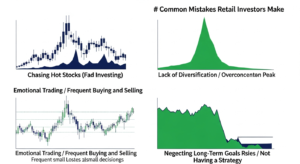
Passive income is, by definition, passive. Frequent trading leads to “slippage” and potential tax consequences. A cost-effective dividend strategy involves a “buy and hold” (or “buy and add”) mentality. By minimizing the frequency of your trades, you keep more of your capital invested, allowing the power of compounding to flourish without the drag of transaction-related costs.

3. Identifying High-Quality Dividend Stocks and Avoiding “Yield Traps”

A common mistake for beginners is “yield chasing”—buying a stock simply because it offers a 10% or 12% dividend yield. Often, an exceptionally high yield is a warning sign that the stock price has plummeted because the market expects a dividend cut. This is known as a **Yield Trap**.

To identify quality, retail investors should focus on three key pillars:

* **The Payout Ratio:** This is the percentage of earnings a company pays out as dividends. Generally, a payout ratio below 60% is considered safe, as it leaves the company with enough “breathing room” to maintain the dividend even during a temporary earnings slump. For Real Estate Investment Trusts (REITs), we look at “Funds From Operations” (FFO) instead of net income, but the principle remains the same.
* **Free Cash Flow (FCF):** Dividends are paid out of cash, not accounting profits. A company with strong, growing free cash flow is far more likely to sustain and increase its dividend over the next decade.
* **Dividend History:** Look for “Dividend Aristocrats” (S&P 500 companies with 25+ years of consecutive increases) or “Dividend Kings” (50+ years). These companies have survived recessions, inflation spikes, and global shifts without cutting their payouts, making them the backbone of a reliable passive income stream.

In 2026, as industries evolve, it is also vital to ensure the company’s business model remains relevant. A high-quality dividend payer in 2026 must demonstrate adaptability to a digital, green-conscious, and automated economy.

4. Tax Optimization and the Power of DRIPs

To maximize your passive income, you must consider the “tax drag.” In many jurisdictions, dividends are taxed as income. However, by using tax-advantaged accounts—such as a Roth IRA in the US, an ISA in the UK, or a TFSA in Canada—you can potentially shield your dividends from taxes entirely.

#

The DRIP Advantage
A **Dividend Reinvestment Plan (DRIP)** is a retail investor’s best friend. Most modern brokerages allow you to toggle an “Auto-Reinvest” feature. Instead of receiving your dividends as cash, the broker automatically uses that cash to buy more shares of the stock that paid it.

The beauty of a DRIP is twofold:
1. **Compounding Efficiency:** You are adding to your position without paying additional commissions.
2. **Dollar-Cost Averaging:** Because the reinvestment happens automatically regardless of the stock price, you naturally buy more shares when prices are low and fewer when prices are high.

By 2026, the automation of DRIPs has become so seamless that an investor can essentially set their portfolio on “autopilot,” watching their share count (and thus their future dividend payments) grow exponentially without any manual intervention.

5. Risk Management: Sector Diversification and Rebalancing

While dividend investing is generally more conservative than growth investing, it is not without risk. Economic shifts can hit specific sectors harder than others. For example, a portfolio heavy in “Consumer Staples” might be stable during a recession but underperform during a period of high growth. Conversely, “Energy” stocks might offer massive dividends during oil booms but cut them when prices crash.

#

Proper Sector Allocation
A well-rounded dividend portfolio should span multiple sectors, including:
* **Healthcare:** Stable demand regardless of the economy.
* **Utilities:** Consistent cash flows and regulated monopolies.
* **Technology:** Increasingly becoming a source of high-growth dividends (e.g., software giants).
* **Financials:** Banks and insurance companies that benefit from varied interest rate environments.

#

The 2026 Perspective on Rebalancing
As we move through 2026, retail traders should perform a “health check” on their portfolio at least twice a year. Rebalancing doesn’t mean frequent trading; it means ensuring that one single stock hasn’t grown to represent 20% or 30% of your total income. Diversifying your income sources ensures that if one company faces a “black swan” event and cuts its dividend, your overall lifestyle and passive income stream remain intact.

6. The Long-Term Outlook: Dividend Investing in 2026 and Beyond

As we navigate the economic realities of 2026, the case for dividend investing remains stronger than ever. In an era where traditional “safe” assets like bonds may offer fluctuating real returns due to inflation, the ability of companies to raise prices and pass those profits to shareholders via dividends provides a natural inflation hedge.

Furthermore, the “democratization of finance” has continued to lower the barriers for retail investors. In 2026, sophisticated screening tools that were once reserved for hedge funds are now available for free to the average trader. This allows for more precise targeting of companies with high return-on-equity and low debt-to-equity ratios.

The successful investor of 2026 is one who views their portfolio not as a collection of fluctuating tickers, but as a collection of ownership stakes in profitable businesses. By focusing on low costs, high-quality selections, and the relentless power of reinvestment, the path to a five-figure or even six-figure passive income stream becomes a matter of “when,” not “if.”

***

FAQ: Passive Income Through Dividend Investing

#

1. How much money do I need to start dividend investing?
One of the greatest myths is that you need a large sum of money. Thanks to zero-commission brokers and fractional shares, you can start with as little as $10 or $50. The key is consistency. Starting early with small amounts allows more time for the compounding of reinvested dividends to take effect.

#

2. Is it better to buy individual stocks or dividend ETFs?
For most retail investors, a “core and satellite” approach works best. Use low-cost ETFs (like SCHD or VIG) for the “core” of your portfolio to ensure diversification. Then, add “satellite” positions in individual companies you understand deeply and that offer higher growth or yield potential.

#

3. What is a “good” dividend yield in 2026?
A “good” yield is relative to interest rates, but generally, a yield between 2.5% and 5% is considered the “Goldilocks zone.” It is high enough to provide meaningful income but low enough to suggest the company is still reinvesting in its own growth and that the payout is sustainable.

#

4. Are dividends guaranteed?
No. Unlike bond interest, a company’s board of directors can choose to reduce or eliminate a dividend at any time. This is why focusing on “Dividend Aristocrats” and analyzing the payout ratio and free cash flow is essential for risk management.

#

5. How often will I receive dividend payments?
Most US-based companies pay dividends quarterly (four times a year). However, some companies and many REITs pay monthly. By diversifying your portfolio with companies that have different payment schedules, you can structure your holdings to receive a “paycheck” every single month.

***

Conclusion: Your Path to Financial Freedom

Passive income through dividend investing is not a “get rich quick” scheme; it is a “get wealthy for sure” strategy. As we have explored, the landscape of 2026 offers retail investors unprecedented tools to minimize costs and maximize returns. By focusing on quality over quantity, understanding the importance of tax efficiency, and embracing the patient power of reinvestment, you can build a financial fortress that stands the test of time.

The journey toward living off dividends requires a shift in mindset. You stop being a consumer of products and start being an owner of the companies that produce them. Every share you buy is a “worker” added to your financial army, earning money for you 24 hours a day. Start small, stay disciplined, keep your costs low, and let the mathematics of dividend growth pave your way to true financial independence. In the world of 2026, the most valuable asset you can own is a stream of income that you don’t have to work for.