Optimizing Your Grocery Spend: A Strategic Lever in Personal Finance and Wealth Accumulation
In the intricate landscape of personal finance, managing household expenses is a perpetual challenge, and few categories command as much attention – and often frustration – as groceries. For many households, food represents the third or fourth largest expenditure, trailing only housing, transportation, and sometimes healthcare. As inflation continues to exert pressure on consumer prices, with food-at-home prices experiencing significant year-over-year increases (e.g., a 10.4% rise from August 2021 to August 2022, though moderating since, according to the USDA Economic Research Service), the strategic optimization of grocery spending is no longer just a frugal habit; it is a critical component of sound financial planning and a powerful lever for wealth accumulation.
At TradingCosts, we understand that every dollar saved on essential expenditures can be a dollar invested, compounding over time to build substantial wealth. This comprehensive guide, crafted for the discerning investor and personal finance enthusiast, will delve into data-driven strategies for reducing your grocery bill, transforming a seemingly mundane task into a sophisticated exercise in financial efficiency. We will explore analytical approaches, compare various methodologies, and ultimately illustrate how these savings, when strategically allocated, can significantly bolster your investment portfolio.
Understanding Your Grocery Budget: The Analytical Foundation of Savings
The first step in optimizing any expenditure is to understand its current state. Many individuals operate without a clear picture of their actual grocery spending, often underestimating the true cost. According to the U.S. Bureau of Labor Statistics (BLS), the average American household spent approximately $5,703 on food at home in 2022, equating to roughly $475 per month. This figure, however, is a national average and can vary dramatically based on household size, location, dietary preferences, and income level.
Tracking and Categorization: Identifying Your Baseline
- Digital Tools: Leverage budgeting apps such as Mint, YNAB (You Need A Budget), or EveryDollar. These platforms often connect directly to your bank accounts and credit cards, automatically categorizing transactions and providing a real-time overview of your spending. Many offer detailed reports, allowing you to visualize where your grocery dollars are truly going – fresh produce, pantry staples, convenience foods, or even impulse buys.
- Manual Tracking: For those who prefer a hands-on approach, a simple spreadsheet can be highly effective. Record every grocery-related purchase for at least one month, categorizing items to identify trends. Are you spending disproportionately on snacks, pre-made meals, or specialty items? This granular data is invaluable.
- Receipt Analysis: Retain all grocery receipts. Regularly review them to discern pricing patterns, identify items that consistently inflate your bill, and understand the impact of sales and discounts.
Once you have a clear baseline, you can set realistic and achievable savings goals. Aiming for a 10-15% reduction in your current grocery spend is often a feasible starting point for most households without sacrificing nutritional quality or enjoyment.
Strategic Shopping: Planning and Execution for Maximum Efficiency
Effective grocery shopping is less about luck and more about meticulous planning and disciplined execution. This section outlines strategies that transform a reactive chore into a proactive financial endeavor.
Meal Planning: The Cornerstone of Cost Control
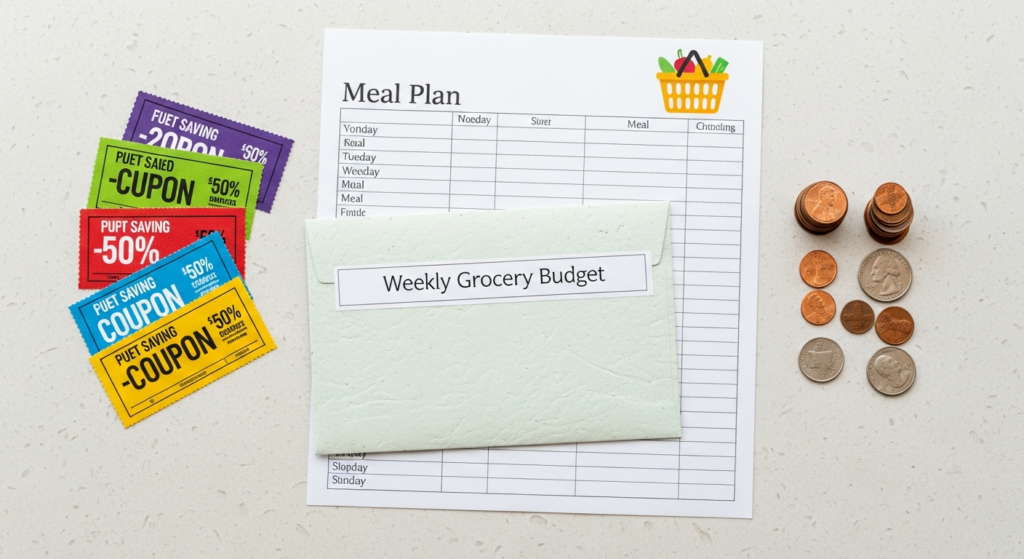
- Weekly or Bi-Weekly Planning: Dedicate time each week to plan all meals, including breakfasts, lunches, dinners, and snacks. Base your plan around ingredients you already have, items on sale, and seasonal produce. This reduces impulse purchases and ensures every ingredient serves a purpose.
- Ingredient Repurposing: Design meals that share common ingredients. For example, roast a whole chicken and use leftovers for sandwiches, salads, or a stir-fry later in the week. This minimizes waste and maximizes ingredient utility.
- Batch Cooking: Prepare larger quantities of staple items (e.g., grains, cooked beans, roasted vegetables) that can be incorporated into multiple meals throughout the week. This saves time and often reduces the reliance on more expensive convenience foods.
Smart Store Selection and In-Store Tactics
- Compare Unit Prices: Always look at the unit price (e.g., price per ounce or pound) rather than just the total price. This is particularly crucial for bulk items, where a larger package isn’t always the most cost-effective. A study by the National Bureau of Economic Research found that consumers who consistently compare unit prices can save between 10-20% on their grocery bills.
- Discount Retailers vs. Premium Stores: Understand the pricing structure of various supermarkets. Stores like Aldi, Lidl, and Costco (for bulk items) typically offer significantly lower prices on many staples compared to conventional supermarkets. For instance, Aldi consistently ranks among the lowest-priced grocery chains, often saving shoppers 30-50% on their overall bill compared to traditional grocers.
- Shop with a List and Stick to It: An estimated 60-70% of grocery purchases are unplanned. A detailed shopping list, derived from your meal plan, is your primary defense against impulse buys.
- Avoid Shopping Hungry: Research consistently shows that shopping on an empty stomach leads to more impulse purchases and higher overall spending. A small snack before heading to the store can save you significant dollars.
- Perimeter Shopping: Focus on the perimeter of the store where fresh produce, dairy, and meats are typically located. The inner aisles often house processed foods, which tend to be more expensive and less nutritious.
Leveraging Technology and Loyalty Programs
In the digital age, technology offers a plethora of tools to further optimize grocery savings. From digital coupons to cash-back apps, these resources can add up to substantial annual reductions.
Digital Coupons and Loyalty Programs
- Store Loyalty Cards: Most major grocery chains (e.g., Kroger, Safeway, Stop & Shop) offer loyalty programs that provide exclusive discounts, personalized offers, and fuel rewards. These programs can often save you 5-15% on your total bill if utilized effectively. Ensure you sign up and load digital coupons directly to your card.
- Manufacturer Coupons: While traditional paper coupons are less prevalent, many manufacturers offer digital coupons through their websites or dedicated apps. Combine these with store sales for maximum savings.
Cash-Back and Rebate Apps
- Ibotta: This popular app offers cash back on a wide range of grocery items. Users select offers before shopping, scan receipts after purchase, and receive cash back. Many users report saving $20-$50 per month.
- Fetch Rewards: Simply scan any grocery receipt, and Fetch Rewards will give you points for thousands of products and brands, which can be redeemed for gift cards. It’s less about specific item offers and more about general brand loyalty.
- Checkout 51: Similar to Ibotta, Checkout 51 offers weekly cash-back deals on groceries, often including fresh produce and dairy.
Price Comparison Apps and Websites
- Flipp: Aggregates digital circulars and coupons from local stores, allowing you to compare prices and plan your shopping route for the best deals.
- Basket: Allows users to compare prices of specific items across various local grocery stores, ensuring you get the best deal on your entire list.
Smart Choices in the Aisle: Product Selection and Preservation
The decisions you make about what to buy and how to manage it once home are equally critical to maximizing savings.
Generic vs. Brand Name: The Value Proposition
For many staple items – think canned goods, pasta, rice, flour, dairy, and even over-the-counter medications – generic or store-brand products offer comparable quality at a significantly lower price point. Consumer Reports frequently tests store brands against national brands, often finding little to no difference in taste or effectiveness for many categories. Opting for store brands can reduce your bill by 15-25% on these items without compromise.
Buying in Bulk (Strategically)
Purchasing non-perishable goods and items with a long shelf life in bulk can offer substantial savings per unit. Warehouse clubs like Costco and Sam’s Club specialize in this. However, bulk buying is only advantageous if:
- You have adequate storage: A pantry full of bulk items you can’t properly store leads to spoilage and wasted money.
- You will consume it before it expires: This is especially true for perishable items like fresh produce, which often comes in larger quantities at bulk stores.
- The unit price is genuinely lower: Always calculate the unit price to ensure you’re getting a true deal. Sometimes smaller packages on sale can beat bulk prices.
Seasonal Produce and Frozen Alternatives
Buying fruits and vegetables when they are in season locally is almost always cheaper and often fresher. Out-of-season produce typically travels further and commands a premium. When fresh isn’t in season or is too expensive, frozen fruits and vegetables are an excellent, equally nutritious, and often more economical alternative. They are typically flash-frozen at their peak ripeness, preserving nutrients and reducing waste.
Reducing Food Waste: A Hidden Financial Drain
Food waste is a significant financial burden. The USDA estimates that 30-40% of the food supply in the United States is wasted, representing approximately $161 billion annually. For an average family of four, this can translate to $1,500-$2,000 per year in wasted food. Strategies to combat this include:
- Proper Storage: Understand how to store different foods to extend their shelf life. For example, keeping apples and potatoes separate, storing herbs in water, and freezing bread.
- “Eat Me First” Section: Designate a shelf in your fridge for items that need to be consumed soon.
- Leftover Management: Repurpose leftovers creatively or freeze them for future meals.
- Composting: While not directly saving money, composting food scraps reduces waste and can enrich your garden, potentially saving on gardening supplies.
Beyond the Supermarket: Alternative Sourcing and The Compounding Effect of Savings
While supermarket strategies are crucial, expanding your sourcing options can unlock further savings. More importantly, understanding the financial impact of these savings and how to leverage them for long-term wealth is where the true power lies for TradingCosts readers.
Exploring Alternative Food Sources
- Farmers’ Markets: While not always cheaper than discount supermarkets for every item, farmers’ markets can offer competitive pricing on seasonal produce, especially towards the end of the market day. They also often provide higher quality and support local economies.
- Community Supported Agriculture (CSA): Subscribing to a CSA program means you pay a farm upfront for a share of their harvest. This can lead to significant savings over the season for fresh, local produce, though it requires flexibility with what you receive.
- Gardening: Growing your own herbs, vegetables, and even some fruits can lead to substantial savings, particularly if you have the space and time. A small herb garden on a windowsill can save hundreds over a year compared to buying fresh herbs from the store.
- DIY Convenience: Making items from scratch (e.g., bread, salad dressings, yogurt, chicken stock) instead of buying pre-made can offer significant savings. A loaf of artisanal bread might cost $5-$7, while homemade costs less than $1 in ingredients.
The Compounding Effect: Investing Your Grocery Savings
This is where disciplined grocery savings transcend mere budgeting and become a powerful engine for wealth creation. Consider the average family spending $475 per month on groceries. If, through diligent application of the strategies outlined above, they manage to reduce this by a modest 15%, that’s a saving of approximately $71.25 per month, or $855 per year.
Now, imagine consistently investing that $71.25 each month. Let’s look at the potential long-term growth:
- Investment Vehicle: A broad-market index fund or Exchange Traded Fund (ETF) tracking the S&P 500, such as the Vanguard S&P 500 ETF (VOO), iShares Core S&P 500 ETF (IVV), or SPDR S&P 500 ETF Trust (SPY), offers diversified exposure to the U.S. stock market. These are readily available through brokerages like Vanguard, Fidelity, and Charles Schwab.
- Historical Returns: Over the long term (e.g., 30+ years), the S&P 500 has historically delivered an average annual return of approximately 10-12%, though past performance is not indicative of future results and market returns can be volatile. For a conservative projection, let’s use a 7% average annual return, adjusted for inflation.
Scenario: Investing $71.25 per month (approx. $855/year) at a 7% annual return:
- After 10 Years: Approximately $12,400
- After 20 Years: Approximately $37,000
- After 30 Years: Approximately $90,000
The power of compounding is evident. A seemingly small monthly saving, consistently invested, can grow into a substantial sum over decades. This capital can then contribute to retirement funds, a down payment on a house, or funding a child’s education.
Risk Considerations: It is crucial to acknowledge that all investments carry risk. Market values can fluctuate, and there is no guarantee of returns. The figures above are hypothetical and for illustrative purposes only. Investors should consider their own risk tolerance and financial goals before making investment decisions. Diversification and a long-term perspective are key strategies for mitigating risk in equity investments.
By viewing grocery savings not as an isolated act of frugality, but as a direct capital injection into your investment portfolio, you fundamentally shift your financial perspective. Each smart grocery decision becomes a micro-investment in your future self.
Frequently Asked Questions About Grocery Savings
Q1: Is organic produce worth the extra cost?
A1: The decision to buy organic is often a personal one, balancing perceived health benefits against cost. Organics typically cost 20-100% more than conventional produce. From a purely financial standpoint, if budget is the primary concern, conventional produce offers similar nutritional value. Focus on the “Dirty Dozen” list (foods with higher pesticide residues, like strawberries and spinach) if you prioritize organic for certain items, and save money on the “Clean Fifteen” (foods with lower residues, like avocados and corn).
Q2: How much should I budget for groceries each month?
A2: There’s no one-size-fits-all answer, as it depends on household size, location, and dietary needs. The USDA provides monthly food plan costs at different spending levels (thrifty, low-cost, moderate-cost, liberal). For example, a moderate-cost plan for a family of four (two adults, two children) might range from $1,000-$1,200 per month. A good starting point is to track your current spending for a month, then aim to reduce it by 10-15% through strategic changes.
Q3: Are discount grocery stores always cheaper?
A3: Generally, yes, stores like Aldi and Lidl often offer significantly lower prices on core pantry items and produce due to their streamlined operations, private-label focus, and fewer overheads. However, it’s always wise to compare unit prices, especially for specialty items or specific brands, as conventional stores might have better sales on certain products. A hybrid approach, shopping at both, can maximize savings.
Q4: What’s the most effective way to reduce food waste?
A4: The most effective strategies involve proactive planning. Start with precise meal planning based on what you already have and what you’ll buy. Store food correctly to extend shelf life, use a “eat me first” bin for expiring items, and get creative with leftovers. Freezing excess portions or ingredients before they spoil is also highly effective.
Q5: How can I best track my grocery spending without feeling overwhelmed?
A5: Begin with simplicity. For one month, either manually record every grocery receipt in a spreadsheet or use a budgeting app that automatically categorizes transactions. This initial data collection will provide a clear picture without requiring constant vigilance. Once you have a baseline, you can set a target budget and periodically review your spending (e.g., weekly or bi-weekly) to stay on track, rather than meticulously tracking every single item.
Conclusion: Grocery Savings as a Pillar of Financial Prudence
In an economic environment characterized by persistent inflationary pressures and the ever-present need for financial resilience, mastering your grocery budget is more than just a mundane household chore – it is a strategic imperative. By adopting an analytical, data-driven approach to meal planning, smart shopping, leveraging technology, and making informed product choices, you can unlock significant savings that directly impact your household’s financial health.
More profoundly, for the astute investor, these savings represent investable capital. The transformation of a $70-$100 monthly reduction in grocery spending into tens of thousands of dollars through consistent, long-term investment in diversified assets like S&P 500 index funds underscores the profound power of compounding. This isn’t merely about cutting costs; it’s about reallocating resources from consumption to wealth creation, building a stronger financial future one smart grocery decision at a time. Embrace these strategies not as acts of deprivation, but as deliberate steps toward greater financial independence and prosperity.
Disclaimer: This article is for informational purposes only and does not constitute financial advice. Investment decisions should be made based on individual circumstances, risk tolerance, and consultation with a qualified financial advisor.