Building Enduring Wealth: Essential Habits for Financial Prosperity

Building Enduring Wealth: Essential Habits for Financial Prosperity In the complex world of personal
wealth building habits to start now

Building Enduring Wealth: Essential Habits for Financial Prosperity

In the complex world of personal finance, the allure of quick riches often overshadows the profound power of consistent, disciplined habits. While market fluctuations and economic shifts dominate headlines, the bedrock of sustainable wealth building lies not in speculative gambles, but in the deliberate cultivation of sound financial practices. For investors and personal finance enthusiasts alike, understanding and implementing these habits is paramount. This article, drawing on principles espoused by leading financial experts and historical market data, will dissect the core habits that underpin long-term financial prosperity, providing a strategic roadmap for anyone committed to securing their financial future. Building wealth is a marathon, not a sprint, and the habits we cultivate today are the fuel for tomorrow’s success.

Mastering Your Cash Flow: The Foundation of Wealth

The first and most critical step in wealth building is gaining absolute control over your cash flow. Without a clear understanding of where your money comes from and where it goes, all other financial strategies are built on shaky ground. This involves two primary components: meticulous budgeting and disciplined savings automation.

Budgeting: The Blueprint for Your Money

A budget is not a restrictive cage; it’s a financial blueprint that empowers you to make intentional choices with your money. Popular budgeting methodologies include the 50/30/20 rule, which allocates 50% of your after-tax income to needs, 30% to wants, and 20% to savings and debt repayment. Alternatively, zero-based budgeting, where every dollar is assigned a specific job, can offer even greater control. Digital tools like Mint, YNAB (You Need A Budget), and Personal Capital simplify expense tracking and categorization, providing real-time insights into your spending patterns. Research consistently shows that individuals who budget are more likely to achieve their financial goals. For instance, a 2022 study by the National Financial Educators Council found that budgeting was a key predictor of financial well-being.

Automating Savings: The Path of Least Resistance

Once your budget is established, the next habit is to automate your savings. This removes the psychological friction of manually transferring money and ensures consistency. Set up automatic transfers from your checking account to your savings, investment accounts, and debt repayment vehicles immediately after each paycheck. Many employers offer direct deposit options where a portion of your salary can be routed directly to these accounts. For emergency funds, consider high-yield savings accounts (HYSAs) offered by online banks like Ally Bank, Marcus by Goldman Sachs, or Discover Bank. These typically offer interest rates significantly higher than traditional brick-and-mortar banks, often 10-20 times higher, though rates fluctuate with the federal funds rate. A robust emergency fund, ideally covering 3-6 months of essential living expenses, provides a critical buffer against unforeseen financial shocks, preventing the need to dip into investments or incur high-interest debt.

Strategic Debt Management: Liberating Future Capital

Debt is a double-edged sword. While certain types, like a mortgage or a student loan for a high-ROI degree, can be strategic tools for wealth accumulation, high-interest consumer debt acts as a corrosive force, siphoning off future capital that could otherwise be invested. Effective debt management is therefore a crucial wealth-building habit.

Distinguishing Good vs. Bad Debt

Good debt typically has a low interest rate, is tax-deductible, or finances an asset that appreciates in value or generates income (e.g., a mortgage, a low-interest business loan, or student loans for a career-advancing education). Bad debt, conversely, usually carries high interest rates and finances depreciating assets or consumption (e.g., credit card debt, payday loans, car loans on rapidly depreciating vehicles). The average credit card APR in the U.S. frequently hovers between 20-25%, making it incredibly difficult to build wealth when a significant portion of your income is dedicated to servicing such expensive liabilities.

Prioritizing High-Interest Debt Repayment

The habit of aggressively paying down high-interest debt should precede or run concurrently with significant investing, especially when interest rates exceed potential conservative investment returns. Two popular strategies for tackling multiple debts are the debt snowball and debt avalanche methods. The debt snowball focuses on paying off the smallest balance first, regardless of interest rate, to build psychological momentum. The debt avalanche, mathematically superior, prioritizes debts with the highest interest rates first, minimizing total interest paid. For example, if you have a credit card with a 22% APR and a personal loan with an 8% APR, the avalanche method dictates focusing on the credit card first, saving you more money in the long run. Refinancing higher-interest debts, such as personal loans or student loans, to lower rates can also significantly reduce your monthly payments and overall interest burden, freeing up capital for investment.

The Power of Compounding: Early & Consistent Investing

Perhaps the most powerful habit in wealth building is early and consistent investing, harnessing the exponential growth of compound interest. Albert Einstein reportedly called compound interest the “eighth wonder of the world,” and for good reason.

Understanding Compound Growth

Compound interest is the interest on your principal plus the accumulated interest from previous periods. The earlier you start, the longer your money has to grow. Consider this: investing $300 per month from age 25 to 65 (40 years) at an average annual return of 8% could yield over $1 million. If you wait just 10 years and start at age 35, investing the same $300 per month for 30 years, you’d accumulate closer to $450,000 – a difference of over half a million dollars for the same monthly contribution, simply due to the power of time and compounding.

Diversification and Asset Allocation

A well-diversified portfolio is crucial to mitigate risk. This means spreading your investments across different asset classes (stocks, bonds, real estate), industries, and geographies. For most long-term investors, low-cost index funds and Exchange Traded Funds (ETFs) that track broad market indices like the S&P 500 (e.g., VOO, SPY, IVV) are excellent choices. Historically, the S&P 500 has delivered an average annual return of approximately 10-12% over long periods, though past performance is not indicative of future results and market returns are never guaranteed. Asset allocation – determining the right mix of stocks, bonds, and other assets – should align with your risk tolerance, time horizon, and financial goals. A younger investor with a longer time horizon might opt for a higher allocation to equities (e.g., 80-90%), while an investor nearing retirement might prefer a more conservative mix (e.g., 50-60% equities).

Leveraging Tax-Advantaged Accounts

Maximizing contributions to tax-advantaged retirement accounts is a non-negotiable habit. These include 401(k)s (especially if your employer offers a matching contribution, which is essentially free money), Traditional IRAs, Roth IRAs, and Health Savings Accounts (HSAs). Each offers unique tax benefits – tax-deductible contributions, tax-deferred growth, or tax-free withdrawals in retirement – significantly enhancing your net returns. For example, an HSA offers a triple tax advantage: tax-deductible contributions, tax-free growth, and tax-free withdrawals for qualified medical expenses, making it an incredibly powerful, yet often underutilized, investment vehicle for those with high-deductible health plans.

Choosing Investment Platforms

For self-directed investors, reputable brokerage firms like Vanguard, Fidelity, and Charles Schwab offer a wide array of low-cost index funds, ETFs, and commission-free trading. These platforms are known for their robust research tools and customer service. For those seeking more guidance, robo-advisors such as Betterment and Wealthfront provide automated portfolio management based on your risk profile, rebalancing your investments automatically for a small fee (typically 0.25%-0.50% of assets under management). While platforms like Robinhood have popularized commission-free trading, investors should be mindful of their focus on active trading and potential for gamification, which can be detrimental to long-term wealth building for inexperienced users.

Risk Considerations: All investments carry inherent risks, including the potential loss of principal. Market values can fluctuate, and there is no guarantee of returns. Diversification helps manage risk but does not eliminate it entirely.

Continuous Financial Education & Adaptability

The financial landscape is dynamic, constantly evolving with new regulations, technologies, and economic conditions. A crucial habit for wealth builders is a commitment to continuous learning and adaptability.

Staying Informed and Educated

Regularly consuming financial news from reputable sources (e.g., The Wall Street Journal, Financial Times, Bloomberg, academic journals) helps you understand broader economic trends, inflation, interest rate movements, and their potential impact on your investments. Understanding concepts like inflation, which erodes purchasing power over time (e.g., an average inflation rate of 3% means your money loses half its value in about 23 years), is vital for setting realistic investment goals. Learning about different investment vehicles, tax laws, and estate planning strategies empowers you to make informed decisions and optimize your financial plan. Many brokerage firms also offer extensive educational resources for their clients.

Regular Portfolio Review and Rebalancing

While a long-term mindset is essential, neglecting your portfolio for decades is not advisable. Make it a habit to review your investment portfolio at least annually, or when significant life events occur. This review should assess whether your asset allocation still aligns with your risk tolerance and goals. Market movements can cause your portfolio to drift from its target allocation (e.g., a strong stock market might lead to equities comprising a larger percentage of your portfolio than intended). Rebalancing involves selling some of the outperforming assets and buying more of the underperforming ones to bring your portfolio back to its desired allocation. This disciplined approach helps manage risk and can even enhance returns over the long term, acting as a systematic “buy low, sell high” mechanism.

Adapting to Life Changes and Planning for the Future

Life is unpredictable. Marriages, children, career changes, home purchases, and health challenges all have significant financial implications. The habit of adaptability means regularly updating your financial plan to reflect these changes. This extends to crucial, yet often overlooked, aspects like estate planning. Having a will, establishing a power of attorney, setting up healthcare directives, and designating beneficiaries on all financial accounts ensures your assets are distributed according to your wishes and avoids costly probate processes. Consulting with a Certified Financial Planner (CFP) or an attorney specializing in estate planning can be invaluable in navigating these complexities.

Optimizing Income Streams & Minimizing Taxation

Wealth building isn’t just about managing what you have; it’s also about strategically growing your income and efficiently managing your tax burden. These two habits work in tandem to accelerate your financial progress.

Growing Your Income Streams

Your primary income is often your most powerful wealth-building tool. Develop the habit of continuously investing in your skills and career. Negotiating salary increases, pursuing promotions, and acquiring new certifications or education can significantly boost your earning potential. Studies by organizations like the U.S. Bureau of Labor Statistics consistently show a strong correlation between higher education levels and increased lifetime earnings. Beyond your primary job, consider developing additional income streams through side hustles, freelancing, or even starting a small business. Passive income, derived from investments like rental properties, dividend stocks, or royalties, can also contribute meaningfully to your financial independence, providing income that doesn’t directly trade time for money.

Tax Efficiency in Investing

Taxes are one of the largest expenses you’ll face over your lifetime. Developing habits that minimize your tax liability can significantly enhance your net returns. This includes:

  • Maximizing Tax-Advantaged Accounts: As discussed, 401(k)s, IRAs, Roth IRAs, and HSAs offer substantial tax benefits.
  • Tax-Loss Harvesting: For investors with taxable brokerage accounts, strategically selling investments at a loss to offset capital gains and potentially up to $3,000 of ordinary income can be a powerful tax-saving habit. Major brokerage firms like Fidelity and Schwab offer tools to help identify these opportunities.
  • Tax-Efficient Fund Placement: Holding tax-inefficient assets (e.g., actively managed mutual funds with high turnover, REITs, or high-dividend stocks) in tax-advantaged accounts, and tax-efficient assets (e.g., broad market index ETFs with low turnover) in taxable accounts can optimize your overall tax burden.
  • Understanding Marginal Tax Rates: Knowing which tax bracket you fall into helps in making decisions about traditional vs. Roth contributions, and when to realize capital gains.

These strategies, when consistently applied, can add significant percentage points to your effective annual returns over decades, compounding the impact of your investments.

Cultivating a Mindset of Patience and Discipline

Perhaps the most challenging, yet ultimately rewarding, wealth-building habit is cultivating the right psychological mindset. Financial success over the long term demands patience, discipline, and emotional resilience, especially during periods of market volatility.

Avoiding Emotional Investing

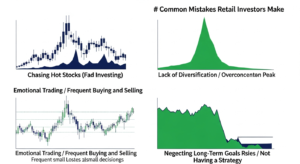
Market downturns are inevitable. The S&P 500 has experienced an average intra-year decline of approximately 14% since 1980, yet it has finished positive in 32 out of 43 years. The habit of reacting emotionally – panic selling during a downturn or chasing hot stocks during a bull market (FOMO, or fear of missing out) – is detrimental to long-term returns. Studies consistently show that individual investors who attempt to time the market often underperform those who maintain a disciplined, buy-and-hold strategy. For instance, Dalbar’s Quantitative Analysis of Investor Behavior (QAIB) often highlights that average investor returns significantly lag behind market benchmarks due to poor timing decisions.

The Long-Term Perspective and Delayed Gratification

Wealth building is a long game. The habit of delayed gratification – foregoing immediate consumption for future financial security – is fundamental. This means consistently saving and investing, even when it feels challenging, and resisting the urge to prematurely withdraw from your retirement accounts. Understanding that market corrections are normal and often present opportunities for long-term investors to buy quality assets at a discount is part of this resilient mindset. Focus on your long-term goals and remember that time in the market is more important than timing the market.

Seeking Professional Guidance When Needed

While self-education is important, recognizing when to seek professional advice is a sign of financial maturity. A fee-only Certified Financial Planner (CFP) or a CFA (Chartered Financial Analyst) can provide objective, personalized advice on complex financial situations, including estate planning, tax optimization, retirement income planning, and investment strategy. This habit ensures you have an expert sounding board and helps prevent costly mistakes, particularly as your financial situation becomes more intricate.

Frequently Asked Questions (FAQ)

What’s the most important wealth-building habit to start with?

The most important habit to start with is gaining control over your cash flow through budgeting and establishing an emergency fund. Without knowing where your money goes and having a financial safety net, it’s challenging to consistently save and invest for the long term. Start by tracking your expenses for a month, then creating a basic budget, and simultaneously building up 3-6 months of essential living expenses in a high-yield savings account.

How much of my income should I be saving and investing?

A common guideline is to save and invest at least 15-20% of your gross income for retirement. This percentage includes contributions to your 401(k), IRA, and any taxable brokerage accounts. If you have significant high-interest debt, you might prioritize paying that off before hitting the full 15-20% for investing, but always aim to contribute enough to your 401(k) to capture any employer match, as that’s essentially a 100% return on your contribution.

Is it ever too late to start building wealth?

It’s never too late to start building wealth. While starting early maximizes the power of compound interest, consistent saving and smart investing can significantly improve your financial situation at any age. If you’re starting later, you may need to increase your savings rate more aggressively or work a few extra years, but the principles of budgeting, debt management, and diversified investing remain equally effective.

Should I pay off debt or invest first?

This depends on the interest rate of your debt. Generally, it’s advisable to pay off any high-interest consumer debt (e.g., credit cards with APRs above 8-10%) before making significant investments outside of your employer’s 401(k) match. The guaranteed return of avoiding 20%+ interest often outweighs the potential, but not guaranteed, returns from the stock market. Once high-interest debt is cleared, you can then focus more heavily on investing, while continuing to manage lower-interest debts like mortgages or student loans strategically.

What’s the best investment for a beginner?

For most beginners, low-cost, broadly diversified index funds or ETFs that track the total stock market (like VTSAX or ITOT) or the S&P 500 (like VOO or SPY) are excellent starting points. They offer immediate diversification, low expense ratios, and historically strong returns. Robo-advisors like Betterment or Wealthfront can also be a good option for beginners, as they automate the investment process and portfolio rebalancing based on your risk tolerance.

Conclusion

Building enduring wealth is not a matter of luck or timing the market; it is the direct result of consistently applying a set of proven financial habits over time. From mastering your cash flow and strategically managing debt to harnessing the power of compounding through early and diversified investing, each habit reinforces the next. A commitment to continuous financial education, tax efficiency, and cultivating a resilient, long-term mindset are the pillars upon which true financial prosperity is built. The journey may demand patience and discipline, but the rewards—financial freedom, security, and peace of mind—are invaluable. The most opportune moment to begin cultivating these habits was yesterday; the next best time is now. Start today, stay consistent, and watch your financial future transform.

Disclaimer: This article is for informational purposes only and does not constitute financial advice. Investment involves risk, including the possible loss of principal. Always consult with a qualified financial professional before making any investment decisions.