The Cornerstone Habits of Wealth Building: A Comprehensive Guide for Astute Investors

The Cornerstone Habits of Wealth Building: A Comprehensive Guide for Astute Investors In the
wealth building habits to start now

The Cornerstone Habits of Wealth Building: A Comprehensive Guide for Astute Investors

In the intricate landscape of personal finance, the journey to substantial wealth is not merely a matter of luck or market timing, but rather the deliberate cultivation of robust financial habits. For investors and personal finance enthusiasts, understanding and implementing these foundational practices is paramount. This article, presented by TradingCosts, delves into the essential disciplines that underpin long-term financial prosperity, providing a data-driven, analytical perspective akin to insights from a seasoned financial advisor. We will explore strategies that transcend market volatility, focusing on sustainable growth, risk mitigation, and the psychological fortitude required to navigate the complexities of modern finance. Our aim is to equip you with actionable knowledge, supported by statistical evidence and objective comparisons, to forge a path towards enduring financial independence.

1. Master Your Cash Flow: The Bedrock of Financial Stability

Before any significant investment can be made, a clear understanding and control of one’s cash flow are absolutely essential. This involves meticulously tracking income and expenses to identify where money is coming from and, more critically, where it is going. Without this foundational insight, all other wealth-building efforts are built on shaky ground.

Budgeting: Your Financial Blueprint

Effective budgeting is not about restriction, but rather about strategic allocation. Popular methods include the 50/30/20 rule, where 50% of after-tax income goes to needs, 30% to wants, and 20% to savings and debt repayment. While simple, its effectiveness lies in its clarity and adaptability. For those seeking more granular control, zero-based budgeting ensures every dollar is assigned a purpose, preventing financial drift. Tools like Mint, YNAB (You Need A Budget), or even a simple spreadsheet can facilitate this process. The goal is to consistently spend less than you earn, creating a surplus that can be directed towards wealth accumulation.

Emergency Fund: Your Financial Safety Net

A non-negotiable component of cash flow management is establishing a robust emergency fund. This liquid reserve, typically held in a high-yield savings account, should cover 3 to 6 months of essential living expenses. Data from a 2023 Bankrate survey revealed that only 43% of Americans could cover a $1,000 emergency expense from savings, highlighting a significant vulnerability. An adequate emergency fund prevents unforeseen events (job loss, medical emergencies, car repairs) from derailing your financial plan or forcing you into high-interest debt. Platforms like Ally Bank, Marcus by Goldman Sachs, or Discover Bank often offer competitive rates for these funds, ensuring your safety net grows, albeit modestly.

Strategic Debt Management

Not all debt is created equal, but high-interest consumer debt (credit cards, personal loans) is a significant impediment to wealth building. The average credit card interest rate can exceed 20% APR, effectively eroding any investment gains. Prioritizing the elimination of such debt is often the highest-return “investment” you can make. Strategies like the debt avalanche (paying off highest interest rate first) or debt snowball (paying off smallest balance first for psychological wins) are effective. Once high-interest debt is cleared, focus can shift to optimizing lower-interest debt like mortgages or student loans, where repayment can be balanced with investment contributions.

2. Automate Your Savings and Investments: The Power of Set-and-Forget

💰 Investing Tip

One of the most powerful habits for wealth building is the automation of savings and investments. This strategy removes the human element of procrastination and decision fatigue, ensuring consistent progress towards your financial goals.

The “Pay Yourself First” Principle

The core of automation is the “pay yourself first” principle. Before paying bills or discretionary spending, a portion of your income is automatically transferred to savings and investment accounts. This ensures that wealth accumulation is a priority, not an afterthought. Studies consistently show that individuals who automate their savings accumulate significantly more wealth over time.

Leveraging Retirement Accounts

Maximize tax-advantaged retirement accounts. For employees, contributing to a 401(k) or 403(b) is often the first step, especially if an employer offers a matching contribution—this is essentially free money and an immediate 100% return on your contribution up to the match limit. In 2024, the employee contribution limit for 401(k)s is $23,000 ($30,500 for those 50 and over).

Individual Retirement Accounts (IRAs), both Traditional and Roth, offer additional avenues for tax-advantaged growth. The 2024 contribution limit for IRAs is $7,000 ($8,000 for those 50 and over). A Roth IRA is particularly appealing for younger investors who anticipate being in a higher tax bracket in retirement, as qualified withdrawals are tax-free. For higher earners, a “backdoor Roth” strategy can bypass income limitations. Brokerages like Fidelity, Vanguard, and Charles Schwab are excellent platforms for setting up and managing these accounts, offering a wide array of low-cost index funds and ETFs.

Automated Taxable Brokerage Accounts

Once retirement accounts are fully funded, consider setting up automated contributions to a taxable brokerage account. This provides flexibility for goals beyond retirement, such as a down payment on a house or early retirement. Many platforms allow you to set up recurring investments into specific ETFs or mutual funds, dollar-cost averaging your way into the market. This consistent investment, regardless of market fluctuations, mitigates the risk of trying to “time the market.”

3. Strategic Investing: Harnessing Compounding and Diversification

Investing is where your money begins to work for you, and understanding strategic principles is crucial for maximizing long-term returns while managing risk.

The Unstoppable Force of Compounding

Albert Einstein reportedly called compounding the “eighth wonder of the world.” This principle dictates that returns on your investments generate their own returns, leading to exponential growth over time. For example, an initial investment of $10,000 with a consistent annual return of 8% would grow to approximately $46,610 in 20 years, without any further contributions. With an additional $200 monthly contribution, it would become over $120,000. The key is time and consistent returns. Starting early is an unparalleled advantage.

Diversification: The Only Free Lunch in Investing

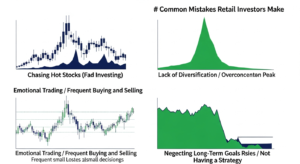
Diversification is critical for mitigating risk. It involves spreading your investments across different asset classes (stocks, bonds, real estate), industries, geographies, and company sizes. A common pitfall for new investors is concentrating too much wealth in a single stock or sector. While individual stocks can offer high returns, they also carry high idiosyncratic risk.

Instead, consider low-cost, broadly diversified index funds or ETFs. An S&P 500 index fund (e.g., Vanguard S&P 500 ETF – VOO, iShares Core S&P 500 – IVV) provides exposure to 500 of the largest U.S. companies, effectively diversifying across major sectors. Historically, the S&P 500 has delivered an average annual return of approximately 10-12% over the long term, though past performance is not indicative of future results. For even broader diversification, a total market index fund (e.g., Vanguard Total Stock Market Index Fund – VTSAX or ITOT) covers the entire U.S. stock market. Adding international stock funds and bond funds further enhances diversification and reduces overall portfolio volatility.

Asset Allocation and Rebalancing

Your asset allocation—the mix of stocks, bonds, and other assets—should align with your risk tolerance and time horizon. Younger investors with a long time horizon often opt for a higher allocation to stocks (e.g., 80-90%) due to their higher growth potential and ability to recover from market downturns. As retirement approaches, a more conservative allocation with a higher percentage of bonds (e.g., 60% stocks, 40% bonds) helps preserve capital.

Regular rebalancing (e.g., annually) is crucial to maintain your target asset allocation. If stocks have performed exceptionally well, your portfolio might become overweight in stocks. Rebalancing involves selling some appreciated assets and buying underperforming ones to return to your desired percentages, which can also be a disciplined way to “buy low and sell high.”

4. Continuous Learning and Adaptation: Staying Ahead of the Curve

The financial world is dynamic, constantly evolving with new regulations, investment products, and economic shifts. A commitment to continuous learning is not just a good habit, but a necessity for long-term financial success.

Cultivate Financial Literacy

Read reputable financial news sources (e.g., The Wall Street Journal, Financial Times, Bloomberg), books by renowned investors (e.g., Benjamin Graham, John Bogle), and educational blogs like TradingCosts. Understand key financial concepts such as inflation, interest rates, economic cycles, and different investment vehicles. The more you understand, the less susceptible you become to hype, fear, and misinformation. For instance, understanding the real return on investments (nominal return minus inflation) is crucial; if your investments earn 7% but inflation is 3%, your real return is only 4%.

Regular Financial Reviews

Schedule annual financial reviews, much like a physical check-up. During these reviews, assess your budget, investment performance, debt levels, and progress towards your goals. Life circumstances change – income increases, family situations evolve, and goals may shift. Your financial plan should be a living document, adaptable to these changes. This is also an opportune time to review your asset allocation and rebalance your portfolio as needed.

Adapt to Market Conditions and Economic Shifts

📊 Market Insight

While long-term investing advocates for a buy-and-hold strategy, it doesn’t mean ignoring market realities. Understanding macroeconomic trends, interest rate policies from the Federal Reserve, and global events can help you anticipate potential impacts on your portfolio. For example, in periods of high inflation, certain asset classes like Treasury Inflation-Protected Securities (TIPS) or real estate may offer better protection than traditional bonds. However, resist the urge to make drastic, emotional changes based on short-term news. Instead, use knowledge to refine your long-term strategy and ensure your portfolio remains robust.

5. Protecting Your Wealth: Insurance and Estate Planning

Building wealth is only half the battle; protecting it from unforeseen circumstances and ensuring its proper distribution is equally vital.

Essential Insurance Coverage

Insurance acts as a financial shield.

  • Health Insurance: A medical emergency can be financially devastating. A 2022 KFF study found that 17% of U.S. adults had medical debt, totaling $195 billion. Adequate health insurance is non-negotiable.
  • Disability Insurance: Your ability to earn an income is your greatest asset. If you become unable to work due to illness or injury, disability insurance replaces a portion of your income. Long-term disability (LTD) insurance is particularly crucial.
  • Life Insurance: If you have dependents, life insurance provides financial security for them in the event of your premature death. Term life insurance is generally recommended for most individuals as it’s cost-effective and covers a specific period.
  • Property & Casualty Insurance: Homeowners/renters insurance and auto insurance protect your physical assets and provide liability coverage.

Regularly review your coverage to ensure it aligns with your current life stage and asset base.

Basic Estate Planning

Estate planning is not just for the wealthy; it’s for anyone who wants control over their assets and healthcare decisions.

  • Will: A legally binding document that dictates how your assets will be distributed after your death and can appoint guardians for minor children.
  • Power of Attorney (POA): Designates someone to make financial and/or healthcare decisions on your behalf if you become incapacitated.
  • Beneficiary Designations: Crucially, review beneficiaries on all your financial accounts (retirement accounts, life insurance policies). These designations often supersede your will, so ensure they are up-to-date.
📊 Market Insight

Failing to plan can lead to your estate being tied up in probate, incurring significant legal costs, and potentially not distributing your assets according to your wishes.

6. Cultivate a Wealth Mindset: Overcoming Behavioral Biases

Financial success is as much about psychology as it is about numbers. Cultivating the right mindset and understanding common behavioral biases can significantly impact your wealth-building journey.

Delayed Gratification and Patience

Wealth building is a marathon, not a sprint. The ability to delay gratification—sacrificing immediate pleasure for future gain—is a hallmark of successful investors. This means consistently saving and investing, even when it feels like a small sacrifice, and resisting the urge for lavish spending that outpaces your income. Patience is equally vital in investing; market fluctuations are inevitable, and reacting emotionally to short-term dips often leads to selling at a loss, undermining long-term compounding.

Beware of Behavioral Biases

Human psychology often works against rational financial decision-making. Awareness of these biases can help you avoid costly mistakes:

  • Loss Aversion: The tendency to prefer avoiding losses over acquiring equivalent gains. This can lead to holding onto losing investments too long or being too conservative.
  • Herd Mentality/FOMO (Fear Of Missing Out): Following the crowd, especially into speculative investments, can lead to buying high and selling low.
  • Confirmation Bias: Seeking out information that confirms existing beliefs while ignoring contradictory evidence.
  • Recency Bias: Overweighting recent events when making decisions, leading to extrapolating short-term trends into the future.

Adhering to a disciplined, long-term investment plan and automating contributions can serve as powerful antidotes to these behavioral traps.

Embrace a Long-Term Perspective

Focus on your long-term goals and remember that market downturns are temporary. Historically, the stock market has always recovered and reached new highs over extended periods. For instance, despite numerous recessions and crises, the S&P 500 has maintained its impressive average annual return over decades. A long-term perspective allows you to view market corrections as opportunities to buy assets at a discount, rather than reasons to panic. This resilience and unwavering commitment to your financial plan are crucial for compounding wealth effectively.

Conclusion

The journey to wealth building is a testament to discipline, foresight, and continuous learning. By meticulously mastering your cash flow, automating your savings and investments, embracing strategic investment principles like compounding and diversification, committing to ongoing financial education, safeguarding your assets through insurance and estate planning, and cultivating a resilient wealth mindset, you lay a formidable foundation for enduring financial prosperity. These habits, though seemingly simple individually, collectively form a powerful synergy that propels you towards your financial goals. Remember, consistent action, even small steps, compounds into significant results over time. Start cultivating these habits today, and empower your financial future with confidence and control.

Disclaimer: This article is for informational purposes only and does not constitute financial advice. Investing involves risk, including the potential loss of principal. Past performance is not indicative of future results. Always consult with a qualified financial professional before making any investment decisions.