Understanding Dividend Growth Investing
Dividend growth investing is a strategy focused on purchasing shares of companies that not only pay dividends but also have a consistent history and strong likelihood of increasing those dividends over time. Unlike simply chasing high-yield stocks, which can often be a trap, dividend growth investing prioritizes the quality and sustainability of a company’s dividend payments, coupled with its ability to grow those payments consistently. This strategy is built on the premise that companies with a proven track record of increasing dividends are often financially sound, have strong competitive advantages, and are committed to returning value to shareholders.
The core appeal of this approach lies in its dual benefit: income and capital appreciation. As a company grows its earnings, it often increases its dividend payout. This growing dividend stream provides a rising income for the investor, which can be particularly attractive for retirees or those seeking passive income. Furthermore, healthy, growing companies that consistently raise their dividends tend to see their stock prices appreciate over time as well. This capital appreciation adds another layer of return, creating a powerful compounding effect when combined with reinvested dividends.
Consider the difference between a high-yield trap and a dividend growth gem. A stock with a 10% dividend yield might seem appealing at first glance, but if that company’s earnings are declining, the dividend could be cut or eliminated, leading to both income loss and a plummeting stock price. Conversely, a company with a 2% yield that consistently grows its dividend by 8-10% annually can see its effective yield on your original investment soar over time, all while its stock price steadily climbs. This long-term perspective is crucial to understanding the power of dividend growth. It’s not just about the current payout, but the trajectory and reliability of future payouts.
The stability offered by dividend growth stocks is another significant advantage. During market downturns, companies with strong fundamentals and a history of paying dividends often demonstrate more resilience than their non-dividend-paying counterparts. The consistent income stream can also provide a psychological buffer, making it easier for investors to hold through volatile periods, rather than panic selling. This strategy aligns perfectly with long-term financial planning, providing a predictable and growing income stream that can help fund retirement or other significant life goals.
Why Dividend Growth Matters for Your Portfolio

For many investors, building a robust and resilient portfolio is a primary goal. Dividend growth investing offers a compelling pathway to achieve this, delivering several distinct advantages that can significantly enhance long-term wealth creation. Firstly, it provides a steadily increasing income stream. Imagine purchasing shares today, and years down the line, the income you receive from those shares has doubled or tripled, simply because the company has consistently increased its payout. This rising income acts as a natural hedge against inflation, ensuring your purchasing power doesn’t erode over time. For example, if inflation averages 3% annually, a dividend growing at 7-10% ensures your real income from dividends is increasing.
Secondly, dividend growth stocks often exhibit greater stability and lower volatility compared to the broader market. Companies capable of consistently growing their dividends typically possess strong balance sheets, sustainable competitive advantages (often referred to as “moats”), and a history of consistent profitability. These characteristics make them more resilient during economic downturns, providing a bedrock for your portfolio when other sectors might be struggling. This stability can be particularly comforting for investors who are looking for a less roller-coaster-like experience than, say, growth stocks or speculative ventures.
Historically, dividend growth stocks have outperformed non-dividend-paying stocks and even high-yield, non-growth dividend stocks over extended periods. This outperformance is often attributed to the quality filter inherent in the strategy: only well-managed, profitable companies can sustain and grow their dividends. The reinvestment of these growing dividends further supercharges returns through the power of compounding. When you reinvest dividends, you buy more shares, which then generate more dividends, which buy even more shares, creating an exponential growth effect. This is a critical component for those looking at how to invest in dividend growth stocks effectively for long-term gains.
Moreover, dividend growth investing encourages a long-term mindset. It discourages frequent trading and focuses on the underlying business health rather than short-term price fluctuations. This patient approach is often the most rewarding in investing. For individuals exploring how to start investing little money 2026, dividend growth stocks can be an excellent starting point. Even small initial investments, consistently added to and reinvested, can grow into substantial sums over decades thanks to the compounding power of growing dividends and capital appreciation. It’s a strategy that rewards patience and discipline, making it accessible and effective for investors at all stages of their financial journey.
Identifying Quality Dividend Growth Stocks
1. Consistent Dividend History
- Dividend Aristocrats/Kings: These are excellent starting points. Dividend Aristocrats are S&P 500 companies that have increased their dividend for at least 25 consecutive years. Dividend Kings have done so for 50+ years. While past performance is no guarantee of future results, such a long track record speaks volumes about a company’s resilience and commitment to shareholders.
- Long-term Growth: Look beyond just the streak. Examine the dividend growth rate over 5, 10, and 20 years. Consistent, healthy growth (e.g., 5-10% annually) is preferable to sporadic, massive increases.
2. Sustainable Payout Ratio
- Definition: The dividend payout ratio is the percentage of a company’s earnings (or free cash flow) that it pays out as dividends.
- Ideal Range: A payout ratio between 40% and 60% of earnings is often considered healthy for mature companies. This leaves enough room for the company to reinvest in its business, pay down debt, and continue growing the dividend even during minor economic slowdowns. A payout ratio above 70-80% can signal that the dividend might be unsustainable, especially if earnings are volatile. For REITs or MLPs, payout ratios can be higher due to their business structure, but still require careful scrutiny.
3. Strong Financial Health
- Earnings Per Share (EPS) Growth: Dividends are paid from earnings. Consistently growing EPS is vital for sustainable dividend growth. If earnings are stagnant or declining, dividend growth is unlikely to continue.
- Free Cash Flow (FCF): FCF is arguably more important than reported earnings for dividend sustainability, as it represents the cash a company actually has available after covering its operating expenses and capital expenditures. Look for companies with strong, positive, and growing FCF that comfortably covers their dividend payments.
- Balance Sheet Strength: A low debt-to-equity ratio and ample cash reserves indicate a company’s ability to weather economic storms and continue its dividend policy. High debt levels can put pressure on a company to cut dividends to service its obligations.
4. Competitive Advantage (Moat)
- Definition: A “moat” refers to a company’s structural competitive advantages that protect its long-term profits and market share.
- Examples: Strong brands (e.g., Coca-Cola), network effects (e.g., Visa), high switching costs (e.g., Microsoft’s enterprise software), cost advantages, or proprietary technology/patents. Companies with wide moats tend to have more predictable and durable earnings, which translates to more reliable dividend growth.
5. Industry and Management Quality
- Industry Stability: Businesses in stable, essential industries (e.g., utilities, consumer staples, healthcare) often have more predictable cash flows, making them fertile ground for dividend growth stocks. Avoid highly cyclical industries if dividend stability is your primary goal.
- Management Team: Assess the management team’s track record, capital allocation decisions, and commitment to shareholders. Do they prioritize long-term growth and dividend payments, or are they prone to risky ventures?
By thoroughly evaluating these factors, you can significantly increase your chances of identifying quality dividend growth stocks that will contribute positively to your portfolio for years to come. This analytical approach moves beyond mere surface-level yields and delves into the fundamental strength of the underlying business.
Building Your Dividend Growth Portfolio
Once you understand the characteristics of quality dividend growth stocks, the next step is to construct a diversified portfolio that aligns with your financial goals and risk tolerance. Building a successful dividend growth portfolio is more than just picking a few stocks; it involves strategic planning and ongoing management.
1. Start with a Brokerage Account
To begin investing, you’ll need a brokerage account. There are many reputable online brokers that offer low-cost or commission-free trading. When choosing a broker, consider factors like user-friendliness, research tools, customer service, and account minimums. For those asking how to start investing little money 2026, many brokers now allow you to start with very small amounts, sometimes even fractional shares, making dividend growth investing accessible to almost everyone.
2. Diversification is Key
Never put all your eggs in one basket. Diversification is crucial to mitigate risk. Aim to diversify across:
- Sectors/Industries: Don’t concentrate too heavily in one sector. A portfolio heavily weighted in, say, technology, might suffer disproportionately if that sector faces headwinds. Include companies from consumer staples, healthcare, utilities, financials, industrials, and real estate (REITs).
- Company Size (Market Cap): While many dividend growth stocks are large-cap, consider including some mid-cap companies that are earlier in their dividend growth journey and may offer higher growth potential.
- Geography: If comfortable, consider international dividend growth stocks to further diversify.
A well-diversified portfolio might consist of 15-25 individual dividend growth stocks. For beginners or those with smaller portfolios, exchange-traded funds (ETFs) or mutual funds focused on dividend growth can provide instant diversification with a single investment. Look for ETFs that track indices like the Dividend Aristocrats or focus on companies with strong dividend growth metrics. These funds offer a convenient way to invest in dividend growth stocks without the need for extensive individual stock research.
3. Reinvest Your Dividends (DRIPs)
One of the most powerful tools in dividend growth investing is dividend reinvestment. A Dividend Reinvestment Plan (DRIP) allows you to automatically use your dividend payments to buy more shares (or fractional shares) of the same company. This process supercharges compounding, as your dividends buy more shares, which then generate even more dividends, and so on. Many brokers offer automatic dividend reinvestment for free. If your goal is long-term wealth accumulation rather than immediate income, enabling DRIPs is a highly recommended strategy.
4. Regular Contributions
Consistent contributions, even small ones, significantly enhance your portfolio’s growth. By investing regularly (e.g., monthly or quarterly), you benefit from dollar-cost averaging. This means you buy more shares when prices are low and fewer when prices are high, averaging out your purchase price over time and reducing the impact of market volatility. This strategy is particularly effective for those starting with limited capital and looking to build wealth steadily over time.
5. Consider Your Time Horizon and Goals
Your investment strategy should align with your personal financial goals. Are you investing for retirement in 30 years? Then you might focus on companies with strong long-term growth prospects and reinvest all dividends. Are you approaching retirement and seeking income? You might favor companies with slightly higher current yields and choose to receive dividends as cash. Understanding your time horizon will help you make appropriate decisions regarding stock selection and dividend utilization.
Building a dividend growth portfolio is an ongoing process. It requires initial research, thoughtful construction, and periodic review. By adhering to principles of diversification, consistent investment, and dividend reinvestment, you can create a powerful engine for wealth generation.
Research and Due Diligence for Dividend Growth Investors
Successful dividend growth investing isn’t about guesswork; it’s about informed decision-making. Thorough research and due diligence are the bedrock of identifying and maintaining a portfolio of high-quality dividend growth stocks. This process involves both quantitative analysis (numbers) and qualitative analysis (the story behind the numbers).
1. Where to Find Information
- Company Investor Relations Websites: The most reliable source for a company’s financial information. Here you’ll find annual reports (10-K), quarterly reports (10-Q), investor presentations, and press releases. Pay close attention to the “Management Discussion and Analysis” section for insights into the company’s performance, risks, and outlook.
- Financial News Outlets: Reputable sources like The Wall Street Journal, Bloomberg, Reuters, and specialized financial websites provide up-to-date news, analyst reports, and market commentary.
- Stock Screeners: Tools available through most brokerage accounts or financial websites (e.g., Finviz, Yahoo Finance, Google Finance) allow you to filter stocks based on criteria like dividend yield, payout ratio, market cap, industry, and dividend growth streak. These are excellent for generating initial ideas.
- Investment Forums and Communities: While useful for ideas and discussion, always cross-reference information found here with official sources.
2. Understanding Financial Statements
Being able to read and interpret a company’s financial statements is paramount:
- Income Statement: Reveals a company’s revenues, expenses, and profit (net income) over a period. Look for consistent revenue and earnings growth.
- Balance Sheet: Provides a snapshot of a company’s assets, liabilities, and shareholder equity at a specific point in time. Assess debt levels, cash on hand, and overall financial health. A strong balance sheet indicates resilience.
- Cash Flow Statement: Shows how much cash a company is generating from its operations, investing activities, and financing activities. This is critical for dividend investors. Focus on “cash flow from operations” and “free cash flow” to ensure the company can actually afford its dividends.
3. Quantitative Analysis: Diving into the Numbers
- Dividend Metrics:
- Dividend Yield: Current annual dividend / current stock price.
- Dividend Payout Ratio: Annual dividend / Earnings Per Share (EPS) or Free Cash Flow Per Share.
- Dividend Growth Rate: The average rate at which the dividend has increased over various periods (e.g., 1-year, 5-year, 10-year CAGR).
- Dividend Coverage Ratio: Free Cash Flow / Total Dividends Paid. A ratio above 1.5-2.0 is generally strong.
- Profitability Ratios: Gross Margin, Operating Margin, Net Profit Margin. Look for stable or improving margins.
- Efficiency Ratios: Return on Equity (ROE), Return on Assets (ROA), Return on Invested Capital (ROIC). High and consistent ROIC is a sign of a strong business with a competitive advantage.
- Valuation Metrics: Price-to-Earnings (P/E) ratio, Price-to-Free Cash Flow (P/FCF). Compare these to industry averages and the company’s historical averages to determine if the stock is reasonably valued. Even a great dividend growth stock can be a poor investment if purchased at an exorbitant price.
4. Qualitative Analysis: The Story Behind the Numbers
- Business Model: How does the company make money? Is it sustainable and adaptable?
- Competitive Landscape: Who are the competitors? What are the company’s competitive advantages (moat)?
- Industry Trends: Is the industry growing or declining? Are there disruptive technologies or regulatory changes on the horizon?
- Management Quality: Review earnings call transcripts, shareholder letters, and news articles to gauge management’s competence, integrity, and strategic vision.
- Risks: What are the primary risks to the business? Economic downturns, technological disruption, new competitors, regulatory changes, or supply chain issues?
5. Ongoing Monitoring
Investing is not a “set it and forget it” activity. Periodically review your holdings. At least once a year, re-evaluate the fundamentals of each company in your portfolio. Stay updated on their earnings reports, news, and any changes in their competitive landscape or dividend policy. This continuous due diligence ensures your portfolio remains aligned with your dividend growth objectives. This vigilance helps you avoid pitfalls that might be highlighted in an Options Trading Beginners Guide, where active monitoring is even more critical due to the higher leverage and risk involved.
By diligently applying these research and due diligence practices, you empower yourself to make informed decisions, build a resilient dividend growth portfolio, and confidently navigate the investment landscape.
Managing and Optimizing Your Dividend Growth Investments
Once you’ve built your dividend growth portfolio, effective management is crucial to maximize returns and ensure it continues to meet your financial objectives. This involves regular review, strategic adjustments, and an understanding of tax implications.
1. Rebalancing Your Portfolio
Over time, some of your holdings will perform better than others, causing their weight in your portfolio to increase. This can lead to an unintended concentration in certain stocks or sectors, which increases risk. Rebalancing involves periodically (e.g., annually) adjusting your portfolio back to your target asset allocation. This might mean selling a portion of your best-performing stocks (trimming winners) and using the proceeds to buy more of your underperforming, but still fundamentally sound, stocks (buying dips). Rebalancing helps maintain diversification and enforces a disciplined approach to buying low and selling high.
2. Understanding Tax Implications
Dividends are taxable income, and understanding how they are taxed is important for optimizing your returns:
- Qualified Dividends: These are typically paid by U.S. corporations and certain qualified foreign corporations, and they are taxed at lower long-term capital gains rates for most investors. To qualify, you must hold the stock for a specified period around the ex-dividend date.
- Non-Qualified (Ordinary) Dividends: These are taxed at your ordinary income tax rate, which is generally higher than capital gains rates. Examples include dividends from REITs (Real Estate Investment Trusts) or certain foreign companies.
- Tax-Advantaged Accounts: Consider holding dividend growth stocks in tax-advantaged accounts like an IRA or 401(k). In a Roth IRA, qualified withdrawals in retirement are tax-free, meaning your growing dividends are never taxed. In a traditional IRA or 401(k), dividends grow tax-deferred until withdrawal. This can significantly enhance your net returns, especially if you plan to reinvest dividends for many years.
Always consult with a tax professional to understand your specific situation and optimize your tax strategy.
3. When to Sell a Dividend Growth Stock
While dividend growth investing is a long-term strategy, there are situations where selling a stock is prudent:
- Dividend Cut or Elimination: This is a major red flag. A company cutting its dividend often signals severe financial distress or a fundamental shift in business strategy that is detrimental to shareholders. Unless there’s a clear, temporary, and justifiable reason (e.g., a planned, short-term investment that will yield significant future growth), a dividend cut is usually a strong sell signal.
- Deterioration of Fundamentals: The company’s competitive advantage is eroding, debt is spiraling out of control, earnings are consistently declining, or management quality has diminished.
- Overvaluation: While a quality company deserves a premium, if a stock becomes excessively overvalued (e.g., P/E ratio far exceeds historical averages and industry peers without a corresponding improvement in growth prospects), it might be wise to trim or sell and reallocate capital to more reasonably priced opportunities.
- Change in Investment Thesis: Your original reasons for investing no longer hold true.
- Better Opportunities: You’ve identified a significantly better investment opportunity that aligns with your goals. However, avoid “chasing” hot stocks; ensure the new opportunity is genuinely superior based on your due diligence.
4. Leveraging Technology for Management
In 2026, managing your finances and investments is easier than ever with technology. Utilize the best money apps budgeting 2026 offers to track your income, expenses, and savings, ensuring you have capital available for consistent investment contributions. Many of these apps also integrate with brokerage accounts, providing a holistic view of your financial health. Portfolio tracking tools can help you monitor dividend payouts, track your yield on cost, and visualize the growth of your reinvested dividends, making the management process more efficient and insightful.
Effective management transforms a collection of stocks into a cohesive, goal-oriented portfolio. By proactively rebalancing, understanding tax implications, knowing when to sell, and leveraging modern financial tools, you can ensure your dividend growth investments are continuously optimized for long-term success.
Common Pitfalls and How to Avoid Them
Even with a sound strategy like dividend growth investing, certain pitfalls can derail an investor’s progress. Being aware of these common mistakes and actively working to avoid them is crucial for long-term success.
1. Chasing High Yields
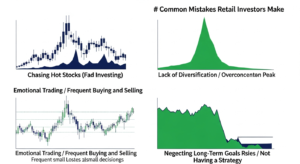
This is perhaps the most common and dangerous trap for dividend investors. A very high dividend yield (e.g., 8% or more) often signals that the market perceives significant risk to the dividend’s sustainability. The yield might be high because the stock price has fallen dramatically due to underlying business problems, or the company is paying out an unsustainable portion of its earnings. Such companies are often referred to as “yield traps.” To avoid this, always scrutinize the company’s fundamentals, payout ratio, and free cash flow before being lured by an attractive headline yield. Remember, a lower, but consistently growing dividend from a strong company is far more valuable than a high, but unsustainable, one.
2. Ignoring Fundamentals and Over-Reliance on Yield
Some investors focus solely on the dividend yield or the dividend growth streak without delving into the underlying health of the business. A company might have a long history of dividend increases, but if its earnings are stagnating, debt is piling up, or its competitive advantage is eroding, that streak is likely to end. Always perform thorough due diligence on the company’s balance sheet, income statement, cash flow, and competitive landscape. The dividend is a byproduct of a healthy business, not the sole indicator of investment quality.
3. Lack of Diversification
Concentrating your portfolio in a few stocks or a single industry exposes you to significant idiosyncratic risk. If one of those companies or that industry faces severe headwinds, your entire portfolio could suffer. While dividend growth stocks are often stable, no company is immune to failure. Diversify across various sectors, industries, and company sizes to spread risk. As mentioned earlier, dividend growth ETFs can be an excellent solution for achieving broad diversification easily.
4. Emotional Investing and Market Timing
Reacting to short-term market fluctuations or negative news by panic selling can be detrimental. Dividend growth investing is a long-term strategy that rewards patience. Avoid trying to time the market; instead, focus on the fundamentals of the businesses you own. Stick to your investment plan, make regular contributions (dollar-cost averaging), and trust in the power of compounding. Unlike the fast-paced world highlighted in an Options Trading Beginners Guide, where timing and quick decisions are paramount, dividend growth investing thrives on a calm, disciplined approach.
5. Neglecting Ongoing Monitoring
As discussed, investing is not a “set it and forget it” activity. Companies’ fortunes can change. Neglecting to regularly review the financial health and competitive position of your holdings can lead to holding onto deteriorating assets for too long. Set a schedule for reviewing your portfolio (e.g., quarterly or annually) and be prepared to make adjustments if the investment thesis for a particular stock no longer holds true.
6. Not Reinvesting Dividends (If Growth is the Goal)
If your primary goal is long-term wealth accumulation rather than immediate income, failing to reinvest dividends means missing out on the immense power of compounding. While taking income from dividends is perfectly valid for those in retirement, younger investors with a long time horizon should strongly consider automatic dividend reinvestment to accelerate portfolio growth. This is especially true for those starting with smaller amounts, as the compounding effect can be quite dramatic over decades.
By being mindful of these common pitfalls and implementing disciplined strategies to avoid them, you can significantly enhance your chances of achieving your financial goals through dividend growth investing. This robust approach, when executed thoughtfully, can provide a steady and growing stream of income and capital appreciation, paving the way for a more secure financial future.
Frequently Asked Questions
What is the difference between high-yield and dividend growth stocks?▾
Are dividend growth stocks suitable for beginners?▾
How do I identify a “dividend aristocrat” or “dividend king”?▾
What is a good dividend payout ratio?▾
How do taxes affect dividend growth investing?▾
Should I reinvest all my dividends, or take them as cash?▾
Recommended Resources
You might also enjoy Best Crm Software For Small Businesses In 2025 from Kacerr.
Learn more about this topic in Sinking Funds Personal Finance Guide at Fin3go.