Understanding the Debt Snowball Method
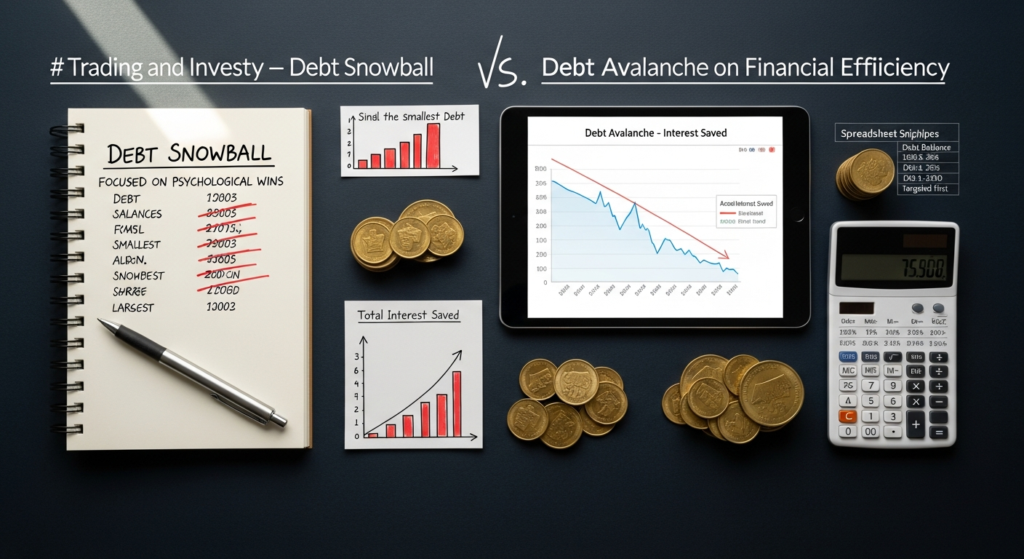
The Debt Snowball Method is a debt repayment strategy that prioritizes psychological momentum over mathematical efficiency. Conceived and popularized by financial experts, this method encourages debtors to tackle their smallest debt first, regardless of its interest rate. Once that smallest debt is paid off, the money that was being allocated to its minimum payment is then “rolled” into the payment for the next smallest debt. This process continues, with each paid-off debt freeing up more capital to accelerate the repayment of the subsequent debt, creating a cascading effect much like a snowball rolling down a hill and gathering size.
The Mechanics of the Debt Snowball
- List All Debts: The first step is to list all your outstanding debts from smallest balance to largest balance, ignoring the interest rates for this initial prioritization.
- Minimum Payments: Make minimum payments on all debts except for the smallest one.
- Attack the Smallest Debt: Devote all extra available funds to paying off the smallest debt as quickly as possible. This means any additional money you can scrounge up—from cutting expenses, earning extra income, or even a bonus—goes directly to this debt.
- Roll Over Payments: Once the smallest debt is completely paid off, take the money you were paying on that debt (its minimum payment plus any extra you were applying) and add it to the minimum payment of the next smallest debt.
- Repeat: Continue this process until all debts are eradicated. With each debt paid off, the “snowball” of available funds for the next debt grows larger, leading to faster repayment times for subsequent debts.
The Psychological Advantage
The core appeal of the Debt Snowball Method lies in its psychological impact. Debt can be incredibly demoralizing, and seeing little progress on large balances can lead to frustration and a loss of motivation. By focusing on the smallest debt first, individuals quickly achieve a “win.” This early success provides a powerful burst of motivation, demonstrating that debt repayment is achievable. Each subsequent debt paid off reinforces this feeling of accomplishment, building momentum and increasing the likelihood that the individual will stick with the plan until all debts are gone. This is especially beneficial for those struggling with how to get out credit card debt, where multiple small balances can feel overwhelming.
Who Benefits Most from the Debt Snowball?
- Individuals Needing Quick Wins: If you find yourself easily discouraged by slow progress or need tangible proof that your efforts are making a difference, the snowball method can be highly effective.
- Those with Numerous Small Debts: A long list of small balances can be mentally taxing. Knocking them out quickly can simplify your financial landscape and reduce stress.
- Anyone Struggling with Motivation: For individuals who have tried other methods and failed, or those who are new to structured debt repayment, the psychological boost of the snowball method can be the key to success.
While mathematically less efficient due to potentially paying more interest overall, the Debt Snowball Method’s emphasis on human behavior often makes it the more successful strategy for a significant portion of the population. It prioritizes consistency and adherence over pure numerical optimization, recognizing that a plan followed imperfectly is often better than a perfectly optimized plan that is abandoned.
Understanding the Debt Avalanche Method
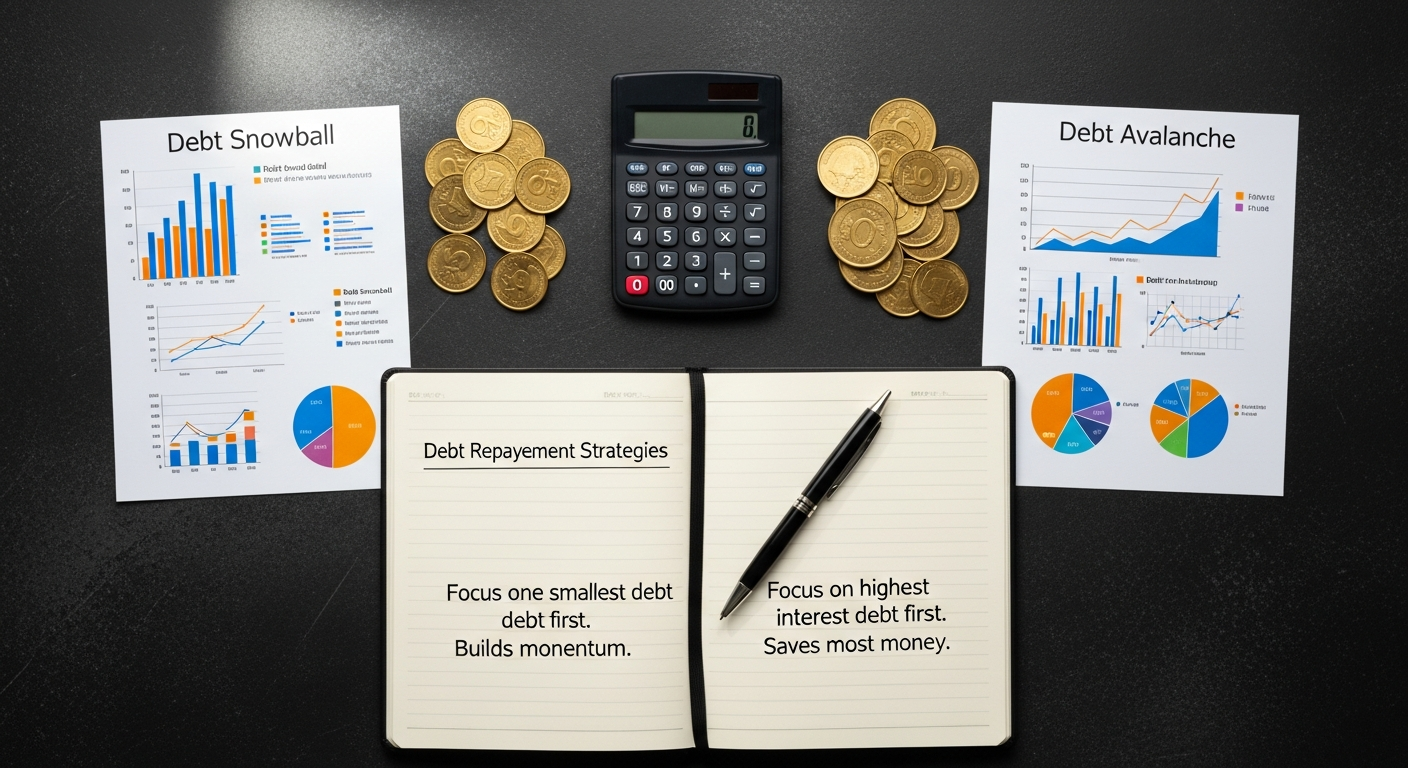
In stark contrast to the Debt Snowball, the Debt Avalanche Method is a purely mathematical approach to debt repayment, designed to minimize the total amount of interest paid over the life of your debts. This strategy prioritizes debts with the highest interest rates first, regardless of their balance. By tackling the most expensive debts first, you effectively reduce the speed at which interest accrues, leading to significant savings and a faster overall debt-free date compared to methods that ignore interest rates.
The Mechanics of the Debt Avalanche
- List All Debts by Interest Rate: The initial step involves listing all your outstanding debts from the highest interest rate to the lowest interest rate. The balance of the debt is secondary to its interest rate for this prioritization.
- Minimum Payments: Make minimum payments on all debts except for the one with the highest interest rate.
- Attack the Highest Interest Debt: Direct all extra available funds (beyond minimum payments) towards the debt with the highest interest rate. This ensures you are paying down the debt that costs you the most money each month.
- Roll Over Payments: Once the highest interest debt is completely paid off, take the money you were allocating to that debt (its minimum payment plus any extra funds) and apply it to the minimum payment of the next highest interest rate debt.
- Repeat: Continue this process until all debts are fully repaid. Each time a high-interest debt is eliminated, the funds freed up are directed to the next highest, accelerating its repayment and maximizing your interest savings.
The Financial Advantage
The primary benefit of the Debt Avalanche Method is its financial efficiency. By systematically eliminating the debts that cost you the most in interest first, you reduce the total amount of money you pay over the life of your loans. This means you become debt-free faster and save a substantial sum of money, which can then be redirected towards other financial goals, such as building an emergency fund, saving for a down payment, or investing. For those focused on optimizing every dollar, especially when dealing with high-interest credit card debt, this method is mathematically superior. It is a powerful answer to how to get out credit card debt efficiently.
Who Benefits Most from the Debt Avalanche?
- Disciplined Individuals: If you are highly disciplined, motivated by numbers, and can maintain focus even when immediate results aren’t visible, the avalanche method is an excellent choice.
- Those with High-Interest Debts: If you have significant balances on high-interest loans, such as credit cards or personal loans, the avalanche method will save you the most money.
- Individuals Prioritizing Financial Efficiency: For those who view debt repayment as a purely logical, financial optimization problem, the avalanche method offers the most cost-effective path to debt freedom.
While it may lack the immediate psychological gratification of the Debt Snowball, the Debt Avalanche Method provides the most direct and financially prudent route to becoming debt-free, ultimately putting more money back into your pocket. It demands a longer-term perspective and a stronger commitment to the strategy without the frequent small victories, but the monetary rewards are undeniable.
Debt Snowball vs. Debt Avalanche: A Direct Comparison
Key Differences Summarized
-
Prioritization:
- Snowball: Debts are prioritized by their balance, from smallest to largest.
- Avalanche: Debts are prioritized by their interest rate, from highest to lowest.
-
Primary Benefit:
- Snowball: Provides psychological wins and maintains motivation through frequent, albeit small, victories.
- Avalanche: Saves the most money on interest and leads to the fastest debt-free date mathematically.
-
Total Interest Paid:
- Snowball: Typically results in paying more total interest over the life of the debts.
- Avalanche: Minimizes the total interest paid, maximizing your savings.
-
Time to Debt Freedom:
- Snowball: Can potentially take longer to become debt-free due to higher interest accumulation, though adherence might make it faster for some.
- Avalanche: Mathematically leads to the fastest debt-free date.
The Psychological vs. Mathematical Debate
The core of the debate centers on whether human behavior or pure mathematics should dictate your debt repayment strategy.
- For the Snowball: Advocates argue that if you don’t stick to a plan, its mathematical superiority is irrelevant. The snowball method’s ability to keep people motivated and engaged often leads to successful debt elimination, even if it costs a bit more in interest. For someone overwhelmed by debt, especially when facing high-interest credit card balances, getting started and staying consistent can be the biggest hurdle. The quick wins provide the fuel to keep going.
- For the Avalanche: Proponents emphasize the undeniable financial logic. Every dollar saved on interest is a dollar that stays in your pocket or can be directed toward building wealth. For those with a strong will and a methodical approach, the avalanche method is the most efficient and financially savvy choice. It appeals to individuals who prioritize long-term financial gain over immediate gratification.
Which is “Better”?
There is no universally “better” method; the optimal choice depends entirely on the individual.
- If you struggle with motivation, get easily discouraged, or have a history of starting and stopping financial plans, the Debt Snowball Method is likely your best bet. The psychological wins will provide the necessary impetus to see the plan through.
- If you are highly disciplined, confident in your ability to stick to a plan regardless of immediate gratification, and want to save the maximum amount of money, the Debt Avalanche Method is mathematically superior. This is particularly true if you have substantial high-interest debts, such as those often incurred through credit card usage.
Ultimately, the “best” method is the one you will commit to and follow consistently until you are debt-free. Both methods, when executed diligently, will lead you to the same destination: financial freedom.
When to Choose the Debt Snowball Method
The Debt Snowball Method isn’t just a strategy; it’s a behavioral hack designed to leverage human psychology for financial gain. While it may not be the mathematically cheapest route, its power lies in its ability to keep you engaged and motivated, making it an excellent choice for specific scenarios and personality types.
Key Indicators for Choosing the Debt Snowball
Consider the Debt Snowball if any of the following resonate with your financial situation or personal tendencies:
- You Need Immediate Gratification: If you’re the type of person who thrives on seeing quick results and needs frequent wins to stay motivated, the snowball method is tailor-made for you. Paying off that first small debt can provide an immense sense of accomplishment, proving to yourself that you can do this.
- You Have Multiple Small Debts: A long list of various small debts (e.g., medical bills, old store credit cards, small personal loans) can feel overwhelming. The snowball method allows you to systematically eliminate these, visually clearing your debt roster and making your financial life feel less cluttered. This is particularly useful when you’re looking for strategies on how to get out credit card debt across multiple cards with varying small balances.
- You’ve Struggled with Debt Repayment Before: If you’ve tried to tackle debt in the past and lost steam, or if you’ve found traditional budgeting demoralizing, the snowball’s focus on momentum can be a game-changer. It re-frames debt repayment as a series of achievable goals rather than one massive, daunting task.
- Your Debt Balances Feel Overwhelming: When you look at your total debt and it feels insurmountable, starting with the smallest balance makes the journey seem less daunting. It provides a manageable first step into what might otherwise appear to be an endless climb.
- You Prioritize Consistency Over Pure Cost Savings: You understand that while the avalanche method saves more money, your ability to stick with a plan is paramount. You recognize that a slightly more expensive plan that you actually follow is infinitely better than a perfectly optimized plan that you abandon.
Practical Applications and Scenarios
Imagine Sarah, who has five different debts: a $500 medical bill, a $1,200 store credit card, a $3,000 personal loan, a $7,000 car loan, and a $10,000 student loan. The interest rates vary, but Sarah feels overwhelmed by the sheer number of accounts.
Using the Debt Snowball, Sarah would focus all her extra payments on the $500 medical bill. Within a month or two, she pays it off. That “win” gives her a huge confidence boost. She then takes the money she was paying on the medical bill and adds it to her payment for the $1,200 store credit card. Soon, that’s gone too. Each success fuels her determination, making the larger debts seem less intimidating as she moves down her list. This systematic approach helps her maintain focus and enthusiasm, crucial for long-term financial discipline.
The Debt Snowball Method is a testament to the idea that sometimes, the most effective financial strategy isn’t the one that’s mathematically perfect, but the one that aligns best with human behavior and motivation. It’s about building a sustainable habit of debt repayment, one small victory at a time.
When to Choose the Debt Avalanche Method
The Debt Avalanche Method is the preferred strategy for individuals who approach their finances with a logical, numbers-driven mindset. It’s about efficiency, maximizing savings, and achieving debt freedom in the shortest possible time from a purely mathematical perspective. If you possess strong discipline and are motivated by the bottom line, this method will serve you best.
Key Indicators for Choosing the Debt Avalanche
Opt for the Debt Avalanche if these characteristics describe your financial situation or personal approach:
- You Are Highly Disciplined and Motivated by Numbers: If you are comfortable with delayed gratification and can remain committed to a plan even without frequent small wins, the avalanche method is ideal. You are driven by the financial savings and the logical efficiency of the approach.
- You Have Significant High-Interest Debts: This is where the avalanche method truly shines. If you have substantial balances on credit cards (which often carry APRs of 18-25% or even higher) or other high-interest personal loans, prioritizing these will save you a tremendous amount of money in interest over time. It’s the most direct and impactful way to address how to get out credit card debt when those rates are eating away at your principal.
- You Want to Minimize Total Interest Paid: Your primary goal is to spend as little money as possible on interest. You understand that every dollar paid in interest is a dollar lost that could have been saved, invested, or used for other financial goals.
- You Have a Clear Understanding of Your Debt Landscape: You’ve taken the time to list all your debts, understand their interest rates, and are comfortable organizing them by this metric. This methodical approach is inherent to the avalanche strategy.
- You Are Seeking the Fastest Debt-Free Date (Mathematically): If your sole objective is to be debt-free as quickly as possible, and you are not concerned with the psychological pacing, the avalanche method will get you there sooner.
Practical Applications and Scenarios
Consider Mark, who has three debts: a $15,000 credit card with a 22% APR, a $5,000 personal loan with a 10% APR, and a $20,000 student loan with a 6% APR. Mark is financially savvy and disciplined.
Using the Debt Avalanche, Mark would focus all his extra payments on the $15,000 credit card, as it has the highest interest rate (22%). Even though it’s not his smallest debt, he knows that tackling this first will save him thousands in interest. Once that credit card is paid off, he directs the substantial payment amount (its minimum plus all extra funds) to the $5,000 personal loan (10% APR). Finally, he attacks the student loan. Mark might not get the immediate gratification of paying off a tiny debt, but he sees the numbers declining rapidly on his highest-interest debt, and he understands he’s making the most financially optimal choice. His total cost of debt repayment will be significantly lower than if he had chosen the snowball method.
The Debt Avalanche Method is for those who prioritize cold, hard numbers and possess the fortitude to stick to a plan that offers long-term financial rewards over short-term psychological boosts. It’s a strategic allocation of resources to attack the most damaging debts first, paving the most cost-effective path to financial freedom.
Beyond Debt Repayment: Integrating Investing and Financial Growth
While debt repayment is a critical first step towards financial security, it’s essential to view it within the broader context of your overall financial journey. Once you’ve established a solid plan for eliminating debt, whether through the Debt Snowball or Debt Avalanche, your focus will inevitably shift towards building wealth and achieving long-term financial goals. This is where the world of investing comes into play, transforming your freed-up cash flow into a powerful engine for future prosperity.
The Transition from Debt-Free to Wealth-Builder
As you systematically pay down debt, you’re not just reducing liabilities; you’re actively increasing your monthly cash flow. This newfound financial flexibility is your opportunity to pivot from defense (debt repayment) to offense (wealth building).
- Establish an Emergency Fund: Before diving deep into investing, ensure you have a robust emergency fund (3-6 months of living expenses) saved in a high-yield savings account. This acts as a crucial buffer against unforeseen financial setbacks, preventing you from falling back into debt.
- Maximize Retirement Contributions: Once your emergency fund is solid, prioritize contributing to tax-advantaged retirement accounts like 401(k)s and IRAs. If your employer offers a 401(k) match, contribute at least enough to get the full match—it’s essentially free money and an immediate, guaranteed return on your investment.
- Strategic Investment Choices: With your foundational elements in place, you can then explore broader investment opportunities. This could range from diversified low-cost index funds and ETFs to individual stocks. For those interested in exploring more active strategies, an Options Trading Beginners Guide might become relevant, though it’s crucial to understand the higher risks involved and to educate yourself thoroughly before engaging in such complex instruments. This is generally a step for those who have a strong financial foundation and a robust understanding of market dynamics.
How To Start Investing Little Money 2026
Many people assume investing requires a large lump sum, but this isn’t true, especially in 2026. The accessibility of investing platforms has democratized wealth building, allowing individuals to start with very modest amounts.
- Micro-Investing Apps: Platforms like Acorns or Fidelity Go allow you to invest spare change or small recurring deposits (e.g., $5 a week) into diversified portfolios. These are excellent entry points for learning the basics of investing.
- Fractional Shares: Many brokerages now offer fractional shares, meaning you can buy a portion of a high-priced stock with as little as $1. This allows you to invest in companies you believe in without needing hundreds or thousands of dollars for a single share.
- Automated Investing: Set up automatic transfers from your checking account to your investment account. Even $25 or $50 a month, consistently invested, can grow significantly over time thanks to the power of compounding interest.
- Understand Your Risk Tolerance: Before investing, especially if you’re exploring options trading, understand your risk tolerance. Investing small amounts initially can help you learn without putting significant capital at risk.
By 2026, the landscape of investing continues to evolve, making it easier than ever for individuals to participate in the market. The key is to start early, invest consistently, and educate yourself continually. The money you save by efficiently paying off debt can become the seed capital for your future wealth, allowing you to transition from merely managing finances to actively growing them. Remember, while the journey out of debt is challenging, the journey towards financial independence and wealth creation is incredibly rewarding and begins with disciplined action.
Practical Steps to Implement Your Chosen Strategy
Once you’ve decided whether the Debt Snowball or Debt Avalanche method is right for you, the next crucial step is implementation. A well-thought-out plan, consistently executed, is the backbone of successful debt elimination. Here’s a practical guide to putting your chosen strategy into action.
Step 1: Gather All Your Debt Information
This is the foundational step for either method.
- List Every Debt: Include credit cards, personal loans, student loans, car loans, medical bills, and any other outstanding balances.
-
Collect Key Details: For each debt, note down:
- Original Balance and Current Balance
- Interest Rate (APR)
- Minimum Monthly Payment
- Due Date
- Creditor Name and Account Number
-
Organize Your Debts:
- For Snowball: Order them from smallest balance to largest balance.
- For Avalanche: Order them from highest interest rate to lowest interest rate.
Step 2: Create a Realistic Budget
To find extra money for debt repayment, you need to understand where your money is going.
- Track Income and Expenses: For at least a month, meticulously track every dollar you earn and spend. Use budgeting apps, spreadsheets, or even pen and paper.
- Identify Areas for Cuts: Look for non-essential expenses that can be reduced or eliminated. Common culprits include dining out, subscriptions, entertainment, and impulsive purchases. Even small cuts add up.
- Allocate “Extra” Funds: Determine how much extra money you can realistically commit to your chosen debt repayment strategy each month, beyond your minimum payments. Be honest with yourself to create a sustainable plan.
Step 3: Implement Your Chosen Method
This is where the rubber meets the road.
- Minimum Payments First: Ensure you make at least the minimum payment on ALL your debts to avoid late fees and further damage to your credit score.
-
Attack the Priority Debt:
- Snowball: Direct all your identified “extra” funds to the debt with the smallest balance.
- Avalanche: Direct all your identified “extra” funds to the debt with the highest interest rate.
- Automate Payments (Carefully): Set up automatic payments for minimums to avoid missing due dates. For your priority debt, manually make the extra payment to ensure the full amount is applied correctly, or carefully configure automated payments if your bank/creditor allows for principal-only payments.
Step 4: Maintain Momentum and Stay Motivated
Debt repayment is a marathon, not a sprint.
- Celebrate Milestones: Acknowledge each debt you pay off. These small celebrations can provide the psychological boost needed to keep going, especially with the snowball method.
- Track Your Progress: Visually track your debt reduction. Use a spreadsheet, a whiteboard, or an app. Seeing the numbers shrink can be incredibly motivating.
- Find Additional Income: Consider side hustles, selling unused items, or picking up extra shifts to accelerate your debt repayment. Every extra dollar you throw at your priority debt makes a difference. This can significantly impact how to get out credit card debt faster.
- Avoid New Debt: While on your debt repayment journey, commit to not taking on any new debt. Cut up credit cards if necessary, or freeze them.
- Stay Flexible: Life happens. If an unexpected expense arises, adjust your budget and get back on track as soon as possible. Don’t let a minor setback derail your entire plan.
By following these practical steps, you can effectively implement your chosen debt repayment strategy and systematically work towards a debt-free future. Consistency and discipline are your greatest allies in this journey.
Frequently Asked Questions
Recommended Resources
You might also enjoy What Is Demand Generation In Marketing from Kacerr.
Check out Llc Vs Sole Proprietorship Which Is Better on AssetBar for a deeper dive.