Understanding the FIRE Movement: More Than Just Early Retirement
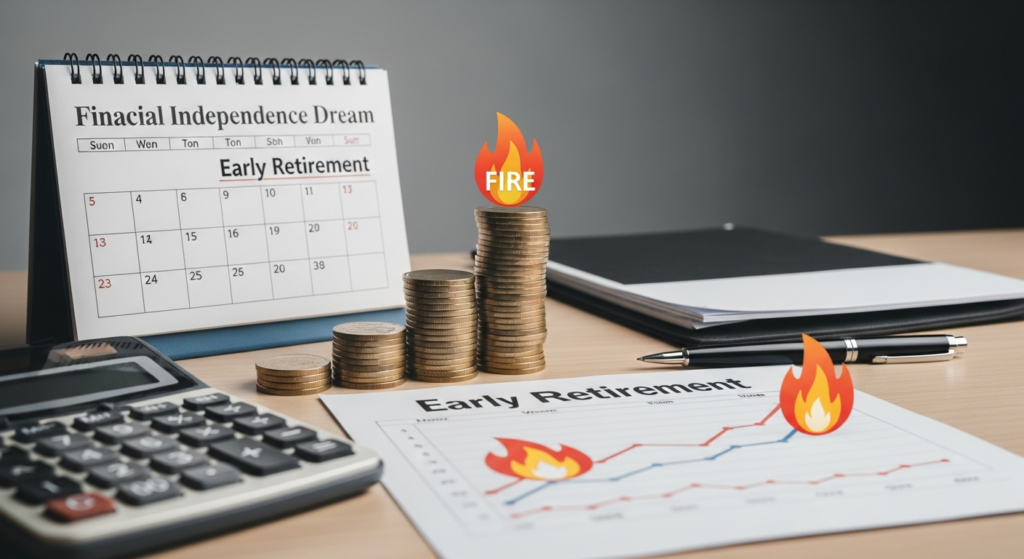
The acronym FIRE stands for Financial Independence, Retire Early. While the “retire early” part often grabs headlines, it’s the “financial independence” component that truly defines the movement and holds the most profound implications for your life. Financial independence means having enough passive income from your investments to cover your living expenses, eliminating the necessity of working for a paycheck. This doesn’t inherently mean stopping work altogether. For many, FIRE provides the ultimate freedom: the choice to work on projects they’re passionate about, pursue hobbies, travel extensively, spend more time with family, or simply enjoy a life unburdened by financial stress.
The origins of FIRE can be traced back to principles espoused in best-selling books like “Your Money or Your Life” by Vicki Robin and Joe Dominguez, published in 1992, which advocated for conscious spending and aligning money with personal values. More recently, the internet and personal finance blogs have amplified these ideas, fostering a vibrant community dedicated to sharing strategies and support. The core philosophy is simple yet powerful: by significantly increasing your savings rate and investing wisely, you can dramatically shorten the timeline to financial freedom compared to traditional retirement planning.
There are various sub-categories within the FIRE movement, each catering to different preferences and risk tolerances:
- Traditional FIRE: Aims for a large nest egg that allows for complete cessation of work, typically following the 4% rule (which we’ll discuss later).
- Lean FIRE: Pursuing financial independence with a much lower annual spending budget, requiring a smaller nest egg. This often involves significant frugality.
- Fat FIRE: Aiming for financial independence with a significantly larger nest egg that supports a more luxurious or comfortable lifestyle, requiring higher annual expenses.
- Barista FIRE: Achieving enough financial independence to cover most expenses, but continuing to work part-time in a low-stress job (like a barista, hence the name) to cover health insurance or discretionary spending.
- Coast FIRE: Saving and investing enough in your early career that your investments will grow sufficiently to cover traditional retirement expenses without any further contributions. You then “coast” until traditional retirement age, without the pressure of aggressive saving.
Regardless of the specific path, the underlying goal remains the same: to reclaim your time and autonomy. It’s a proactive approach to wealth building that challenges conventional wisdom about career progression and retirement age, making the dream of a self-directed life a tangible reality for many.
The Core Pillars of FIRE: Saving, Investing, and Lifestyle Optimization
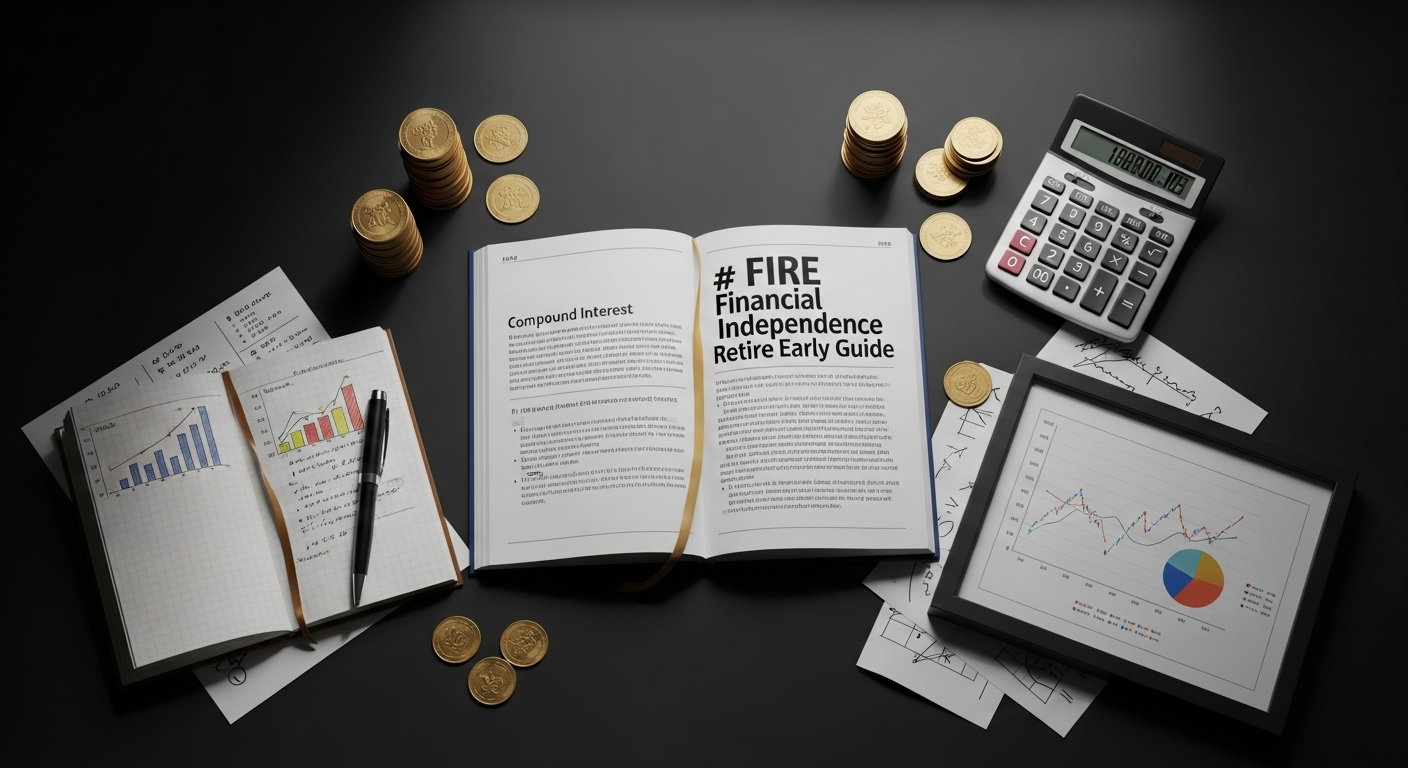
Achieving FIRE isn’t a single action; it’s a strategic combination of three interconnected pillars that work in synergy to accelerate your journey to financial independence. Understanding and mastering each of these components is crucial for anyone embarking on this path.
Aggressive Savings Rate: Fueling Your Freedom
The cornerstone of the FIRE movement is an exceptionally high savings rate. While conventional financial advice often recommends saving 10-15% of your income for retirement, FIRE enthusiasts typically aim for 50%, 60%, or even 70% or more. The logic is straightforward: the more you save and invest, the faster your money compounds, and the sooner you reach your FIRE number. Your savings rate is often a more powerful lever than your income level, especially in the early stages.
- Calculate Your Current Savings Rate: (Income – Expenses) / Income. This will give you a baseline.
- Identify Areas for Reduction: Go through your budget with a fine-tooth comb. Look at major expenses first – housing, transportation, and food are often the biggest culprits. Even small, recurring expenses add up over time.
- Automate Savings: Set up automatic transfers from your checking to your savings and investment accounts immediately after payday. Treat savings as a fixed expense you can’t skip.
Remember, a higher savings rate directly correlates to a shorter working career. This mathematical reality is what makes the FIRE movement so compelling.
Strategic Investing: Putting Your Money to Work
Saving money is only half the battle; the other half is making that money work for you. Investing is where your wealth truly begins to compound, turning your saved capital into a self-sustaining income stream. For those asking “How To Start Investing Little Money 2026,” the FIRE path offers practical solutions.
- Low-Cost Index Funds and ETFs: These are a favorite among the FIRE community due to their diversification, low fees, and consistent long-term returns. They allow you to own a broad basket of stocks or bonds, reducing individual company risk.
- Robo-Advisors: If you’re new to investing, platforms like Vanguard Personal Advisor Services, Fidelity Go, or Betterment can help you build a diversified portfolio automatically based on your risk tolerance, often with low minimums, making it easier for those looking to start investing little money in 2026.
- Tax-Advantaged Accounts: Maximize contributions to 401(k)s, IRAs (Roth or Traditional), and HSAs. These accounts offer significant tax benefits that accelerate wealth accumulation. Understand the rules for early withdrawals from these accounts for FIRE planning.
- Diversification: Don’t put all your eggs in one basket. A diversified portfolio across different asset classes (stocks, bonds, real estate) and geographies helps mitigate risk.
While some advanced investors might explore strategies outlined in an Options Trading Beginners Guide, for the majority pursuing FIRE, a consistent, long-term approach with broad market index funds is generally recommended due to its simplicity and proven effectiveness in wealth accumulation over decades.
Lifestyle Optimization: Smart Spending and Income Generation
Lifestyle optimization isn’t about deprivation; it’s about conscious spending and maximizing your income. It involves aligning your expenditures with your values and actively seeking ways to increase your earning potential.
- Mindful Spending: Differentiate between needs and wants. Challenge every expense. Can you find a cheaper alternative? Do you truly derive value from this purchase? This might involve cooking at home more, finding free entertainment, or optimizing utility usage.
- Major Expense Reduction: Housing, transportation, and food are typically the largest budget categories. Strategies might include living in a smaller home, house hacking, optimizing commutes, using public transport, or meal prepping.
- Increase Your Income: Don’t just focus on cutting expenses. Look for ways to boost your income. This could be through negotiating a higher salary, taking on a side hustle, freelancing, or developing new, in-demand skills. Every extra dollar earned and saved significantly speeds up your FIRE journey.
- Utilize Budgeting Tools: To track your spending and savings, leverage the Best Money Apps Budgeting 2026. Apps like YNAB (You Need A Budget), Mint, or Personal Capital can provide invaluable insights into where your money is going and help you stick to your financial plan.
By diligently applying these three pillars, you create a powerful engine for wealth creation that drives you steadily towards your financial independence goal.
Calculating Your FIRE Number: The 4% Rule Explained
What is the 4% Rule?
The 4% Rule originated from a seminal study conducted by three professors at Trinity University in 1998, often referred to as the “Trinity Study.” This research analyzed historical market data to determine a “safe” withdrawal rate from a retirement portfolio that would ensure the funds lasted for 30 years or more, with a high probability of success. The study found that withdrawing 4% of your initial portfolio value (adjusted for inflation each year) offered a very high success rate over various market conditions.
For the FIRE community, the 4% Rule is often extended to cover a much longer period than traditional retirement, potentially 50-60 years or more. While the original study focused on a 30-year horizon, subsequent analyses and Monte Carlo simulations suggest that for a diversified portfolio, a 4% withdrawal rate still holds a high probability of success for longer periods, though some FIRE proponents opt for a more conservative 3.5% or even 3% to enhance longevity, especially given current market conditions and interest rates.
How to Calculate Your FIRE Number
The calculation for your FIRE Number is surprisingly simple once you know your annual expenses:
Your Annual Expenses x 25 = Your FIRE Number
Here’s a breakdown:
- Determine Your Annual Expenses: This is the most critical step. You need a clear, realistic understanding of how much money you spend in a year. This includes housing, food, transportation, healthcare, insurance, utilities, entertainment, travel, and any other recurring costs. Be honest and thorough. If you plan to live a different lifestyle in early retirement, adjust your projected expenses accordingly. For instance, if you plan to travel extensively, factor in higher travel costs, or if you plan to move to a lower cost-of-living area, adjust downward. Utilizing the Best Money Apps Budgeting 2026 can significantly help in accurately tracking and projecting these expenses.
- Multiply by 25: Once you have your annual expenses, multiply that number by 25. This effectively means that your investment portfolio needs to be 25 times your annual expenses. Why 25? Because 100% divided by 4% equals 25. If you have $1,000,000 and withdraw 4% annually, you’re withdrawing $40,000. Conversely, if you need $40,000 per year, you need $40,000 x 25 = $1,000,000.
Example:
Let’s say your current annual expenses are $40,000.
Your FIRE Number = $40,000 x 25 = $1,000,000.
If you want a more conservative withdrawal rate, say 3.5%, then you would divide your annual expenses by 0.035 instead of multiplying by 25 (which is the same as multiplying by ~28.57).
For $40,000 annual expenses with a 3.5% withdrawal rate: $40,000 / 0.035 = ~$1,142,857.
Caveats and Considerations
- Inflation: The 4% rule assumes you adjust your withdrawal amount for inflation each year. Your portfolio needs to grow enough to outpace inflation while still providing your income.
- Market Volatility: While historically robust, no rule is foolproof. Significant market downturns early in retirement (sequence of returns risk) can impact portfolio longevity. This is why some opt for a lower withdrawal rate.
- Longevity Risk: Living longer than anticipated means your money needs to last longer. A 30-year study might not fully encompass a 50-60 year retirement.
- Flexibility: The FIRE number is a target, not a rigid prison. You can adjust your spending in down years, pick up part-time work, or delay full retirement if needed.
Your FIRE Number is a dynamic target. As your life circumstances, expenses, and market conditions change, you should periodically revisit and recalculate it. It provides a clear, measurable goal that makes the abstract concept of financial independence tangible and actionable.
Building Your Investment Portfolio for FIRE: Strategies and Considerations
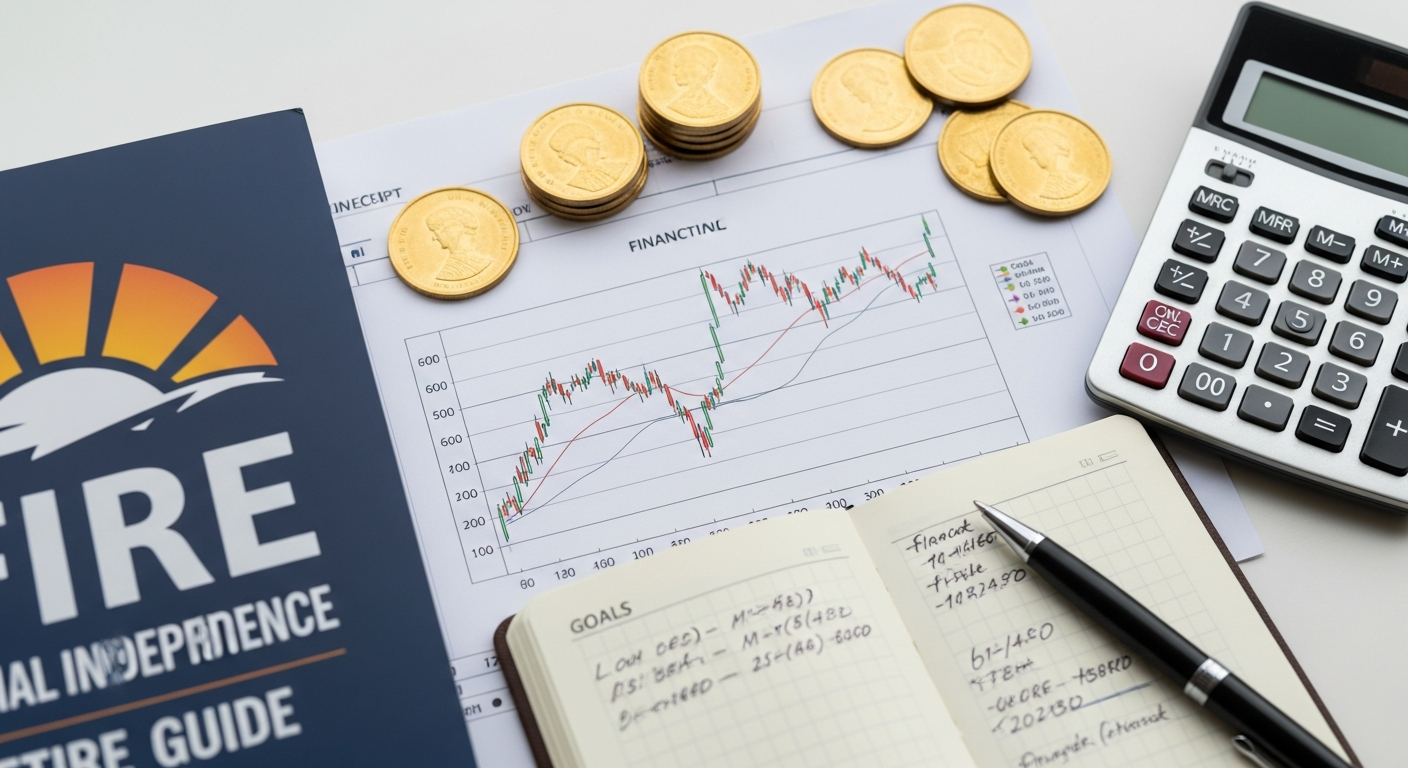
Once you’ve calculated your FIRE number, the next critical step is to strategically build an investment portfolio that will grow efficiently to reach that target and then sustain your early retirement. This isn’t about getting rich quick, but rather about consistent, disciplined investing in vehicles designed for long-term growth and stability.
Diversification is Key: The Cornerstone of a Resilient Portfolio
A well-diversified portfolio is crucial to mitigate risk and ensure consistent returns over the long haul. The FIRE community generally favors a strategy that emphasizes broad market exposure over individual stock picking.
- Low-Cost Index Funds and ETFs: These are the workhorses of most FIRE portfolios. They offer instant diversification by tracking a specific market index (like the S&P 500 for large-cap US stocks, or a total world stock market index for global exposure) at a very low cost. Examples include Vanguard Total Stock Market Index Fund (VTSAX/VTTSX) or equivalent ETFs (VTI/VT).
- Asset Allocation: This refers to how you divide your investments among different asset classes, primarily stocks and bonds.
- Stocks: Offer higher growth potential but come with greater volatility. They are essential for accumulating wealth.
- Bonds: Provide stability and income, acting as a ballast during stock market downturns. They are crucial for preserving wealth, especially as you approach and enter retirement.
The ideal stock-to-bond ratio depends on your risk tolerance and time horizon. Younger investors with a long runway to FIRE often have a higher allocation to stocks (e.g., 80-90% stocks), while those closer to their FIRE date or already retired might shift towards a more balanced or bond-heavy portfolio (e.g., 60/40 or even 50/50).
- Global Diversification: Don’t limit your investments to just one country. Investing in international stocks and bonds provides exposure to different economies and reduces reliance on any single market.
Risk Tolerance and Time Horizon: Tailoring Your Strategy
Your personal comfort level with risk and how many years you have until you hit your FIRE number should heavily influence your investment choices.
- Longer Time Horizon (e.g., 10+ years to FIRE): You generally have more capacity to take on risk. Market downturns are opportunities to buy more assets at lower prices, and you have ample time for the market to recover. A higher stock allocation is typically appropriate.
- Shorter Time Horizon (e.g., 1-5 years to FIRE): As you get closer to your FIRE date, preserving capital becomes more important. A sudden market crash could significantly delay your plans. Gradually shifting a portion of your portfolio into less volatile assets like bonds or cash equivalents can be wise.
- Personal Risk Tolerance: Be honest with yourself. Can you stomach seeing your portfolio drop by 20-30% in a bear market without panicking and selling? If not, a more conservative allocation might be better for your peace of mind, even if it means a slightly slower accumulation phase.
Advanced Strategies and Considerations (with Caution)
While the core FIRE strategy relies on broad-market index funds, some investors, particularly those with a strong understanding of financial markets, might explore more advanced avenues.
- Real Estate: Investing in rental properties can provide passive income and appreciation, accelerating your FIRE journey. This can be direct ownership or through Real Estate Investment Trusts (REITs). However, it requires significant capital, management effort, and can be illiquid.
- Individual Stocks: While generally not recommended as the primary FIRE strategy due to higher risk, some investors allocate a small portion of their portfolio to individual stocks they have thoroughly researched and believe in. This requires considerable time, effort, and knowledge.
- Options Trading: For those interested in higher-risk, potentially higher-reward strategies, an Options Trading Beginners Guide might pique curiosity. Options can be used for speculation or hedging existing positions. However, it’s crucial to understand that options trading is complex, carries significant risk of capital loss, and is generally not suitable for the core wealth-building phase of a FIRE journey. It should only be attempted with a small, disposable portion of your portfolio after extensive education and practice.
- Peer-to-Peer Lending: Platforms that allow you to lend money to individuals or businesses can offer higher interest rates than traditional savings accounts, but also come with credit risk.
Rebalancing and Monitoring: Keeping Your Portfolio on Track
Your investment portfolio isn’t a “set it and forget it” system. Regular rebalancing is necessary to maintain your desired asset allocation. If stocks have performed exceptionally well, they might now represent a larger portion of your portfolio than you intended. Rebalancing involves selling some of your overperforming assets and buying more of your underperforming ones to bring your portfolio back to your target allocation. This should typically be done annually or when your allocation drifts significantly (e.g., by 5-10%).
Additionally, continuously monitor your progress towards your FIRE number. As your income or expenses change, or as market conditions evolve, you may need to adjust your savings rate or investment strategy. Staying informed and adaptable is key to a successful FIRE journey.
The Road to FIRE: Practical Steps and Ongoing Management
The journey to FIRE is a marathon, not a sprint. It requires consistent effort, discipline, and adaptability. Here’s a practical roadmap to guide you through the initial setup and ongoing management of your FIRE plan.
Step 1: Get Your Financial House in Order
Before you can aggressively save and invest, you need a solid financial foundation.
- Eliminate High-Interest Debt: Credit card debt, personal loans, and other high-interest consumer debt are absolute wealth destroyers. Prioritize paying these off aggressively. The interest rates often far outpace any investment returns you could hope to achieve, making debt repayment your highest-return “investment.”
- Build an Emergency Fund: Aim for 3-6 months (or even more for FIRE, given the desire for early retirement) of living expenses held in an easily accessible, high-yield savings account. This fund acts as a buffer against unexpected life events (job loss, medical emergency, car repairs) and prevents you from having to dip into your investment portfolio during a market downturn.
- Track Your Spending and Budget: You can’t manage what you don’t measure. Use a spreadsheet, a notebook, or one of the Best Money Apps Budgeting 2026 like YNAB, Mint, or Personal Capital to meticulously track every dollar in and out. This insight is crucial for identifying areas to cut expenses and for accurately calculating your FIRE number.
Step 2: Automate Savings and Investments
Make saving and investing a non-negotiable part of your financial routine. Automating these processes ensures consistency and removes the temptation to spend the money instead.
- Set Up Direct Deposits: Have a portion of your paycheck directly deposited into your investment accounts (401k, IRA, taxable brokerage).
- Schedule Automatic Transfers: Set up recurring transfers from your checking account to your savings and investment accounts on payday.
- Max Out Tax-Advantaged Accounts: Prioritize contributing the maximum allowed to your 401(k) (especially if there’s an employer match), Roth or Traditional IRA, and Health Savings Account (HSA). These accounts offer significant tax benefits that accelerate your wealth accumulation.
Step 3: Increase Your Income
While cutting expenses is vital, increasing your income provides another powerful lever for accelerating your FIRE journey. Every extra dollar earned can be saved and invested, significantly shortening your timeline.
- Negotiate Your Salary: Regularly assess your market value and negotiate for higher pay in your current role or when seeking new employment.
- Develop High-Demand Skills: Invest in yourself. Acquire new skills that command higher wages or open up new income streams.
- Start a Side Hustle: Freelancing, consulting, driving for a ride-share service, selling goods online, or tutoring can provide additional income that can be entirely dedicated to your FIRE fund.
- Explore Passive Income Streams: While requiring initial effort, developing passive income sources like rental properties, creating digital products, or dividend investing can further bolster your financial independence.
Step 4: Stay Educated and Adapt
The financial landscape is always evolving, and your personal circumstances will change over time. Continuous learning and flexibility are crucial.
- Read and Research: Stay informed about personal finance, investing strategies, and economic trends. Follow reputable financial blogs (like Trading Costs!), read books, and listen to podcasts.
- Review Your Plan Annually: At least once a year, revisit your budget, investment portfolio, and FIRE number. Adjust as needed based on changes in your income, expenses, family situation, or market performance.
- Be Prepared for Market Volatility: Understand that stock market corrections and bear markets are a normal part of investing. Develop the mental fortitude to stay the course, avoid emotional decisions, and view downturns as opportunities to buy assets at a discount.
Step 5: Planning for Healthcare and Post-FIRE Life
Retiring early comes with unique considerations, especially regarding healthcare coverage before Medicare eligibility (age 65 in the US).
- Healthcare Strategy: Research options like healthcare.gov marketplace plans (subsidies based on income), COBRA (temporary), private insurance, or moving abroad to a country with universal healthcare. This is a critical piece of the FIRE puzzle that requires careful planning.
- Finding Purpose: Financial independence frees you from the necessity of work, but it doesn’t automatically provide purpose. Think about how you want to spend your time, what passions you want to pursue, and how you will maintain social connections. Planning for this aspect of life is just as important as the financial planning.
- Phased Retirement: Some choose a phased approach, transitioning from full-time work to part-time or consulting before fully retiring. This can ease the psychological adjustment and help bridge potential financial gaps.
By systematically addressing these practical steps, you build a robust and resilient path toward achieving your FIRE goals, ensuring that your early retirement is not just financially viable but also personally fulfilling.
Navigating Potential Pitfalls and Staying Motivated
While the FIRE journey is immensely rewarding, it’s not without its challenges. Awareness of potential pitfalls and strategies to maintain motivation are vital for long-term success.
Potential Pitfalls on the FIRE Path
- Lifestyle Creep: As your income increases, there’s a natural tendency to increase your spending. This “lifestyle creep” is a silent killer of FIRE plans, as it inflates your annual expenses and, consequently, your FIRE number, pushing your goal further away.
Solution: Be vigilant about your spending. Automate savings before you see the money. Practice conscious consumption and regularly review your budget with the Best Money Apps Budgeting 2026 to ensure your expenses don’t unconsciously rise.
- Market Downturns and Sequence of Returns Risk: Major stock market crashes can significantly impact your portfolio, especially if they occur early in your retirement (known as “sequence of returns risk”). A large drop can deplete your capital before it has a chance to recover.
Solution: Employ a conservative withdrawal rate (e.g., 3.5% instead of 4%). Maintain a cash buffer or a bond tent (a higher allocation to bonds) as you approach retirement. Be flexible with your spending in down years, reducing withdrawals if necessary, and consider part-time work to bridge gaps.
- Burnout: The aggressive savings rates and intense focus on finance can lead to burnout, making the journey feel unsustainable or overly restrictive.
Solution: Find a balance. It’s okay to indulge occasionally within reason. Reassess your savings rate if it’s causing undue stress. Remember that FIRE is about freedom and choice, not deprivation. Your mental health is paramount.
- Social Isolation and Misunderstanding: Your FIRE journey might be misunderstood by friends and family who don’t share your goals. The sacrifices you make can sometimes lead to feeling isolated.
Solution: Seek out the FIRE community online or in person. Connect with like-minded individuals who understand and support your goals. Educate your close circle about your motivations in a positive way.
- Lack of Purpose Post-FIRE: Achieving financial independence is a huge accomplishment, but if you haven’t planned for what comes next, you might experience a void or lack of purpose after leaving your traditional career.
Solution: Actively plan for your post-FIRE life throughout your journey. Cultivate hobbies, volunteer, develop new skills, or explore entrepreneurial ventures. Your “retirement” might simply be a pivot to work you truly love, not a complete cessation of productive activity.
- Inflation: The purchasing power of money erodes over time due to inflation. Your FIRE number needs to account for this.
Solution: The 4% rule inherently accounts for historical inflation by adjusting withdrawals. Ensure your investments are in assets (like stocks) that historically outpace inflation. Regularly review your spending and portfolio.
Staying Motivated on Your Journey
Motivation can wane during a long journey. Here’s how to keep your spirits high:
- Visualize Your Future: Regularly remind yourself why you started. Picture your ideal life post-FIRE – the freedom, the experiences, the peace of mind.
- Track Your Progress: Seeing your net worth grow and your FIRE number getting closer is incredibly motivating. Use personal finance trackers or spreadsheets to monitor your progress. Celebrate milestones, no matter how small.
- Educate Yourself Continuously: Learning more about personal finance and investing keeps you engaged and confident in your plan. Reading articles (like an Options Trading Beginners Guide, if you’re exploring advanced strategies) or learning about How To Start Investing Little Money 2026 can empower you.
- Find a Community: Engaging with other FIRE enthusiasts provides support, shares new ideas, and keeps you accountable.
- Be Flexible: Life happens. Don’t be afraid to adjust your timeline or your approach if circumstances change. A flexible plan is more resilient than a rigid one.
- Focus on the “Independence” Aspect: Remember that FIRE is primarily about financial independence – the freedom of choice – not just early retirement. Even before you hit your full FIRE number, the increasing stability and options you gain are powerful motivators.
The FIRE journey is transformative. By being aware of potential obstacles and actively working to overcome them, you can ensure your path to financial independence is not only successful but also enjoyable and sustainable.
Frequently Asked Questions
Recommended Resources
Related reading: How To Start An Ecommerce Business 2026 (E-ComProfits).
Check out How To Build An Emergency Fund on Fin3go for a deeper dive.