

What is a Health Savings Account (HSA)? Understanding the Basics
A Health Savings Account (HSA) is a tax-advantaged savings and investment account designed to help individuals save and pay for qualified medical expenses. It stands out in the world of personal finance due to its unique “triple tax advantage,” which we’ll delve into in detail shortly. Unlike many other health-related savings vehicles, an HSA is owned by the individual, not the employer, meaning it’s portable and stays with you even if you change jobs or health insurance plans.
To be eligible for an HSA, you must be enrolled in a High Deductible Health Plan (HDHP). This critical prerequisite ensures that HSAs are paired with insurance plans that typically have lower monthly premiums but higher deductibles before the insurance coverage kicks in. The idea is that the HSA helps you cover those out-of-pocket costs while also providing a long-term savings and investment vehicle.
The core features that make an HSA such a compelling financial tool include:
- Tax-Deductible Contributions: Money you contribute to your HSA is tax-deductible, reducing your taxable income in the year you contribute. This is true whether you contribute through payroll deductions or directly to the account.
- Tax-Free Growth: The funds in your HSA can be invested, and any earnings, dividends, or capital gains grow tax-free. This allows your money to compound significantly over time, much like a traditional retirement account.
- Tax-Free Withdrawals: When you use your HSA funds for qualified medical expenses, the withdrawals are entirely tax-free. This means you avoid taxes on the money going in, the money growing, and the money coming out for eligible healthcare costs.
- No “Use It or Lose It” Rule: Unlike Flexible Spending Accounts (FSAs), HSA funds roll over from year to year. There’s no deadline to spend the money, allowing you to accumulate a substantial balance over time.
- Portability: Your HSA belongs to you, not your employer. If you switch jobs or retire, your HSA and its funds go with you.
- Retirement Flexibility: After age 65, HSA funds can be withdrawn for any purpose without penalty, though non-medical withdrawals will be subject to ordinary income tax, similar to a traditional IRA or 401(k). For qualified medical expenses, withdrawals remain tax-free at any age.
Understanding these fundamental aspects is the first step toward appreciating the full scope of an HSA’s potential. It’s not merely a savings account for doctor visits; it’s a powerful wealth-building tool that can play a significant role in your long-term financial security, especially given the ever-increasing costs of healthcare in retirement.
Eligibility Requirements and Contribution Limits for HSAs in 2026
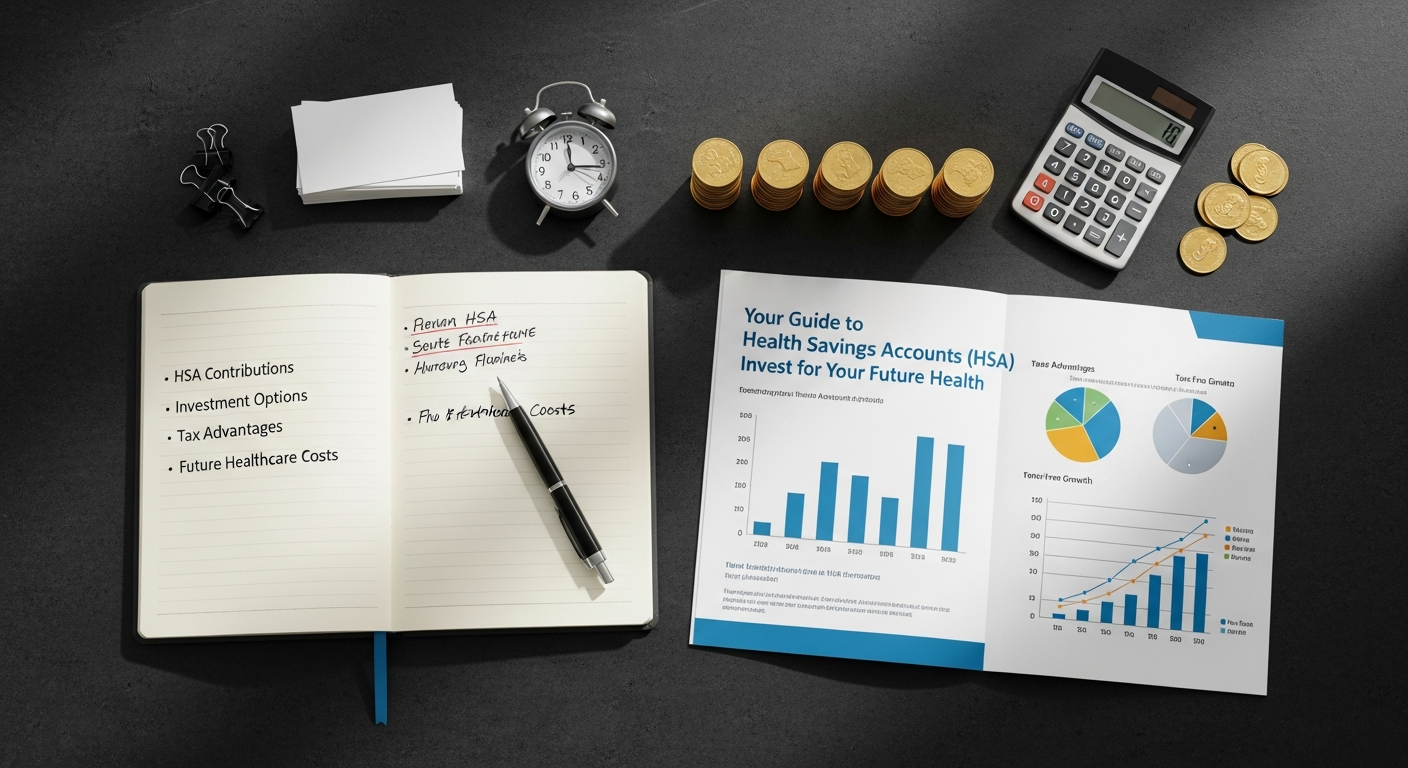
Before you can unlock the robust benefits of a Health Savings Account, it’s crucial to understand the strict eligibility criteria set forth by the IRS. The cornerstone of HSA eligibility is participation in a High Deductible Health Plan (HDHP). For the year 2026, the IRS will define specific parameters that an HDHP must meet:
- Minimum Deductible: For self-only coverage, the HDHP must have an annual deductible of at least a certain amount (e.g., hypothetically, $1,600 in 2026). For family coverage, this minimum deductible will be higher (e.g., hypothetically, $3,200 in 2026). These are the amounts you must pay out of pocket for covered services before your insurance plan begins to pay.
- Maximum Out-of-Pocket: There’s also a cap on the total amount you can pay out of pocket for covered services in a year (including deductibles, co-payments, and coinsurance, but not premiums). For self-only coverage, this maximum might be, for instance, $8,050 in 2026, and for family coverage, it could be $16,100. Once you hit this maximum, your HDHP typically covers 100% of additional covered expenses for the rest of the plan year.
It’s important to note that these figures are hypothetical for 2026, as the IRS typically releases the official adjustments later in the preceding year. Always verify the most current limits from official IRS sources or your HSA provider.
Beyond simply having an HDHP, there are other critical eligibility rules:
- No Other Health Coverage: Generally, you cannot be covered by any other health plan that is not an HDHP. This includes a spouse’s non-HDHP plan if it covers you. Certain “permitted insurance” (like specific injury insurance, accident, disability, dental care, vision care, or long-term care insurance) is allowed.
- Not Enrolled in Medicare: If you are enrolled in Medicare, you are not eligible to contribute to an HSA. You can, however, continue to use funds already in your HSA even after enrolling in Medicare.
- Not Claimed as a Dependent: You cannot be claimed as a dependent on someone else’s tax return.
- Not Receiving VA Benefits: If you’ve received VA benefits within the past three months, you may be ineligible, with some exceptions for preventative care.
HSA Contribution Limits for 2026
Once eligible, the IRS also sets annual limits on how much you can contribute to your HSA. These limits are also subject to annual adjustments and are typically announced in the fall of the preceding year. For 2026, based on historical trends, we can anticipate the limits to be approximately:
- Self-Only Coverage: Hypothetically, around $4,300 for individuals.
- Family Coverage: Hypothetically, around $8,550 for those with family HDHP coverage.
- Catch-Up Contributions: If you are age 55 or older by the end of the tax year, you can contribute an additional “catch-up” amount, which is typically $1,000 per year. This means an individual age 55 or older with self-only coverage could potentially contribute $5,300 in 2026. If both spouses are 55 or older and covered by a family HDHP, each can contribute an additional $1,000 to their respective HSAs.
These limits include contributions made by both you and your employer. If you contribute more than the annual limit, the excess contributions are subject to a 6% excise tax each year they remain in the account, in addition to being taxable income. It’s crucial to monitor your contributions to stay within these limits.
Understanding and adhering to these eligibility and contribution rules is paramount to legally and effectively leveraging the significant financial advantages an HSA offers. Always consult with a tax professional if you have complex eligibility questions or concerns about your specific situation.
The Triple Tax Advantage: Why HSAs Are a Financial Powerhouse
Tax-Deductible Contributions
The first tax benefit you encounter with an HSA is the ability to contribute pre-tax dollars. When you contribute money to your HSA, those contributions are tax-deductible. This means they reduce your taxable income for the year, leading to a lower tax bill. For example, if you contribute the maximum individual amount to your HSA in 2026, that entire sum is subtracted from your gross income before your income tax liability is calculated. If your contributions are made through payroll deductions by your employer, they are often also exempt from FICA taxes (Social Security and Medicare), adding an extra layer of tax savings. This immediate tax break makes contributing to an HSA attractive right from the start, providing an instant return on your savings.
Tax-Free Growth
This is where the HSA transforms from a simple savings account into a formidable investment tool. Unlike many other accounts where investment earnings are taxed annually or upon withdrawal, the money you invest within your HSA grows completely tax-free. This means that any interest, dividends, or capital gains generated by your HSA investments are not subject to taxes as long as they remain in the account. This tax-free growth allows your money to compound much more rapidly over time, significantly increasing your potential returns. For those interested in learning
Tax-Free Withdrawals for Qualified Medical Expenses
The third and arguably most compelling leg of the triple tax advantage is the ability to withdraw funds completely tax-free for qualified medical expenses. This is the ultimate payoff: money goes in tax-free, grows tax-free, and comes out tax-free, provided it’s used for eligible healthcare costs. Qualified medical expenses are broad and include a wide range of services and products, such as:
- Deductibles, co-payments, and coinsurance
- Prescription medications
- Dental and vision care (including orthodontia, glasses, and contacts)
- Chiropractic care
- Acupuncture
- Psychiatric and psychological care
- Over-the-counter medicines (with a doctor’s prescription or certain exceptions)
- Certain long-term care insurance premiums
- COBRA premiums
- Medicare Part A, B, C, and D premiums (but not Medigap policies)
It’s crucial to keep meticulous records of all your medical receipts. Should you withdraw funds for non-qualified expenses before age 65, those withdrawals will be subject to your ordinary income tax rate plus a hefty 20% penalty. After age 65, non-qualified withdrawals are only subject to income tax, effectively turning your HSA into a traditional IRA with the added benefit of tax-free medical withdrawals.
This triple tax advantage makes the HSA an incredibly versatile and powerful financial tool. It’s not just for covering immediate healthcare costs; it’s a strategic vehicle for long-term wealth accumulation, offering a tax-sheltered way to save for future medical expenses, including those in retirement, which can be substantial. For many, the HSA truly earns its reputation as the “ultimate retirement account” or “stealth IRA,” blending healthcare savings with robust investment potential.
Maximizing Your HSA: Investment Strategies and Long-Term Growth

While an HSA’s primary purpose is to help cover healthcare costs, its true potential is unleashed when treated as an investment vehicle. Too many account holders let their HSA funds sit in low-interest savings accounts, missing out on decades of tax-free growth. To truly maximize your HSA, you need to think beyond immediate medical expenses and embrace its role as a long-term wealth-building tool.
Choosing the Right HSA Provider for Investing
Not all HSA providers are created equal, especially when it comes to investment options. When selecting or evaluating your HSA custodian, consider the following:
- Investment Options: Look for a provider that offers a wide range of investment choices, such as mutual funds, Exchange Traded Funds (ETFs), and potentially individual stocks. A diverse selection allows you to build a portfolio that aligns with your risk tolerance and financial goals. Some providers might only offer a limited selection of funds, while others provide access to a full brokerage platform.
- Fees: Be mindful of all fees, including monthly maintenance fees, investment fees (expense ratios of funds, trading commissions), and transfer fees. High fees can erode your returns over time. Many providers offer fee waivers if you maintain a certain balance.
- Ease of Use: A user-friendly online platform and mobile app can make managing your investments and tracking expenses much simpler.
Many employers automatically enroll employees in a default HSA provider, but you often have the option to transfer your funds to a different custodian with better investment options and lower fees. This process, known as an HSA rollover or transfer, is generally tax-free and can be done periodically.
Strategic Investment Approaches for Your HSA
Once you’ve chosen a suitable provider, the next step is to formulate an investment strategy. Given the long-term nature of HSA investing, especially if you plan to use it for retirement healthcare costs, a growth-oriented approach is often recommended:
- Invest for Growth: For younger individuals or those with a long time horizon until retirement, a more aggressive investment strategy, heavily weighted towards equities (stocks or stock-based mutual funds/ETFs), can be highly beneficial. The tax-free growth allows your investments to compound significantly without the drag of annual taxes.
- Diversification: As with any investment portfolio, diversification is key. Spread your investments across different asset classes, industries, and geographies to mitigate risk. Don’t put all your eggs in one basket.
- Dollar-Cost Averaging: Contribute consistently to your HSA, ideally through payroll deductions. This allows you to invest a fixed amount regularly, buying more shares when prices are low and fewer when prices are high, which can smooth out market fluctuations over time. This aligns perfectly with the principles discussed in guides like
How To Start Investing Little Money 2026 , demonstrating how even modest, consistent contributions can build substantial wealth. - Rebalancing: Periodically review and rebalance your portfolio to ensure it remains aligned with your target asset allocation and risk tolerance.
The “Pay Yourself Back” Strategy
This advanced HSA strategy is a game-changer for maximizing long-term growth. Instead of immediately withdrawing HSA funds to pay for current medical expenses, you pay those expenses out-of-pocket using other funds. Crucially, you save all your receipts for qualified medical expenses. Years or even decades later, you can then reimburse yourself for those past expenses from your HSA, tax-free. This strategy allows your HSA funds to continue growing tax-free for as long as possible. Imagine saving $20,000 in medical receipts over 15 years while your HSA grows to $100,000. You could then withdraw $20,000 from your HSA tax-free, essentially getting a tax-free reimbursement for expenses you paid years ago, all while the remaining $80,000 continues to grow. This requires diligent record-keeping but offers immense flexibility and tax efficiency.
By treating your HSA as a serious investment vehicle and employing these strategies, you can transform it into a powerful engine for long-term wealth accumulation, securing your financial future against the ever-present challenge of healthcare costs.
Practical Applications and Advanced HSA Strategies
Beyond understanding the basics and the triple tax advantage, truly leveraging your HSA involves integrating it into your broader financial strategy. This means not just contributing, but actively managing and optimizing its use for maximum benefit, both now and in the future.
Opening and Managing Your HSA
Opening an HSA is typically straightforward. If your employer offers an HDHP, they usually provide an HSA option, often integrating payroll deductions for easy, pre-tax contributions. You can also open an HSA independently through various financial institutions, even if your employer doesn’t offer one, as long as you meet the eligibility criteria. Look for providers with competitive fees, robust investment options, and user-friendly interfaces, as discussed previously. Once open, managing your HSA involves:
- Consistent Contributions: Aim to contribute the maximum allowed each year to take full advantage of the tax benefits and growth potential.
- Investment Selection: Regularly review and adjust your investments based on your time horizon and risk tolerance. Most HSAs offer a range of mutual funds, ETFs, and potentially individual stocks.
- Expense Tracking: Maintain meticulous records of all qualified medical expenses, especially if you plan to use the “Pay Yourself Back” strategy. Digital tools and apps can be incredibly helpful here. This is where applications mentioned in guides like
Best Money Apps Budgeting 2026 can be invaluable for organizing your financial life and ensuring all your health-related outlays are tracked for potential future reimbursement.
Rollovers and Transfers
You’re not stuck with your initial HSA provider. If you find another custodian with better investment options, lower fees, or a more user-friendly platform, you can initiate a trustee-to-trustee transfer or an indirect rollover. A direct transfer moves funds directly from one HSA to another and is not limited in frequency. An indirect rollover involves you taking possession of the funds, which must then be redeposited into a new HSA within 60 days. You are generally limited to one indirect rollover per 12-month period. These options ensure you can always optimize where your HSA funds are held and invested.
HSA for Retirement Healthcare Costs
This is arguably the most powerful long-term application of the HSA. Healthcare costs in retirement can be astronomical, often ranking as one of the largest expenses for seniors. By consistently contributing to and investing your HSA, you can build a substantial tax-free reservoir specifically for these future costs. This includes Medicare premiums (Parts A, B, C, and D, but not Medigap), deductibles, co-pays, and even long-term care services and insurance premiums. The ability to withdraw these funds tax-free in retirement for medical expenses provides an unparalleled financial advantage, alleviating a major source of stress for many retirees.
HSA vs. 401(k) / IRA: Prioritization
For many, the question arises: where should I prioritize my savings? While a 401(k) match should always be your first priority, the HSA often comes next, especially for those who can afford to pay current medical expenses out-of-pocket. The triple tax advantage of the HSA (deductible contributions, tax-free growth, tax-free withdrawals for medical) often makes it superior to even a Roth IRA or traditional IRA, which typically only offer two of those three benefits. Many financial planners advocate maxing out your HSA after securing an employer 401(k) match, before contributing additional funds to an IRA or taxable brokerage account. This strategy ensures you’re optimizing for tax efficiency across your entire financial portfolio.
Considerations for Self-Employed Individuals
Self-employed individuals can also benefit immensely from HSAs. If you purchase an HDHP on the individual market, you are fully eligible to open and contribute to an HSA. The contributions are still tax-deductible, helping to offset self-employment income, and the investment growth and tax-free withdrawals for medical expenses remain intact. This is a critical tool for managing healthcare costs when you don’t have an employer-sponsored plan.
Leveraging Technology for HSA Management
In 2026, technology plays a pivotal role in managing personal finance. Utilize
While the focus of HSA investing is typically long-term and growth-oriented, some advanced investors might explore more complex strategies within their HSA. For example, some HSA providers allow for self-directed brokerage options, potentially opening avenues to strategies that might be touched upon in an
Common Misconceptions and Important Considerations
Despite the immense benefits of HSAs, several misconceptions persist, preventing many from fully utilizing this powerful financial tool. Clarifying these can help you avoid common pitfalls and ensure you’re making the most of your account.
Misconception 1: HSAs are Only for Current Medical Expenses
One of the most widespread misunderstandings is that an HSA is merely a checking account for day-to-day medical bills. While it certainly serves that purpose, its true power lies in its investment potential and long-term savings capabilities. As discussed, the ability for funds to grow tax-free and be withdrawn tax-free in retirement for medical expenses makes it a premier wealth-building vehicle, often referred to as a “stealth IRA.” By paying smaller, current medical expenses out-of-pocket and letting your HSA balance grow through investments, you harness its full long-term advantage.
Misconception 2: You Lose the Money if You Don’t Use It
This misconception likely stems from confusion with Flexible Spending Accounts (FSAs), which traditionally have a “use it or lose it” rule by the end of the plan year (though some offer grace periods or limited rollovers). HSAs, however, are entirely different. Your HSA funds roll over year after year, indefinitely. There is no deadline to spend the money, allowing you to accumulate a substantial balance over decades. This permanent ownership and rollover feature is a key differentiator and a significant advantage for long-term planning.
Misconception 3: HSAs are Only for Healthy People
Some believe that HSAs are only beneficial for individuals who rarely visit the doctor. While it’s true that healthy individuals might accumulate funds faster, HSAs offer substantial benefits for everyone. For those with chronic conditions or anticipated high medical costs, the HSA provides a tax-advantaged way to save for those expenses. The tax deductions on contributions immediately save money, and the ability to invest and grow those funds tax-free means you’re building a dedicated fund for future care. Even if you spend down your balance annually, you still benefit from the immediate tax deduction on contributions. For individuals with significant medical needs, an HSA ensures that your healthcare dollars are working as hard as possible for you.
The Importance of Meticulous Record-Keeping
A critical consideration for all HSA holders is the necessity of maintaining accurate and thorough records of all qualified medical expenses. The IRS requires that you prove any tax-free withdrawals were for eligible expenses. This means keeping receipts, invoices, and explanations of benefits (EOBs) for all medical, dental, and vision care, prescription drugs, and other qualified expenses. If you’re audited and cannot provide proof, those withdrawals could be reclassified as non-qualified, subjecting you to income tax and potentially a 20% penalty if you’re under age 65. Digital record-keeping, such as scanning receipts or using budgeting apps, can simplify this crucial task.
Impact of Changing Health Plans
Your eligibility to contribute to an HSA is tied to your enrollment in an HDHP. If you switch to a non-HDHP, enroll in Medicare, or become covered by another non-HDHP plan (even a spouse’s), you lose eligibility to contribute to your HSA. However, you do not lose the HSA itself. The funds already in your account remain yours, continue to grow tax-free, and can still be withdrawn tax-free for qualified medical expenses at any time. This flexibility ensures your accumulated savings are protected even if your health coverage changes.
Tax Reporting (Form 8889)
Each year, if you contribute to or take distributions from an HSA, you will need to file Form 8889, “Health Savings Accounts (HSAs),” with your tax return. This form reports your contributions, distributions, and fair market value of your HSA. Your HSA custodian will send you Form 1099-SA (for distributions) and Form 5498-SA (for contributions) to help you complete Form 8889 accurately. Understanding these reporting requirements is essential for compliant HSA management.
By understanding these nuances and avoiding common pitfalls, you can ensure your HSA truly serves as a powerful and enduring asset in your financial portfolio, providing both immediate tax relief and long-term financial security against healthcare costs.
Frequently Asked Questions
Recommended Resources
Explore Keyword Research Guide For Beginners for additional insights.
Explore What Is A 401K And How Does It Work for additional insights.