
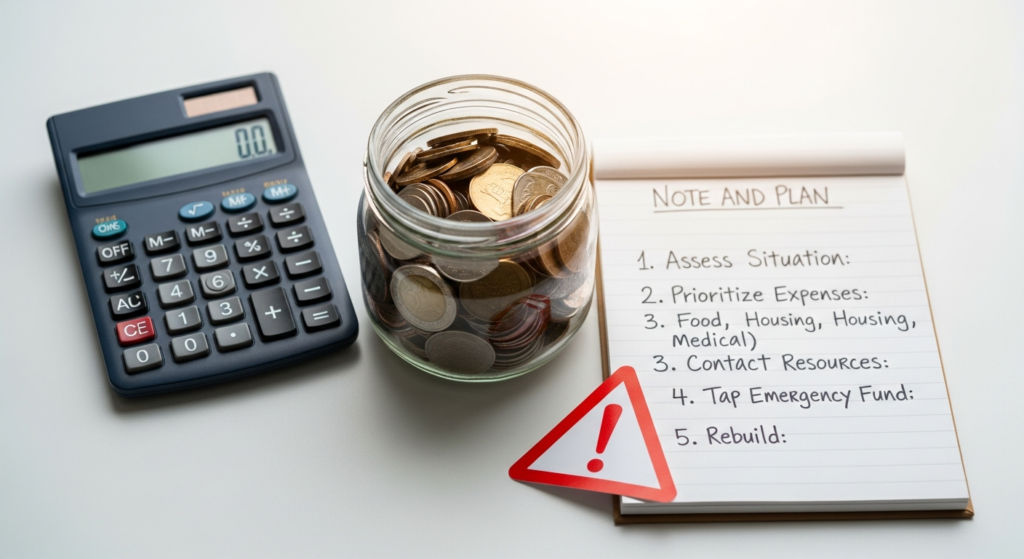
Defining and Identifying a Financial Emergency
Before diving into how to handle a financial emergency, it’s crucial to understand what truly constitutes one. Not every unexpected expense qualifies as a financial emergency; some are merely inconvenient setbacks that can be absorbed by your regular budget or short-term savings. A true financial emergency is an unforeseen, urgent event that demands immediate financial attention and, if not addressed promptly, could lead to significant financial detriment or even ruin.
Distinguishing between a minor financial hiccup and a full-blown crisis is the first step toward effective management. Here’s a breakdown of what typically qualifies:
- Job Loss or Significant Income Reduction: This is perhaps one of the most common and impactful financial emergencies. The sudden cessation or drastic reduction of your primary income stream immediately threatens your ability to cover essential living expenses.
- Major Medical Emergency: Even with health insurance, a severe illness, accident, or chronic condition can lead to exorbitant medical bills, co-pays, deductibles, and lost wages due to recovery time. These costs can quickly deplete savings and accumulate debt.
- Critical Home or Vehicle Repair: A burst pipe, a failing furnace, a leaking roof, or a major engine breakdown can be thousands of dollars to fix. These are often non-negotiable repairs because they impact your safety, shelter, or ability to commute for work.
- Unexpected Legal Expenses: Lawsuits, divorce proceedings, or other legal entanglements can incur substantial legal fees, court costs, and potential settlements, often appearing with little to no warning.
- Death or Disability of a Primary Earner: The sudden loss of income due to the death or long-term disability of a household’s main provider creates an immediate and profound financial crisis, often compounded by emotional distress.
What isn’t always an emergency? While important, things like holiday shopping, a planned vacation, or even a minor car service usually fall outside the realm of a true emergency. These are expenses that can typically be budgeted for or postponed. The key differentiator for an emergency is its unforeseen nature, its urgency, and its potential for severe financial repercussions if not immediately addressed. Recognizing this distinction helps you avoid dipping into vital emergency funds for non-critical expenses, preserving them for when they are truly needed.
The Cornerstone of Preparedness: Building an Emergency Fund
The single most critical step in learning how to handle a financial emergency is proactive preparation, and at the heart of that preparation lies a robust emergency fund. Think of your emergency fund as your financial first responder – a liquid pool of money specifically earmarked to cover essential expenses during unforeseen crises without forcing you into debt or liquidating long-term investments prematurely.
Why an Emergency Fund is Non-Negotiable
An emergency fund provides a crucial buffer against life’s uncertainties. Without one, a financial emergency forces individuals to resort to high-interest credit cards, personal loans, or even dipping into retirement accounts, which can have severe long-term consequences. It offers peace of mind, reduces stress during a crisis, and preserves your investment strategies. For those looking to grow wealth, having this safety net is paramount. It means you won’t have to interrupt your journey of, for example, learning How To Start Investing Little Money 2026 by selling off early investments just to cover an unexpected car repair.
How Much Should You Save?
The general rule of thumb for an emergency fund is to save enough to cover 3 to 6 months of essential living expenses. However, what constitutes “essential” varies, and the ideal amount can depend on several factors:
- Job Security: If your job is highly stable, 3 months might suffice. If you’re in a volatile industry or self-employed, 6 months or even more (9-12 months) might be prudent.
- Number of Income Earners: Single-income households often need a larger fund than dual-income households, where one income might still cover basics if the other is lost.
- Health Status: Individuals with chronic health conditions or dependents with special needs might benefit from a larger fund to cover potential medical costs.
- Debt Load: If you have significant debt, especially high-interest credit card debt, a larger emergency fund can prevent you from accumulating more during a crisis.
- Risk Tolerance: Some people simply feel more comfortable with a larger safety net.
To calculate your target, total up your non-negotiable monthly expenses: housing (rent/mortgage), utilities, groceries, transportation, insurance premiums, minimum debt payments, and basic communication (phone/internet). Multiply this by your desired number of months.
Where to Keep Your Emergency Fund
The characteristics of an ideal emergency fund account are liquidity, safety, and accessibility.
- High-Yield Savings Account (HYSA): This is the most recommended option. HYSAs offer better interest rates than traditional savings accounts while keeping your money readily accessible and FDIC-insured.
- Money Market Account: Similar to HYSAs, money market accounts often offer competitive interest rates and check-writing privileges, but may have higher minimum balance requirements.
- Short-Term Certificates of Deposit (CDs) – with caution: While CDs offer slightly higher rates, they lock up your money for a fixed period. If you must use CDs, consider a CD ladder (staggering maturity dates) to maintain some liquidity. Generally, less ideal for the primary emergency fund due to withdrawal penalties.
What to avoid: Do not keep your emergency fund in volatile investments like stocks, mutual funds, or even an Options Trading Beginners Guide portfolio. While these vehicles offer growth potential, they are subject to market fluctuations, meaning your principal could be significantly diminished precisely when you need it most. The primary goal of an emergency fund is preservation and accessibility, not growth. Similarly, resist the temptation to keep it in your checking account, where it might be inadvertently spent on non-emergencies.
Building Your Fund: Strategies for Success
Building a substantial emergency fund takes time and discipline.
- Automate Savings: Set up an automatic transfer from your checking account to your emergency fund savings account each payday. Treat it like a non-negotiable bill.
- Cut Expenses: Temporarily reduce discretionary spending (dining out, entertainment, subscriptions) to accelerate your savings.
- Boost Income: Consider a side hustle, selling unused items, or taking on extra shifts to funnel more money into your fund.
- Windfalls: Direct tax refunds, bonuses, or inheritances directly into your emergency fund.
Remember, building this fund is a marathon, not a sprint. Start small if you must, even $25-$50 a week adds up. The important thing is to start and be consistent. Once you have a fully funded emergency cushion, you’ll be far better positioned to handle a financial emergency without derailing your broader financial goals, including exploring opportunities like How To Start Investing Little Money 2026.
Immediate Actions When an Emergency Strikes
1. Don’t Panic: Assess the Situation Calmly
Emotional responses can lead to poor decisions. Take a deep breath. Gather all relevant information about the emergency:
- What is the exact nature of the emergency? (e.g., job loss, specific medical diagnosis, precise repair estimate).
- What is the immediate financial impact? (e.g., how much income is lost, what are the initial costs).
- What is the projected duration or total cost? (e.g., how long might unemployment last, what’s the full course of treatment).
Having a clear picture, however grim, is the first step toward finding solutions.
2. Prioritize Essential Expenses
In a financial emergency, distinguishing between needs and wants becomes critical. Your absolute priority is to cover the “four walls” of your financial stability:
- Housing: Rent or mortgage payments to keep a roof over your head.
- Food: Basic groceries to feed yourself and your family.
- Utilities: Electricity, water, gas, and essential communication (phone, internet for job searching/emergencies).
- Critical Medical Needs: Prescriptions, doctor visits for acute conditions, health insurance premiums.
- Transportation: If essential for work or medical appointments (gas, public transport fares).
All other expenses, from entertainment subscriptions to dining out, should be immediately cut or significantly reduced.
3. Review Your Budget and Identify Immediate Cuts
This is where your regular budget (or lack thereof) becomes invaluable. Pull up your financial statements for the past few months.
- Categorize Spending: Identify fixed vs. variable expenses, and essential vs. discretionary.
- Slash Discretionary Spending: Immediately cancel non-essential subscriptions, pause gym memberships, eliminate dining out, and defer any non-critical purchases. Every dollar saved can extend the life of your emergency fund.
- Negotiate Fixed Costs: While harder to cut immediately, you might be able to call service providers (cable, internet, phone) to ask about lower-cost plans or temporary payment adjustments.
Create a bare-bones “emergency budget” that focuses only on your prioritized essential expenses. This new, tightened budget will guide how you deploy your emergency fund.
4. Communicate with Creditors and Lenders
Do not wait until you miss a payment. Proactive communication is key.
- Mortgage/Rent: Contact your landlord or mortgage lender to inquire about hardship programs, forbearance options, or temporary payment deferrals. Many lenders have programs in place for those experiencing job loss or medical crises.
- Credit Card Companies: Explain your situation. They may offer temporary interest rate reductions, payment deferrals, or minimum payment adjustments. This can be crucial in preventing further interest accumulation and protecting your credit score. This proactive step can be a vital part of How To Get Out Credit Card Debt by preventing it from spiraling further out of control during a crisis.
- Utility Companies: Ask about payment plans, energy assistance programs, or temporary shut-off protection.
- Loan Providers (Car, Student, Personal): Explore deferment options. Federal student loans, for instance, often have robust deferment or forbearance programs.
Always get any agreements in writing. Be honest about your situation and proactive in seeking solutions.
5. Explore Temporary Income Streams
While dealing with the immediate crisis, concurrently look for ways to bring in any additional income, however small.
- Unemployment Benefits: If you’ve lost your job, apply for unemployment benefits immediately. There’s often a waiting period.
- Gig Economy: Consider temporary work through ride-sharing, food delivery, freelancing, or selling services online.
- Selling Unused Items: Declutter your home and sell items of value on online marketplaces.
- Part-Time or Temporary Work: Even a few hours a week can help bridge the gap.
These immediate actions create a framework for stability, allowing you to systematically address the financial emergency rather than being overwhelmed by it. They buy you time and preserve your resources for the long haul.
Accessing and Utilizing Your Emergency Resources (Beyond the Fund)
While your dedicated emergency fund is your primary line of defense, some financial emergencies can be so severe or prolonged that they exhaust even a well-stocked fund. In such cases, it becomes necessary to carefully consider other resources. This phase requires strategic thinking and a clear understanding of the implications of each option.
1. Your Emergency Fund (First Resort)
As discussed, this is what it’s there for. Access it as needed to cover your essential expenses as identified in your emergency budget. Be disciplined in its use, replenishing it as soon as your financial situation stabilizes. Using it prevents you from incurring high-interest debt or liquidating long-term investments.
2. Selling Assets (Last Resort, with Caution)
If your emergency fund is depleted or insufficient, selling non-essential assets might be necessary.
- Non-Essential Possessions: Consider selling items like extra vehicles, recreational equipment, collectibles, or valuable electronics. These generate cash without incurring debt.
- Investments: This should be a genuine last resort, especially if you’re still learning How To Start Investing Little Money 2026 or have a long-term strategy. Liquidating investments prematurely can trigger capital gains taxes (if sold at a profit) and means you miss out on potential future growth. If you must sell, prioritize those with minimal tax implications or those that have performed poorly (to potentially offset gains). Be especially cautious with complex instruments; for instance, if you’re exploring an Options Trading Beginners Guide, you’ll understand that liquidating options contracts prematurely can sometimes result in significant losses or tax complexities, so traditional stock holdings might be a ‘safer’ (though still undesirable) option for emergency cash.
Always consult with a financial advisor before making significant decisions about liquidating investment portfolios.
3. Credit Options (Carefully and Strategically)
Turning to credit can be a double-edged sword. While it provides immediate liquidity, misuse can lead to a deeper financial hole.
- Low-Interest Personal Loans: If you have good credit, a personal loan from a bank or credit union can offer a lower interest rate than credit cards. Ensure the repayment terms are manageable.
- 0% APR Credit Cards (if disciplined): Some credit cards offer introductory 0% APR periods on purchases or balance transfers. If you can qualify and are absolutely certain you can pay off the balance before the promotional period ends, this can be a way to bridge a short-term gap without incurring interest. This requires immense discipline; otherwise, it quickly becomes part of the problem addressed by How To Get Out Credit Card Debt.
- Home Equity Line of Credit (HELOC): If you own a home and have equity, a HELOC can provide access to funds at a relatively low interest rate. However, your home serves as collateral, meaning you could lose it if you default. This is a very serious decision.
Avoid at all costs: Payday loans, title loans, and high-interest cash advances from credit cards. These have exorbitant interest rates and fees that trap borrowers in a cycle of debt, making your emergency significantly worse.
4. Friends and Family (If Absolutely Necessary)
Borrowing from loved ones can provide a lifeline but comes with potential interpersonal risks.
- Be Clear and Professional: Treat it like a formal loan. Discuss the exact amount, repayment schedule, and whether interest will be charged. Put the agreement in writing.
- Only Borrow What You Need: Don’t over-borrow.
- Prioritize Repayment: Make every effort to repay your loved ones as agreed to preserve the relationship.
5. Government and Charitable Aid
Don’t overlook assistance programs designed for those facing hardship.
- Unemployment Benefits: As mentioned, apply immediately if eligible.
- Food Assistance Programs (SNAP): If your income drops significantly, you may qualify for help with groceries.
- Utility Assistance: Programs like LIHEAP (Low Income Home Energy Assistance Program) can help with heating and cooling costs.
- Medical Assistance: Medicaid or state-specific programs can provide health coverage or help with medical bills for low-income individuals.
- Local Charities and Non-profits: Many organizations offer assistance with rent, utilities, food, or specific emergency needs. Do some research in your local community.
6. Retirement Accounts (Extreme Last Resort)
Tapping into retirement funds should be considered only when all other options have been exhausted, as it can have significant long-term consequences for your future financial security.
- 401(k) Loans: Some plans allow you to borrow from your 401(k) and repay yourself with interest. If you leave your job before it’s repaid, the outstanding balance may become due immediately or be treated as a taxable withdrawal.
- Hardship Withdrawals: Some 401(k) plans allow for hardship withdrawals for specific reasons (e.g., medical expenses, preventing foreclosure). These are subject to income tax and a 10% early withdrawal penalty if you’re under 59½.
- IRA Withdrawals: Similar to 401(k) hardship withdrawals, these are generally subject to income tax and a 10% penalty for early withdrawal, though some exceptions apply (e.g., unreimbursed medical expenses over a certain percentage of AGI).
Always understand the tax implications and penalties before touching retirement funds. The goal is to avoid compromising your future self to solve a present crisis.
Navigating Debt During a Crisis
A financial emergency often brings with it the specter of accumulating or exacerbating debt. Effectively managing debt during a crisis is crucial to prevent a temporary setback from becoming a long-term financial burden. This section expands on the proactive communication mentioned earlier and delves deeper into strategic debt management.
Prioritizing Debt Payments
When funds are scarce, you can’t pay everyone. You must prioritize your debts based on their implications.
- Secured Debts First: These are debts backed by collateral, such as your mortgage (your home) or auto loan (your car). Defaulting on these can lead to foreclosure or repossession, which compounds your problems significantly. Make these payments a top priority after essential living expenses.
- High-Interest Debts: After secured debts, focus on those with the highest interest rates, typically credit cards or payday loans. These debts grow the fastest, making them the most expensive to carry and the hardest to escape. Even paying slightly more than the minimum can save you substantial money in the long run. This is a core principle in any strategy for How To Get Out Credit Card Debt.
- Unsecured Debts (Lower Interest): Personal loans, student loans (especially federal ones with flexible repayment options), and medical bills often have lower interest rates or more flexible terms than credit cards. While important, they may take a secondary priority if funds are extremely tight, provided you have communicated with the lenders.
Communicating with Creditors for Hardship Programs
As emphasized, contact your creditors proactively. Many institutions have formal or informal hardship programs.
- Mortgage Lenders: Inquire about forbearance (temporary suspension of payments), loan modification (changing terms of the loan), or deferment.
- Credit Card Companies: Ask for a temporary reduction in interest rates, a temporary waiver of late fees, or a temporary reduction in minimum payments. Some may offer a payment plan.
- Student Loan Servicers: Federal student loans offer income-driven repayment plans, deferment, and forbearance options that can temporarily pause or reduce payments. Private student loans may have fewer options but are worth exploring.
- Medical Bill Negotiators: Hospitals and healthcare providers are often willing to negotiate bills, offer payment plans, or even reduce the total amount owed, especially if you’re uninsured or underinsured and demonstrate financial hardship.
When speaking with creditors, be honest about your situation, clearly state what you can afford, and ask for specific programs. Document all conversations, including dates, names, and what was agreed upon.
Avoiding Predatory Loans
In desperation, it’s easy to fall prey to lenders offering quick cash with crippling terms. These include:
- Payday Loans: Extremely high annual percentage rates (APRs) often exceeding 400%. They are designed to trap you in a cycle of debt.
- Car Title Loans: You put up your car title as collateral. If you can’t repay, you lose your vehicle.
- High-Interest Installment Loans: While not always as bad as payday loans, some online lenders offer personal loans at very high rates to borrowers with poor credit.
These types of loans will always make your financial emergency worse. Exhaust all other options before considering such avenues.
Seeking Credit Counseling
If you feel overwhelmed by debt or are struggling to negotiate with creditors, consider reaching out to a non-profit credit counseling agency. Organizations accredited by the National Foundation for Credit Counseling (NFCC) can:
- Assess Your Financial Situation: Help you create a realistic budget during the crisis.
- Negotiate with Creditors: They can often work on your behalf to set up debt management plans (DMPs) with lower interest rates or consolidated payments.
- Educate You: Provide guidance on financial management and debt reduction strategies.
Credit counseling is a valuable resource, especially when you are trying to understand How To Get Out Credit Card Debt and prevent new debt from forming during a crisis. It offers objective advice and a structured path forward. By taking these steps, you can navigate the choppy waters of debt during a financial emergency, preventing it from capsizing your long-term financial well-being.
Rebuilding and Fortifying Your Financial Future Post-Emergency
Surviving a financial emergency is a significant accomplishment, but the journey doesn’t end there. The period immediately following the crisis is crucial for rebuilding your financial foundation and fortifying it against future shocks. This phase is about learning from the experience, repairing any damage, and enhancing your resilience.
1. Replenishing Your Emergency Fund
This should be your absolute top financial priority once the immediate crisis has passed and your income stream is stable. If you had to dip into your emergency fund, or if you didn’t have one and now recognize its vital importance, recommit to saving.
- Automate Savings: Set up automatic transfers back into your high-yield savings account.
- Maintain Frugality: Continue with your “emergency budget” for a while longer, directing the saved funds towards replenishing your cushion.
- Windfalls: Use any bonuses, tax refunds, or unexpected income to quickly rebuild the fund.
Consider this fund as the bedrock upon which all other financial goals, including investing, are built. You shouldn’t realistically consider advanced strategies like those in an Options Trading Beginners Guide, or even basic investing like How To Start Investing Little Money 2026, until your emergency fund is fully restored.
2. Reviewing and Enhancing Insurance Coverage
A financial emergency often highlights gaps in your insurance coverage. Use this experience as a catalyst to review and potentially upgrade your policies.
- Health Insurance: Is your deductible too high? Are your out-of-pocket maximums manageable? Explore different plans during open enrollment periods.
- Disability Insurance: This is critical, especially if you’re a primary earner. Both short-term and long-term disability can replace a portion of your income if you’re unable to work due to illness or injury.
- Life Insurance: Ensure you have adequate coverage to protect your dependents if you were to pass away.
- Homeowner’s/Renter’s Insurance: Review your policy limits, deductibles, and specific coverage (e.g., flood, earthquake, sewer backup) to ensure you’re adequately protected against property damage.
- Auto Insurance: Evaluate collision, comprehensive, and liability limits.
- Umbrella Policy: Consider an umbrella policy for additional liability coverage beyond what your home and auto policies provide.
Insurance is a preventative measure against financial emergencies. Investing in the right coverage can prevent a single incident from derailing your finances.
3. Revisiting Your Budget and Spending Habits
The emergency budget you created during the crisis can be a template for a more disciplined, sustainable budget moving forward.
- Identify Lasting Cuts: What discretionary spending did you eliminate that you genuinely don’t miss? Can you permanently reduce or remove these expenses?
- Optimize Variable Costs: Have you found more economical ways to shop for groceries, reduce utility consumption, or manage transportation costs?
- Create a “Sinking Fund” for Predictable Surprises: While not true emergencies, things like car repairs, home maintenance, or annual insurance premiums are predictable. Start saving small amounts monthly into dedicated “sinking funds” for these, so they don’t become mini-emergencies.
The goal is to move from a crisis-driven budget to a proactive, resilient one that maximizes savings and minimizes financial stress.
4. Strategizing for Future Financial Resilience
Once your emergency fund is rebuilt and your budget is solid, you can shift your focus back to growth and long-term planning.
- Debt Reduction: If you accumulated debt during the emergency, make an aggressive plan to pay it off. Refer back to strategies like the snowball or avalanche method (key components of How To Get Out Credit Card Debt) to systematically eliminate high-interest balances.
- Retirement Savings: Get back on track with your 401(k), IRA, or other retirement contributions. If you had to tap into these, prioritize replenishing them.
- Investing: With your safety net secure, you can confidently explore investment opportunities. For beginners, understanding How To Start Investing Little Money 2026 provides a pathway to gradual wealth accumulation. This might involve low-cost index funds, ETFs, or diversified portfolios.
- Advanced Strategies (with caution): For
Recommended Resources
Related reading: Best Budgeting Apps 2025 (Fin3go).
You might also enjoy Honey Vs Rakuten Cashback Comparison from Gold Points.