
Why Open a Brokerage Account? Your Gateway to Financial Growth
In a world of evolving financial landscapes, simply letting your money sit idle in a traditional savings account often means losing purchasing power due to inflation. A brokerage account, on the other hand, offers the potential for your capital to grow significantly over time by investing in a diverse range of assets. Understanding the fundamental advantages can provide the motivation needed to take that crucial first step.
Access to Diverse Investment Opportunities
One of the primary benefits of a brokerage account is the unparalleled access it provides to a vast array of investment vehicles. Unlike a basic bank account, which primarily offers low-interest savings options, a brokerage account allows you to invest in:
- Stocks: Ownership stakes in publicly traded companies, offering potential for capital appreciation and dividends.
- Exchange-Traded Funds (ETFs): Baskets of securities that trade like stocks, providing diversification across various sectors, industries, or asset classes with a single investment.
- Mutual Funds: Professionally managed portfolios of stocks, bonds, or other investments, offering diversification and expert management.
- Bonds: Debt instruments issued by governments or corporations, offering fixed income streams and typically lower risk than stocks.
- Options and Futures: More complex derivatives that allow investors to speculate on future price movements or hedge existing positions.
- Cryptocurrencies: Many modern brokerages are now offering access to digital assets like Bitcoin and Ethereum, though these come with higher volatility.
This diversity means you can tailor your investment portfolio to match your risk tolerance, financial goals, and time horizon, from conservative income generation to aggressive growth strategies.
Building Wealth and Reaching Financial Goals
The power of compounding is one of the most significant advantages of investing through a brokerage account. When your investments generate returns, and those returns are reinvested, they begin to earn returns themselves, creating an exponential growth effect over time. This makes brokerage accounts indispensable tools for:
- Retirement Planning: While dedicated retirement accounts like IRAs and 401(k)s are crucial, a taxable brokerage account can supplement these, providing additional flexibility for early retirement or other long-term goals.
- Saving for Major Purchases: Whether it’s a down payment on a house, your children’s education, or a significant life event, a brokerage account can help your savings grow faster than traditional methods.
- Achieving Financial Independence: By consistently investing and allowing your capital to compound, you can build a substantial nest egg that generates passive income, eventually leading to financial freedom.
Flexibility and Control
Most brokerage accounts offer a high degree of flexibility. You can typically deposit funds whenever you choose, withdraw them (subject to settlement periods and tax implications), and buy or sell investments at your discretion during market hours. Modern online platforms provide you with direct control over your portfolio, allowing you to execute trades, monitor performance, and access research tools from virtually anywhere with an internet connection.
Types of Brokerage Accounts: Finding Your Fit
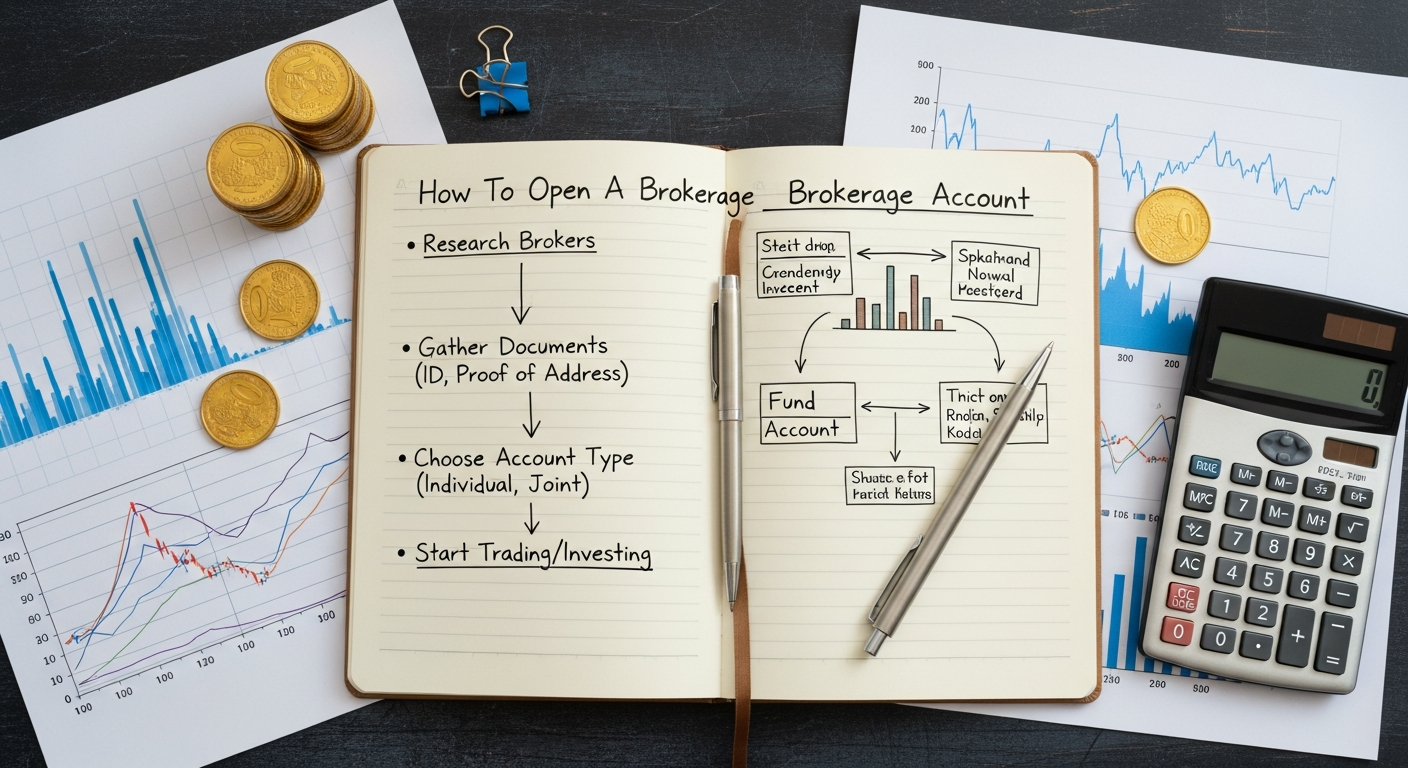
Before you dive into selecting a specific brokerage, it’s essential to understand the different types of accounts available. Each serves a unique purpose and comes with distinct rules, tax implications, and investment capabilities. Choosing the right account type is a foundational step in your investment journey.
Individual Brokerage Accounts
This is the most common and straightforward type of account. An individual brokerage account is owned and controlled by one person. All investments within the account, and any profits or losses, belong solely to that individual. They are also solely responsible for any taxes due on capital gains or dividends.
- Pros: Simple to open and manage, complete control over investments.
- Cons: No tax advantages beyond standard deductions, all gains are typically taxable in the year they are realized.
- Best For: Individuals looking to invest for general wealth growth, short-term goals, or supplementing retirement savings.
Joint Brokerage Accounts
A joint brokerage account is owned by two or more individuals, typically spouses or family members. There are generally two forms:
- Joint Tenants with Rights of Survivorship (JTWROS): If one account holder passes away, ownership of the entire account automatically transfers to the surviving account holder(s), bypassing probate.
- Tenants in Common (TIC): Each owner holds a specific percentage of the account, and upon the death of one owner, their share is passed on to their estate, not automatically to the other account holders.
- Pros: Shared management and ownership, simpler asset transfer upon death for JTWROS.
- Cons: Both parties typically need to authorize transactions, potential for disputes, shared tax liability.
- Best For: Married couples, domestic partners, or family members who wish to invest collaboratively for shared goals.
Retirement Brokerage Accounts (IRAs)
Individual Retirement Accounts (IRAs) are specialized brokerage accounts designed specifically for retirement savings, offering significant tax advantages. There are two main types:
- Traditional IRA: Contributions may be tax-deductible, reducing your taxable income in the year you contribute. Earnings grow tax-deferred, and you pay taxes only when you withdraw funds in retirement.
- Roth IRA: Contributions are made with after-tax dollars, meaning they are not tax-deductible. However, qualified withdrawals in retirement are entirely tax-free.
Both types have annual contribution limits and eligibility requirements. They are powerful tools for long-term wealth accumulation specifically for retirement.
- Pros: Significant tax benefits (deductible contributions or tax-free withdrawals), powerful compounding over decades.
- Cons: Contribution limits, penalties for early withdrawals (before age 59½), specific income eligibility for Roth IRAs.
- Best For: Anyone saving for retirement, maximizing tax efficiency for long-term growth.
Custodial Accounts (UGMA/UTMA)
Custodial accounts are designed to hold assets for a minor until they reach the age of majority (typically 18 or 21, depending on the state). The Uniform Gifts to Minors Act (UGMA) and Uniform Transfers to Minors Act (UTMA) are the legal frameworks for these accounts. A custodian (usually a parent or guardian) manages the account for the benefit of the minor, who becomes the legal owner of the assets upon reaching adulthood.
- Pros: Allows adults to invest for children, potential for significant growth over a long horizon, assets are irrevocably owned by the child.
- Cons: Limited control for the custodian once the child reaches majority, potential impact on financial aid eligibility, “kiddie tax” rules may apply to investment income.
- Best For: Parents, grandparents, or other relatives looking to save and invest for a child’s future, such as college or a down payment on a home.
Trust Accounts
- Pros: Control over asset distribution, estate planning benefits, potential for tax efficiency, protection of assets.
- Cons: Complex to set up and administer, legal fees involved, less flexibility than individual accounts.
- Best For: Individuals with significant assets, complex estate planning needs, or those wishing to provide for specific beneficiaries under defined conditions.
Carefully consider your personal circumstances, financial goals, and tax situation when deciding which type of brokerage account is best for you. Consulting with a financial advisor can be invaluable in making this choice.
Choosing the Right Brokerage: Key Considerations for 2026
Selecting the right brokerage firm is as crucial as choosing the right account type. The landscape of financial services is constantly evolving, with new platforms and features emerging regularly. As you consider your options for 2026, evaluate brokers based on a range of factors that align with your investment style, budget, and support needs.
Fees and Commissions
Brokerage fees can significantly eat into your returns over time. Understanding the fee structure is paramount, especially for those learning How To Start Investing Little Money 2026.
- Trading Commissions: Many major online brokers now offer commission-free trading for stocks and ETFs. However, commissions may still apply to options, mutual funds, futures, or cryptocurrency trades.
- Account Maintenance Fees: Some brokers charge monthly or annual fees, though these are becoming less common, particularly for accounts meeting certain balance requirements.
- Inactivity Fees: Be aware of fees for not making a certain number of trades or maintaining a minimum balance.
- Transfer Fees: If you decide to move your account to another broker, you may incur fees for outgoing transfers (ACAT fees).
- Miscellaneous Fees: Look out for fees related to paper statements, wire transfers, or margin interest if you plan to borrow against your investments.
For budget-conscious investors or those starting with smaller amounts, prioritizing brokers with minimal or no commissions and low to no maintenance fees is essential.
Investment Options and Product Availability
Ensure the brokerage offers the types of investments you’re interested in.
- Basic Investments: Most brokers offer stocks, ETFs, mutual funds, and bonds.
- Advanced Investments: If you plan to trade options, futures, forex, or cryptocurrencies, verify that the broker supports these products and provides adequate tools for them.
- ESG and Impact Investing: For investors guided by an Impact Investing Esg Guide 2026, check if the broker offers a robust selection of ESG (Environmental, Social, and Governance) funds, sustainable ETFs, or screening tools to identify socially responsible companies. Some brokers also provide curated portfolios focused on impact investing.
Trading Platform and User Experience
The quality of the brokerage’s trading platform can significantly impact your investing experience.
- Ease of Use: Is the platform intuitive for beginners, or is it designed for experienced traders?
- Desktop vs. Mobile: Does the broker offer robust desktop software, a user-friendly web platform, and a comprehensive mobile app?
- Tools and Features: Look for real-time data, charting tools, research reports, screeners, watchlists, and educational resources. Advanced traders might require features like algorithmic trading, API access, or level II data.
Research and Educational Resources
Especially for new investors, access to quality research and educational content is invaluable.
- Market Research: Does the broker provide proprietary research, analyst reports, news feeds, and economic calendars?
- Educational Content: Look for articles, webinars, tutorials, and courses that can help you understand market concepts, investment strategies, and platform functionality.
- Screening Tools: Effective stock and fund screeners can help you identify investment opportunities that meet your specific criteria.
Customer Service
When you encounter an issue or have a question, reliable customer support is crucial.
- Availability: Are representatives available 24/7 or only during business hours?
- Contact Methods: Do they offer phone, email, live chat, or in-person support?
- Quality of Support: Read reviews or test their support channels yourself to gauge responsiveness and helpfulness.
Security and Regulation
Your investments must be safe and protected.
- SIPC Protection: Ensure the broker is a member of the Securities Investor Protection Corporation (SIPC), which protects securities customers of its members up to $500,000 (including $250,000 for cash) in case the brokerage firm fails.
- FINRA Regulation: Verify that the broker is regulated by the Financial Industry Regulatory Authority (FINRA).
- Cybersecurity: Look for features like two-factor authentication, encryption, and other measures to protect your account from unauthorized access.
By carefully weighing these factors, you can select a brokerage firm that not only meets your current needs but also supports your growth as an investor over the long term.
The Step-by-Step Process: How to Open Your Account

Once you’ve identified the type of account you need and chosen a suitable brokerage firm, the actual process of opening the account is relatively straightforward. Most online brokers have streamlined this procedure, allowing you to complete it digitally in a matter of minutes.
Step 1: Gather Necessary Documents and Information
Before you begin the application, ensure you have the following information and documents readily available. Having these on hand will significantly speed up the process:
- Personal Identification: A valid government-issued ID, such as a driver’s license, passport, or state ID. You may need to provide a digital copy or photograph.
- Social Security Number (SSN) or Taxpayer Identification Number (TIN): Required for tax reporting purposes.
- Contact Information: Your current residential address, phone number, and email address.
- Employment Information: Your employer’s name and address, and potentially your occupation.
- Financial Information: Details about your income, net worth, and investment experience. This helps the broker assess your suitability for certain investments and comply with regulatory requirements (Know Your Customer – KYC and Anti-Money Laundering – AML rules).
- Bank Account Details: Your bank account number and routing number for funding your new brokerage account.
Step 2: Complete the Online Application Form
Navigate to the chosen brokerage’s website and look for a prominent “Open Account” or “Sign Up” button. The application will typically guide you through several sections:
- Account Type Selection: Reconfirm whether you’re opening an individual, joint, IRA, or custodial account.
- Personal Information: Fill in your name, address, date of birth, SSN, and employment details.
- Financial Profile: Answer questions about your annual income, liquid net worth, investment objectives (e.g., growth, income, speculation), and risk tolerance (e.g., conservative, moderate, aggressive).
- Investment Experience: Disclose any prior experience with different types of investments (stocks, options, futures, etc.). This helps the broker ensure you understand the risks involved.
- Beneficiary Information: For individual accounts, you may be asked to name beneficiaries to inherit your assets upon your death, often bypassing probate.
- Regulatory Disclosures: You’ll need to review and agree to terms and conditions, privacy policies, and other regulatory disclosures, including those related to SIPC protection.
Be honest and accurate with all information provided. Misrepresentation can lead to issues later on.
Step 3: Review and Submit Your Application
Before final submission, most online platforms allow you to review all the information you’ve entered. Take this opportunity to double-check for any errors or omissions. Once satisfied, electronically sign the application (by typing your name or checking a box) and submit it.
Step 4: Identity Verification
After submission, the brokerage firm will need to verify your identity. This is a crucial step to prevent fraud and comply with federal regulations. Often, this process is automated and happens instantly by cross-referencing your provided information with public databases. In some cases, you might be asked to:
- Upload copies of your identification documents (driver’s license, passport).
- Provide additional proof of address (e.g., a utility bill).
- Answer security questions based on your credit history.
Once your identity is verified, your account will typically be approved within a few business days, or even instantly in many cases.
Funding Your Brokerage Account
With your account successfully opened and verified, the next critical step is to fund it. This is how you transfer money from your bank account into your brokerage account, making it available for investment.
Common Funding Methods
- Electronic Funds Transfer (ACH): This is the most common and often free method. You link your bank account to your brokerage account using your bank’s routing and account numbers. ACH transfers typically take 1-3 business days to clear, though some brokers may allow you to trade with a portion of the funds immediately.
- Wire Transfer: For larger amounts or if you need funds to be available quickly, a wire transfer is faster, usually clearing within one business day. However, banks often charge a fee for outgoing wire transfers, and brokerages may charge for incoming ones.
- Check Deposit: You can mail a personal check to your brokerage firm. This is usually the slowest method, as it involves mail delivery and then the check clearing process, which can take up to several business days.
- Account Transfer (ACAT): If you already have an investment account at another brokerage firm, you can transfer your existing assets (stocks, ETFs, mutual funds, cash) directly to your new account. This is known as an Automated Customer Account Transfer (ACAT) and can take 5-10 business days. While some brokers may reimburse transfer fees, your old broker might charge an outgoing transfer fee.
- Rollover from a Retirement Account: If you’re funding an IRA, you might be rolling over funds from an old 401(k) or another IRA. This involves specific paperwork and procedures to maintain the tax-advantaged status of your retirement savings.
Initial Deposit Considerations
Many brokers have no minimum initial deposit, making investing accessible to everyone, aligning perfectly with the principles of How To Start Investing Little Money 2026. However, some may require a minimum deposit to access certain features, specific investment products (like margin trading), or to avoid inactivity fees.
Consider how much you can comfortably invest without impacting your emergency savings or other critical financial obligations. It’s often recommended to start small and contribute regularly, leveraging dollar-cost averaging to build your portfolio over time.
Navigating Your New Account and Beyond
Opening and funding your brokerage account is a significant achievement, but it’s just the beginning. The next phase involves familiarizing yourself with your new platform, making your first investments, and establishing healthy investing habits for long-term success.
Getting Started with Your First Investments
Once your funds have settled, you’re ready to make your first trade. Take your time to explore the platform:
- Platform Navigation: Understand where to find research tools, your account balance, portfolio holdings, and the trading interface.
- Placing an Order: Learn how to search for a specific stock or ETF, understand different order types (market order, limit order), and execute a trade. Start with small, manageable trades to get comfortable.
- Diversification: Remember the importance of diversification. Don’t put all your eggs in one basket. Consider investing in a mix of assets across different sectors or geographies to mitigate risk. ETFs and mutual funds are excellent tools for instant diversification.
If you’re unsure where to begin, many brokers offer model portfolios or robo-advisor services that can help you create a diversified portfolio based on your risk tolerance and financial goals.
Monitoring Your Portfolio and Understanding Statements
Regularly monitoring your portfolio doesn’t mean obsessing over daily fluctuations, but rather keeping an eye on your overall progress and ensuring your investments still align with your goals.
- Account Statements: Brokerages typically provide monthly or quarterly statements detailing your transactions, holdings, and account performance. Review these carefully for accuracy.
- Performance Tracking: Utilize the platform’s tools to track the performance of your individual investments and your overall portfolio.
- Rebalancing: Periodically review your asset allocation. Over time, some investments may grow faster than others, shifting your portfolio’s risk profile. Rebalancing involves selling some of your outperforming assets and buying more of your underperforming ones to bring your portfolio back to your target allocation.
Continuous Learning and Financial Planning
The world of investing is dynamic, and continuous learning is key to long-term success. Leverage the educational resources provided by your broker and reputable financial news sources. Stay informed about market trends, economic indicators, and new investment strategies.
Beyond investing, remember that your brokerage account is one piece of a larger financial puzzle. Before you dive deep into investing, ensure your financial house is in order. For many, this includes addressing high-interest liabilities. Understanding How To Get Out Credit Card Debt is often a foundational step towards building a robust investment portfolio, as high-interest debt can negate investment gains and create significant financial stress. Prioritize debt repayment and building an emergency fund before aggressively investing.
Regularly review your financial goals and adjust your investment strategy as your life circumstances change. Consider consulting a financial advisor to help you navigate complex decisions and develop a holistic financial plan.
Frequently Asked Questions
Recommended Resources
Learn more about this topic in Best Deal Websites For Discounts 2026 at Gold Points.
For more on how to open, see Small Business Accounting Basics For Beginners on AssetBar.
What Is Cryptocurrency Trading for Beginners in 2026?
Cryptocurrency trading involves buying and selling digital currencies like Bitcoin and Ethereum on various platforms known as exchanges. Unlike traditional investing, which often focuses on long-term growth, trading is more about capitalizing on short-term market movements. The key difference between trading and investing (or HODLing) is the time horizon and strategy. Trading is typically short-term and speculative, while investing is long-term and focused on gradual wealth accumulation.
Best Crypto Exchanges for Beginners
Choosing the right crypto exchange is crucial for beginners. Here are some criteria to consider:
| Exchange | Fee Structure | KYC Requirement | Fiat Support | Security Features | Beginner Suitability |
|---|---|---|---|---|---|
| Binance | Low maker/taker fees | Yes | Yes | 2FA, cold storage | High |
| Coinbase | Higher fees | Yes | Yes | Insurance, 2FA | Very High |
| Kraken | Competitive fees | Yes | Yes | Advanced security | High |
How to Start Crypto Trading Step by Step
Starting your journey in crypto trading involves several key steps:
- Choose an Exchange: Select a platform that meets your needs in terms of fees, security, and ease of use.
- Create an Account: Complete the registration process, including KYC verification.
- Fund Your Account: Deposit fiat currency or cryptocurrency to start trading.
- Place Your First Trade: Use basic order types like market or limit orders to buy or sell crypto.
- Secure Your Assets: Transfer funds to a secure wallet and enable 2FA for added security.
How to Manage Risk in Crypto Trading
Effective risk management is crucial for beginners:
| Risk Rule | Formula | Example | Beginner Threshold |
|---|---|---|---|
| Risk per Trade | 1-2% of capital | $1000 account, risk $10-$20 | 1% |
| Position Sizing | Capital * Risk % | $1000 * 1% = $10 | Conservative |
| Stop-Loss | Set at 5% below entry | Buy at $100, stop at $95 | Essential |
What Fees and Taxes Do Beginners Pay?
Understanding the costs involved in crypto trading is essential:
- Trading Fees: Maker and taker fees vary by exchange.
- Withdrawal Fees: Charged when transferring crypto out of the exchange.
- Network Fees: Costs associated with blockchain transactions.
- Taxable Events: Selling crypto for a profit is subject to capital gains tax.
Security and Custody: Protecting Your Funds
Security is paramount in cryptocurrency trading:
- Two-Factor Authentication (2FA): Adds an extra layer of security.
- Cold Wallets: Store your crypto offline to prevent hacks.
- Seed Phrases: Securely back up your wallet recovery phrases.
- Phishing Awareness: Be cautious of fraudulent emails and websites.
Understanding Crypto Market Risks
The crypto market is known for its volatility and unique risks:
- Extreme Volatility: Prices can fluctuate dramatically in short periods.
- Rug Pulls: Scams where developers abandon a project and take investors’ funds.
- Low Liquidity: Can lead to slippage and difficulty in executing trades.
- Stablecoin Depeg: Risk of stablecoins losing their peg to fiat currencies.
From Our Network
- TikTok marketing strategy for brands (en Pagerelease)
- how to improve employee productivity in your company (en Kacerr)
- passive income ideas 2025 (en Fin3go)