How to Pick Winning Stocks in 2026: A Strategy for Low-Cost Retail Investors
The financial landscape of 2026 is defined by the democratization of data and the stabilization of global macroeconomics. For the retail investor, the challenge is no longer accessing information, but filtering the noise to identify true value. As we move deeper into this decade, the era of “easy money” fueled by near-zero interest rates has been replaced by a market that rewards fiscal discipline, sustainable growth, and technological integration. Picking winning stocks in 2026 requires a blend of traditional fundamental analysis and a modern understanding of how artificial intelligence reshapes corporate efficiency. For the cost-conscious trader, success hinges on maximizing “Alpha” while ruthlessly minimizing overhead, commissions, and tax slippage. This guide provides a comprehensive framework for navigating the 2026 equity markets, ensuring that your portfolio isn’t just a collection of tickers, but a calculated engine for wealth generation. By focusing on high-conviction setups and low-fee execution, you can compete with institutional giants on your own terms.
1. The 2026 Economic Landscape: Why Fundamentals Still Rule
In 2026, the global economy has moved past the volatility of the early 2020s, settling into a new “normal” where capital has a distinct cost. For stock pickers, this means the “growth at any price” model is officially obsolete. To pick a winning stock today, you must prioritize companies with robust balance sheets and the ability to generate organic free cash flow.
When evaluating a potential investment, the primary metric remains the Price-to-Earnings (P/E) ratio, but it must be viewed through the lens of the PEG ratio (Price/Earnings to Growth). A company with a high P/E might still be a “bargain” if its earnings are projected to grow significantly due to market share capture or technological breakthroughs. In 2026, investors are specifically looking for “Quality Growth”—companies that can increase their margins without taking on excessive debt.
Furthermore, pay close attention to the debt-to-equity ratio. With interest rates having stabilized at higher levels than the previous decade, companies burdened with “zombie debt” are facing massive headwinds. Winning stocks in 2026 are often those that utilized the previous years to deleverage, leaving them with the dry powder necessary to acquire struggling competitors or reinvest in R&D.
2. Leveraging AI-Driven Analysis Tools Without the High Price Tag
One of the greatest advantages for the 2026 retail investor is the availability of institutional-grade analytical tools at a fraction of the historical cost. You no longer need a five-figure terminal subscription to perform complex data modeling. AI-powered stock screeners and sentiment analysis tools have become standard for the cost-conscious trader.
To pick winners, utilize free or low-cost screeners to filter for specific “alpha factors.” These might include:
* **Earnings Surprise Trends:** Companies that consistently beat analyst expectations over four consecutive quarters.
* **Insider Buying:** Identifying where C-suite executives are putting their own capital.
* **R&D Efficiency:** Measuring how much revenue is generated for every dollar spent on research.
However, the “winning” strategy in 2026 involves using AI to do the heavy lifting of data aggregation while you perform the final qualitative check. AI can summarize 10-K filings and earnings call transcripts in seconds, highlighting shifts in management tone or specific mentions of supply chain pressures. By automating the “discovery” phase, you save time—the most valuable commodity for a retail trader—allowing you to focus on the “conviction” phase of your investment process.
3. The “Low-Cost” Advantage: Minimizing Fees and Churn to Boost Alpha
For the retail investor, the greatest threat to a winning portfolio isn’t always a bad stock pick; it’s the erosion of gains through unnecessary costs. In 2026, the gap between “gross returns” and “net returns” is where the battle for wealth is won or lost.
First, focus on brokerage fees. While zero-commission trading is the standard, many “free” platforms make their money through Payment for Order Flow (PFOF), which can result in poor execution prices (slippage). To pick winning stocks effectively, use a broker that offers transparent, low-cost routing to ensure you get the best possible entry price. Over a year of trading, saving even $0.02 per share on entries can add up to thousands of dollars in saved capital.
Second, consider the “tax cost” of your strategy. Picking a winning stock only to sell it in three months triggers short-term capital gains taxes, which can eat up to 37% of your profits depending on your bracket. The most successful retail investors in 2026 are adopting a “buy and hold” or “position trading” mentality, aiming for long-term capital gains status (holding for over a year). By reducing “churn”—the frequency with which you flip stocks—you keep more of your winning gains working for you through the power of compounding.
4. Thematic Investing: Identifying the 2026 Growth Engines
To find the massive winners of 2026, you must look where the “puck is going.” Thematic investing involves identifying long-term structural shifts in the economy and picking the companies best positioned to capitalize on them. Currently, several themes are dominating the 2026 market:
**The Infrastructure of AI:** While the initial “AI boom” focused on chipmakers, the 2026 winners are often found in the “second derivative” plays. This includes specialized cooling systems for data centers, proprietary software integrators, and cybersecurity firms that protect AI models from adversarial attacks.
**The Energy Transition 2.0:** By 2026, the focus has shifted from speculative “green energy” startups to the companies building the actual electrical grid. Look for firms involved in copper mining, high-voltage transmission, and battery storage technology. These are the “picks and shovels” of the energy revolution.
**The Longevity Economy:** As global populations age, healthcare companies focusing on “Geroscience” and chronic disease management (like GLP-1 weight loss drugs and their successors) are seeing massive tailwinds. The winning stocks in this sector are those with strong patent portfolios and high barriers to entry.
5. Risk Management for the Modern Trader: Protecting Your Capital
Picking a winning stock is only half the battle; keeping the money is the other half. In the fast-moving 2026 market, volatility can wipe out a retail account that lacks a disciplined risk management framework.
The “Golden Rule” for cost-minimizing traders is to never risk more than 1-2% of your total account equity on a single trade. This is achieved through proper position sizing. If you have a $10,000 account, you should not be losing more than $200 if your thesis is proven wrong. By calculating your “stop-loss” point before you enter the trade, you can determine exactly how many shares to buy.
Furthermore, diversification in 2026 doesn’t mean owning 50 different stocks. For a retail investor, “diworsification” is a real risk. Owning too many stocks makes it impossible to track news and earnings for all of them. Instead, aim for 8-12 high-conviction positions across different sectors. This provides enough concentration to see meaningful gains when you pick a winner, but enough protection so that one bad earnings report doesn’t sink your entire portfolio.
6. Developing a Repeatable Stock-Picking Framework
Consistency is what separates the professional-grade retail trader from the gambler. To pick winners in 2026, you need a repeatable “checklist” that every potential stock must pass. A typical framework might look like this:
1. **Market Cap & Liquidity:** Is the stock liquid enough to enter and exit without moving the price? (Usually $500M+ market cap).
2. **The “Moat”:** Does the company have a competitive advantage (brand, patent, network effect) that prevents others from stealing its margins?
3. **Relative Strength:** Is the stock outperforming its sector peers and the S&P 500? In 2026, winners tend to show “relative strength” even during market pullbacks.
4. **Institutional Sponsorship:** Are “smart money” managers (hedge funds, pension funds) increasing their positions? You can track this through 13F filings.
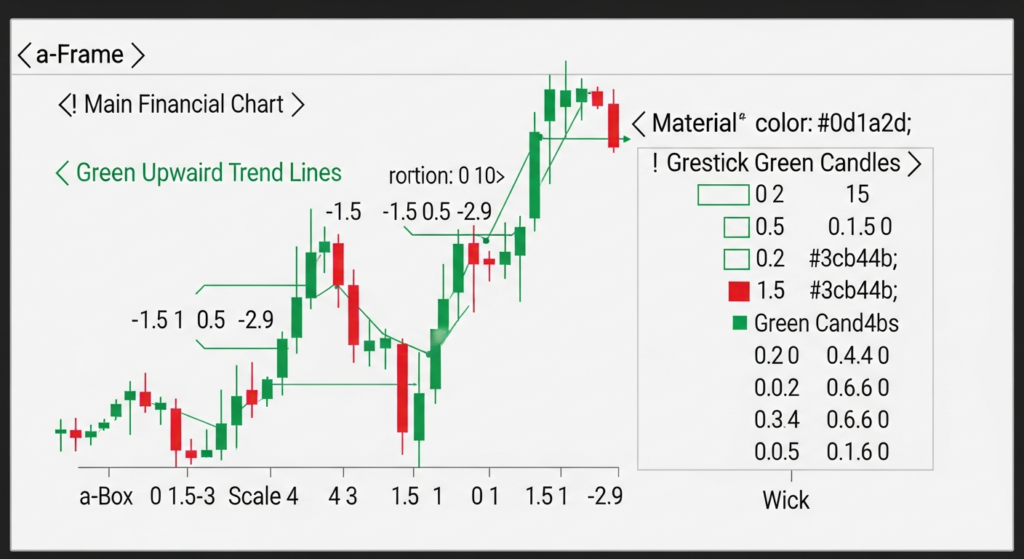
5. **Technical Setup:** Is the stock in a clear uptrend? Buying a fundamentally sound company that is in a technical downtrend is often “catching a falling knife.” Wait for the price action to confirm the fundamental story.
By adhering to a strict checklist, you remove emotion from the equation. Emotional trading is the primary reason retail investors underperform the market. In 2026, the “cool-headed” investor who sticks to their process will invariably outperform the one chasing the latest social media hype.
***
FAQ: Picking Winning Stocks in 2026
**Q1: Which sectors are most promising for retail investors in 2026?**
A: Technology remains a leader, but the focus has shifted toward “Applied AI” and Cybersecurity. Additionally, the industrial sector—specifically those involved in domestic manufacturing and grid modernization—offers significant value for investors looking for stability combined with growth.
**Q2: How much money do I need to start picking individual stocks?**
A: With fractional shares and zero-commission trading becoming the global standard in 2026, you can start with as little as $100. However, to see meaningful gains after the time spent on research, a starting capital of $1,000–$5,000 is often recommended to allow for some diversification.
**Q3: Can a retail investor really beat the S&P 500 in 2026?**
A: Yes, but it requires discipline. The S&P 500 is a formidable benchmark because it is market-cap weighted. Retail investors can beat it by being more “nimble”—investing in mid-cap companies ($2B–$10B) that are too small for giant institutional funds to buy without moving the price, but large enough to have proven business models.
**Q4: What are the best free tools for stock research in 2026?**
A: Finviz remains a top choice for technical screening. For fundamental data, sites like TradingView and various AI-integrated news aggregators offer comprehensive data sets for free. Always cross-reference your data with the SEC’s EDGAR database to ensure you are looking at official filings.
**Q5: Is dividend investing still a “winning” strategy?**
A: In 2026, “Dividend Growth” is often a better strategy than “High Yield.” Stocks with a high yield are often “value traps” with declining businesses. Instead, look for companies that consistently increase their dividends by 10% or more annually. This indicates strong cash flow and management’s confidence in the future.
***
Conclusion
Picking winning stocks in 2026 is an exercise in precision and patience. The market of today does not tolerate sloppiness; it demands that retail investors behave with the same rigor as professionals. By focusing on fundamental health, leveraging modern AI tools to streamline your research, and maintaining a fanatical devotion to low-cost execution, you position yourself in the top tier of the investing public.
Remember that the ultimate goal of picking stocks is not just to “hit a home run,” but to build a resilient, growing portfolio that can withstand various economic cycles. The winners of 2026 are those who understand that wealth is built through a combination of smart selection and cost-efficiency. Stay disciplined, keep your expenses low, and let the data guide your decisions. The opportunities in this market are vast for those who have the framework to find them.