What Are Index Funds, Anyway? The Foundation of Passive Investing
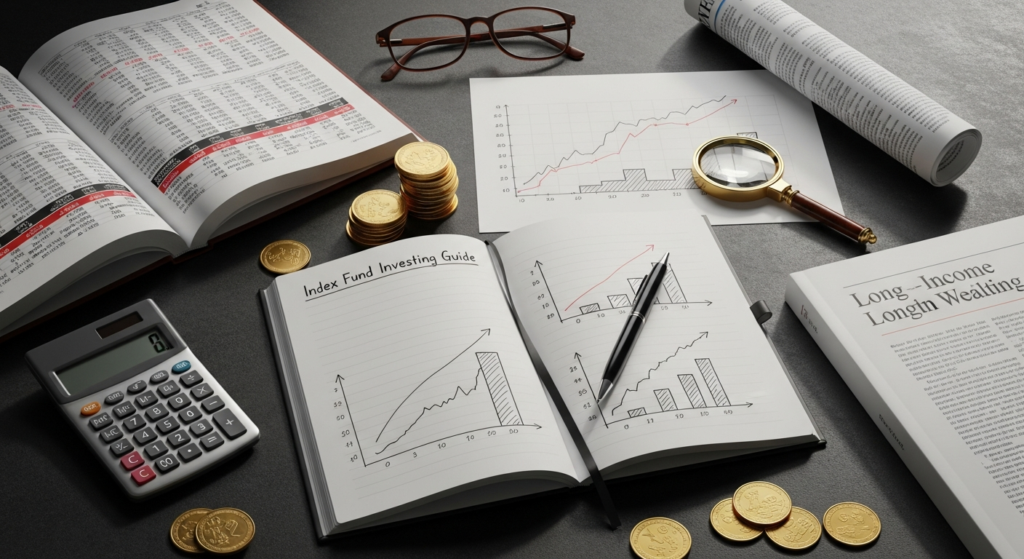
Before diving into strategies for 2026, it’s crucial to solidify our understanding of what index funds truly are. At their core, an index fund is a type of mutual fund or exchange-traded fund (ETF) with a portfolio constructed to match or track the components of a financial market index, such as the S&P 500, the Dow Jones Industrial Average, or a bond index. Unlike actively managed funds, where fund managers constantly buy and sell securities in an attempt to outperform the market, index funds simply aim to replicate the performance of their chosen benchmark.
Consider the S&P 500 index, for instance. It comprises 500 of the largest publicly traded companies in the United States. An S&P 500 index fund would hold shares in these same 500 companies, weighted proportionally to their size within the index. This passive approach has several profound implications for investors:
- Broad Diversification: By holding a multitude of securities across various sectors, index funds inherently offer significant diversification. Investing in an S&P 500 index fund, for example, gives you a tiny stake in 500 companies, spreading your risk far more effectively than investing in just a handful of individual stocks. This diversification is a key pillar of risk management.
- Lower Costs: This is where index funds truly shine, especially for readers of Trading Costs. Because there’s no need for expensive research teams or active trading decisions, index funds typically have significantly lower expense ratios (the annual fee charged as a percentage of your investment) compared to actively managed funds. These lower costs directly translate into higher net returns for investors over the long term, as every dollar saved in fees is a dollar that remains invested and compounds. In 2026, as competitive pressures continue, we can expect these low costs to persist, making index funds an even more attractive proposition.
- Simplicity: For many, the complexity of picking individual stocks or evaluating hundreds of actively managed funds is a barrier to entry. Index funds simplify the investment process dramatically. You choose an index you believe in (e.g., broad market, international, bonds), invest, and let the market do its work.
- Market Performance: Historically, a vast majority of actively managed funds fail to beat their benchmark index over extended periods, especially after accounting for fees. Index funds, by design, aim to match the market’s performance, ensuring you capture market returns rather than underperforming them.
Understanding these foundational aspects is the first step towards building a robust and cost-effective investment strategy for 2026.
Why Index Funds Are Still King in 2026: The Enduring Advantages
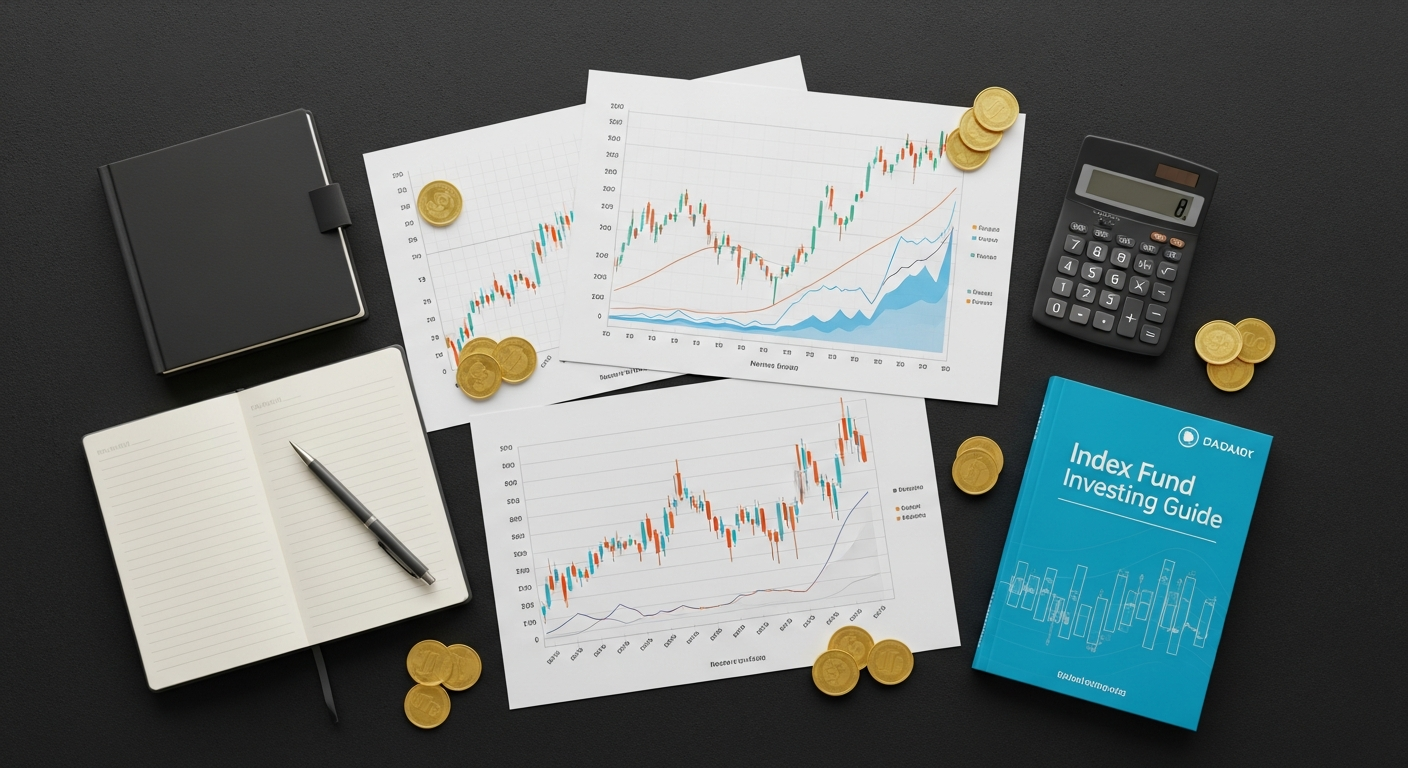
As we look ahead to 2026, the financial markets will undoubtedly present new challenges and opportunities. Yet, the core advantages that have made index funds so popular over the past few decades remain not just relevant, but arguably more critical than ever.
The Power of Compounding with Minimal Drag
The magic of compound interest is often cited as the eighth wonder of the world. With index funds, you harness this power with minimal “drag” from fees. Imagine two identical investment portfolios earning 7% annually before fees. If one has an expense ratio of 0.1% and the other 1.0%, the seemingly small difference of 0.9% can translate into tens or hundreds of thousands of dollars over a few decades. For investors building wealth in 2026, every basis point saved in fees is a significant advantage, directly impacting the final value of their portfolio.
Unbeatable Diversification and Risk Management
Market volatility is a constant. While 2026 might bring periods of economic growth or retraction, an index fund tracking a broad market like the total U.S. stock market or a global equity index inherently provides a wide safety net. If one sector or company struggles, its impact on your overall portfolio is mitigated by the performance of hundreds or thousands of other holdings. This diversification doesn’t eliminate risk, but it significantly reduces idiosyncratic risk – the risk associated with a single company or industry.
Emotional Discipline and Long-Term Focus
One of the biggest enemies of investor returns is often the investor themselves. Reacting emotionally to market dips, chasing hot stocks, or trying to time the market frequently leads to poor decisions. Index fund investing fosters a long-term, disciplined approach. By committing to investing in a broad market index, you remove the temptation to tinker with your portfolio based on daily news cycles or fleeting trends. This “set it and forget it” mentality (with periodic rebalancing) is a powerful tool for achieving financial goals, allowing you to ride out market fluctuations and benefit from the market’s historical upward trend over decades.
Accessibility for Every Investor
The advent of fractional shares and the proliferation of user-friendly brokerage platforms mean that virtually anyone can start investing in index funds, even with very little money. This accessibility makes index funds an equitable tool for wealth creation, democratizing investment opportunities that were once the exclusive domain of the wealthy. The trend towards greater accessibility is only expected to strengthen by 2026, lowering barriers further.
In essence, index funds offer a scientifically sound, cost-effective, and emotionally intelligent approach to investing that is perfectly suited for the complexities and opportunities of 2026 and beyond.
Getting Started: Your Index Fund Investing Journey in 2026
Step 1: Define Your Financial Goals and Time Horizon
Before you invest a single dollar, understand what you’re investing for. Are you saving for retirement (a long-term goal, 30+ years)? A down payment on a house (mid-term, 5-10 years)? Or perhaps a child’s education? Your goals will dictate your risk tolerance and the appropriate asset allocation. Generally, longer time horizons allow for greater exposure to equities (stocks), while shorter horizons might warrant a more conservative approach with a higher allocation to bonds.
Step 2: Assess Your Risk Tolerance
How comfortable are you with the value of your investments fluctuating? While index funds mitigate specific company risk, they are still subject to market volatility. A 20% market downturn is not uncommon over a decade. Understanding your psychological comfort with such swings is crucial. Be honest with yourself; investing beyond your comfort level can lead to panic selling at the worst possible time.
Step 3: Choose the Right Investment Account
The type of account you use can have significant tax implications:
- Tax-Advantaged Retirement Accounts: For long-term goals like retirement, prioritize accounts like a 401(k) (especially if your employer offers a match – free money!), Roth IRA, or Traditional IRA. These accounts offer tax benefits that can dramatically boost your returns over time.
- Taxable Brokerage Accounts: For non-retirement goals or if you’ve maxed out your retirement accounts, a standard brokerage account is suitable.
- Health Savings Accounts (HSAs): If you have a high-deductible health plan, an HSA offers a triple tax advantage (tax-deductible contributions, tax-free growth, tax-free withdrawals for qualified medical expenses) and can be invested in index funds.
Step 4: Select a Reputable Brokerage Platform
In 2026, the competition among online brokerages is intense, largely benefiting the investor. Look for platforms with:
- Low or No Trading Commissions: Many major brokerages now offer commission-free trading for stocks and ETFs.
- Low Expense Ratios: When selecting specific index funds or ETFs, scrutinize their expense ratios. Vanguard, Fidelity, Schwab, and iShares are known for their low-cost offerings.
- User-Friendly Interface: Especially important for beginners.
- Customer Support and Educational Resources: Good support can be invaluable when you have questions.
Step 5: Decide on Your Asset Allocation
This is arguably the most critical decision. Asset allocation refers to how you divide your investment portfolio among different asset classes, primarily stocks (equities) and bonds (fixed income). A common rule of thumb is the “110 minus your age” rule for your stock allocation (e.g., if you’re 30, 110-30 = 80% stocks, 20% bonds), but this is just a starting point. Your risk tolerance and goals should guide this decision. For instance, a target-date fund automatically adjusts this allocation over time, becoming more conservative as you approach your target retirement date.
Step 6: Choose Your Index Funds or ETFs
For most beginners, a simple portfolio of 1-3 funds is sufficient:
- Total U.S. Stock Market Index Fund/ETF: Covers virtually all publicly traded U.S. companies (e.g., VTI, ITOT, FZROX).
- Total International Stock Market Index Fund/ETF: Provides exposure to global markets, crucial for diversification (e.g., VXUS, IXUS, FZILX).
- Total U.S. Bond Market Index Fund/ETF: Adds stability and income (e.g., BND, AGG).
Keep an eye on the ticker symbol, the fund’s expense ratio, and what specific index it tracks.
Step 7: Automate Your Investments (How To Start Investing Little Money 2026)
This is key for consistent wealth building, especially if you’re starting with small amounts. Set up automatic transfers from your checking account to your investment account on a regular basis (e.g., weekly, bi-weekly, or monthly). This strategy, known as dollar-cost averaging, means you buy more shares when prices are low and fewer when prices are high, smoothing out your average purchase price over time. Even $50 or $100 a month consistently invested can grow substantially over decades. The emphasis for How To Start Investing Little Money 2026 should be on consistency and automation, not the initial sum.
Step 8: Rebalance Periodically
Over time, your asset allocation will drift as some investments perform better than others. Rebalancing means adjusting your portfolio back to your target allocation (e.g., selling some overperforming stocks to buy more underperforming bonds). This can be done annually and helps maintain your desired risk level.
By following these steps, you can confidently begin your index fund investing journey and lay a strong foundation for your financial future in 2026.
Navigating the Index Fund Landscape: Types and Strategies for 2026
While the concept of index funds is simple, the variety available in 2026 is extensive. Understanding the different types and how to strategically combine them is crucial for building a portfolio tailored to your specific needs.
Understanding Different Market Indices
Not all indices are created equal. They can be broadly categorized by:
- Market Cap: Large-cap (S&P 500), Mid-cap, Small-cap. Each segment has different risk/return characteristics.
- Geography: U.S. (total market, specific sectors), International (developed markets, emerging markets), Global. International diversification is vital to reduce country-specific risk.
- Asset Class: Equities (stocks), Fixed Income (bonds), Commodities, Real Estate (REITs).
- Specific Sectors/Industries: Technology, Healthcare, Energy, etc. While tempting, concentrating too much on sector-specific funds can reduce diversification.
- Factor-Based (Smart Beta) Indices: These track indices that are weighted by factors other than market capitalization, such as value, size, momentum, or low volatility. While more complex, they offer a middle ground between passive and active investing.
ETFs vs. Mutual Funds: Which to Choose?
Index funds can be structured as either Exchange-Traded Funds (ETFs) or traditional index mutual funds. Both are excellent choices for passive investing, but they have key differences:
- ETFs:
- Trade like stocks on an exchange throughout the day.
- Can be bought or sold at any time during market hours at their current market price.
- Often have slightly lower expense ratios than comparable mutual funds.
- Can be more tax-efficient in taxable accounts due to their creation/redemption mechanism.
- Excellent for How To Start Investing Little Money 2026 due to fractional share availability on many platforms.
- Index Mutual Funds:
- Are priced once a day after the market closes.
- Can be bought or sold only at that day’s net asset value (NAV).
- Often allow for automatic investments in dollar amounts, making it easy to invest a fixed sum regularly.
- Some may have minimum initial investment requirements, though many large brokerages have eliminated these for their own funds.
For most long-term investors, the choice between an ETF and an index mutual fund boils down to personal preference and the specific features offered by their chosen brokerage. Both provide the core benefits of low-cost, diversified index exposure.
Building a Diversified Index Fund Portfolio for 2026
A simple, yet powerful, portfolio often involves a combination of a few broad-market index funds:
- The “Three-Fund Portfolio”:
- Total U.S. Stock Market Index Fund/ETF
- Total International Stock Market Index Fund/ETF
- Total U.S. Bond Market Index Fund/ETF
This combination provides broad exposure to global equities and domestic bonds, offering excellent diversification across asset classes and geographies. The allocation between these three funds would depend on your age, risk tolerance, and financial goals.
- Target-Date Funds: For those who prefer maximum simplicity, a single target-date fund automatically invests in a diversified mix of stocks and bonds and adjusts its allocation to become more conservative as the target retirement date approaches. Just be mindful of their expense ratios, as they can sometimes be slightly higher than individual index funds.
The key is to keep it simple, diversified, and low-cost. Avoid chasing fads or trying to pick “winning” sectors. The goal of index fund investing is to capture the market’s overall return, not to beat it through complex strategies.
Beyond Returns: Integrating ESG and Impact Investing in 2026
As investor awareness grows and global challenges become more pressing, the demand for investments that align with personal values has surged. This brings us to Impact Investing ESG Guide 2026, a crucial consideration for many modern investors. ESG (Environmental, Social, and Governance) investing is no longer a niche concept but a significant force shaping the investment landscape.
What is ESG Investing?
ESG investing involves considering a company’s performance on environmental, social, and governance factors alongside traditional financial metrics. These factors include:
- Environmental (E): A company’s impact on the natural world, including climate change policies, resource management, pollution, and renewable energy adoption.
- Social (S): How a company manages its relationships with employees, suppliers, customers, and the communities where it operates. This includes labor practices, diversity and inclusion, human rights, and product safety.
- Governance (G): A company’s leadership, executive pay, audits, internal controls, and shareholder rights. Strong governance ensures accountability and transparency.
The Rise of ESG Index Funds in 2026
The good news for index fund investors is that the market for ESG-focused index funds and ETFs has matured considerably. In 2026, you’ll find a wide array of options designed to track indices composed of companies with strong ESG profiles. These funds typically exclude companies involved in controversial industries (e.g., tobacco, firearms, fossil fuels) or those with poor ESG track records, while overweighting companies that are leaders in sustainability and ethical practices.
How to Integrate ESG into Your Index Fund Portfolio:
- Identify Your Priorities: What ESG issues matter most to you? Climate change? Social justice? Ethical governance? Different ESG funds emphasize different criteria.
- Research ESG Index Funds/ETFs: Look for funds that explicitly state their ESG methodology and the specific index they track. Major providers like Vanguard, iShares, Fidelity, and Schwab offer a growing selection of ESG-screened index funds. Examples might include funds tracking the MSCI ESG Leaders Index or the S&P 500 ESG Index.
- Evaluate Expense Ratios: While ESG funds may sometimes have slightly higher expense ratios than their non-ESG counterparts, competitive options with low fees are increasingly available. Always prioritize low costs.
- Consider Impact: True “impact investing” often goes a step further than ESG, actively seeking to generate measurable social and environmental impact alongside financial returns. While pure impact investing is more common in private markets, some public equity funds are designed with a stronger impact lens.
- Beware of Greenwashing: As ESG investing becomes mainstream, some companies and funds might exaggerate their sustainability efforts. Look for transparent reporting and robust screening methodologies. Independent ratings agencies (like MSCI, Sustainalytics) can provide valuable insights into a fund’s underlying ESG quality.
By thoughtfully integrating ESG index funds into your portfolio, you can align your investments with your values without sacrificing the diversification and low-cost benefits that make index funds so powerful. This approach allows you to contribute to a more sustainable future while still building your wealth in 2026.
Common Pitfalls and How to Avoid Them in 2026
While index fund investing is praised for its simplicity and effectiveness, it’s not entirely immune to missteps. Being aware of common pitfalls can help you stay on track and maximize your long-term returns in 2026.
1. Market Timing: The Ultimate Folly
The biggest mistake any investor can make, regardless of the investment vehicle, is trying to time the market – attempting to buy low and sell high based on predictions of future market movements. This is incredibly difficult, even for professional investors. For index fund investors, the temptation might be to pull money out during a downturn or wait for a “better entry point.” This often leads to missing the market’s best days, which frequently occur shortly after its worst. The solution is simple: stay invested and stick to your plan. Dollar-cost averaging, as discussed earlier, helps mitigate the impact of market fluctuations.
2. Chasing Performance or Fads
It’s natural to be drawn to investments that have performed exceptionally well recently. However, past performance is not indicative of future results. Chasing the “hottest” sector or country fund can lead to buying high and selling low when the trend inevitably reverses. Similarly, beware of thematic index funds that focus on very narrow industries (e.g., specific technology sub-sectors, meme stocks). While they might offer explosive growth, they also come with significantly higher risk and less diversification than broad market funds. For 2026, stick to diversified, broad-market index funds that capture the overall growth of the economy.
3. Over-Diversification or “Too Many Funds Syndrome”
While diversification is crucial, it’s possible to have too many funds. Holding 10 different S&P 500 ETFs, for example, doesn’t add diversification; it just adds complexity. A simple three-fund portfolio (total U.S. stock, total international stock, total U.S. bond) is often sufficient for excellent diversification. Adding too many niche funds can dilute your returns and make rebalancing a chore without providing significant additional benefit.
4. Ignoring Your Asset Allocation or Rebalancing
Setting an initial asset allocation (e.g., 80% stocks, 20% bonds) is only the first step. Over time, market movements will cause your portfolio to drift from your target. If stocks perform well, your stock allocation might creep up to 85%. If bonds lag, they might fall to 15%. Failing to rebalance periodically means your risk exposure will change without your intention. Rebalancing, typically once a year, helps you maintain your desired risk level and can even lead to a slight performance boost by forcing you to “sell high and buy low.”
5. Focusing Too Much on Daily Fluctuations
The stock market is inherently volatile in the short term. Checking your portfolio daily can lead to anxiety and impulsive decisions. Remember that index fund investing is a long-term strategy. Focus on your financial goals, your savings rate, and the power of compounding, rather than the daily ups and downs of the market. Consider checking your portfolio quarterly or annually, aligning with your rebalancing schedule.
6. Underestimating the Impact of Taxes and Fees
Even with low-cost index funds, taxes and fees can erode returns over time. Always be mindful of expense ratios. In taxable accounts, understand the difference between qualified dividends, ordinary dividends, and capital gains. Utilize tax-advantaged accounts like 401(k)s and IRAs whenever possible to shield your investments from annual taxation. For 2026, continue to prioritize low-cost funds and optimize your tax strategy.
By being mindful of these common pitfalls, you can enhance your discipline and significantly improve your chances of long-term investing success with index funds.
Maximizing Your Investment: A Holistic Financial Approach
Successful index fund investing isn’t a standalone endeavor; it’s a critical component of a broader, holistic financial strategy. To truly maximize your investment potential in 2026, you must ensure your overall financial house is in order. This includes crucial steps like building an emergency fund and, importantly, addressing high-interest debt.
1. Build a Robust Emergency Fund
Before you commit significant funds to long-term investments, ensure you have a safety net. An emergency fund is typically 3-6 months’ worth of essential living expenses, stored in an easily accessible, liquid account like a high-yield savings account. This fund acts as a buffer against unexpected events – job loss, medical emergencies, car repairs – preventing you from having to sell your investments at an inopportune time, potentially incurring losses or missing out on future growth.
2. Prioritize High-Interest Debt: How To Get Out Credit Card Debt
This is a non-negotiable step before or alongside your investing efforts. High-interest debt, particularly credit card debt, can cripple your financial progress. The interest rates on credit cards often range from 15% to 25% or even higher. It’s highly unlikely you’ll consistently earn investment returns that exceed these debt interest rates after taxes and inflation. Therefore, paying off high-interest debt is, in essence, a guaranteed, risk-free return on your money equal to the interest rate you avoid paying. Here’s a strategy for How To Get Out Credit Card Debt:
- Stop Accumulating New Debt: Cut up cards if necessary, or freeze them.
- Create a Debt Repayment Plan:
- Debt Avalanche: List all your debts from highest interest rate to lowest. Pay minimums on all but the highest interest debt, then throw every extra dollar at that one until it’s gone. Repeat.
- Debt Snowball: List debts from smallest balance to largest. Pay minimums on all but the smallest, then attack that one. The psychological wins can be motivating.
- Consider Consolidation: A lower-interest personal loan or balance transfer card (if you can pay it off before the promotional period ends) can help manage high-interest credit card debt.
- Budget Aggressively: Find areas to cut expenses and free up more money for debt repayment.
It makes little sense to invest for a potential 7-10% return while simultaneously paying 20% interest on debt. Eliminating this financial drag is often the most impactful “investment” you can make.
3. Maximize Tax-Advantaged Accounts
As mentioned, prioritize 401(k)s, IRAs, and HSAs. The tax benefits (deductions, tax-free growth, tax-free withdrawals) provide an incredible boost to your long-term wealth accumulation that a taxable brokerage account simply cannot match. Ensure you’re taking full advantage of employer matches in your 401(k) – that’s essentially free money.
4. Understand Your Tax Efficiency
Even in taxable accounts, you can be tax-efficient. Index ETFs are often more tax-efficient than traditional index mutual funds due to their in-kind redemption mechanisms. Also, holding investments for over a year qualifies them for long-term capital gains tax rates, which are typically lower than ordinary income tax rates. Be mindful of tax-loss harvesting opportunities if applicable, but don’t let tax considerations dictate poor investment decisions.
5. Consider Professional Financial Guidance (If Needed)
While index fund investing is straightforward, complex financial situations (estate planning, significant wealth, business ownership) might benefit from the advice of a fee-only financial advisor. They can help integrate your index fund strategy into a comprehensive financial plan that addresses all aspects of your financial life in 2026.
By adopting a holistic financial approach, you ensure that your index fund investments are built on a solid foundation, allowing them to grow unhindered and effectively contribute to your long-term financial security.
The Future of Index Fund Investing Post-2026
As we cast our gaze beyond 2026, the landscape of index fund investing is poised for continued evolution, yet its core tenets of diversification, low cost, and market-matching returns will undoubtedly remain central to sound financial strategy. What might the future hold?
Continued Innovation and Lower Costs
The competition among fund providers is unlikely to abate. This means investors can anticipate even lower expense ratios across a broader range of index funds and ETFs. We may see further innovation in “zero-fee” funds, though these typically recoup costs through other means or by serving as loss leaders for larger financial ecosystems. Fractional share investing, already prevalent, will become universal, further lowering the barrier to entry for How To Start Investing Little Money 2026 and enabling truly granular portfolio construction.
Sophistication in ESG and Thematic Indexing
The Impact Investing ESG Guide 2026 highlights a growing trend that will only accelerate. Post-2026, we can expect more refined ESG screening methodologies, potentially incorporating AI and big data to analyze corporate sustainability performance with greater precision. Thematic indexing, while requiring caution, will also likely become more sophisticated, offering investors exposure to megatrends like renewable energy, artificial intelligence, or biotech through diversified, rules-based funds, rather than speculative individual stocks. The challenge will be to ensure these remain diversified enough to truly be “index” funds and not just thinly disguised active strategies.
Personalized Indexing and Direct Indexing
A significant development on the horizon is the rise of “direct indexing.” Instead of buying shares of an index fund, investors (typically those with larger portfolios) directly own the individual stocks that make up an index. This allows for greater customization – for instance, excluding specific companies based on personal values (even beyond standard ESG screens), or optimizing for tax-loss harvesting opportunities on individual stock positions. While currently more accessible to affluent investors, technology could democratize direct indexing, bringing its benefits to a wider audience over time.
The Enduring Power of Simplicity
Despite these innovations, the fundamental appeal of a simple, diversified, low-cost index fund portfolio will endure. The core message will remain: for most investors, consistently investing in a broad-market index fund over the long term is the most reliable path to wealth creation. The temptation to overcomplicate, to seek out “alpha” where none exists, will always be present, but the data will continue to support the elegance and effectiveness of passive indexing.
In conclusion, the principles of index fund investing are robust and time-tested. As we move through 2026 and into the future, these vehicles will continue to be indispensable tools for building financial security, empowering investors to capture market returns efficiently and align their capital with their values. Your journey starts now, armed with knowledge and discipline.
Top Index Funds Compared: Expense Ratios, Holdings, and Performance
Not all index funds are equal. Expense ratios have a compounding impact over decades — a 0.50% higher fee costs you roughly $30,000 on a $100,000 portfolio over 20 years. Here are the benchmarks:
| Fund | Ticker | Expense Ratio | Index Tracked | Holdings |
|---|---|---|---|---|
| Vanguard S&P 500 ETF | VOO | 0.03% | S&P 500 | ~503 U.S. large-cap stocks |
| SPDR S&P 500 ETF | SPY | 0.0945% | S&P 500 | ~503 U.S. large-cap stocks |
| Vanguard Total Stock Market ETF | VTI | 0.03% | CRSP US Total Market | ~3,600 U.S. stocks (all caps) |
| Fidelity ZERO Total Market | FZROX | 0.00% | Fidelity U.S. Total Investable Market | ~2,700 U.S. stocks |
| Vanguard Total Intl Stock ETF | VXUS | 0.07% | FTSE Global All Cap ex US | ~8,600 international stocks |
| Vanguard Total Bond Market ETF | BND | 0.03% | Bloomberg U.S. Aggregate Bond Index | ~10,000+ U.S. bonds |
| iShares Core S&P 500 ETF | IVV | 0.03% | S&P 500 | ~503 U.S. large-cap stocks |
Note: FZROX is only available at Fidelity. VOO, VTI, VXUS, BND are available at any major broker. SPY has highest liquidity (useful for active traders; long-term investors should prefer VOO at lower cost).
Portfolio Rebalancing: Keeping Your Asset Allocation on Track
Rebalancing is the process of realigning your portfolio back to your target allocation as market movements cause drift. For example, a 90% stocks / 10% bonds portfolio may drift to 96% stocks after a bull market — increasing risk beyond your target. Rebalancing restores the balance by selling what’s grown above target and buying what’s fallen below.
How often to rebalance: Most financial planners recommend annual rebalancing (calendar method) or threshold-based rebalancing when any allocation drifts more than 5% from target. Vanguard research found that annual or semi-annual rebalancing effectively maintains risk targets without excessive transaction costs. In tax-advantaged accounts (Roth IRA, 401k), rebalance freely — no tax implications. In taxable accounts, direct new contributions to underweight assets first to minimize taxable events. The Vanguard LifeStrategy and Target Retirement fund series handle automatic rebalancing internally — worth considering for investors who prefer full automation.
Frequently Asked Questions About Index Fund Investing in 2026
Q: Is 2026 a good time to start investing in index funds?
A: Yes, any time is a good time to start investing in index funds, provided you have a long-term perspective (5+ years). Trying to time the market is a losing strategy. By starting in 2026 and investing consistently, you can take advantage of dollar-cost averaging and the power of compounding over decades, regardless of short-term market fluctuations.
Q
Recommended Resources
For more on index fund investing, see Video Marketing Trends 2026 on Page Release.
Check out How To Earn More Points On Everyday Purchases on Gold Points for a deeper dive.
Major Index Providers & Indices
Index funds don’t choose their own holdings — they track indices constructed by independent index providers. Understanding who builds these indices helps you evaluate what you’re actually buying:
| Index Provider | Key Indices | Coverage |
|---|---|---|
| S&P Dow Jones Indices | S&P 500, S&P 1500 | 500 largest US companies |
| MSCI | MSCI World, MSCI ACWI, MSCI EM | Global & emerging markets |
| FTSE Russell | Russell 2000, FTSE All-World | Small-cap US & global |
| CRSP | CRSP US Total Market Index | ~4,000 US stocks (used by Vanguard) |
The late John Bogle, founder of Vanguard and creator of the first retail index fund in 1976, famously argued that passive indexing beats the vast majority of active managers over long periods. The Bogleheads community — millions of followers of Bogle’s investment philosophy — advocate for the simplicity of low-cost index funds as the cornerstone of personal investing.
What’s New in Index Fund Investing in 2026
- Fee compression continues: Fidelity offers FZROX and FZILX at 0.00% expense ratio (zero-fee index funds). Vanguard, BlackRock, and Schwab are competing with sub-0.03% offerings across core equity index funds.
- Direct indexing democratized: Services like Fidelity Managed FidFolios, Schwab Personalized Indexing, and BlackRock Aperio now allow investors with $5,000–$25,000 minimums to own individual stocks comprising an index — enabling custom ESG screens and tax-loss harvesting on individual positions.
- Bitcoin and crypto spot ETFs: In 2024, the SEC approved spot Bitcoin ETFs (BlackRock’s iShares Bitcoin Trust / IBIT, Fidelity’s Wise Origin Bitcoin Fund / FBTC, Invesco Galaxy). By 2026, these have attracted hundreds of billions in AUM, bringing institutional-grade index investing to digital assets.
- Contribution limits (2026): IRS 401(k) contribution limit is $23,500 (under 50) / $31,000 (50+ with catch-up). Roth/Traditional IRA limit is $7,000 ($8,000 for 50+). HSA limit: $4,300 (individual) / $8,550 (family).
- Sequence-of-returns risk: A growing focus for those approaching retirement — the order in which investment returns occur matters, not just the average. Index fund investors use bond allocation and bucket strategies to protect against poor early-retirement returns.
Bond Index Funds & Tax-Efficient Placement
For investors building a complete portfolio, understanding bond indices and smart placement across account types is crucial:
Key Bond Indices and Funds
- Bloomberg US Aggregate Bond Index (the “Agg”): The most widely tracked broad US bond index. Covers investment-grade US government bonds, corporate bonds, and mortgage-backed securities. Tracked by BND (Vanguard) and AGG (iShares) at 0.03% expense ratio each.
- TIPS (Treasury Inflation-Protected Securities): US government bonds with principal that adjusts with CPI inflation. Tracked by SCHP (0.03%) and VTIP (0.04%). Particularly valuable during high-inflation periods.
- Municipal Bond Funds: Issue interest that is federal-tax-exempt (and sometimes state-tax-exempt). Valuable for investors in high tax brackets using taxable accounts. Vanguard’s VTEAX and iShares’ MUB are popular options.
- Short-term vs. Long-term Duration: Bond duration measures sensitivity to interest rate changes. Long-term bonds (10-30 year) are more volatile when rates change; short-term bonds are more stable. In 2026, with interest rate uncertainty, many advisors recommend intermediate or short-term bond funds for their lower rate sensitivity.
Asset Location Strategy
Asset location — which account type holds which investments — significantly impacts after-tax returns:
- Tax-advantaged accounts (IRA/401k): Place bond funds and REITs here, as their income is taxed as ordinary income. The tax-sheltered environment eliminates annual taxation on interest.
- Taxable brokerage: Place broad-market equity ETFs here. They are tax-efficient (minimal capital gains distributions) and benefit from lower long-term capital gains tax rates.
- Wash-sale rule (IRS): If you sell a fund at a loss for tax-loss harvesting, you cannot repurchase the “substantially identical” fund within 30 days before or after the sale. For example, selling VTI at a loss and immediately buying ITOT (same index) may trigger the wash-sale rule. Solution: swap to a similar but non-identical ETF (e.g., VTI to SCHB) for 30 days, then switch back if desired.
- Capital gains distributions: Mutual index funds can distribute capital gains to all shareholders when they rebalance — even shareholders who didn’t sell. ETFs avoid this via in-kind creation/redemption. This is a key tax advantage of ETFs in taxable accounts.
What are the best index funds for beginners in 2026?
For most beginners, three funds cover everything: (1) VTI (Vanguard Total Stock Market, 0.03%) or FZROX (Fidelity Zero, 0.00%) for US equities; (2) VXUS (Vanguard Total International, 0.07%) or FZILX (Fidelity Zero, 0.00%) for international equities; (3) BND (Vanguard Total Bond Market, 0.03%) or AGG (iShares, 0.03%) for bonds. This three-fund portfolio, popularized by Vanguard founder John Bogle and the Bogleheads community, provides broad diversification at the lowest possible cost. Adjust the equity/bond ratio based on age and risk tolerance — younger investors typically hold 80-90% equity, reducing toward 60% as retirement approaches.
Should I place index funds in my taxable or tax-advantaged account?
Tax location matters significantly over long periods. The general rule: put bond index funds in tax-advantaged accounts (IRA/401k) since interest income is taxed at ordinary rates; keep stock index ETFs in taxable accounts since they’re tax-efficient (minimal capital gains distributions) and benefit from lower long-term capital gains rates when held over 1 year. Municipal bond funds are an exception — their federal-tax-exempt income makes them suitable in taxable accounts for high-earner investors. HSAs offer a triple tax advantage and are excellent for any investment held long-term, since qualified medical withdrawals are completely tax-free.
How do I choose between an index fund and an ETF for the same index?
Both track the same index, so the choice comes down to account type and broker. In a taxable brokerage account: favor ETFs (more tax-efficient, no capital gains distributions). In a Roth/Traditional IRA or 401k: either works equally well since tax efficiency is irrelevant inside tax-sheltered accounts — choose based on expense ratio and whether your broker offers fractional shares. Fidelity’s ZERO funds (FZROX, FZILX) have 0% expense ratios but are only available at Fidelity. Vanguard’s ETFs (VTI, VXUS) are portable across any brokerage. Check if your 401k plan offers index fund options — most modern plans include low-cost index funds from Vanguard, Fidelity, or BlackRock.