Investing in Renewable Energy Stocks 2026: The Retail Investor’s Guide to Low-Cost Green Growth
The global transition toward a decarbonized economy is no longer a speculative “future” scenario; it is the current reality of the global financial markets. As we look toward 2026, the landscape for renewable energy stocks has shifted from a niche playground for venture capitalists to a cornerstone of the modern retail portfolio. For the retail investor, the challenge has evolved from finding “if” green energy is viable to determining “how” to gain exposure without eroding returns through high fees, excessive trading costs, or overpriced valuations. By 2026, the maturation of battery storage technology, the scaling of green hydrogen, and the stability provided by long-term government subsidies have created a unique entry point. This guide explores the strategic nuances of investing in renewable energy stocks in 2026, focusing on maximizing long-term gains while minimizing the overhead costs that often plague individual traders.
The 2026 Inflection Point: Why Timing and Cost Matter Now
As we move through 2026, the renewable energy sector is entering what economists call the “deployment phase.” The initial volatility that characterized the early 2020s has begun to settle as projects initiated under massive legislative frameworks—such as the U.S. Inflation Reduction Act and the EU’s Green Deal Industrial Plan—reach operational maturity. For retail investors, 2026 represents an inflection point where the “cost of capital” begins to normalize, and companies transition from burning cash to generating consistent free cash flow.
Investing in this sector requires a dual focus: identifying companies with sustainable competitive advantages and utilizing low-cost investment vehicles. High-frequency trading or chasing “meme” stocks in the green space often leads to significant slippage and tax burdens. Instead, the successful 2026 investor looks for structural growth. By 2026, renewable energy is often the cheapest form of new electricity generation globally. This cost-competitiveness is a fundamental driver for stock valuations, meaning that retail investors no longer need to pay a “green premium” for stocks that are ultimately underperforming on a balance sheet level.
Diversification via Low-Cost ETFs: The Retail Advantage
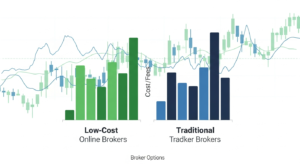
For most retail investors, the most efficient way to gain exposure to the renewable sector in 2026 is through Exchange-Traded Funds (ETFs). However, not all ETFs are created equal. To minimize costs, investors must look beyond just the ticker symbol and scrutinize the expense ratio.
In 2026, the competition among fund managers has driven fees down significantly. A low-cost green energy ETF typically carries an expense ratio between 0.40% and 0.70%. While this may seem higher than a standard S&P 500 index fund, the specialized nature of the sector requires active rebalancing to avoid “zombie” companies—firms that were once leaders but have been surpassed by newer technology.
**Top Categories for 2026 ETFs Include:**
1. **Broad Clean Energy Funds:** These offer a “catch-all” approach, covering solar, wind, and geothermal. They are ideal for investors who want to minimize the risk of a single sub-sector underperforming.
2. **Specialized Storage and Grid Funds:** By 2026, the bottleneck for renewables isn’t generation; it’s the grid. ETFs focused on smart meters, high-voltage transmission, and lithium-ion (or solid-state) storage provide targeted exposure to the infrastructure required to make renewables work.
3. **ESG-Compliant Dividend Funds:** For the cost-conscious trader looking for passive income, certain ETFs focus on “YieldCos”—companies that own and operate renewable power plants and distribute the cash flow as dividends.
By utilizing commission-free brokerage platforms and focusing on funds with high liquidity, retail traders can enter and exit positions without the “hidden costs” of wide bid-ask spreads.
High-Growth Sub-Sectors: Solar, Wind, and the Hydrogen Frontier
While ETFs provide stability, individual stock picking remains attractive for those seeking outsized returns in 2026. Understanding the nuances of each sub-sector is crucial for risk management.
#
Solar Energy: Beyond the Panel
By 2026, the solar industry has moved past simple silicon panels. The market is now focused on “residential ecosystems.” This includes integrated battery storage and AI-driven energy management systems. Investors should look for companies that dominate the “inverter” market—the technology that converts the sun’s power into usable electricity for the home. These companies often have higher margins than panel manufacturers who face stiff commodity price competition.
#
Wind Power: Offshore Momentum
Offshore wind has reached a scale in 2026 that was previously unthinkable. The turbines are larger, more efficient, and located further out at sea. Retail investors should focus on the “majors”—large utility companies and specialized engineering firms that have the capital to manage these multi-billion dollar projects. These are often “moat” businesses; the barrier to entry is so high that competition is limited, protecting the investor’s long-term value.
#
Green Hydrogen: The 2026 Wildcard
2026 is the year green hydrogen moves from the laboratory to the industrial park. Using renewable electricity to split water into hydrogen and oxygen allows for the decarbonization of “hard-to-abate” sectors like steel and shipping. While still more volatile than solar or wind, the cost of electrolyzers has plummeted by 2026, making these stocks a high-beta play for a diversified portfolio.
Financial Metrics for the Cost-Conscious Retail Trader
Investing in renewable energy stocks in 2026 requires a more sophisticated lens than the simple “revenue growth” metric of the past. To minimize the risk of capital loss, retail investors must analyze three specific metrics:
1. **Debt-to-Equity Ratio:** Renewable projects are capital-intensive. In the 2026 environment, where interest rates have stabilized but remain higher than the 2010s, companies with bloated balance sheets are at risk. Look for firms that have successfully refinanced their debt or have strong partnerships with institutional lenders.
2. **Levelized Cost of Energy (LCOE):** This is the average cost of generating electricity over a project’s lifetime. Companies that consistently achieve a lower LCOE than their peers are the most likely to win government contracts and provide long-term shareholder value.
3. **Price-to-Earnings-to-Growth (PEG) Ratio:** Many green stocks carry high P/E ratios because of their future potential. The PEG ratio helps retail investors determine if they are overpaying for that growth. A PEG ratio near 1.0 suggests the stock is fairly valued relative to its expected growth in 2026 and beyond.
Using free or low-cost stock screeners, retail traders can filter the market for these metrics, ensuring they aren’t buying into a “green bubble” but are instead investing in fundamentally sound businesses.
Managing Risks and Volatility in 2026
No investment is without risk, and the renewable sector is particularly sensitive to policy shifts and supply chain disruptions. In 2026, the primary risks are no longer technological—we know the tech works—but rather geopolitical and regulatory.
**Policy Reversals:** While the transition is inevitable, the *speed* is determined by government incentives. A shift in political leadership in major economies can lead to the removal of tax credits. Retail investors can mitigate this by diversifying geographically, holding stocks in companies with operations in the US, EU, and emerging markets.
**Supply Chain Constraints:** The “green” transition requires massive amounts of copper, lithium, and rare earth minerals. In 2026, supply chain bottlenecks for these materials can impact the profitability of solar and EV companies. Investors might consider a small allocation into the mining companies that supply these raw materials as a “hedge” against rising equipment costs.
**Technological Obsolescence:** The risk that a new technology (like nuclear fusion or advanced geothermal) makes current solar or wind technology less competitive. Maintaining a “core and satellite” portfolio structure—where the majority is in proven tech and a small portion in “moonshots”—is a cost-effective way to manage this risk.
Tax Efficiency and Fee Minimization Strategies
To truly maximize returns when investing in renewable energy stocks in 2026, a retail investor must be a “tax-aware” trader. All the gains in the world can be negated by inefficient tax management and high platform fees.
* **Utilize Tax-Advantaged Accounts:** For long-term growth, holding renewable stocks in an IRA or 401(k) (or the equivalent in your country) allows gains to compound tax-free. Given the high growth potential of the sector through 2026 and 2030, this can save thousands in future capital gains taxes.
* **Fractional Shares:** Many top-tier renewable companies or “YieldCos” have high share prices. To avoid the cost of buying full shares and to ensure your capital is fully deployed, use brokers that offer fractional shares. This allows for precise dollar-cost averaging (DCA).
* **Avoid Over-Trading:** The “cost” of trading isn’t just the commission (which is often zero in 2026); it’s the bid-ask spread and the taxes triggered by short-term gains. A “buy and hold” or “buy and rebalance” strategy is almost always more cost-effective for retail investors than trying to time the daily fluctuations of the green energy market.
FAQ: Navigating the 2026 Renewable Market
**Q1: Is it too late to start investing in renewable energy in 2026?**
**A:** Not at all. While the “early adopter” phase has passed, the “mass adoption” phase is just beginning. By 2026, renewable energy infrastructure is becoming a standard part of the global utility grid, offering more stability and predictable returns than in previous years.
**Q2: Which is better for a retail investor: solar or wind stocks?**
**A:** Both have merits. Solar generally offers more opportunities for residential and small-scale commercial growth, while wind is dominated by large-scale utility projects. A balanced approach, or a low-cost ETF that holds both, is typically the safest route for a cost-conscious investor.
**Q3: How do interest rates affect renewable energy stocks in 2026?**
**A:** Renewable energy projects require significant upfront capital, making them sensitive to interest rates. In 2026, the market has largely priced in the “higher for longer” rate environment, but any surprise rate cuts could provide a significant tailwind for the sector’s valuations.
**Q4: Are “Green Hydrogen” stocks a safe investment in 2026?**
**A:** Green hydrogen is higher risk than solar or wind. It is a “growth” play rather than a “value” play. Retail investors should limit their exposure to a small percentage of their portfolio and focus on companies with existing industrial partnerships.
**Q5: What are the best low-cost platforms for green energy trading?**
**A:** Look for platforms that offer $0 commissions on stocks and ETFs, provide robust research tools, and allow for fractional share investing. Most major retail brokerages have eliminated trading fees by 2026, so focus on the quality of their execution and the availability of specialized ESG research.
Conclusion: The Path to Sustainable Wealth
Investing in renewable energy stocks in 2026 is an exercise in balancing environmental conviction with financial pragmatism. The sector has matured, offering retail investors a clearer view of which companies are built to last and which were merely riding a wave of hype. By focusing on cost-effective entry points—specifically low-fee ETFs and fundamentally strong individual stocks—traders can capture the growth of the green transition without falling victim to the high overhead costs that derail many portfolios.
The key for 2026 is patience and discipline. The transition to a renewable-powered world is a multi-decade journey. By utilizing the strategies outlined here—focusing on debt levels, utilizing tax-advantaged accounts, and diversifying across sectors like solar, wind, and storage—retail investors can position themselves to profit from the greatest industrial shift of our time. As we move beyond 2026, the “green” in your portfolio will represent not just your values, but your financial foresight.