
What Are Options? The Fundamentals Explained
At its core, an option is a contract that gives the buyer the right, but not the obligation, to buy or sell an underlying asset at a specified price on or before a certain date. Unlike stocks, which represent ownership in a company, options are derivative instruments, meaning their value is derived from the price movement of another asset – typically stocks, but also indices, commodities, or currencies.
Key Components of an Options Contract
- Underlying Asset: This is the security on which the option contract is based. For beginners, this is most commonly a stock like Apple (AAPL) or Microsoft (MSFT).
- Strike Price (or Exercise Price): This is the predetermined price at which the underlying asset can be bought or sold if the option is exercised.
- Expiration Date: Every option contract has a finite lifespan. This is the date after which the option is no longer valid. Options can expire weekly, monthly, or even several years out (LEAPS – Long-term Equity Anticipation Securities).
- Premium: This is the price you pay to buy an option contract. It’s the cost of the right to buy or sell the underlying asset. The premium is determined by several factors, including the underlying asset’s price, strike price, time to expiration, and volatility.
- Contract Size: One standard options contract typically represents 100 shares of the underlying asset. So, if an option’s premium is $2.00, the total cost for one contract would be $2.00 * 100 shares = $200.
Two Main Types of Options: Calls and Puts
Understanding these two fundamental types is paramount:
- Call Options:
- A call option gives the holder the right to buy the underlying asset at the strike price on or before the expiration date.
- Investors typically buy call options when they are bullish, meaning they expect the price of the underlying asset to increase significantly above the strike price.
- If the underlying stock price rises above the strike price, the call option becomes profitable.
- Selling a call option (often called “writing a call”) means you are obligated to sell the underlying asset at the strike price if the buyer exercises their right. This is usually done by investors who are bearish or neutral on the stock, or as part of an income-generating strategy (like covered calls, discussed later).
- Put Options:
- A put option gives the holder the right to sell the underlying asset at the strike price on or before the expiration date.
- Investors typically buy put options when they are bearish, meaning they expect the price of the underlying asset to decrease significantly below the strike price.
- If the underlying stock price falls below the strike price, the put option becomes profitable.
- Selling a put option (writing a put) means you are obligated to buy the underlying asset at the strike price if the buyer exercises their right. This is usually done by investors who are bullish or neutral on the stock, or as part of a strategy to acquire stock at a lower price.
Think of it this way: a call option is like a down payment on a house you hope will increase in value, giving you the right to buy it later at today’s price. A put option is like insurance on an asset, giving you the right to sell it at a certain price even if its market value drops.
Why Trade Options? Benefits, Risks, and Considerations
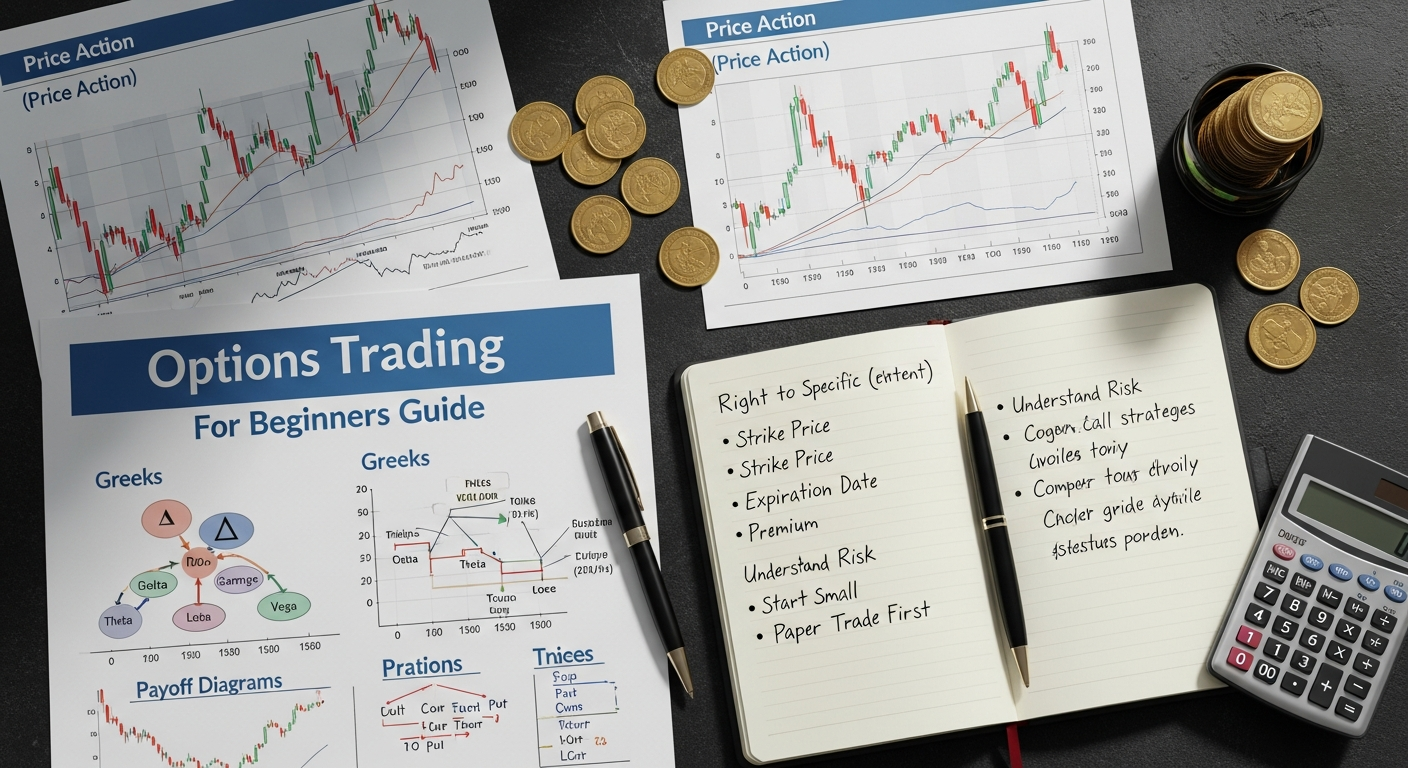
Options trading can be a powerful addition to an investor’s toolkit, offering unique advantages not found in direct stock ownership. However, these advantages come hand-in-hand with substantial risks, making a balanced understanding crucial for any beginner.
Potential Benefits of Options Trading
- Leverage: This is perhaps the most significant appeal for many. Options allow you to control a large block of stock (usually 100 shares per contract) with a relatively small amount of capital. A small movement in the underlying stock can lead to a much larger percentage gain or loss in the option’s value. For those interested in How To Start Investing Little Money 2026, options can appear attractive due to this leverage, as a small premium payment can offer exposure to significant price movements. However, it’s vital to remember that leverage amplifies losses just as effectively as it amplifies gains.
- Income Generation: Selling options, particularly covered calls (selling calls on stock you already own), can generate regular income. This strategy is often used by investors to enhance returns on their existing stock portfolios, especially in sideways markets.
- Hedging and Risk Management: Options can act as an insurance policy. For instance, buying put options on a stock you own can protect your portfolio against a potential downturn in the stock’s price. This strategy, known as a protective put, limits your downside risk while allowing you to participate in any upside.
- Flexibility: Options offer a vast array of strategies suitable for various market conditions – bullish, bearish, or neutral. You can profit from rising prices, falling prices, or even stagnant prices, depending on the strategy employed.
- Defined Risk (for some strategies): When you buy an option, your maximum potential loss is limited to the premium you paid for the contract. This contrasts with short-selling stocks, where potential losses are theoretically unlimited. However, this defined risk applies primarily to options buyers; options sellers can face substantial, sometimes unlimited, risks.
Significant Risks of Options Trading
It cannot be stressed enough: options trading is inherently risky, especially for beginners. Understanding these risks is non-negotiable.
- Time Decay (Theta): Unlike stocks, options have an expiration date. As an option approaches its expiration, its extrinsic value (the portion of the premium related to time and volatility) erodes. This time decay, known as “theta,” works against the option buyer, meaning the underlying stock needs to move in the desired direction quickly and significantly just to offset this erosion.
- Leverage Amplifies Losses: While leverage can lead to substantial gains, it can also lead to rapid and significant losses. A small adverse movement in the underlying stock can wipe out your entire option premium in a short period.
- Complexity: Options strategies can range from simple (buying calls/puts) to highly complex (spreads, iron condors, butterflies). Misunderstanding a strategy’s mechanics or risk profile can lead to unexpected and severe losses.
- Liquidity Risk: Some options contracts, particularly on less popular stocks or with distant expiration dates/unusual strike prices, may have low trading volume. This can make it difficult to enter or exit trades at a fair price, leading to wider bid-ask spreads.
- Assignment Risk (for sellers): If you sell an option, you face the risk of being “assigned,” meaning you are obligated to fulfill the terms of the contract (either buy or sell the underlying stock) even if it’s not financially favorable. This is particularly relevant for uncovered or “naked” options, where the seller doesn’t own the underlying stock.
- High Probability of Loss: A significant percentage of options contracts expire worthless. This means that for options buyers, the probability of losing the entire premium paid is high if the underlying asset doesn’t move sufficiently in the anticipated direction.
For beginners, it is paramount to start with a clear understanding that options trading is not a get-rich-quick scheme. It requires discipline, continuous learning, and robust risk management. It should only be pursued with discretionary capital – money you can afford to lose – and never with funds that are essential for living expenses or that are needed to How To Get Out Credit Card Debt. Prioritizing debt reduction and building an emergency fund should always precede speculative activities like options trading.
Key Concepts and Terminology for Beginners
In-the-Money (ITM), At-the-Money (ATM), Out-of-the-Money (OTM)
These terms describe the relationship between the underlying asset’s current price and the option’s strike price:
- For Call Options:
- In-the-Money (ITM): When the underlying stock price is above the strike price. An ITM call has intrinsic value.
- At-the-Money (ATM): When the underlying stock price is equal to or very close to the strike price.
- Out-of-the-Money (OTM): When the underlying stock price is below the strike price. An OTM call has no intrinsic value, only extrinsic value.
- For Put Options:
- In-the-Money (ITM): When the underlying stock price is below the strike price. An ITM put has intrinsic value.
- At-the-Money (ATM): When the underlying stock price is equal to or very close to the strike price.
- Out-of-the-Money (OTM): When the underlying stock price is above the strike price. An OTM put has no intrinsic value, only extrinsic value.
Generally, OTM options are cheaper but require a larger move in the underlying asset to become profitable. ITM options are more expensive but have a higher probability of expiring profitably.
Intrinsic Value and Extrinsic Value (Time Value)
An option’s premium is comprised of two main components:
- Intrinsic Value: This is the immediate profit you would realize if you exercised the option right now. Only ITM options have intrinsic value.
- For a Call: Intrinsic Value = (Underlying Price – Strike Price). If the result is negative, intrinsic value is 0.
- For a Put: Intrinsic Value = (Strike Price – Underlying Price). If the result is negative, intrinsic value is 0.
- Extrinsic Value (or Time Value): This is the portion of the option’s premium beyond its intrinsic value. It represents the value investors place on the potential for the option to become more profitable before expiration. Extrinsic value is influenced by:
- Time to Expiration: The longer the time until expiration, the greater the chance for the underlying asset to move favorably, thus higher extrinsic value.
- Volatility: Higher expected volatility (how much the underlying asset’s price is expected to fluctuate) increases the likelihood of a significant price move, thus higher extrinsic value.
Premium = Intrinsic Value + Extrinsic Value
As an option approaches expiration, its extrinsic value diminishes due to time decay (Theta). This is why buying options with very short expirations can be highly risky, as you’re fighting against time.
The “Greeks”: Understanding Option Sensitivities
The “Greeks” are a set of metrics used to measure an option’s sensitivity to various factors. While an in-depth understanding is advanced, beginners should at least be aware of the most important ones:
- Delta ($\Delta$): Measures how much an option’s price is expected to change for every $1 change in the underlying asset’s price.
- Call options have positive Delta (0 to 1). If a call has a Delta of 0.50, its price is expected to increase by $0.50 for every $1 increase in the underlying stock.
- Put options have negative Delta (0 to -1). If a put has a Delta of -0.50, its price is expected to increase by $0.50 for every $1 decrease in the underlying stock.
- Gamma ($\Gamma$): Measures the rate of change of Delta. High Gamma means Delta can change quickly with small movements in the underlying.
- Theta ($\Theta$): Measures the rate of time decay. It tells you how much an option’s price is expected to decrease each day due to the passage of time. Theta is always negative for options buyers.
- Vega ($\nu$): Measures an option’s sensitivity to changes in implied volatility. Higher implied volatility generally increases option premiums.
For beginners, focusing on Delta (directionality) and Theta (time decay) is the most critical. Understanding how these forces work will significantly improve your decision-making.
Basic Options Strategies for Beginners
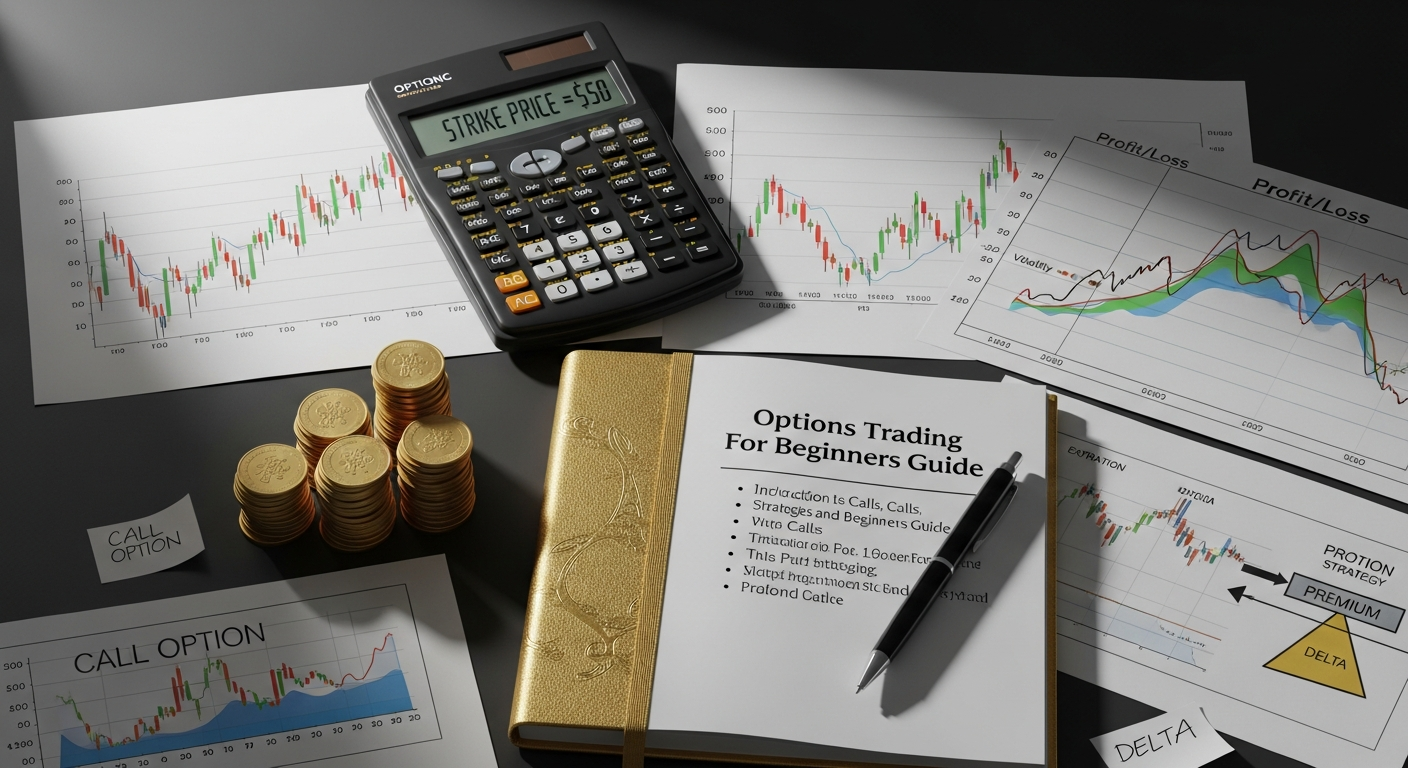
While the world of options strategies is vast, beginners should focus on a few fundamental approaches. These strategies provide a solid entry point, allowing you to learn the mechanics with relatively straightforward risk profiles.
1. Buying Call Options (Bullish Strategy)
This is one of the simplest ways to speculate on an upward move in a stock.
- When to Use: When you are strongly bullish on an underlying stock and expect its price to rise significantly before the option’s expiration.
- How it Works: You purchase a call option, paying a premium. If the stock price rises above the strike price plus the premium paid (your breakeven point), your option becomes profitable.
- Max Risk: Limited to the premium paid.
- Max Reward: Unlimited, as the stock price can theoretically rise indefinitely.
- Example: You believe XYZ stock, currently trading at $50, will surge. You buy a 55-strike call option expiring in 3 months for a premium of $2.00 ($200 per contract). If XYZ rises to $60 before expiration, your option’s value will increase, and you can sell it for a profit or exercise it to buy shares at $55. If XYZ stays below $55, you lose your $200 premium.
Consideration for beginners: Buying calls offers great leverage but is also subject to rapid time decay. It requires the stock to move strongly and quickly in your favor.
2. Buying Put Options (Bearish Strategy)
This strategy allows you to profit from a downward move in a stock.
- When to Use: When you are strongly bearish on an underlying stock and expect its price to fall significantly before the option’s expiration.
- How it Works: You purchase a put option, paying a premium. If the stock price falls below the strike price minus the premium paid (your breakeven point), your option becomes profitable.
- Max Risk: Limited to the premium paid.
- Max Reward: Substantial, as the stock price can theoretically fall to zero.
- Example: You believe ABC stock, currently at $100, is due for a significant drop. You buy a 95-strike put option expiring in 2 months for a premium of $3.00 ($300 per contract). If ABC drops to $85 before expiration, your option’s value will increase, and you can sell it for a profit or exercise it to sell shares at $95. If ABC stays above $95, you lose your $300 premium.
Consideration for beginners: Similar to buying calls, buying puts offers leverage but is susceptible to time decay. It requires a strong, swift downward move.
3. Covered Calls (Income and Hedging Strategy)
This is a popular strategy for stock owners looking to generate income or partially hedge against minor price declines.
- When to Use: When you own at least 100 shares of an underlying stock and are neutral to mildly bullish on its short-term price movement, or you wouldn’t mind selling your shares at a slightly higher price.
- How it Works: You own 100 shares of a stock. You then sell (write) one call option contract against those 100 shares, collecting the premium. The “covered” aspect means you own the underlying stock, which acts as collateral, limiting your risk.
- Max Risk: If the stock price falls significantly, you still own the stock and incur losses, though the premium received partially offsets these. Your maximum loss is the stock purchase price minus the premium received.
- Max Reward: Limited to the premium received plus the difference between the strike price and your stock purchase price (if the option is exercised).
- Example: You own 100 shares of XYZ stock, bought at $50. You sell a 55-strike call option expiring next month for a premium of $1.50 ($150 per contract).
- If XYZ stays below $55, the option expires worthless, and you keep the $150 premium, effectively lowering your cost basis on the stock.
- If XYZ rises above $55 (e.g., to $57), your shares will likely be “called away” (sold) at $55. You profit from the stock appreciation ($55 – $50 = $5 per share) plus the $1.50 premium, totaling $6.50 per share ($650 total). You miss out on any gain above $55.
Consideration for beginners: Covered calls are generally considered a more conservative options strategy, as the risk of unlimited loss is removed by owning the underlying stock. It’s an excellent way to learn about selling options and generating income.
4. Protective Puts (Hedging Strategy)
This strategy acts like an insurance policy for your stock holdings.
- When to Use: When you own shares of a stock and are concerned about a potential short-term downturn but don’t want to sell your shares (e.g., for tax reasons, or you expect a rebound).
- How it Works: You own 100 shares of a stock. You then buy one put option contract against those 100 shares. The put option gives you the right to sell your shares at the strike price, regardless of how far the market price falls.
- Max Risk: Limited to the cost of the put option plus any loss on the stock down to the strike price. Your total downside is capped at the strike price minus the premium paid.
- Max Reward: Unlimited upside potential on your stock, minus the cost of the put premium.
- Example: You own 100 shares of ABC stock, currently at $100. You’re worried about an upcoming earnings report. You buy a 95-strike put option expiring next month for a premium of $2.00 ($200 per contract).
- If ABC falls to $80, your put option is worth at least $15 ($95 – $80). You can sell your put for a profit, which offsets the loss on your stock. Your maximum loss on the stock is effectively capped at $95 (the strike price) plus the $2.00 premium paid for the put.
- If ABC rises to $110, your put option expires worthless, and you lose the $200 premium. However, you still benefit from the full $10 increase in your stock’s value (minus the $200 put cost).
Consideration for beginners: Protective puts are a valuable risk management tool. They allow you to define your maximum downside risk on a stock, similar to setting a stop-loss order, but without the risk of being stopped out prematurely by volatility. The cost of the put option is the “insurance premium.”
The Options Trading Process: From Account to Execution
Getting started with options trading involves more than just understanding the concepts; it requires practical steps to set up your trading environment and execute trades responsibly.
1. Opening a Brokerage Account and Gaining Options Approval
Most reputable online brokers offer options trading. If you already have a stock trading account, you’ll likely need to apply for options trading privileges separately. This process typically involves:
- Application Form: You’ll answer questions about your financial situation, investment experience, income, net worth, and risk tolerance. This helps the broker assess your suitability for options trading.
- Options Level: Brokers typically assign different “levels” of options approval, which determine the complexity of strategies you can employ.
- Level 1: Usually allows for covered calls and protective puts (selling options on stock you own, buying options for hedging).
- Level 2: Adds the ability to buy calls and puts.
- Level 3: Includes spread strategies.
- Level 4: Allows for naked (uncovered) options selling, which carries the highest risk.
As a beginner, you’ll likely start at Level 1 or 2. Be honest in your application, as misrepresenting your experience can lead to inappropriate trading permissions and potential financial harm.
- Funding Your Account: Once approved, you’ll need to fund your account. Remember the advice: only use discretionary capital. For those looking at How To Start Investing Little Money 2026, options might seem appealing, but the capital required for standard contracts (100 shares) can still be substantial. Start with a modest amount that you are comfortable losing entirely.
2. Research and Analysis
Successful options trading, like any investing, requires thorough research:
- Understand the Underlying Asset: Before trading options on a stock, understand the company, its industry, financial health, and future prospects. Is it a growth stock, value stock, or dividend payer? Consider factors that might be covered in an Impact Investing Esg Guide 2026 if you’re aligning your investments with ethical or sustainable criteria.
- Technical Analysis: Study price charts, indicators (like moving averages, RSI, MACD), and chart patterns to identify potential entry and exit points for the underlying stock.
- Fundamental Analysis: Review company earnings reports, news, and economic data that could influence the stock’s price.
- Options Chain Analysis: Familiarize yourself with how to read an options chain on your broker’s platform. This table displays all available strike prices, expiration dates, premiums, volume, and open interest for calls and puts. Pay attention to implied volatility, which can indicate market expectations for future price swings.
- Paper Trading: Before using real money, practice with a paper trading account (also known as a simulated or demo account). Most brokers offer these. This allows you to test strategies, understand market dynamics, and get comfortable with your broker’s platform without financial risk.
3. Placing an Options Order
When you’re ready to place a live trade, the process is similar to buying or selling stocks, but with additional considerations:
- Select the Option: Choose the underlying stock, whether you want a call or a put, the strike price, and the expiration date.
- Order Type:
- Market Order: Executes immediately at the best available price. Risky for options due to potential wide bid-ask spreads.
- Limit Order: Specifies the maximum price you’re willing to pay (for buying) or the minimum price you’re willing to accept (for selling). This is generally recommended for options to ensure you get a fair price.
- Quantity: Specify the number of contracts you want to buy or sell (remember, one contract typically represents 100 shares).
- Time in Force:
- Day Order: Expires at the end of the trading day if not filled.
- Good-Till-Canceled (GTC): Remains active until filled or canceled (typically for a maximum of 60 days).
- Review and Confirm: Always double-check all details of your order before confirming the trade. Mistakes can be costly.
4. Monitoring and Managing Your Trades
Executing a trade is only half the battle. Active management is crucial:
- Track Performance: Monitor the underlying stock’s price, the option’s premium, and the time remaining until expiration.
- Adjust or Close Positions: Don’t just let options expire. If a trade is going well, you might close it early to lock in profits. If it’s going poorly, you might close it to cut losses before the entire premium is lost.
- Be Prepared for Exercise/Assignment: Understand the implications if your option is exercised (for buyers) or if you are assigned (for sellers). Most retail options are closed out before expiration, but it’s important to know the procedures.
Risk Management and Responsible Trading
For beginners, risk management is not just a suggestion; it’s the cornerstone of sustainable options trading. Ignoring it is a direct path to financial distress.
1. Only Trade with Discretionary Capital
This is the golden rule. Options trading is speculative. Only use money that you can afford to lose entirely without impacting your financial stability. This means:
- No Essential Funds: Never use money earmarked for rent, utilities, groceries, or other essential living expenses.
- No Borrowed Money: Absolutely avoid trading with borrowed funds, especially high-interest sources like credit cards. If you’re struggling with How To Get Out Credit Card Debt, your focus should be on eliminating that debt, not engaging in high-risk trading. The potential for magnified losses in options can quickly exacerbate an already precarious financial situation.
- Emergency Fund First: Ensure you have a robust emergency fund (3-6 months of living expenses) saved before considering options trading.
2. Understand Your Maximum Risk
Before entering any trade, clearly define your maximum potential loss. For options buyers, this is generally the premium paid. For options sellers, especially naked sellers, the risk can be theoretically unlimited, which is why beginners should avoid such strategies.
3. Start Small and Simple
- Small Position Sizes: Begin with one or two contracts. Don’t risk a significant portion of your capital on a single trade.
- Simple Strategies: Stick to buying calls and puts, and perhaps covered calls or protective puts if you own stock. Avoid complex multi-leg strategies until you have substantial experience.
- High-Quality, Liquid Underlying Assets: Trade options on well-known, highly liquid stocks with tight bid-ask spreads. This ensures you can enter and exit trades efficiently.
4. Implement Stop-Loss Orders (or Mental Stop-Losses)
While direct stop-loss orders for options can sometimes be tricky due to volatility and spreads, have a clear exit strategy:
- Define Your Loss Tolerance: Decide beforehand at what percentage loss (e.g., 20%, 30%, 50% of the premium) you will close the position. Stick to it without emotion.
- Profit Taking: Similarly, have a target profit level. Options are not long-term investments; take profits when they are available, especially as time decay accelerates.
5. Diversify (Within Reason)
While options inherently involve concentration on specific assets, avoid putting all your options capital into one trade or one sector. Diversification helps mitigate single-point failure risk.
6. Continuous Learning and Paper Trading
The market is constantly evolving. Commit to ongoing education. Use paper trading accounts to test new strategies or refine existing ones without risking real money. This is invaluable for practicing discipline and understanding market mechanics.
Building Your Options Trading Foundation for 2026
Embarking on the journey of options trading is a marathon, not a sprint. Success in 2026 and beyond will hinge on continuous education, disciplined practice, and adapting to market conditions. Here’s how you can build a robust foundation:
1. Prioritize Education and Practice
- Books and Courses: Invest in high-quality educational resources. Look for reputable authors and platforms that focus on practical application and risk management.
- Online Resources: Utilize articles, webinars, and tutorials from trusted financial websites and brokers.
- Paper Trading Consistently: Make paper trading a regular habit. It allows you to experiment, make mistakes without financial consequences, and build confidence in your chosen strategies. Treat your paper trading account as if it were real money to cultivate discipline.
2. Understand Market Cycles and Economic Impact
Options values are highly sensitive to market sentiment, economic data, and corporate news. Staying informed about broader economic trends, interest rate changes,
Related: Explore more insights on wellness and mindfulness practices.
Related: Explore more insights on vacation rental investment opportunities.
Recommended Resources
Related reading: How To Use Content Marketing For Ecommerce (E-ComProfits).
You might also enjoy How To Market A Small Business On Social Media from AssetBar.