How to Build Wealth in Your 30s: The Complete Financial Roadmap

TL;DR: Building wealth in your 30s hinges on smart debt management, maximizing tax-advantaged retirement
TL;DR: Building wealth in your 30s hinges on smart debt management, maximizing tax-advantaged retirement accounts, strategic real estate decisions, and boosting income through career growth and side hustles. Prioritize long-term investing, understand tax efficiency, and protect your assets with appropriate insurance to set a robust foundation for future financial independence.

How to Build Wealth in Your 30s: The Complete Financial Roadmap

The third decade of your life is a pivotal period for financial growth, offering a unique window to accelerate your wealth accumulation. If you’re looking for a comprehensive how to build wealth in your 30s guide, you’ve come to the right place. This isn’t just about saving money; it’s about strategic planning, smart investing, and making informed decisions that will compound over the coming decades. Your 30s typically bring increased earning potential, but also new responsibilities like family, homeownership, and career advancement. Navigating these changes while staying on track to financial freedom requires a deliberate approach. By focusing on key areas such as debt elimination, maximizing retirement contributions, intelligent real estate moves, and income diversification, you can establish a robust financial foundation that will pay dividends for years to come. Let’s dive into the actionable steps you can take today to build substantial wealth throughout your 30s and beyond.

Building a Solid Financial Foundation: Debt Management & Emergency Funds

Before you can truly accelerate your wealth, it’s crucial to establish a rock-solid financial foundation. This means getting a handle on debt and securing your short-term finances with an adequate emergency fund. In your 30s, you might be carrying student loan debt, credit card balances, or even a new mortgage. Not all debt is created equal, and understanding the distinction is key to effective debt repayment strategies.

High-interest debt, such as credit card balances (often with APRs exceeding 18-20%), should be your absolute top priority. The interest payments on these debts can quickly erode any investment gains you might make. Consider strategies like the debt avalanche method, where you pay off debts with the highest interest rates first, or the debt snowball method, which focuses on paying off the smallest balances first to build momentum. The Federal Reserve consistently highlights the burden of consumer debt, making its reduction a critical step for financial health.

Student loans, while typically carrying lower interest rates than credit cards, can still be a significant burden. Explore refinancing options if you have good credit, or consider income-driven repayment plans if you’re struggling. The goal isn’t necessarily to eliminate all student debt before investing, but to manage it strategically so it doesn’t hinder your long-term wealth building.

Simultaneously, establishing a robust emergency fund is non-negotiable. Aim to save at least three to six months’ worth of essential living expenses in a high-yield savings account. This fund acts as a financial safety net, protecting you from unexpected job loss, medical emergencies, or large home repairs without having to dip into investments or incur high-interest debt. The SEC and FINRA consistently recommend maintaining an accessible emergency fund as a cornerstone of personal finance. Without it, even the best investment strategy can be derailed by life’s inevitable curveballs.

A good budget is the cornerstone for both debt repayment and emergency savings. Tools like YNAB (You Need A Budget) or Mint can help you track your income and expenses, ensuring every dollar has a job. Adopting a 50/30/20 rule (50% for needs, 30% for wants, 20% for savings and debt repayment) can provide a simple framework. By diligently managing debt and building your emergency buffer, you lay a stable foundation upon which to build substantial wealth in your 30s.

Supercharging Your Retirement: Maximizing 401(k)s, IRAs, and HSAs

Your 30s represent a prime decade for aggressive retirement savings, leveraging the power of compound interest to its fullest. Maximizing contributions to tax-advantaged accounts is arguably the most impactful step you can take for retirement planning in your 30s.

First and foremost, prioritize your employer-sponsored 401(k) or 403(b), especially if there’s an employer match. This match is essentially “free money” – a 100% return on your investment from day one. Failing to contribute enough to capture the full match is a significant missed opportunity. For example, if your employer matches 50% of your contributions up to 6% of your salary, contributing at least 6% ensures you capture that bonus. The IRS sets annual contribution limits, which for 2024 are $23,000 for employees under 50. Aim to contribute as much as you can, ideally reaching this limit.

Next, consider an Individual Retirement Account (IRA). You have the choice between a Traditional IRA, where contributions may be tax-deductible now and grow tax-deferred, or a Roth IRA, where contributions are made with after-tax dollars but qualified withdrawals in retirement are tax-free. For many in their 30s who anticipate higher tax brackets in retirement, a Roth IRA offers significant benefits. The 2024 contribution limit for IRAs is $7,000. Vanguard and Fidelity offer excellent low-cost index funds and ETFs suitable for IRAs, providing broad market exposure and diversification.

Don’t overlook the Health Savings Account (HSA) if you have a high-deductible health plan (HDHP). The HSA is often lauded as the “triple-tax-advantaged” account: contributions are tax-deductible, investments grow tax-free, and qualified withdrawals for medical expenses are tax-free. Many HSAs allow you to invest contributions beyond a certain threshold, making them a powerful retirement savings vehicle, especially if you anticipate significant healthcare costs in retirement. For 2024, the individual contribution limit is $4,150, and $8,300 for families.

When selecting investments within these accounts, focus on diversification and low-cost options. Target-date funds can be a convenient “set it and forget it” option, automatically adjusting asset allocation as you age. Alternatively, a portfolio of broad market index funds (e.g., total stock market, total international stock market, total bond market) offers excellent diversification at minimal cost. Vanguard’s VTSAX or Fidelity’s FSKAX are popular choices for total market exposure. Regularly rebalancing your portfolio (e.g., annually) ensures your asset allocation aligns with your risk tolerance and goals. By maximizing 401k in 30s and other tax-advantaged accounts, you’re building a powerful engine for long-term wealth.

Strategic Asset Accumulation: Real Estate, Diversified Investing & Net Worth Milestones

Beyond retirement accounts, your 30s are a critical time to build a diversified investment portfolio and consider strategic real estate moves. These decisions significantly contribute to your overall net worth milestones.

Real estate, particularly homeownership, is often a major financial goal in this decade. However, it’s important to approach it strategically. Consider house hacking, a strategy where you buy a multi-unit property (e.g., a duplex, triplex, or even a single-family home with rentable rooms) and live in one unit while renting out the others. This can significantly reduce or even eliminate your housing costs, allowing you to save and invest more aggressively. FHA loans, for instance, can be used for multi-unit properties with low down payments, making house hacking accessible.

Another common dilemma is investing vs paying off mortgage early. While paying off your mortgage provides a guaranteed return equal to your interest rate and reduces risk, investing in a diversified portfolio (like the S&P 500, which has historically returned around 10% annually) often offers a higher potential return, especially when mortgage rates are low (e.g., under 4%). The decision depends on your risk tolerance, current mortgage rate, and other investment opportunities. For most, striking a balance—making extra principal payments while also investing—is a sound strategy.

Outside of retirement accounts and primary residence, open a taxable brokerage account. This allows for greater liquidity and flexibility. Diversification is paramount here. Don’t put all your eggs in one basket. Invest in a mix of asset classes: U.S. equities, international equities, and bonds. Low-cost index funds and ETFs from providers like Vanguard, Fidelity, or Charles Schwab are excellent choices for building a diversified portfolio. Aim to track broad market indices rather than picking individual stocks, which carries higher risk.

As you accumulate assets, it’s helpful to track your net worth and compare it against benchmarks. While specific numbers vary, Fidelity suggests aiming for 1x your salary saved by age 30, and 3x your salary by age 40. These are guides, not strict rules, but they provide a useful gauge of your progress. Regularly review your asset allocation to ensure it remains aligned with your long-term goals and risk tolerance. Your 30s are about planting seeds, and a strategic approach to real estate and diversified investing ensures those seeds grow into a forest of wealth.

Accelerating Your Income: Career Growth & Side Hustle Strategies

While smart saving and investing are crucial, increasing your income is often the fastest way to accelerate wealth building in your 30s. This involves a two-pronged approach: maximizing your primary career earnings and exploring profitable side hustles.

For career income growth, focus on continuous skill development. Identify skills that are in high demand within your industry or emerging fields. Online courses (Coursera, Udemy, LinkedIn Learning), certifications, or even pursuing a master’s degree can significantly boost your earning potential. Networking is also vital; building relationships with peers and mentors can open doors to new opportunities and provide valuable insights into salary benchmarks and career trajectories.

Don’t shy away from salary negotiation. Research market rates for your position and experience level using resources like Glassdoor, Levels.fyi, or the Bureau of Labor Statistics. When negotiating, clearly articulate your value and accomplishments. Even a modest increase in salary can have a substantial impact over your career due to compounding. For example, a $5,000 raise annually, compounded over 30 years with a 7% return, could equate to over $500,000 in additional wealth.

In parallel, exploring side hustles for wealth can provide an additional stream of income that can be directly channeled into investments or debt repayment. Popular side hustles in your 30s might include freelancing in your professional field (writing, graphic design, consulting, web development), e-commerce (dropshipping, Etsy shop), teaching online, or even real estate-related activities like property management or Airbnb hosting. The key is to find a side hustle that leverages your existing skills or allows you to develop new ones, and that can scale without consuming all your free time.

The additional income from a side hustle can be a game-changer. Imagine earning an extra $500-$1000 per month and directing 100% of it towards your Roth IRA or a taxable brokerage account. This can significantly accelerate your progress towards financial independence. For instance, an extra $1,000 invested monthly, earning 8% annually, could grow to over $1.5 million in 20 years. The Federal Reserve’s surveys often highlight the importance of multiple income streams for household financial resilience. Remember to track your side hustle income and expenses for tax purposes and explore potential deductions. By strategically growing your primary income and intelligently pursuing side hustles, you create a powerful engine for wealth accumulation.

Tax Optimization & Essential Protection: Smart Strategies for Your 30s

As your income and assets grow, understanding tax optimization in your 30s becomes increasingly important. Minimizing your tax burden legally and ethically means more money stays in your pocket to invest and compound. Simultaneously, protecting your hard-earned assets with the right insurance is non-negotiable.

One key strategy is tax-loss harvesting in taxable brokerage accounts. If you have investments that have lost value, you can sell them to offset capital gains and even a limited amount of ordinary income (up to $3,000 per year). This strategy can reduce your current tax bill. Always consult with a tax professional before implementing complex tax strategies. Understanding the difference between short-term (assets held for less than a year) and long-term capital gains (assets held for over a year) is also crucial, as they are taxed at different rates, with long-term gains typically being much lower.

Tax-efficient fund placement is another advanced strategy. Assets that generate significant ordinary income (like bonds or REITs) are often best held in tax-advantaged accounts (401k, IRA) to defer or avoid taxes on that income. Growth stocks or funds that produce qualified dividends are often suitable for taxable accounts because their gains are taxed at lower capital gains rates. Utilizing municipal bonds, which offer tax-exempt interest income, can also be beneficial for high-income earners.

Beyond taxes, protecting your wealth is paramount. Life insurance needs are often significant in your 30s, especially if you have dependents (spouse, children) who rely on your income. Term life insurance is generally the most cost-effective option for most families. It provides coverage for a specific period (e.g., 20 or 30 years) and is significantly cheaper than whole life insurance, which often comes with high fees and poor investment returns. A common rule of thumb is to have 10-12 times your annual income in coverage, but a more precise calculation would include outstanding debts, future income replacement needs, and children’s education costs. Reputable insurers like Northwestern Mutual or Policygenius can help you compare quotes.

Don’t forget disability insurance, which protects your income if you become unable to work due to illness or injury. Your most valuable asset is often your ability to earn an income, and disability insurance safeguards that. An umbrella liability policy, which provides additional liability coverage beyond your home and auto insurance, is also a wise investment once your net worth begins to grow, protecting you from large lawsuits. By proactively managing your tax burden and securing adequate insurance, you ensure your wealth-building efforts are both efficient and protected against unforeseen circumstances.

Avoiding Common Pitfalls & Sustaining Momentum: Key Financial Mistakes in Your 30s

While the 30s are a decade of immense opportunity, they also present unique challenges and potential pitfalls that can derail your financial progress. Being aware of these financial mistakes to avoid in 30s is just as important as knowing what to do.

One of the most insidious traps is lifestyle inflation. As your income rises, it’s natural to want to enjoy a higher standard of living. However, if every raise or bonus is immediately spent on bigger houses, fancier cars, or more expensive vacations, you’ll find yourself on a “hedonic treadmill” where your savings rate stagnates despite increased earnings. The key is to consciously save and invest a significant portion of every pay raise before adjusting your lifestyle. For example, commit to saving 50% of any new raise and spending the other 50%. This allows for some enjoyment while still prioritizing wealth building.

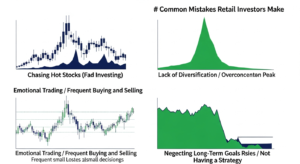
Another common mistake is chasing hot stocks or market timing. The allure of quick riches can be strong, especially with social media hype. However, consistent data from the SEC and FINRA shows that active trading and trying to predict market movements rarely outperform a diversified, low-cost index fund strategy over the long term. Stick to your investment plan, rebalance periodically, and ignore the noise. The S&P 500’s average historical return of around 10% annually is achieved through patient, consistent investing, not speculative bets.

Neglecting estate planning is also a significant oversight in your 30s, especially if you have children or a spouse. While it might seem like something for “older people,” having a will, durable power of attorney, and healthcare directive ensures your wishes are honored and your loved ones are protected in case of the unexpected. Without a will, state laws dictate how your assets are distributed, which may not align with your desires. This simple step provides immense peace of mind.

Ignoring inflation is another subtle mistake. While your savings might look impressive in nominal terms, inflation (historically around 2-3% annually, as tracked by the Federal Reserve) erodes purchasing power over time. Keeping too much cash in low-interest accounts is a guaranteed way to lose money to inflation. Ensure the vast majority of your long-term savings are invested in assets that have a historical track record of outpacing inflation, such as equities.

Finally, failing to regularly review and adjust your financial plan is a mistake. Life changes rapidly in your 30s—marriage, children, new jobs, home purchases. Your financial plan should evolve with these changes. Schedule annual financial reviews to assess your budget, investment allocation, insurance coverage, and overall goals. This proactive approach ensures you stay on track and make necessary adjustments to sustain your momentum towards financial independence.

Key Takeaways for Building Wealth in Your 30s

  • Prioritize Debt Elimination & Emergency Savings: Tackle high-interest debt first and build a 3-6 month emergency fund before aggressive investing.
  • Maximize Tax-Advantaged Accounts: Fully utilize 401(k) matches, Roth IRAs, and HSAs to benefit from tax breaks and compound growth.
  • Strategize Real Estate & Diversify Investments: Explore house hacking, weigh mortgage payoff vs. investing, and build a broad, low-cost portfolio beyond retirement accounts.
  • Boost Income Streams: Focus on career advancement, salary negotiation, and profitable side hustles to accelerate your savings and investment capital.
  • Optimize Taxes & Protect Assets: Employ tax-efficient strategies and secure adequate term life, disability, and umbrella insurance to safeguard your financial future.
Comparison: Investing Strategies for Your 30s
Strategy Primary Goal Key Benefits Potential Drawbacks Ideal For
Maximizing 401(k) / IRA Retirement Savings Tax advantages (deductions, tax-free growth/withdrawals), employer match (free money), forced savings. Limited access to funds before retirement age (penalties), contribution limits. Anyone with earned income; crucial for long-term retirement security.
High-Interest Debt Payoff Financial Stability Guaranteed “return” (saving interest), improved credit score, reduced financial stress. Funds not directly invested in growth assets. Individuals with credit card debt or high-interest personal loans.
House Hacking Reduced Housing Costs / Real Estate Investment Lowers or eliminates primary housing expense, builds equity, potential for rental income. Requires landlord responsibilities, potential tenant issues, property management time. Those seeking to minimize housing costs and enter real estate investing.
Taxable Brokerage Account Flexible Investment Growth Liquidity, no withdrawal age restrictions, flexibility for various goals (e.g., future down payment, early retirement). No immediate tax deductions, capital gains taxes on profits. Individuals who have maxed out tax-advantaged accounts and have additional funds to invest.
Side Hustle Income Income Acceleration Directly boosts cash flow for savings/investing/debt, skill development, diversification of income. Requires extra time and effort, potential for burnout, self-employment taxes. Anyone looking to accelerate wealth building beyond their primary income.

Frequently Asked Questions About Building Wealth in Your 30s

Should I prioritize paying off student loans or investing in my 30s?

It depends on your student loan interest rate. If your loan rates are high (e.g., above 6-7%), prioritizing repayment might be wise, as the guaranteed return of avoiding that interest can be significant. If rates are lower, and especially if you’re getting an employer match on your 401(k), prioritize capturing that match first, then consider a balance between investing and paying down student loans. The goal is to maximize your net financial gain, not just eliminate debt.

How much life insurance do I need in my 30s?

A common rule of thumb is 10-12 times your annual income, especially if you have dependents. However, a more accurate assessment involves calculating your financial obligations: outstanding debts (mortgage, student loans), future income replacement needed until your children are grown, and any specific goals like college funding. Term life insurance is generally recommended for its affordability and direct coverage during the years you need it most.

What are the best investment accounts for someone in their 30s?

Start with your employer’s 401(k) or 403(b), especially to capture any employer match. Next, fully fund a Roth IRA, which offers tax-free growth and withdrawals in retirement. If you have a high-deductible health plan, an HSA is another excellent triple-tax-advantaged option. After maximizing these, consider a taxable brokerage account for additional investments and flexibility.

Is house hacking a good strategy for building wealth in my 30s?

Yes, house hacking can be an excellent strategy. By buying a multi-unit property (e.g., duplex) or renting out spare rooms, you can significantly reduce or eliminate your largest expense (housing). This frees up substantial cash flow to invest, pay down debt, or save, accelerating your wealth accumulation and providing a pathway into real estate investing with less personal financial strain.

How can I combat lifestyle inflation as my income grows?

The most effective way is to automate your savings and investments first. When you receive a raise or bonus, immediately increase your contributions to retirement accounts, brokerage accounts, or debt payments before you even see the extra money in your checking account. Consciously decide to save a percentage (e.g., 50%) of every raise. Regularly review your budget to ensure your spending aligns with your values and long-term financial goals, rather than just increasing with your income.

Conclusion: Your Actionable Roadmap to Wealth in Your 30s

Your 30s are an unparalleled opportunity to lay a robust financial foundation that will support a lifetime of wealth and financial independence. By diligently applying the strategies outlined in this guide, you’re not just saving money; you’re actively constructing a future where your money works harder for you.

Here are your actionable next steps:

  1. Review Your Debt: Identify high-interest debts and create a clear plan for aggressive repayment. Simultaneously, ensure your emergency fund covers 3-6 months of expenses.
  2. Optimize Retirement Contributions: Maximize your 401(k) contributions, especially to capture any employer match. Fully fund a Roth IRA, and leverage an HSA if you qualify.
  3. Explore Investment Diversification: Consider opening a taxable brokerage account once tax-advantaged accounts are maxed out. Research low-cost index funds or ETFs for broad market exposure.
  4. Evaluate Real Estate Opportunities: If homeownership is a goal, investigate house hacking to mitigate housing costs and build equity strategically.
  5. Boost Your Income: Actively seek career growth opportunities, negotiate salary increases, and explore profitable side hustles to accelerate your savings and investment capital.
  6. Protect Your Assets: Review your insurance needs, focusing on affordable term life insurance and disability coverage to safeguard your income and dependents.