Forex Risk Management for Funded Account Programs
Effectively managing risk in a funded forex account is paramount for success, requiring strict adherence to a well-defined trading plan, meticulous position sizing, and robust psychological discipline. Prioritize understanding prop firm rules like drawdown limits, utilize advanced analytics for performance monitoring, and continuously refine your strategies to navigate the volatile forex market and protect your capital allocation.
Navigating the high-stakes world of forex trading, especially within the framework of a funded account program, demands an exceptional level of discipline and a sophisticated understanding of Forex Risk Management for Funded Account Programs. These programs offer retail traders the unique opportunity to trade with substantial capital provided by proprietary firms, often after passing a rigorous evaluation phase. While the allure of trading larger sums and potentially earning significant profits is strong, the inherent leverage and strict rules imposed by prop firms amplify the need for stringent risk controls. Without a robust risk management strategy, traders risk not only losing their funded status but also incurring substantial psychological and financial setbacks.
The forex market, known for its immense liquidity and 24/5 accessibility, also presents considerable volatility, making risk management a non-negotiable component of any successful trading endeavor. For funded traders, this isn’t just about protecting personal capital; it’s about safeguarding the firm’s capital and proving one’s capability to manage significant financial responsibility. This comprehensive guide delves into the critical aspects of risk management tailored specifically for individuals participating in funded forex account programs, providing actionable insights, data-driven strategies, and references to authoritative financial principles to empower you on your trading journey. We will explore everything from understanding prop firm-specific rules to psychological resilience, ensuring you’re equipped to thrive in this challenging yet rewarding environment.
Understanding Funded Accounts and Their Unique Risk Parameters
Funded account programs, often provided by proprietary trading firms, present an exciting pathway for skilled forex traders to access significant capital without risking their own. However, this opportunity comes tethered to a unique set of risk parameters and stringent rules that differ significantly from trading a personal account. A fundamental aspect of forex risk management for funded account programs is a deep understanding and strict adherence to these prop firm-specific guidelines.
The most critical risk parameters typically include:
- Maximum Drawdown (Overall Drawdown Limit): This is the maximum percentage or dollar amount your account balance can fall from its highest historical equity peak before the account is terminated. For instance, a firm might impose a 10% maximum drawdown. If your account starts at $100,000, it cannot drop below $90,000 at any point from its highest peak. If your account grew to $105,000, the new maximum drawdown would be $94,500 ($105,000 – 10%). This trailing drawdown mechanism is common and demands constant vigilance.
- Daily Drawdown Limit: This specifies the maximum loss allowed within a single trading day, calculated from the day’s starting balance or equity. Many firms set this at 4-5%. For a $100,000 account, a 5% daily drawdown means you cannot lose more than $5,000 in a day. Breaching this limit, even if the overall drawdown is not hit, typically results in account termination.
- Profit Target: While not a risk in itself, failing to meet consistent profit targets within a specified timeframe (e.g., 8-10% profit in 30-60 days during an evaluation phase) means you won’t get funded or continue with a live funded account. This indirectly creates pressure that can lead to excessive risk-taking.
- Leverage Restrictions: Prop firms often provide substantial leverage (e.g., 1:50, 1:100), but they may also impose limits on the maximum lot size per trade or per currency pair to prevent over-leveraging and excessive risk exposure.
- Trading Instrument Restrictions: Some firms might restrict trading certain high-volatility pairs, exotic currencies, or news events.
The implications of these rules are profound. Unlike a personal account where you might recover from a significant drawdown over time, a funded account offers no such luxury. Breaching any of these limits means immediate termination, potentially requiring you to re-evaluate or repurchase an evaluation. This “hard stop” mechanism necessitates a more conservative and precise approach to risk. For example, if a firm has a 10% overall drawdown and a 5% daily drawdown on a $100,000 account, a single trade risking 2% of the account could quickly lead to a daily drawdown breach if it goes against you. Therefore, understanding the interplay between these rules is crucial. The U.S. Securities and Exchange Commission (SEC) consistently warns investors about the high risks associated with leveraged trading, a principle that applies even more acutely in funded programs where the “house rules” are absolute. Adopting a mindset that prioritizes capital preservation over aggressive profit-seeking is the cornerstone of success in this environment.
Developing a Robust Trading Plan and Risk-Reward Framework for Consistency
A well-defined trading plan is the bedrock of effective forex risk management for funded account programs. It serves as a personal roadmap, outlining your strategies, rules, and objectives, thereby minimizing emotional decision-making and promoting consistency. For funded traders, this plan must explicitly incorporate the unique risk parameters set by the prop firm, ensuring every trade aligns with their rules and your overarching goal of capital preservation and growth.
Key components of a robust trading plan include:
- Entry and Exit Criteria: Define precise conditions for entering and exiting trades. This includes specific technical indicators, price action patterns, or fundamental catalysts. Vague criteria lead to discretionary, often emotional, decisions.
- Risk-Reward Ratio (R:R): This is perhaps the most critical element for long-term profitability and risk management. A positive risk-reward ratio means your potential profit on a trade is greater than your potential loss. A common target is a 1:2 or 1:3 R:R, meaning for every $1 you risk, you aim to make $2 or $3. For example, if your stop-loss is 20 pips, your take-profit should be at least 40-60 pips. The Federal Reserve’s focus on economic stability underscores the need for calculated risk in financial markets, a principle that translates to setting clear R:R boundaries.
- Position Sizing Rules: Directly linked to risk management, this dictates how much capital you allocate to each trade. We’ll delve deeper into this in the next section, but it must be a core part of your plan.
- Maximum Daily/Weekly Loss Limits: Beyond the prop firm’s daily drawdown, you might impose stricter personal limits. For example, if your daily drawdown limit is 5%, you might set a personal limit of 2-3% to provide a buffer against breaching the firm’s rules.
- Trading Hours and Instruments: Specify which currency pairs you trade and during which sessions (e.g., London and New York sessions for EUR/USD). This helps focus your efforts and avoids trading during illiquid or overly volatile periods.
- Pre- and Post-Trade Analysis: Before entering, ensure the trade meets your plan’s criteria. After exiting, review the trade to learn from successes and failures. A trading journal is invaluable here.
Backtesting and forward testing your trading plan are essential steps. Backtesting involves applying your strategy to historical data to see how it would have performed. Tools like MetaTrader 4’s Strategy Tester or dedicated backtesting software can help. While past performance is not indicative of future results, it provides a statistical edge. Forward testing, or paper trading, allows you to test the strategy in real-time market conditions without risking actual capital, often using demo accounts provided by brokers or prop firms. Fidelity and Vanguard, while focused on long-term investing, advocate for clear financial planning and goal setting, principles that directly translate to the disciplined approach required for successful forex trading. By meticulously crafting and adhering to a robust trading plan with a strong risk-reward framework, funded traders can significantly enhance their chances of consistent profitability and longevity within their programs, transforming a high-risk endeavor into a calculated pursuit.
Implementing Smart Position Sizing and Stop-Loss Strategies
Effective position sizing and strategic stop-loss placement are the tactical pillars of forex risk management for funded account programs. These two elements work in tandem to control your exposure on every trade, ensuring that no single loss can significantly impair your account or breach a prop firm’s stringent drawdown limits. Neglecting these aspects is a common pitfall that can quickly lead to account termination, regardless of a trader’s analytical prowess.
Position Sizing:
The golden rule of risk management, particularly for funded accounts, is to risk only a small percentage of your capital on any single trade. A widely accepted benchmark is the “1% Rule,” meaning you risk no more than 1% of your account balance per trade. For a $100,000 funded account, this translates to risking a maximum of $1,000 per trade. Some conservative traders might even opt for 0.5% or less, especially during an evaluation phase or after a string of losses. The beauty of this rule is its adaptability: as your account grows, the absolute dollar amount you can risk increases, and vice-versa, ensuring your risk is always proportional to your capital. To calculate lot size, you need:
- Your account balance.
- The percentage of capital you’re willing to risk (e.g., 1%).
- The distance to your stop-loss in pips.
- The pip value for the currency pair you’re trading (which varies based on the pair and your account currency).
Many online calculators and trading platforms (like MetaTrader 4/5) have built-in tools to assist with this calculation, preventing manual errors that could lead to over-exposure. FINRA, the Financial Industry Regulatory Authority, consistently emphasizes the importance of understanding risk and managing leverage, which is precisely what proper position sizing achieves.
Stop-Loss Strategies:
A stop-loss order is an instruction to close a trade automatically once it reaches a predetermined price level, thereby limiting potential losses. Placing a stop-loss is non-negotiable in funded trading. Strategies for stop-loss placement include:
- Fixed Pip Stop-Loss: A simple approach where you set a fixed number of pips for your stop-loss (e.g., 20 pips for all trades). While easy, it doesn’t account for market volatility.
- Technical Stop-Loss: Placed at a logical technical level, such as above a recent swing high for a short trade or below a swing low for a long trade, or just beyond a key support/resistance level. This is generally more effective as it aligns with market structure.
- Volatility-Based Stop-Loss: Uses indicators like Average True Range (ATR) to adjust stop-loss distance based on current market volatility. In a high-volatility environment, your stop-loss might be wider, and in a low-volatility environment, it might be tighter, while still adhering to your 1% risk rule by adjusting lot size accordingly.
- Time-Based Stop-Loss: Exiting a trade if it hasn’t moved in your favor within a certain time frame, regardless of price action.
Crucially, once a stop-loss is set, resist the urge to move it further away from your entry point, a common emotional mistake. Adjusting it to breakeven or trailing it as the trade moves in your favor can be beneficial for locking in profits and reducing risk. By meticulously applying these position sizing and stop-loss methodologies, funded traders can systematically protect their capital, manage downside risk, and maintain compliance with their prop firm’s rules, paving the way for sustainable growth.
Psychological Discipline and Emotional Control in High-Stakes Trading
Beyond technical analysis and strategic planning, psychological discipline and emotional control are arguably the most challenging, yet critical, aspects of forex risk management for funded account programs. The high leverage, strict drawdown rules, and the pressure of managing someone else’s capital can amplify emotions, leading to irrational decisions that quickly derail a trading career. Understanding and mitigating common cognitive biases and emotional pitfalls is paramount for longevity and success.
Common psychological traps in funded trading include:
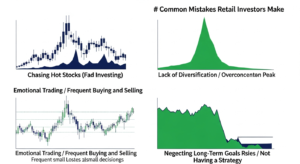
- Fear of Missing Out (FOMO): The urge to jump into a trade because you see it moving quickly, even if it doesn’t align with your trading plan. This often leads to poor entries and rushed decisions.
- Revenge Trading: After a loss, the desire to immediately make back the money by taking larger or more impulsive trades. This invariably leads to further, often larger, losses.
- Overtrading: Taking too many trades, often fueled by boredom, greed, or the need to “do something.” Each trade carries risk, and excessive trading increases exposure to market volatility and transaction costs.
- Confirmation Bias: Only seeking out information that confirms your existing trade idea, ignoring contradictory signals. This can lead to holding onto losing trades for too long.
- Anchoring Bias: Fixating on a specific price point (e.g., your entry price) and being unwilling to close a losing trade because it’s below that anchor.
- Overconfidence: After a string of wins, believing you can’t lose, leading to increased position sizing or deviation from your risk management rules.
To cultivate the necessary psychological resilience, consider these strategies:
- Strict Adherence to Your Trading Plan: Your plan acts as an objective guide. When emotions flare, refer back to your plan. If a trade doesn’t meet your criteria, don’t take it. If your plan says exit, exit.
- Take Regular Breaks: Step away from the screens, especially after a significant win or loss. This helps clear your mind and prevents impulsive decisions.
- Mindfulness and Self-Awareness: Practice recognizing your emotional state before and during trading. Are you feeling frustrated, anxious, or overly euphoric? These are red flags.
- Journaling: Document not just your trades, but also your emotional state and thought process behind each decision. This self-reflection can reveal patterns of impulsive behavior.
- Risk a Fixed, Small Percentage: As discussed, the 1% rule minimizes the emotional impact of any single loss. A small loss is easier to accept and move on from.
- Separate Trading from Results: Focus on executing your plan flawlessly, rather than fixating on the immediate profit or loss of each trade. Consistency in process leads to consistency in results over time.
Even long-term investment firms like Vanguard emphasize the importance of emotional discipline in avoiding market timing and sticking to a long-term strategy. While forex trading is shorter-term, the underlying principle of emotional control remains vital. Mastering your psychology is an ongoing process, but it’s an investment that pays dividends in preserving your funded account and ensuring a sustainable trading career.
Leveraging Technology and Analytics for Enhanced Risk Monitoring
In the fast-paced world of forex trading, particularly for those managing funded accounts, technology and data analytics are indispensable tools for superior forex risk management for funded account programs. Beyond simply executing trades, modern platforms and analytical software provide real-time insights into your performance, exposure, and adherence to risk parameters, enabling proactive adjustments and continuous improvement.
Key technological tools and analytical approaches include:
- Trading Platforms (MetaTrader 4/5, cTrader, TradingView): These platforms are your primary interface with the market. They offer not only execution capabilities but also a wealth of tools for charting, technical analysis, and often, integrated risk management features.
- MetaTrader 4/5 (MT4/MT5): Widely used, these platforms allow for custom indicators (e.g., position size calculators, daily drawdown monitors) and Expert Advisors (EAs) that can automate aspects of risk management, such as setting stop-losses immediately upon entry or closing trades if certain drawdown thresholds are approached.
- TradingView: Excellent for charting and analysis, offering a vast array of indicators and a robust community for sharing ideas. While not a primary execution platform for many prop firms, its analytical capabilities are invaluable for trade planning.
- Performance Tracking Software/Dashboards: Many prop firms provide their own dashboards that display your real-time equity, daily drawdown, overall drawdown, and profit targets. Regularly monitoring these is crucial. Independent trading journals like MyFXBook or TraderSync can also connect to your trading account to provide detailed statistics, including:
- Profit Factor: Gross profit / Gross loss. A factor above 1.0 indicates profitability.
- Expectancy: The average amount you can expect to win or lose per trade.
- Maximum Drawdown: Both absolute and relative.
- Win Rate vs. Average Win/Loss: Helps evaluate the effectiveness of your risk-reward ratio.
These metrics offer an objective view of your strategy’s effectiveness and highlight areas for improvement, such as if your average loss is too large relative to your average win.
- Automated Risk Alerts: Some EAs or custom scripts can be set up to alert you (via email, SMS, or on-platform notification) if your account approaches a daily or overall drawdown limit, or if you’ve exceeded a self-imposed risk threshold. This acts as an early warning system.
- Backtesting and Optimization Tools: As mentioned, these allow you to test strategies against historical data, identifying optimal parameters for entry, exit, and stop-loss placement, thereby refining your risk-reward profile.
The disciplined use of these technological and analytical tools transforms risk management from a reactive measure into a proactive, data-driven process. By continuously monitoring key performance indicators and leveraging automated alerts, funded traders can stay ahead of potential issues, make informed decisions, and ensure their trading aligns with both their personal plan and the prop firm’s stringent rules. This commitment to data-driven decision-making echoes the analytical rigor applied by institutions like the Federal Reserve in assessing economic trends, underscoring its importance in any financial endeavor.
Compliance, Due Diligence, and Choosing Reputable Prop Firms
While the focus of forex risk management for funded account programs is often on trading strategies and personal discipline, an equally critical, yet often overlooked, aspect is the due diligence involved in selecting a reputable proprietary trading firm. Engaging with an illegitimate or poorly managed firm introduces significant external risks that no amount of personal trading skill can mitigate. This section emphasizes the importance of compliance, transparency, and thorough vetting of prop firms.
The forex market, being largely over-the-counter and global, operates with varying degrees of regulation. While prop firms themselves may not always be directly regulated in the same way retail brokers are (e.g., by FINRA or the SEC in the US), their associated brokers often are. However, the funded account model introduces unique considerations:
Key Due Diligence Steps:
- Research Firm Reputation and Reviews: Scour independent review sites, trading forums, and social media for feedback. Look for consistent complaints about payout issues, hidden fees, unfair rule enforcement, or sudden changes to terms and conditions. Be wary of firms with overwhelmingly positive, generic reviews that seem too good to be true.
- Understand Terms and Conditions (T&Cs) Thoroughly: This is paramount. Pay meticulous attention to:
- Drawdown Rules: Absolute vs. trailing, daily vs. overall. How are they calculated?
- Profit Splits: What percentage of profits do you keep? (Commonly 70-90%).
- Payout Process: Minimum payout amounts, frequency, and available methods. Are there any fees?
- Scaling Plan: How can your funded account grow? What are the requirements?
- Restricted Strategies/Instruments: Are certain EAs, news trading, or specific pairs forbidden?
- Fees: Evaluation fees, monthly subscription fees, reset fees.
Ambiguous or overly complex T&Cs are a red flag.
- Check for Transparency: Reputable firms are transparent about their business model, their brokers, and their rules. Look for clear contact information and responsive customer support.
- Avoid Unrealistic Promises: Be extremely skeptical of firms promising guaranteed high returns, easy passes, or exceptionally loose rules. These are often hallmarks of scams. The SEC consistently warns against investment schemes that promise “risk-free” or “guaranteed” returns, a principle that applies here.
- Verify Brokerage Partner: Inquire about the broker the prop firm uses. Research that broker’s regulatory status (e.g., ASIC, FCA, CySEC) and reputation. A prop firm using an unregulated or offshore broker increases your risk.
- Understand the Business Model: Some prop firms primarily profit from evaluation fees, not from successful traders. While not inherently bad, it’s important to understand where their incentives lie.
By conducting thorough due diligence, you can significantly reduce the risk of falling victim to fraudulent schemes or encountering unexpected issues that can undermine your trading efforts. Choosing a reputable firm is a foundational risk management step, ensuring that your hard-earned trading skills are applied in a fair and supportive environment, allowing you to focus on market risks rather than operational risks posed by the firm itself.
Diversification and Hedging Techniques for Forex Portfolios
While often associated with traditional investment portfolios, the principles of diversification and hedging play a crucial, albeit adapted, role in forex risk management for funded account programs. For funded traders, these techniques aim to reduce overall portfolio volatility, mitigate single-currency pair exposure, and protect against unexpected market movements, all while staying within the prop firm’s strict drawdown limits. Unlike long-term investment strategies promoted by institutions like Vanguard or Fidelity, forex diversification is more about managing short-term correlations and specific market risks.
Diversification in Forex:
True diversification in forex is not simply trading multiple pairs. It involves trading pairs that exhibit low or negative correlation to each other. If you trade EUR/USD and GBP/USD, and both are moving in the same direction (high positive correlation), you are not diversified; you are simply increasing your exposure to the USD. A significant move against the USD would impact both positions negatively.
- Identify Non-Correlated Pairs: Use correlation matrices (available on many forex analysis websites or trading platforms) to find pairs with low or negative correlation. For example, EUR/USD and USD/JPY often have a negative correlation, meaning they tend to move in opposite directions. Trading both could potentially balance out losses in one with gains in another, or at least reduce the overall swing of your portfolio.
- Consider Different Currency Blocks: Instead of focusing solely on majors, consider adding pairs from different economic blocs like AUD/NZD, CAD/JPY, or even some emerging market currencies (with caution, due to higher volatility and spread).
- Avoid Over-Diversification: Trading too many pairs can lead to diluted focus and difficulty managing all positions effectively, especially for a single trader. Aim for a manageable number of truly diversified pairs.
- Timeframe Diversification: While less common for funded accounts due to strict daily rules, some traders might employ different strategies on different timeframes (e.g., a swing trade on a daily chart alongside an intraday scalp), though this adds complexity and requires robust planning.
Hedging Techniques in Forex:
Hedging involves taking an offsetting position to reduce your risk on an existing trade or portfolio. For funded accounts, where direct hedging (opening a buy and sell on the same pair) might be restricted by some firms or simply inefficient due to spreads, more strategic approaches are needed.
- Correlation Hedging: If you are long EUR/USD and anticipate USD strength, you might consider taking a short position on a highly correlated pair like GBP/USD, but with a smaller lot size or a tighter stop-loss. This isn’t a perfect hedge but can mitigate some of the USD-related risk.
- Options and Futures (Advanced): For very large funded accounts, or those with access to broader markets, forex options or futures contracts can be used to hedge spot positions. For example, buying a put option on a currency pair you are long provides downside protection for a premium. This is generally beyond the scope of most retail funded programs but is a sophisticated hedging tool.
- Event-Based Hedging: Ahead of major economic news events (e.g., Non-Farm Payrolls, Federal Reserve interest rate decisions), some traders might reduce exposure or place small, opposing positions on highly sensitive pairs to capitalize on volatility while limiting downside risk on core positions. However, this is extremely high-risk and often restricted by prop firms.
The overarching goal is to minimize the impact of adverse market movements on your overall account equity, thereby protecting against breaching drawdown limits. While diversification and hedging don’t eliminate risk, they are powerful tools to manage it systematically, allowing funded traders to navigate the complex forex landscape with greater resilience and strategic foresight.
Key Takeaways for Funded Forex Risk Management:
- Strictly understand and adhere to all prop firm rules, especially daily and overall drawdown limits, to maintain your funded status.
- Develop a comprehensive trading plan with clear entry/exit criteria and a positive risk-reward ratio (e.g., 1:2 or 1:3).
- Implement rigorous position sizing (e.g., 1% risk per trade) and logical stop-loss placements (technical or volatility-based).
- Cultivate strong psychological discipline to combat FOMO, revenge trading, and other emotional pitfalls.
- Utilize trading platform tools and performance analytics to monitor risk exposure and strategy effectiveness continuously.
Comparison of Key Risk Metrics in Funded Accounts
Understanding how different prop firms structure their risk parameters is crucial for a funded trader. This table compares common risk metrics across hypothetical funded account programs, illustrating the nuances that impact a trader’s strategy and risk exposure. These figures are illustrative and vary widely among actual prop firms.
| Risk Metric | Prop Firm A (Aggressive) | Prop Firm B (Balanced) | Prop Firm C (Conservative) | Trader’s Personal Goal |
|---|---|---|---|---|
| Starting Capital | $100,000 | $100,000 | $100,000 | N/A |
| Max Overall Drawdown | 12% ($12,000) | 10% ($10,000) | 8% ($8,000) | < 7% |
| Max Daily Drawdown | 6% ($6,000) | 5% ($5,000) | 4% ($4,000) | < 3% |
| Profit Target (Evaluation) | 10% ($10,000) | 8% ($8,000) | 6% ($6,000) | Consistently achieve |
| Max Risk Per Trade (Trader’s Rule) | 1.5% | 1.0% | 0.5% | Varies by confidence |
| Payout Split (Trader’s Share) | 70% | 80% | 90% | Maximize |
As seen in the table, firms labeled “Aggressive” might offer higher drawdown limits, potentially allowing for larger single-trade risks, but this also means less room for error. “Conservative” firms impose stricter limits but often offer higher profit splits as a reward for disciplined trading. A trader’s personal risk goals should always be more stringent than the prop firm’s limits, providing a safety buffer against unexpected market moves or small errors. For instance, if a prop firm allows a 5% daily drawdown, a prudent trader might set a personal daily stop-loss at 3% to avoid premature account termination. This proactive approach to risk management is a hallmark of successful funded traders.
Frequently Asked Questions About Forex Risk Management for Funded Accounts
What is the most common reason funded traders fail?
The most common reason funded traders fail is a lack of strict adherence to risk management rules, particularly breaching daily or overall drawdown limits. This often stems from overtrading, revenge trading after losses, or using excessive position sizes that do not align with the firm’s rules or a sound risk-reward strategy. Emotional decision-making under pressure is a significant contributing factor.
How does maximum daily drawdown differ from maximum overall drawdown?
Maximum daily drawdown is the maximum loss allowed within a single trading day, usually calculated from the day’s starting balance or equity. Breaching it results in immediate account termination for that day. Maximum overall drawdown (or trailing drawdown) is the maximum loss permitted from the highest point your account’s equity has reached, preventing the account from falling below a certain threshold over its