
TL;DR
The decision between complimentary and premium investment software hinges on your trading style, capital, and commitment. While basic broker platforms and public financial sites offer a solid foundation for beginners, advanced traders often benefit from the real-time data, sophisticated analytics, and customization of paid subscriptions. These premium options can justify their cost by improving decision-making, efficiency, and ultimately, profitability.
From charting software to real-time data feeds, the market offers a spectrum of options, each promising an edge. This comprehensive guide will dissect the landscape of investment software, exploring the capabilities of readily available free resources against the enhanced features of premium platforms. We will delve into specific categories, evaluating their utility for various trading styles, and provide a data-driven perspective to help you decide when an investment in tools can genuinely pay off, ensuring you make informed choices that align with your financial goals and trading intensity.
Types of Charting Platforms and When to Upgrade
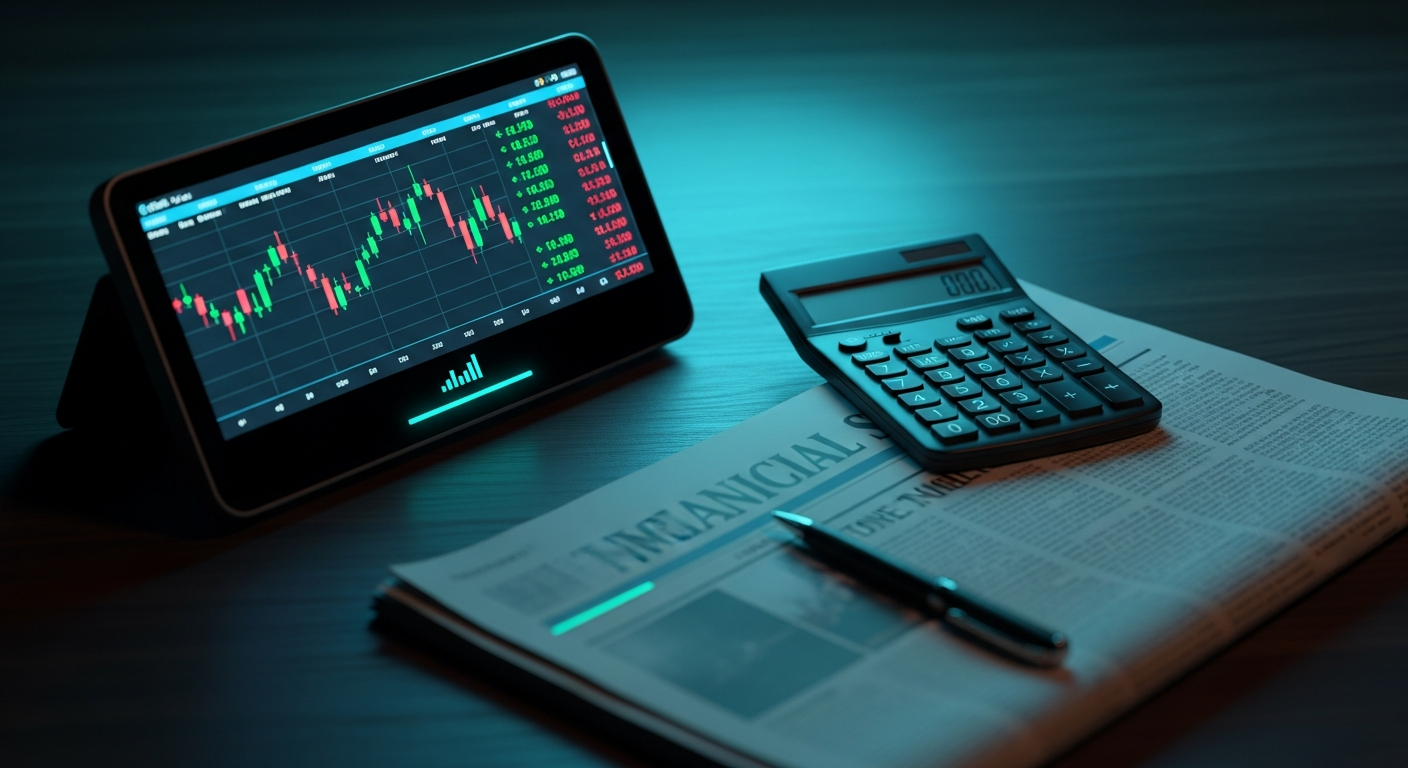
For many active traders, charting and technical analysis form the bedrock of their decision-making process. These tools allow investors to visualize price movements, identify trends, and spot potential entry and exit points using a variety of indicators. The market offers a wide array of options, from basic free services to sophisticated premium platforms, each with distinct advantages and limitations.
Free charting platforms often come bundled with brokerage accounts or are available through popular financial websites. Tools like those integrated into Fidelity’s Active Trader Pro, Charles Schwab’s StreetSmart Edge, or TD Ameritrade’s Thinkorswim provide robust charting capabilities for their clients. These typically include a decent selection of technical indicators, multiple chart types, and drawing tools. Independent platforms like TradingView’s free tier or Yahoo Finance also offer excellent basic charting. TradingView, for instance, allows users to access hundreds of indicators, create watchlists, and share ideas, albeit with limitations such as a maximum of three indicators per chart and advertisements.
However, the limitations of free tools become apparent as a trader’s needs grow. Delayed data is a common constraint, with free platforms often providing quotes that are 15-20 minutes behind real-time market activity. Premium charting platforms address these limitations directly. TradingView’s paid subscriptions, for example, offer real-time data across various exchanges, significantly more indicators per chart, and the ability to backtest strategies. Services like TrendSpider specialize in automated technical analysis, using algorithms to identify trendlines and candlestick patterns, saving traders considerable time.
Consider the cost-benefit analysis in relation to your overall trading costs. A premium subscription providing access to Level 2 data and server-side alerts is crucial for advanced technical analysis. For a trader managing a portfolio of $50,000, a single well-timed trade based on superior data could easily offset this annual cost by minimizing slippage. The SEC’s Rule 606 requires brokers to disclose order routing practices, which directly impacts execution costs; having premium charting tools helps you verify if you are getting the best fills. The choice between free and paid charting tools ultimately depends on your trading frequency, capital at risk, and the depth of analysis required.
[INLINE IMAGE 1: TradingView charting platform interface displaying technical analysis indicators and real-time market data.]
The Science of Fundamental Research and Stock Screening
Identifying promising investment opportunities in a vast market of thousands of stocks requires efficient filtering and in-depth research. Stock screeners and fundamental analysis tools are indispensable for this task, allowing investors to narrow down potential candidates based on specific criteria. The distinction between free and paid options often lies in the granularity of data, the sophistication of screening parameters, and the depth of research reports.
Free stock screeners are widely available and serve as an excellent starting point for retail investors. Platforms like Finviz offer robust screening capabilities, allowing users to filter stocks by market capitalization, industry, price, dividend yield, and various technical and fundamental metrics. While the free version includes advertising and slightly delayed data, it is remarkably powerful for generating initial watchlists. Many brokerage firms also offer proprietary screeners to their clients, leveraging their extensive databases to help investors find funds and stocks that align with their investment philosophy.
The limitations of free screeners typically involve restricted access to real-time data, fewer advanced filtering parameters, and less comprehensive fundamental data. Paid fundamental research tools take this analysis to a much deeper level. Services like Zacks Premium, Morningstar Premium, and Value Line provide proprietary research, analyst ratings, detailed financial models, and comprehensive reports that go beyond publicly available information. Zacks Premium, for instance, offers its “Zacks Rank” system, identifying stocks with the strongest earnings estimate revisions.
For institutional investors and serious professionals, tools like the Bloomberg Terminal offer unparalleled access to global financial data. While these services come with high annual costs, they provide real-time data across all asset classes and direct access to company filings. The IRS relies on accurate financial reporting, and these tools aggregate and present such data efficiently. For retail investors with significant capital, premium subscriptions can be a worthwhile investment, providing deeper insights that can lead to more informed decisions and potentially higher returns, justifying the cost by uncovering undervalued assets and optimizing long-term portfolio expenses.
How Does Real-Time Market Data Impact Your Bottom Line?
In the fast-paced world of stock trading, access to real-time market data and breaking news can be the difference between profit and loss. While free sources provide a baseline of information, paid services offer a significant advantage in speed, depth, and customization, crucial for traders whose strategies depend on immediate reactions to market-moving events.
Free market data and news feeds are readily available through various channels like Google News, Yahoo Finance, and CNBC. Many brokerage platforms also provide integrated news feeds and basic real-time quotes for stocks traded on major exchanges. Social media platforms have become informal but rapid sources for breaking news, though verification is always critical. However, the “real-time” aspect often comes with caveats. Free quotes typically have a 15-20 minute delay, making them unsuitable for active day trading or scalping strategies where milliseconds matter.
Paid market data and news feeds provide a distinct competitive edge. Services like Benzinga Pro are designed specifically for active traders, offering real-time squawk box alerts, direct access to earnings calls, and detailed news analysis that often precedes broader market awareness. These platforms also provide Level 2 data, which shows the depth of buy and sell orders at different price levels, offering insights into market sentiment. Seeing a large block of buy orders at a specific price can signal a potential floor, allowing you to optimize your entry and reduce hidden bid-ask spread costs.
The value of real-time data is directly proportional to the sensitivity of your trading strategy to time. FINRA Rule 5310 (Best Execution) mandates that firms use reasonable diligence to ascertain the best market for the subject security, and having your own real-time data helps you hold your broker accountable. For a day trader, even a few seconds’ delay can lead to significant slippage. Investing in a premium news and data service could be a small price to pay for consistent, actionable insights that help maintain or enhance profitability.
Optimizing Your Investment Journey with Portfolio Trackers
Effective portfolio management and performance tracking are crucial for understanding investment health, identifying areas for improvement, and making informed decisions about asset allocation. While basic tools can get you started, advanced software offers deeper insights, automation, and sophisticated analytics that can significantly optimize your investment journey.
Free portfolio tracking options often include the tools provided by your brokerage firm. Most brokers offer dashboards that display your current holdings, their market value, and basic performance metrics over different timeframes. For investors with multiple accounts across different institutions, free aggregators allow you to link all your financial accounts to get a holistic view of your net worth. Google Sheets or Excel also serve as powerful, free, customizable tools for tracking, especially for those comfortable with formulas and manual data entry.
The limitations of free options typically involve manual data entry for advanced metrics, lack of sophisticated analytics, and limited integration with tax planning or rebalancing features. Paid portfolio management software addresses these gaps. Quicken Premier, for example, offers robust investment tracking, allowing users to categorize transactions, track cost basis, and even download data directly from many financial institutions. Specialized trading journals like Tradervue or Edgewonk often include performance analytics specifically tailored for active traders, calculating metrics like win rate and profit factor.
For more sophisticated investors, platforms that offer automated tax-loss harvesting and advanced risk analysis can be invaluable. Understanding your true rate of return, adjusted for inflation and taxes, is critical. The IRS provides strict guidelines on capital gains and losses, and premium software can help accurately track these, potentially saving significant time and reducing errors during tax season. Investing in a paid portfolio tracker can provide insights that lead to a measurable improvement in annual returns due to better risk management, effectively lowering your long-term investment costs.
Why Should You Backtest Trading Strategies Before Execution?
Before deploying a trading strategy with real capital, it is paramount to validate its efficacy using historical data. Backtesting platforms allow traders to simulate how a strategy would have performed in the past, providing crucial insights into its potential profitability, risk, and robustness. The offerings range from basic, manual methods to sophisticated, automated systems, each catering to different levels of technical expertise and trading complexity.
Free backtesting options are often limited or require significant manual effort. Many charting platforms offer basic capabilities to apply indicators to historical data. However, automatically executing a defined strategy across an extended period and generating comprehensive performance reports is typically restricted. Traders might resort to manual backtesting using spreadsheets and historical price data. While educational, this method is time-consuming, prone to human error, and impractical for complex strategies or large datasets.
Paid backtesting and strategy development platforms offer a quantum leap in capability and efficiency. Brokerage platforms like TradeStation provide integrated backtesting engines that allow users to write custom strategies and test them against extensive historical data. Dedicated platforms like QuantConnect or Amibroker provide even more advanced features, allowing users to develop, backtest, and deploy algorithmic trading strategies with access to petabytes of historical data.
The value proposition here is immense: a thoroughly backtested strategy significantly reduces the risk of deploying an unproven system with real money. The SEC and FINRA consistently advise investors to exercise due diligence and understand the risks associated with any trading strategy. For a trader aiming to develop systematic strategies, investing in a robust backtesting platform is a necessity. A strategy that generates even a modest alpha can easily justify the software cost, demonstrating how evaluating software ROI leads to substantial, risk-mitigated gains.
[INLINE IMAGE 5: Comparison chart showing backtested algorithmic trading results versus manual trading performance.]
Categories of Tax Reporting Tools for IRS Compliance
Beyond executing trades, diligent record-keeping is a cornerstone of successful and compliant trading. Trading journals provide a mechanism for self-reflection and performance analysis, while specialized tax reporting tools simplify the complex process of fulfilling obligations to the IRS. The choice between free and paid solutions often comes down to automation, analytical depth, and ease of compliance.
Free options for trading journals typically involve using spreadsheets or simple note-taking applications. Traders can manually log each trade, including entry/exit points, position size, rationale, and emotional state. For tax reporting, many retail investors rely on the statements provided by their brokerage firms, such as Form 1099-B. For straightforward trading activities, this might suffice. The IRS provides Publication 550, “Investment Income and Expenses,” which outlines how to report various investment-related income and deductions.
However, as trading activity increases in frequency and complexity, the limitations of free tools become apparent. Manually maintaining a detailed trading journal can be time-consuming and prone to inconsistencies. Paid trading journals offer automated trade import directly from your brokerage accounts. They provide advanced analytics, breaking down performance by strategy, market, or time of day. These platforms can calculate critical metrics like profit factor and maximum drawdown, offering insights that are difficult to glean from a simple spreadsheet.
For tax reporting, specialized software can streamline the process significantly. These programs allow direct import of 1099-B data, automatically calculate wash sales, and help optimize capital gains and losses. The SEC mandates brokers to maintain accurate records, and these tools help individuals align with those standards. Investing in a paid trading journal and tax software is a prudent decision that saves time, improves performance, and ensures compliance with IRS regulations, ultimately reducing your tax-related trading costs.
What Are the Hidden Costs of Automated Trading APIs?
The allure of automated trading, where predefined strategies execute trades without constant human intervention, has grown significantly among retail investors. This realm often involves leveraging Application Programming Interfaces (APIs) to connect trading platforms with custom-built algorithms. The spectrum of options ranges from basic, free API access to sophisticated, high-performance paid solutions, each with implications for cost, complexity, and potential advantage.
Free API access is increasingly offered by a growing number of brokers, particularly those catering to a tech-savvy client base. Platforms like Alpaca Markets are built with API-first principles, providing commission-free trading and robust REST APIs for both paper trading and live trading. These free APIs enable traders to send orders, retrieve market data, access account information, and manage positions programmatically. The primary advantage here is the ability to experiment with algorithmic trading without incurring significant software costs.
However, free API access typically comes with limitations. Rate limits can be restrictive, potentially hindering high-frequency strategies. Data feeds might be delayed or offer limited depth. For serious algorithmic traders, paid API access and dedicated automated trading platforms offer crucial enhancements. Premium tiers might offer higher rate limits, access to more granular data, and dedicated technical support. Specialized platforms provide robust infrastructure for deploying and managing algorithms, including co-location services for ultra-low latency execution.
The cost justification for paid automated trading tools stems from the potential for improved execution, reduced slippage, and the ability to capitalize on fleeting market opportunities. The Federal Reserve’s monitoring of market stability underscores the importance of well-regulated and efficient trading systems. If an algorithm can consistently generate an additional return compared to manual trading due to better execution and speed, it easily offsets the API subscription cost, proving that managing your algorithmic trading fees is just as important as the strategy itself.
Key Takeaways and Free vs. Paid Comparison
Core Principles for Choosing Trading Software
- Assess Your Needs First: Beginners and long-term investors can often thrive with free tools, while active traders and those with larger capital benefit most from paid subscriptions.
- Data Quality Matters: Real-time data, Level 2 insights, and comprehensive historical data are key differentiators for paid platforms, crucial for time-sensitive strategies.
- Efficiency & Automation: Paid tools offer advanced screening, automated backtesting, detailed performance analytics, and algorithmic trading capabilities that save time and reduce manual errors.
- Compliance & Insight: Specialized trading journals and tax reporting software streamline record-keeping and tax obligations, while offering deeper insights into trading psychology and strategy effectiveness.
- Cost vs. ROI: Evaluate the potential return on investment (ROI) from a paid tool. If it genuinely improves your decision-making, saves significant time, or mitigates risk, the cost can be a worthwhile investment in your trading success.
Comparison Table: Free vs. Paid Trading Tools at a Glance
To help illustrate the differences, here is a comparison of common trading tool categories, highlighting typical free alternatives versus their paid counterparts and key differentiating features.
| Tool Category | Free Alternatives (Examples) | Paid Alternatives (Examples) | Key Differentiating Features of Paid Tools | Typical Cost Range (Annual) |
|---|---|---|---|---|
| Charting & Technical Analysis | TradingView (basic), Yahoo Finance, Broker Platforms | TradingView Pro/Premium, MetaStock, TrendSpider | Real-time data, more indicators/charts, advanced chart types, automated pattern recognition. | $150 – $1,500+ |
| Stock Screeners & Fundamental Research | Finviz (free), Yahoo Finance, Broker Screeners | Zacks Premium, Morningstar Premium, Bloomberg Terminal | Proprietary ratings/research, deeper financial metrics, real-time data, advanced filtering. | $200 – $600 (retail) |
| Real-time Market Data & News | Google News, CNBC, MarketWatch, Basic Broker Feeds | Benzinga Pro, Bloomberg Terminal, Refinitiv Eikon | Sub-second news alerts, Level 2 data, squawk box, advanced filtering, institutional-grade data. | $1,200 – $3,600+ |
| Portfolio Management & Tracking | Broker Dashboards, Google Sheets, Personal Capital | Quicken Premier, Empower Personal Wealth, specialized journals | Automated data import, advanced performance metrics, tax-loss harvesting features. | $70 – $600 |
| Backtesting & Strategy Development | Manual spreadsheets, basic broker tools, open-source libraries | TradeStation, Thinkorswim (advanced), QuantConnect | Extensive historical data, custom scripting languages, automated strategy execution. | $300 – $1,000+ |
| Trading Journals & Tax Reporting | Excel/Google Sheets, Broker 1099-B statements | Tradervue, Edgewonk, TurboTax Premier | Automated trade import, advanced performance analytics, wash sale tracking. | $100 – $600 |
| Automated Trading & API Access | Alpaca Markets, Interactive Brokers (basic API) | Interactive Brokers (premium API), dedicated algo platforms | Higher API rate limits, granular/tick data, co-location, dedicated support. | $600 – $2,400+ |
Frequently Asked Questions About Trading Tools
Are free trading tools sufficient for beginners?
Yes, absolutely. For beginners, free trading tools offered by reputable brokers (like Fidelity, Schwab) or public financial websites (like Yahoo Finance, TradingView’s free tier, Finviz) provide an excellent foundation. They allow you to learn charting, basic fundamental analysis, and portfolio tracking without incurring additional costs. As your experience grows and your trading capital increases, you can then evaluate if paid tools offer a significant enough edge to justify their expense.
When should a retail investor consider paying for trading tools?
A retail investor should consider paying for trading tools when their current free resources limit their ability to execute their strategy effectively, gain crucial insights, or manage risk. If a paid tool can demonstrably lower your overall trading fees through better execution or tax optimization, it becomes a necessary investment rather than a luxury.
Sources & References
- U.S. Securities and Exchange Commission (SEC). “Rule 606: Disclosure of Order Routing Information.” SEC.gov.
- Financial Industry Regulatory Authority (FINRA). “Rule 5310: Best Execution and Interpositioning.” FINRA Manual.
- Internal Revenue Service (IRS). “Publication 550: Investment Income and Expenses.” IRS.gov.
- Federal Reserve. “Financial Stability Report.” Federalreserve.gov.
Reviewed by Dr. Elena Rostova, Quantitative Finance Specialist — Last reviewed: October 2023