Everything You Need To Know About Applied Finance

In a world of ever-fluctuating markets, evolving financial products, and increasing economic complexity, understanding
Everything you need to know about applied finance
In a world of ever-fluctuating markets, evolving financial products, and increasing economic complexity, understanding and applying sound financial principles is no longer a luxury but a necessity. For retail investors and personal finance enthusiasts alike, the journey from theoretical knowledge to practical application can seem daunting. This is where applied finance steps in, bridging the gap between abstract economic theories and the tangible decisions you make every day. It’s about empowering you to manage your money effectively, grow your wealth strategically, and secure your financial future. At Trading Costs, we believe that everyone deserves the tools and knowledge to navigate their financial landscape with confidence. Join us as we explore everything you need to know about applied finance, helping you transform financial concepts into actionable strategies for success in 2026 and beyond.

Understanding Applied Finance: Bridging Theory and Practice

At its core, applied finance is the practical application of financial theories and models to real-world situations. While academic finance delves into the intricate theories of market efficiency, asset pricing, and corporate finance, applied finance takes those insights and translates them into actionable strategies for individuals, businesses, and institutions. For the retail investor and personal finance enthusiast, this means moving beyond simply understanding concepts like compound interest or diversification, to actually implementing them in your budgeting, saving, investing, and debt management decisions.

Think of it this way: knowing the physics of flight is academic finance; actually flying a plane is applied finance. In your personal financial journey, applied finance means constructing a budget that works for you, choosing the right investment vehicles to meet your goals, managing your debt efficiently, and planning for major life events like retirement or purchasing a home. It’s about making informed choices that align with your personal circumstances, risk tolerance, and long-term aspirations.

The significance of applied finance cannot be overstated. In today’s dynamic economic environment, individuals are increasingly responsible for their own financial well-being. Pensions are less common, healthcare costs are rising, and the burden of saving for retirement often falls squarely on the individual. This necessitates a proactive approach to personal finance, grounded in sound applied principles. It involves understanding important financial concepts everyone should understand, such as the time value of money, opportunity cost, and the power of compound interest, and then knowing exactly how to use these concepts to your advantage. Applied finance empowers you to take control, make smarter decisions, and build a resilient financial future, rather than passively reacting to economic shifts.

The Foundational Pillars: Essential Concepts for Personal Finance Mastery

Everything You Need To Know About Applied Finance

Building a robust financial framework begins with mastering a few foundational pillars. These are the bedrock upon which all other applied finance strategies are built.

  • Budgeting & Cash Flow Management: This is arguably the most critical starting point. Applied finance dictates that you must know where your money is coming from and where it’s going. A practical budget isn’t about deprivation; it’s about intentional spending and saving. Start by tracking every dollar for a month or two to identify patterns. Categorize your expenses into fixed (rent, mortgage, loan payments) and variable (groceries, entertainment, utilities). Tools, apps, and even simple spreadsheets can help you visualize your cash flow. The goal is to ensure your income exceeds your expenses, creating a surplus for savings and investments. Regularly reviewing and adjusting your budget is a key aspect of applied financial management.
  • Saving & Emergency Funds: Once you’ve established a positive cash flow, the next applied step is to build an emergency fund. This fund, typically 3-6 months’ worth of essential living expenses, acts as a critical buffer against unforeseen circumstances like job loss, medical emergencies, or unexpected home repairs. Without it, you might be forced to incur high-interest debt or liquidate investments prematurely. Beyond the emergency fund, applied finance encourages targeted savings for specific goals, such as a down payment on a house, a new car, or a significant vacation. Automating your savings by setting up regular transfers from your checking to a separate savings account is one of the easiest and most effective applied finance strategies.
  • Debt Management: Not all debt is created equal. Applied finance teaches us to distinguish between “good” debt (e.g., a mortgage or student loan with a reasonable interest rate that helps build an asset or increase earning potential) and “bad” debt (e.g., high-interest credit card debt for depreciating assets). Effectively managing debt involves prioritizing repayment, especially for high-interest obligations. Strategies like the “debt snowball” (paying off smallest debts first for motivational wins) or “debt avalanche” (paying off highest interest debts first to save money) are practical applications. Consolidating high-interest debt into a lower-interest personal loan can also be a smart move, but only if it reduces your overall interest burden and you commit to the new payment schedule. Understanding the true cost of debt, considering interest accrual and compounding, is an important financial concept everyone should understand and apply.

When considering purchases, especially expensive ones, applied finance encourages careful consideration. For instance, finding easy ways to save big on expensive purchases could involve waiting for sales, buying refurbished items, using comparison shopping tools, or even negotiating prices. These simple actions directly impact your budget and free up more funds for saving and investing, demonstrating practical applied finance in action.

Strategic Investing: Growing Your Wealth with Applied Principles

💡 Pro Tip

Once your foundational pillars are solid, applied finance shifts its focus to growing your wealth through strategic investing. This isn’t about getting rich quick; it’s about consistent, disciplined application of proven principles over the long term.
  • Defining Your Investment Goals and Risk Tolerance: Before investing a single dollar, applied finance dictates that you must clearly define what you’re investing for (e.g., retirement, a child’s education, a down payment) and when you’ll need the money. This helps determine your time horizon. Equally important is understanding your risk tolerance—how much volatility and potential loss you can comfortably stomach. A young investor with a 30-year time horizon might have a higher risk tolerance than someone nearing retirement, leading to different asset allocations.
  • Asset Allocation and Diversification: These are two of the most fundamental applied investment principles. Asset allocation refers to how you divide your investment portfolio among different asset classes like stocks, bonds, and cash equivalents. The optimal allocation depends on your goals, time horizon, and risk tolerance. Diversification, on the other hand, is the strategy of spreading your investments across various assets within each class (e.g., different industries, company sizes, geographies for stocks) to minimize risk. The adage “don’t put all your eggs in one basket” is a perfect summary of this applied principle. It reduces the impact of poor performance from any single investment on your overall portfolio. This is an important financial concept everyone should understand to protect their capital.
  • Understanding Different Asset Classes:
    • Stocks (Equities): Represent ownership in a company. They offer potential for higher returns but also carry higher risk and volatility.
    • Bonds (Fixed Income): Essentially loans to governments or corporations. Generally less volatile than stocks, offering more predictable income streams, but with lower growth potential.
    • Real Estate: Can include direct property ownership or real estate investment trusts (REITs). Offers potential for capital appreciation and rental income, but can be illiquid.
    • Cash Equivalents: Low-risk, highly liquid investments like money market funds or high-yield savings accounts. Primarily used for emergency funds or short-term needs.
  • Passive vs. Active Investing: Applied finance offers different approaches. Passive investing typically involves investing in low-cost index funds or ETFs that track a broad market index (e.g., S&P 500). The goal is to match market returns rather than beat them, relying on diversification and long-term market growth. Active investing involves buying and selling individual securities or actively managed funds with the aim of outperforming the market. While potentially offering higher returns, it also carries higher risk, often higher fees, and requires significant research and time. For most retail investors, a passively managed, diversified portfolio is a highly effective applied strategy.
  • Rebalancing Your Portfolio: Over time, market fluctuations will cause your asset allocation to drift from its original target. Applied finance dictates that you should periodically rebalance your portfolio (e.g., annually) to bring it back in line with your desired percentages. This often involves selling some assets that have performed well and buying more of those that have underperformed, which is a disciplined approach to “buy low, sell high.”
  • Tax-Efficient Investing: Understanding how taxes impact your investment returns is a crucial applied finance concept. Utilizing tax-advantaged accounts like 401(k)s, IRAs, Roth IRAs, and 529 plans can significantly boost your long-term growth by allowing your investments to grow tax-deferred or tax-free. Contributions to traditional retirement accounts are often tax-deductible, while Roth accounts offer tax-free withdrawals in retirement.

Risk Management and Protection: Safeguarding Your Financial Future

Everything You Need To Know About Applied Finance

Even the most meticulously planned financial strategy can be derailed by unexpected events. Applied finance therefore places a strong emphasis on identifying, mitigating, and protecting against various financial risks.

  • Identifying Financial Risks:
    • Market Risk: The risk that the overall market or a specific sector will decline, impacting your investments. Diversification is your primary applied defense here.
    • Inflation Risk: The risk that the purchasing power of your money will erode over time. Investing in assets that historically outpace inflation (like stocks or real estate) is an applied strategy.
    • Interest Rate Risk: Particularly relevant for bondholders, where rising interest rates can decrease the value of existing bonds.
    • Personal Risks: These include health issues, disability, job loss, property damage, or even premature death. These risks can have devastating financial consequences if not adequately addressed.
  • Insurance as a Tool: Insurance is a fundamental applied finance tool for transferring risk. Instead of bearing the full financial burden of an unexpected event, you pay a smaller, regular premium to an insurance company, which then covers specified losses.
    • Health Insurance: Essential for covering medical expenses. High deductibles can be managed with a Health Savings Account (HSA) for those with eligible plans, offering a triple tax advantage.
    • Auto Insurance: Legally required in most places, it protects against financial loss in case of accidents or theft.
    • Homeowners/Renters Insurance: Protects your property and possessions from damage or theft and provides liability coverage.
    • Disability Insurance: Replaces a portion of your income if you become unable to work due to illness or injury. A crucial protection for your income stream.
  • Life Insurance: This is a critical component of risk management, especially for those with dependents. It provides a financial safety net for your loved ones in the event of your premature death.
    • Term Life Insurance: Provides coverage for a specific period (e.g., 10, 20, 30 years). It’s generally more affordable and straightforward, covering your income-earning years. For most individuals, term life is the preferred choice for pure coverage.
    • Whole Life Insurance: Provides coverage for your entire life and includes a cash value component that grows over time. It’s more complex and significantly more expensive than term life. While it offers a savings component, investment returns are often modest, and high fees can eat into returns.

    To understand how to save money on your life insurance policy, focus on these applied strategies: purchase term life instead of whole life if your primary goal is income replacement; buy coverage when you’re younger and healthier; assess your actual needs (income replacement, debt coverage, future expenses for dependents) rather than over-insuring; and shop around for quotes from multiple reputable insurers. Maintaining a healthy lifestyle can also lead to lower premiums.

  • Estate Planning Basics: While often associated with the wealthy, basic estate planning is an essential applied finance step for everyone. It ensures your assets are distributed according to your wishes and that your loved ones are cared for.
    • Wills: Legally dictate how your assets will be distributed and can name guardians for minor children.
    • Trusts: Can offer more control over asset distribution, potentially avoid probate, and provide tax advantages.
    • Power of Attorney: Designates someone to make financial and medical decisions on your behalf if you become incapacitated.

Advanced Applied Finance for Long-Term Prosperity

Once you’ve mastered the foundational and risk management aspects, applied finance expands into more nuanced areas designed to optimize your long-term prosperity.

  • Retirement Planning: This is arguably the largest and most critical long-term financial goal for most individuals. Applied finance in retirement planning involves:
    • Setting Clear Goals: How much income will you need in retirement? What lifestyle do you envision?
    • Utilizing Retirement Accounts: Maximizing contributions to tax-advantaged accounts like 401(k)s, 403(b)s, IRAs, and Roth IRAs is paramount. Understanding the differences between traditional (pre-tax contributions, tax-deferred growth, taxable withdrawals) and Roth (after-tax contributions, tax-free growth, tax-free withdrawals in retirement) options allows you to choose the best strategy based on your current and projected future tax brackets. For 2026, contribution limits for these accounts will likely see slight increases, making it even more important to stay informed.
    • Projecting Future Needs: Using retirement calculators to estimate how much you need to save and what your investment returns need to be. Factor in inflation and potential healthcare costs.
    • Catch-Up Contributions: For those aged 50 and over, taking advantage of additional catch-up contributions to 401(k)s and IRAs can significantly boost retirement savings.
  • Tax Planning: Taxes are one of your largest expenses. Applied finance aims to minimize your tax burden legally and strategically. This includes:
    • Understanding Deductions and Credits: Knowing which expenses are deductible (e.g., student loan interest, HSA contributions, traditional IRA contributions) and which credits you qualify for (e.g., child tax credit, education credits) can reduce your taxable income or your tax bill directly.
    • Tax-Loss Harvesting: Strategically selling investments at a loss to offset capital gains and potentially a limited amount of ordinary income.
    • Location-Based Tax Planning: Considering state income and property taxes if you’re planning a move.
    • Qualified Dividends and Long-Term Capital Gains: Understanding that these are often taxed at lower rates than ordinary income.
  • Education Planning: For those with children, saving for college or other higher education is a significant financial undertaking. Applied finance strategies include:
    • 529 Plans: Tax-advantaged savings plans specifically designed for education expenses. Earnings grow tax-deferred, and qualified withdrawals are tax-free. Many states also offer a tax deduction for contributions.
    • Coverdell ESAs: Another option, though with lower contribution limits and income restrictions.
    • UGMA/UTMA Accounts: Custodial accounts that hold assets for the benefit of a minor, though they offer less control and potentially higher tax implications than 529s.
    • Considering Financial Aid and Scholarships: Understanding the FAFSA process and actively seeking out grants and scholarships can significantly reduce the burden of educational costs.
  • Real Estate as an Investment: For many, homeownership is the largest single investment. Applied finance involves:
    • Understanding Mortgage Options: Fixed-rate vs. adjustable-rate, 15-year vs. 30-year terms, and understanding interest rates and closing costs.
    • Leveraging Home Equity: Using home equity through loans or lines of credit for major expenses or investments, but with careful consideration of the risks.
    • Investment Properties: For those looking beyond primary residence, applied finance principles are crucial for evaluating rental income potential, property management costs, and market appreciation.

Leveraging Technology and Resources in Applied Finance

The digital age has revolutionized how we manage our money, offering an unprecedented array of tools and resources to aid in applied finance. Embracing these can significantly enhance your financial journey.

  • Financial Planning Software and Apps: From budgeting apps like Mint or YNAB (You Need A Budget) to comprehensive personal finance platforms, these tools automate tracking, categorize expenses, set financial goals, and provide real-time insights into your financial health. They integrate with your bank accounts and credit cards, making the application of budgeting and cash flow principles incredibly efficient.
  • Robo-Advisors: For investors who prefer a hands-off approach but want professional guidance, robo-advisors (e.g., Betterment, Wealthfront) offer automated, algorithm-driven investment management. They build diversified portfolios based on your risk tolerance and goals, rebalance automatically, and often come with lower fees than traditional financial advisors. They embody applied finance by making sophisticated investing strategies accessible.
  • Online Brokers: Platforms like Fidelity, Charles Schwab, and Vanguard provide access to a vast array of investment vehicles, from individual stocks and bonds to mutual funds and ETFs. Their user-friendly interfaces, extensive research tools, and often commission-free trading make it easier for retail investors to implement their chosen investment strategies.
  • Educational Resources: The internet is a treasure trove of financial knowledge. Blogs like Trading Costs, podcasts, online courses, and reputable financial news websites offer continuous learning opportunities. Staying informed about market trends, economic indicators, and new financial products is a key aspect of applied finance, helping you adapt your strategies.
  • Data Analytics for Personal Finance: Beyond simple tracking, some advanced tools offer predictive analytics, helping you forecast your financial future based on current habits. This allows for proactive adjustments and goal setting, turning raw data into actionable insights for your financial decision-making.

The Future Landscape of Applied Finance in 2026

As we look towards 2026 and beyond, the realm of applied finance will continue to evolve, driven by technological advancements, demographic shifts, and changing economic paradigms. Staying abreast of these trends will be crucial for maintaining financial agility and success.

  • AI and Hyper-Personalization: Artificial intelligence will increasingly power more sophisticated financial tools, offering hyper-personalized advice and predictive insights far beyond what is currently available. AI-driven platforms will analyze your spending habits, income patterns, and future goals to suggest tailored investment strategies, optimal savings rates, and even personalized recommendations for easy ways to save big on expensive purchases or optimize your insurance policies.
  • Blockchain and Decentralized Finance (DeFi): While still in nascent stages for mainstream retail application, blockchain technology could revolutionize how assets are owned, transferred, and managed. While speculative cryptocurrencies capture headlines, the underlying distributed ledger technology has the potential to make financial transactions more transparent, secure, and efficient, impacting everything from payments to lending and even wealth management.
  • Behavioral Finance Integration: Applied finance will increasingly incorporate insights from behavioral economics, recognizing the psychological biases that often influence financial decisions. Future tools may offer nudges, reminders, and gamified experiences designed to help individuals overcome common pitfalls like procrastination or herd mentality, fostering better long-term financial habits.
  • ESG (Environmental, Social, Governance) Investing: The focus on sustainable and responsible investing will continue to grow. More retail investors will apply their values to their portfolios, seeking out companies that align with their ethical standards. Financial products and tools will make it easier to identify and invest in ESG-compliant funds and companies.
  • Increased Regulatory Scrutiny and Consumer Protection: As financial products and technologies become more complex, regulators worldwide will likely enhance efforts to protect consumers. This could lead to new standards for financial advice, data privacy, and the transparency of investment products, ensuring a safer environment for applied finance practitioners.
  • Global Economic Interconnectedness: Events in one part of the world can have ripple effects globally. Applied finance in 2026 will require a greater awareness of international economic trends, currency fluctuations, and geopolitical risks, especially for those with diversified international portfolios.

The core principles of applied finance—budgeting, saving, investing wisely, and managing risk—will remain timeless. However, the tools and context in which these principles are applied will continue to evolve rapidly. The key to long-term success will be continuous learning, adaptability, and a proactive approach to managing your financial life.

Frequently Asked Questions

What’s the difference between academic and applied finance?
Academic finance focuses on theoretical models, mathematical proofs, and conceptual understanding of financial markets and instruments. It asks “how do markets work?” Applied finance, on the other hand, takes those theories and applies them to real-world decision-making. It asks “how can I use this knowledge to manage my personal finances or business effectively?” For a retail investor, academic finance might explain the Black-Scholes model for option pricing, while applied finance would guide you on whether an option strategy fits your investment goals and risk tolerance.
How can a beginner start applying finance principles?
Beginners should start with the foundational pillars: creating a budget, tracking expenses, and building an emergency fund. These steps provide immediate control over your cash flow. Once those are established, begin learning about basic investment vehicles like low-cost index funds or ETFs. Consistency is key; automate savings and investment contributions. Don’t try to master everything at once. Focus on one area, apply the principles, and then move to the next.
Is applied finance only for high-net-worth individuals?
Absolutely not. Applied finance is for everyone, regardless of their income or net worth. The principles of budgeting, saving, debt management, and strategic investing are universal. In fact, applied finance is arguably even more crucial for individuals with limited resources, as every financial decision has a more significant impact. Small, consistent applications of financial principles can lead to substantial wealth building over time, proving that it’s about discipline, not initial capital.
What are common pitfalls to avoid in applied finance?
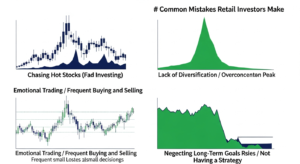
Common pitfalls include failing to budget, accumulating high-interest debt, investing without a clear plan or understanding of risk, trying to time the market, letting emotions drive financial decisions, and neglecting to build an emergency fund. Another significant pitfall is procrastination; delaying savings and investment means missing out on the power of compound interest, an important financial concept everyone should understand and leverage early.
How often should I review my financial plan?
A comprehensive review of your financial plan should ideally happen at least once a year. However, it’s also wise to review and adjust your plan whenever there are significant life changes, such as a new job, marriage, birth of a child, buying a home, or a major economic shift. Regular, smaller check-ins (e.g., monthly budget reviews, quarterly portfolio check-ins) can help ensure you stay on track between annual deep dives.
What role does emotional intelligence play in applied finance?
Emotional intelligence plays a crucial role. Fear and greed are powerful emotions that can lead to impulsive and detrimental financial decisions, such as panic selling during a market downturn or chasing speculative investments during a boom. Applied finance benefits from the ability to stay disciplined, stick to a long-term plan, and make rational decisions even when market conditions are volatile. Understanding your own biases and having the emotional control to override them is a significant asset in effective financial management.