Banking Basics: Choosing Checking, Savings, and High-Yield Accounts
Table of Contents
- Understanding the Core: Checking Accounts for Day-to-Day Financial Management
- Building Your Foundation: Savings Accounts for Financial Security
- Supercharging Your Cash: High-Yield Savings Accounts (HYSAs) and Certificates of Deposit (CDs)
- Key Factors in Choosing the Right Bank and Accounts
- Navigating the Digital Age: Online vs. Traditional Banks vs. Credit Unions
- Practical Steps for Optimizing Your Banking Strategy
Understanding the Core: Checking Accounts for Day-to-Day Financial Management
A checking account is arguably the most essential financial tool for managing your everyday money. It’s designed for frequent transactions, making it the hub for your income and expenses. Think of it as your financial command center, where funds are easily accessible for immediate use. Understanding the nuances of checking accounts is a critical component of mastering banking basics.
Primary Purpose and Features:
A checking account’s main purpose is liquidity. It allows you to deposit funds (such as your paycheck via direct deposit) and withdraw them freely through various methods. Key features typically include:
- Debit Cards: For point-of-sale purchases and ATM withdrawals.
- Checks: Traditional paper checks for payments where electronic options aren’t available.
- Online Bill Pay: Conveniently schedule and send payments to service providers, often free of charge.
- ATM Access: For cash withdrawals and deposits.
- Direct Deposit: Automated deposit of your salary, benefits, or other recurring income.
Types of Checking Accounts:
While most checking accounts serve a similar function, variations exist to cater to different needs:
- Standard Checking: The most common type, offering basic features.
- Student Checking: Often comes with waived fees and lower minimum balance requirements for students.
- Senior Checking: May offer similar benefits to seniors, sometimes with interest-earning potential.
- Interest-Bearing Checking: Some accounts offer a modest interest rate on your balance. However, the rates are typically very low, often negligible compared to savings accounts, and might come with higher balance requirements or fees. For example, a traditional interest-bearing checking account might offer an Annual Percentage Yield (APY) of 0.01% to 0.05%, which is essentially zero.
- Rewards Checking: Offers perks like cash back on debit card purchases or ATM fee refunds, often contingent on meeting specific activity requirements (e.g., a certain number of debit card transactions per month).
Fees to Watch Out For:
Fees can quickly erode your balance if you’re not careful. Common checking account fees include:
- Monthly Maintenance Fees: Can range from $5 to $15 and are often waived if you meet certain criteria, such as maintaining a minimum daily balance (e.g., $1,500), having a direct deposit (e.g., $500 or more per month), or a certain number of debit card transactions.
- Out-of-Network ATM Fees: Charged by your bank and/or the ATM owner for using an ATM outside your bank’s network. These can easily be $3-$5 per transaction.
- Overdraft Fees: Incurred when you spend more money than you have in your account. These can be steep, often $25-$35 per instance, though many banks now offer overdraft protection or no-fee overdraft options.
- Foreign Transaction Fees: Typically 1% to 3% of the transaction amount when using your debit card abroad.
Practical Tips for Choosing and Managing Your Checking Account:
- Prioritize Fee Waivers: Select an account where you can easily meet the requirements to waive monthly maintenance fees. If you can’t, consider a truly free checking account, often found at online banks or credit unions.
- Link for Overdraft Protection: Connect your checking account to a savings account or a line of credit to avoid expensive overdraft fees. Funds will automatically transfer to cover transactions, though sometimes for a small fee.
- Leverage Online Banking & Mobile Apps: Use these tools to monitor your balance, pay bills, deposit checks remotely, and set up alerts for low balances or large transactions.
- Review Statements Regularly: Periodically check your bank statements for errors, unauthorized transactions, and to track your spending habits.
- Consider ATM Network: If you frequently need cash, choose a bank with a wide network of free ATMs or one that reimburses out-of-network ATM fees.
Building Your Foundation: Savings Accounts for Financial Security
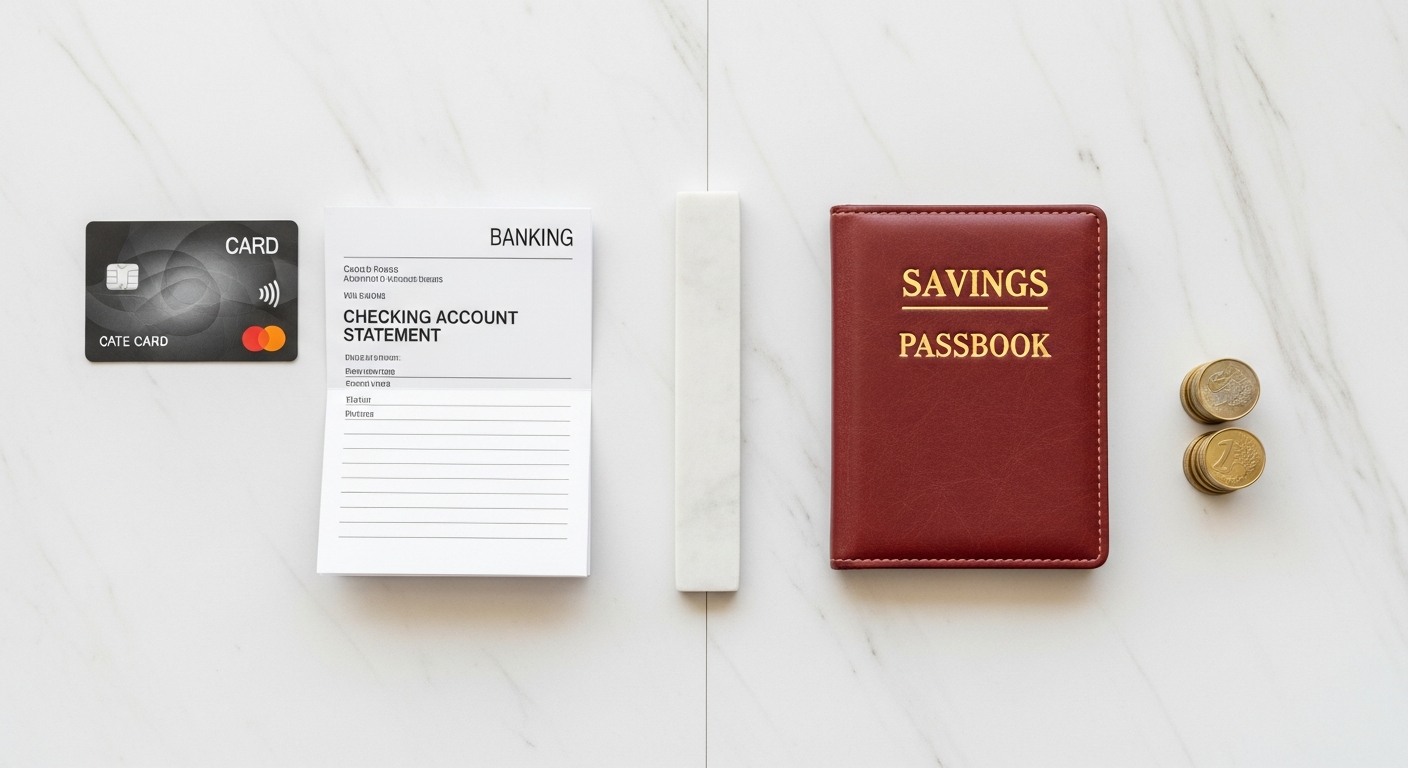
While a checking account handles your daily transactions, a savings account is designed for holding money you don’t need immediately. It’s the primary vehicle for building an emergency fund, saving for short-term goals, and generally accumulating wealth. Grasping the function of savings accounts is another fundamental aspect of understanding banking basics.
Primary Purpose and Features:
The core purpose of a savings account is to store funds securely and earn a modest amount of interest. Key features include:
- Interest Earnings: Your money grows over time, albeit often slowly with traditional savings accounts.
- FDIC Insurance: Your deposits are protected by the Federal Deposit Insurance Corporation (FDIC) up to $250,000 per depositor, per institution, for each ownership category. This is non-negotiable for deposit safety.
- Limited Transactions (Regulation D): Historically, federal Regulation D limited certain withdrawals and transfers from savings accounts to six per month. While this regulation was suspended in 2020, many banks still maintain similar limits to encourage these accounts for saving rather than frequent spending. Be aware of your bank’s specific policy.
Types of Savings Accounts:
- Standard Savings Accounts: The most basic type, offering low interest rates and limited transactional capabilities. Traditional brick-and-mortar banks often pay very low APYs, sometimes as little as 0.01% to 0.05%, meaning a $10,000 balance would earn just $1 to $5 in interest per year.
- Money Market Accounts (MMAs): These are a hybrid between checking and savings accounts. MMAs typically offer higher interest rates than standard savings accounts and may come with limited check-writing privileges or a debit card. However, they often require a higher minimum balance to open or avoid fees, and still have transaction limits similar to savings accounts. An MMA might offer 0.10% to 0.50% APY at a traditional bank.
Fees to Watch Out For:
While generally fewer than checking accounts, savings accounts can still carry fees:
- Monthly Maintenance Fees: Similar to checking accounts, these can be waived by maintaining a minimum balance (e.g., $300-$500) or by setting up recurring transfers.
- Excessive Withdrawal Fees: If you exceed your bank’s transaction limits, you may incur fees, often $10-$15 per transaction over the limit.
Practical Tips for Maximizing Your Savings Account:
- Automate Your Savings: Set up automatic transfers from your checking account to your savings account immediately after you get paid. Even small, consistent transfers add up over time. Many financial experts recommend the “pay yourself first” strategy.
- Build an Emergency Fund: Prioritize saving enough to cover 3-6 months of living expenses in an easily accessible savings account. This fund acts as a crucial safety net for unexpected events like job loss or medical emergencies.
- Know Your Withdrawal Limits: Be mindful of your bank’s transaction limits to avoid unnecessary fees. If you anticipate needing more frequent access, consider a checking account or an MMA for part of your funds.
- Understand FDIC Insurance: Always confirm that your bank is FDIC-insured. This protects your deposits in case the bank fails, ensuring your money is safe up to the legal limits. For example, if you have $200,000 in a savings account at an FDIC-insured bank, it’s fully protected. If you have $300,000, $250,000 is protected, and the remaining $50,000 is not.
- Set Clear Goals: Having specific savings goals (e.g., vacation, down payment, new car) can provide motivation and help you track progress.
Supercharging Your Cash: High-Yield Savings Accounts (HYSAs) and Certificates of Deposit (CDs)
Once you’ve established your emergency fund and are comfortable with the basic structure of checking and savings, it’s time to explore options that can make your money work harder. High-Yield Savings Accounts (HYSAs) and Certificates of Deposit (CDs) are excellent tools for maximizing returns on your cash, representing the next step beyond basic savings in your banking basics journey.
High-Yield Savings Accounts (HYSAs)
HYSAs are essentially enhanced savings accounts that offer significantly higher interest rates than traditional savings accounts. They are particularly popular with online-only banks, which have lower overhead costs and can pass those savings on to customers in the form of better rates.
Purpose:
HYSAs are ideal for holding your emergency fund and saving for larger, medium-term goals where you want better returns but still need relatively easy access to your money. This could include a down payment for a house, a new car, or a large future expense.
Key Features:
- Higher Interest Rates: While traditional savings accounts might offer 0.01% to 0.05% APY, HYSAs can offer APYs ranging from 4.00% to 5.00% or even higher in favorable economic conditions. This difference can translate into hundreds or even thousands of dollars in extra interest earned over time.
- Liquidity: Like standard savings accounts, HYSAs are liquid, meaning you can access your funds as needed (subject to any transaction limits your bank may impose).
- FDIC Insurance: Reputable HYSAs are always FDIC-insured, ensuring the safety of your deposits up to $250,000 per depositor, per institution, per ownership category.
- Often Online-Only: Many of the best HYSAs are offered by online banks, which allows them to keep overhead low and offer competitive rates.
Fees to Watch Out For:
Most HYSAs offered by online banks are designed to be fee-free. However, always check for:
- Minimum Balance Requirements: Some HYSAs might require a minimum initial deposit or a minimum ongoing balance to earn the highest rates or avoid a fee, though many popular options have no minimums.
- Excessive Withdrawal Fees: Similar to traditional savings, these are less common with the suspension of Reg D, but still worth confirming.
Certificates of Deposit (CDs)
CDs are a type of savings account that holds a fixed amount of money for a fixed period of time (the “term”), at a fixed interest rate. In exchange for committing your money for a set period, you typically earn a higher interest rate than you would with a standard savings account or even many HYSAs.
Purpose:
CDs are best suited for money you definitely won’t need until a specific future date. They are excellent for goals with a clear timeline, such as a down payment for a house in three years, college tuition in five years, or a car purchase in one year. They offer principal protection and a guaranteed rate of return.
Key Features:
- Fixed Interest Rate: Once you open a CD, the interest rate is locked in for the entire term, protecting you from rate drops. CD rates vary based on the term and the economic environment. A 1-year CD might offer 4.50% APY, while a 5-year CD could offer 4.00% APY, depending on the yield curve.
- Fixed Term: Terms typically range from 3 months to 5 years or even longer.
- Penalty for Early Withdrawal: If you withdraw your money before the CD matures, you’ll incur a penalty, usually a forfeiture of a certain amount of interest (e.g., 3-6 months’ interest). This makes CDs less liquid than savings accounts.
- FDIC Insurance: Like other deposit accounts, CDs are FDIC-insured.
CD Strategies:
- CD Laddering: This strategy involves dividing your money into several CDs with different maturity dates. For example, if you have $15,000, you might put $5,000 in a 1-year CD, $5,000 in a 2-year CD, and $5,000 in a 3-year CD. As each CD matures, you reinvest it into a new 3-year CD. This provides both liquidity (as a portion of your money becomes available regularly) and the benefit of higher long-term rates.
- Bullet Strategy: Investing in multiple CDs that all mature at approximately the same time, aligning with a specific future expense.
Practical Tips for HYSAs and CDs:
- Shop Around for the Best APY: Rates for HYSAs and CDs can vary significantly between banks. Use online comparison tools to find the most competitive offers. Don’t just look at the highest rate, but also consider the bank’s reputation and customer service.
- Consider Your Liquidity Needs: If you might need the money before a CD’s maturity, an HYSA is a better choice. Only lock up funds in a CD if you’re certain you won’t need them.
- Understand Compounding: Interest on HYSAs and CDs typically compounds daily or monthly, meaning you earn interest on your initial deposit plus the accumulated interest. The more frequently it compounds, the faster your money grows.
- Check for FDIC or NCUA Insurance: Always verify that the institution offering the HYSA or CD is FDIC-insured (for banks) or NCUA-insured (for credit unions) to protect your principal.
- Match CD Terms to Goals: Choose a CD term that aligns with when you’ll need the money. Don’t invest in a 5-year CD for a down payment you plan to make in 2 years.
Key Factors in Choosing the Right Bank and Accounts
Selecting the ideal bank and specific accounts goes beyond simply finding the highest interest rate or the lowest fee. A holistic approach, integrating your personal financial habits and long-term goals, is essential for truly mastering banking basics. Here are the critical factors to consider:
1. Interest Rates & Annual Percentage Yield (APY)
While checking accounts rarely offer significant interest, APY is paramount for savings accounts, especially HYSAs and CDs. A higher APY means your money grows faster.
Actionable Tip: Don’t just look at the advertised rate; compare the APY, which reflects the effect of compounding over a year. Use online comparison sites to track current top rates for HYSAs and CDs and understand how interest is calculated (daily, monthly, quarterly).
2. Fees & Minimums
Fees can quickly erode your balance and negate any interest earned. Scrutinize all potential fees for checking, savings, and HYSAs: monthly maintenance, overdraft, ATM (in-network and out-of-network), wire transfers, foreign transaction fees, and excessive withdrawal fees.
Actionable Tip: Prioritize accounts with no monthly maintenance fees or easily waivable fees (e.g., through direct deposit or minimum balance). Be realistic about your ability to meet minimum balance requirements; if you consistently fall short, a fee-free account might be better, even if it offers a slightly lower APY.
3. Accessibility & Convenience
Your banking needs dictate the level of access you require.
- Branch Network: Do you prefer in-person transactions, financial advice, or depositing cash frequently? A traditional bank with local branches might be necessary.
- ATM Access: How often do you need cash? Look for banks with a vast, free ATM network or those that reimburse out-of-network ATM fees.
- Online & Mobile Banking: A robust, user-friendly mobile app and online platform are crucial for managing accounts, paying bills, and depositing checks remotely.
Actionable Tip: Test drive the bank’s online interface and mobile app if possible. Read reviews about their digital experience. Consider a hybrid approach: a local credit union for cash needs and an online bank for high-yield savings.
4. FDIC Insurance
This is non-negotiable. Ensure your deposits are protected by the FDIC (for banks) or NCUA (for credit unions) up to $250,000 per depositor, per institution, per ownership category.
Actionable Tip: Always verify the institution’s insurance status before depositing funds. You can check the FDIC or NCUA websites directly.
5. Additional Services & Product Ecosystem
Consider your long-term financial journey. Does the bank offer:
- Seamless Account Linking: Easy transfers between checking, savings, and investment accounts.
- Credit Cards & Loans: Competitive rates and terms if you plan to get a mortgage, car loan, or credit card from the same institution.
- Investment Platforms: Some banks offer integrated brokerage services, simplifying your financial picture.
- Budgeting Tools: In-app tools that help categorize spending and track finances.
Actionable Tip: If you prefer to consolidate your financial life, look for a bank that offers a comprehensive suite of products that meet your current and future needs. This can simplify management and sometimes offer preferential rates.
6. Security Features
Protecting your money from fraud and cyber threats is paramount.
- Fraud Protection: Banks offer various forms of fraud monitoring and zero-liability policies for unauthorized transactions.
- Encryption: Secure connections (HTTPS) for online banking.
- Multi-Factor Authentication (MFA): An extra layer of security when logging in or making significant transactions.
Actionable Tip: Choose a bank with strong security protocols. Enable MFA on all your accounts and monitor transaction alerts.
7. Customer Service
How easy is it to get help when you need it?
- Availability: 24/7 phone support, online chat, or in-person assistance.
- Responsiveness: How quickly and effectively do they resolve issues?
Actionable Tip: Read online reviews about customer service. Consider calling their support line with a mock question to gauge their responsiveness before committing.
Navigating the Digital Age: Online vs. Traditional Banks vs. Credit Unions
The landscape of banking has evolved dramatically, offering more choices than ever before. Understanding the distinctions between online banks, traditional brick-and-mortar institutions, and credit unions is crucial for tailoring your banking basics strategy to your lifestyle.
Online-Only Banks
Online banks operate primarily or exclusively through digital channels (websites and mobile apps), without physical branches.
- Pros:
- Higher Interest Rates: With significantly lower overhead costs (no physical branches, fewer staff), online banks can offer some of the most competitive APYs on HYSAs and CDs. It’s common to see rates 10-50 times higher than traditional banks.
- Lower Fees: Many online checking and savings accounts are genuinely free, with no monthly maintenance fees, minimum balance requirements, or overdraft fees (or easier waivers).
- Convenience: 24/7 access to your accounts from anywhere with an internet connection, often with excellent mobile apps for deposits, transfers, and bill pay.
- Innovative Technology: Often at the forefront of banking technology, offering advanced budgeting tools, seamless integrations, and modern user interfaces.
- Cons:
- No Physical Branches: This can be a significant drawback if you prefer in-person service, require notary services, or frequently need to deposit physical cash. Cash deposits typically require workarounds like money orders or depositing at partner ATMs.
- Limited Cash Handling: While ATM access is common through networks, direct cash deposits can be cumbersome.
- Less Personal Interaction: Customer service is primarily via phone, chat, or email, which some prefer but others find less personal.
Traditional (Brick-and-Mortar) Banks
These are the established financial institutions with physical branch locations, often alongside robust online and mobile banking platforms.
- Pros:
- Physical Presence: Access to branches for in-person transactions, customer support, loan applications, and specialized services like safe deposit boxes or cashier’s checks.
- Easy Cash Deposits: Simplest way to deposit cash directly.
- Comprehensive Services: Often offer a wider array of financial products under one roof, including mortgages, business loans, wealth management, and credit cards.
- Personalized Service: The ability to build relationships with bankers for tailored advice.
- Cons:
- Lower Interest Rates: Due to higher operating costs, traditional banks typically offer very low APYs on savings accounts (often 0.01% to 0.10%).
- Higher Fees: More likely to charge monthly maintenance fees, overdraft fees, and other service charges, though many offer ways to waive them.
- Potentially Outdated Technology: While many have invested heavily, some traditional banks may lag behind online-only competitors in terms of app functionality and user experience.
Credit Unions
Credit unions are non-profit financial cooperatives owned by their members. They share many similarities with traditional banks but operate under a different philosophy.
- Pros:
- Member-Owned: Profits are returned to members in the form of lower fees, higher savings rates, and lower loan rates compared to traditional banks.
- Personalized Service: Often known for excellent, community-focused customer service.
- Competitive Rates: Generally offer better interest rates on savings and CDs, and lower interest rates on loans (e.g., mortgages, auto loans) than traditional banks.
- Lower Fees: Typically have fewer fees and more lenient policies.
- NCUA Insurance: Deposits are insured by the National Credit Union Administration (NCUA), equivalent to FDIC insurance.
- Cons:
- Membership Eligibility: You must meet specific criteria to join (e.g., live in a certain geographic area, work for a particular employer, or belong to an affiliated group).
- Limited Branch/ATM Network: While credit unions participate in shared branching networks (allowing members to use other credit unions for certain transactions) and ATM networks, their individual footprint might be smaller than large banks.
- Technology: May not always have the cutting-edge mobile apps or online tools of leading online banks.
Practical Tip: Consider a Hybrid Approach:
Many people find that a hybrid banking strategy offers the best of all worlds. For example, you might:
- Keep a checking account at a local traditional bank or credit union for easy cash deposits and in-person needs.
- Utilize a high-yield savings account or CDs at an online-only bank to maximize interest earnings on your savings and emergency fund.
This approach allows you to leverage the strengths of different financial institutions while mitigating their weaknesses, creating an optimal banking ecosystem tailored to your unique financial profile.
Practical Steps for Optimizing Your Banking Strategy
Making informed choices about your banking accounts is an ongoing process. As your financial situation evolves, so too should your banking strategy. Here are actionable steps to help you master these banking basics and optimize your financial setup:
-
Assess Your Current Financial Needs and Goals
Before you open or close any account, take stock of your personal financial landscape. Ask yourself:
- Daily Spending Habits: How often do you use your debit card? Do you write checks? How much cash do you typically handle?
- Income Flow: Is your income regular (e.g., bi-weekly paycheck) or variable (e.g., freelance work)?
- Savings Goals: Are you building an emergency fund, saving for a down payment, a child’s education, or retirement? What are your timelines for these goals?
- Access Needs: Do you need frequent access to ATMs or physical branches, or are you comfortable with purely online banking?
- Risk Tolerance: Are you comfortable with the liquidity trade-offs of CDs for higher returns, or do you prioritize immediate access above all else?
Actionable Tip: Create a simple spreadsheet listing your current accounts, their features, fees, and interest rates. Then, list your short-term (1-3 years) and long-term (3+ years) financial goals.
-
Research and Compare Accounts Across Institutions
Once you know what you need, it’s time to find accounts that best fit those needs. Don’t settle for the first option; smart consumers compare widely.
- Online Comparison Tools: Utilize websites that aggregate and compare banking products (e.g., NerdWallet, Bankrate, The Ascent). Filter by APY, fees, minimums, and features.
- Read Reviews: Look at customer reviews for both the bank and its mobile app. Pay attention to feedback regarding customer service, ease of use, and problem resolution.
- Scrutinize the Fine Print: Always read the terms and conditions carefully, especially regarding fee waivers, minimum balances, transaction limits, and early withdrawal penalties for CDs.
Actionable Tip: Identify 2-3 top contenders for each type of account you need (checking, HYSA, CD) based on your research before making a final decision.
-
Start Small and Test the Waters
You don’t have to move all your money at once. A phased approach can help you get comfortable with a new banking relationship.
- Open a New Account: Start by opening just one new account, perhaps an HYSA, and transfer a smaller portion of your savings.
- Test Functionality: Get familiar with the bank’s online platform, mobile app, and customer service. Try making a small deposit, setting up a recurring transfer, or contacting support with a non-urgent question.
Actionable Tip: Once you’re confident with the new account, gradually transfer more funds and consider moving direct deposits or automatic payments. Avoid closing old accounts until you’re certain all your financial linkages are updated.
-
Automate Your Financial Habits
Automation is your best friend in personal finance, helping you save consistently and manage bills effortlessly.
- Direct Deposit: Have your paycheck automatically split and deposited into your checking, savings, and even investment accounts.
- Automated Savings Transfers: Set up recurring transfers from your checking to your HYSA after each payday. Even $50-$100 per week adds up significantly.
- Online Bill Pay: Schedule recurring bills (rent, utilities, loan payments) to be paid automatically from your checking account.
Actionable Tip: Review your automated schedule quarterly to ensure it aligns with your budget and financial goals. Adjust amounts as your income or expenses change.
-
Regularly Review and Reassess Your Banking Setup
The banking landscape, interest rates, and your personal needs are constantly changing. What was optimal a year ago might not be today.
- Annual Check-up: Once a year, review all your accounts. Are you still earning competitive interest rates? Are you incurring any avoidable fees? Are there new products or services that would better serve you?
- Life Events: Major life changes (new job, marriage, buying a home, having children) are excellent triggers to reassess your banking strategy.
- Market Conditions: When interest rates rise, be proactive in looking for better HYSA or CD rates.
Actionable Tip: Set a calendar reminder for an annual “banking review.” This proactive approach ensures your money is always working as hard as possible for you.
Conclusion
Navigating the world of checking, savings, and high-yield accounts can seem daunting, but by understanding these fundamental banking basics, you empower yourself to make intelligent, strategic decisions about your money. From the daily liquidity of a checking account to the foundational security of a savings account, and the wealth-building potential of HYSAs and CDs, each account plays a distinct and vital role in a robust personal finance strategy. The right choices can minimize fees, maximize returns, and provide peace of mind.
Remember, your financial journey is unique. The ideal banking setup for you today might evolve tomorrow. By staying informed, regularly reviewing your accounts, and leveraging the diverse options available—whether through traditional banks, online institutions, or credit unions—you can build a banking ecosystem that not only meets your current needs but also propels you towards your long-term financial aspirations. Don’t let your money sit idly; take the practical steps outlined in this guide and start optimizing your banking strategy today to build a more secure and prosperous financial future.
Here are some common questions about banking basics to help solidify your understanding.
Frequently Asked Questions
About the Author
Authored by Jane Doe, a seasoned financial analyst at Trading Costs with over 10 years of experience in personal finance and investment strategies. Jane is dedicated to demystifying complex financial topics and empowering individuals to make informed decisions for their financial well-being.