
Best Defensive Stocks for Economic Downturn: A 2026 Strategy for Retail Investors
Market volatility is an inevitable part of the journey for every investor. While the thrill of high-growth tech stocks often dominates the headlines during bull markets, the narrative shifts dramatically when the economic cycle begins to cool. For retail investors and cost-conscious traders, the primary goal during a contraction is capital preservation. This is where defensive stocks become the cornerstone of a resilient portfolio.
As we look toward the economic landscape of 2026, the importance of “sticky” business models—those providing goods and services that consumers cannot live without—has never been higher. Defensive stocks aren’t just a place to park cash; they are a strategic tool designed to lower your portfolio’s beta, provide consistent dividend income, and minimize the psychological stress of market drawdowns. In this guide, we will explore the best defensive sectors and specific stock characteristics that can help you weather a storm while keeping your investment costs at a minimum.
Why Defensive Stocks are Essential for 2026 and Beyond
Defensive stocks, often referred to as “non-cyclical” stocks, belong to industries that remain relatively stable regardless of the state of the economy. When the GDP slows down, consumers might cancel their luxury vacations or delay buying a new sports car, but they will continue to pay their electric bills, buy toothpaste, and refill their prescriptions.
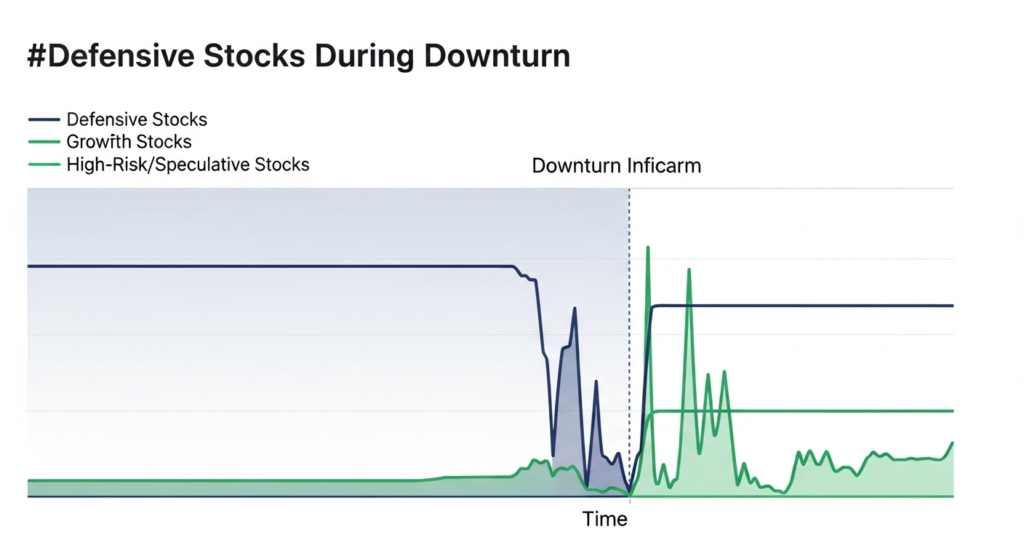
For retail investors, the allure of defensive stocks lies in their low volatility. In a downturn, these stocks typically fall less than the broader S&P 500. By reducing the “depth” of your losses, you ensure that your portfolio has a shorter climb to reach new highs once the recovery begins. Furthermore, for traders looking to minimize costs, defensive stocks often offer high liquidity and lower bid-ask spreads compared to speculative small-caps, making them cheaper to trade in and out of if necessary.
In the 2026 economic environment, where interest rates may have stabilized at a “higher-for-longer” plateau, the ability of a company to generate consistent free cash flow is the ultimate marker of quality. Defensive companies usually possess strong balance sheets and the pricing power necessary to pass increased costs onto consumers, protecting their profit margins even when inflation or recessionary pressures mount.
Consumer Staples: The Bedrock of Recession-Proof Investing
The Consumer Staples sector is perhaps the most classic example of defensive investing. This sector includes companies that manufacture and sell essential items like food, beverages, household goods, and hygiene products.
#
Why They Work
The demand for staples is “inelastic.” This means that even if a consumer’s disposable income drops, their consumption of these products remains largely unchanged. From a retail trader’s perspective, these stocks are excellent for “buy and hold” strategies because they often provide a steady stream of dividends that can be reinvested to compound wealth over time.
#
Key Players to Watch
1. **Procter & Gamble (PG):** A titan in the household goods space, P&G owns brands like Tide, Gillette, and Crest. Their diversified portfolio ensures that even if one product line faces headwinds, others remain stable.
2. **Walmart (WMT):** As the world’s largest retailer, Walmart thrives in downturns as consumers trade down from premium retailers to discount options. Their massive scale allows them to keep prices low, maintaining a competitive moat.
3. **PepsiCo (PEP):** Beyond just soda, PepsiCo’s massive snacks division (Frito-Lay) provides a high-margin revenue stream that is remarkably resilient during economic contractions.
For those looking to minimize costs, instead of buying individual stocks, retail investors might consider the **Consumer Staples Select Sector SPDR Fund (XLP)**. This ETF provides exposure to the entire sector with a very low expense ratio, reducing the risk of picking a “loser” within a winning sector.
Healthcare: Reliability Through Biological Necessity
Healthcare is another pillar of a defensive strategy. Medical needs do not follow the economic cycle; chronic illnesses require treatment regardless of the unemployment rate, and emergency surgeries cannot be postponed until the stock market recovers.
#
The Innovation and Stability Balance
The healthcare sector is unique because it offers both the stability of large-cap pharmaceutical giants and the potential growth of biotech. For a defensive play, retail investors should focus on the “Value” side of healthcare—established companies with massive patent portfolios and recurring revenue.
1. **Johnson & Johnson (JNJ):** Despite some legal headwinds in recent years, J&J remains a powerhouse in pharmaceuticals and medical devices. Their AAA credit rating is often cited as a sign of financial health that rivals even the US government.
2. **UnitedHealth Group (UNH):** As the largest healthcare insurer in the US, UNH benefits from a massive data advantage and a diversified business model that includes Optum (healthcare services). Insurance premiums provide a very steady cash flow.
3. **Merck & Co. (MRK):** With blockbuster drugs like Keytruda, Merck generates significant cash flow that supports a healthy dividend yield, making it an attractive option for income-focused investors in 2026.
Utilities: The Power of Regulated Monopolies
If you are looking for the “bond substitutes” of the equity world, utilities are your best bet. Utility companies provide essential services like electricity, water, and natural gas.
#
Regulated Earnings
Most utility companies operate as regulated monopolies. The government allows them to charge rates that guarantee a certain level of profit in exchange for maintaining critical infrastructure. This creates a highly predictable earnings profile. For retail traders, utilities are often used as a defensive hedge because they tend to have an inverse relationship with interest rates; when the economy slows and rates drop, utility stocks often surge.
#
Top Picks for 2026
* **NextEra Energy (NEE):** A leader in renewable energy, NextEra combines the stability of a traditional utility with the growth prospects of the green energy transition.
* **Duke Energy (DUK):** Known for its high dividend yield, Duke Energy operates in jurisdictions with favorable regulatory environments, ensuring consistent payouts for shareholders.
Investing in utilities through an ETF like the **Utilities Select Sector SPDR Fund (XLU)** is a cost-effective way for retail investors to gain exposure without the need to analyze individual state-level regulatory filings.
Dividend Aristocrats: The Ultimate Defensive Play
For retail investors who want to minimize costs and maximize long-term gains, the “Dividend Aristocrats” list is a goldmine. These are companies within the S&P 500 that have increased their dividend payouts every year for at least 25 consecutive years.
#
The Signal of Quality
A company cannot fake a 25-year dividend growth streak. It requires disciplined management, a dominant market position, and the ability to navigate multiple recessions. When a downturn hits, these companies are often the first to be scooped up by institutional investors, providing a “floor” for the stock price.
#
Why Traders Love Them
Dividend Aristocrats offer a “total return” profile. You get the capital appreciation of the stock plus a growing yield on cost. For a trader in 2026, holding these stocks reduces the need for frequent trading (and the associated commissions or tax implications), as the dividend growth does the heavy lifting for you.
Examples of Aristocrats that fit the defensive mold include **Coca-Cola (KO)**, **Target (TGT)**, and **Abbott Laboratories (ABT)**.
How to Identify Red Flags in a “Defensive” Stock
Not every stock in a defensive sector is actually safe. Retail investors must do their due diligence to avoid “value traps”—companies that look cheap but are actually in secular decline.
1. **Excessive Debt:** In a high-interest-rate environment leading into 2026, defensive companies with high debt loads can see their profits eaten away by interest payments. Look for a low Debt-to-Equity ratio.
2. **Dividend Payout Ratio:** If a company is paying out more than 80-90% of its earnings as dividends, that dividend might be at risk if earnings take even a slight hit. A “safe” payout ratio is generally below 60%.
3. **Lack of Pricing Power:** If a company cannot raise its prices to match inflation without losing customers to a cheaper generic brand, it isn’t truly defensive. Brand loyalty is a defensive investor’s best friend.
Minimizing Costs: Defensive ETFs for the Retail Trader
One of the biggest hurdles for retail investors is the “cost of entry.” Managing a portfolio of 20 individual stocks can be time-consuming and, depending on your broker, expensive in terms of bid-ask spreads and potential fees.
Exchange-Traded Funds (ETFs) are the most efficient way to play defense. By buying a single ticker, you get instant diversification across hundreds of companies.
* **Vanguard Consumer Staples ETF (VDC):** Boasting an incredibly low expense ratio (typically around 0.10%), this fund is a favorite for cost-conscious investors.
* **Schwab US Dividend Equity ETF (SCHD):** This fund focuses on high-quality companies with sustainable dividends, providing a “quality-first” defensive posture.
* **Invesco S&P 500 Low Volatility ETF (SPLV):** This ETF specifically tracks the 100 least volatile stocks in the S&P 500. It is designed to go down less than the market during a crash.
By utilizing these low-cost instruments, retail traders can ensure that more of their capital stays working for them rather than going to fund managers or brokerage fees.
FAQ: Navigating Defensive Stocks
#
1. What exactly makes a stock “defensive”?
A defensive stock is one that provides consistent dividends and stable earnings regardless of the state of the overall stock market. They typically belong to industries like healthcare, utilities, and consumer staples because demand for their products is constant.
#
2. Can defensive stocks lose money?
Yes. No stock is immune to a market crash. However, defensive stocks historically lose *less* than growth stocks during downturns. The goal is “relative” outperformance and capital preservation, not absolute immunity from price drops.
#
3. Are defensive stocks good for long-term growth?
While they may not offer the 500% gains seen in some tech startups, defensive stocks offer excellent long-term growth through the power of dividend reinvestment. Over decades, the “slow and steady” approach often rivals more aggressive strategies with significantly less risk.
#
4. How much of my portfolio should be in defensive stocks?
This depends on your age and risk tolerance. A younger investor might keep 20% in defensive stocks as a stabilizer, while someone closer to retirement might increase that allocation to 50% or 60% to protect their nest egg.
#
5. Should I sell my growth stocks for defensive stocks in 2026?
Market timing is difficult. Instead of an “all or nothing” approach, many successful retail traders use a “core and satellite” strategy. Keep your “core” in defensive ETFs and quality stocks, while using a smaller “satellite” portion of your portfolio for higher-risk growth plays.
Conclusion: Building Your 2026 Fortress
The key to surviving and thriving in an economic downturn is preparation. By the time a recession is officially declared, the “easy money” in defensive stocks has often already been made as investors rush to safety. For retail investors and traders looking to minimize costs, the time to build a defensive foundation is while the market is still rational.
Focus on companies with “moats”—competitive advantages that allow them to maintain high margins. Prioritize liquidity and low expense ratios to keep your trading costs down. By concentrating on Consumer Staples, Healthcare, Utilities, and Dividend Aristocrats, you are not just betting against a downturn; you are investing in the fundamental endurance of the global economy.
In 2026, the winners won’t necessarily be those who found the next “moonshot” stock, but those who protected their capital, collected their dividends, and stayed in the game when others were forced to exit. Defense doesn’t just win championships in sports; it builds lasting wealth in the financial markets.