
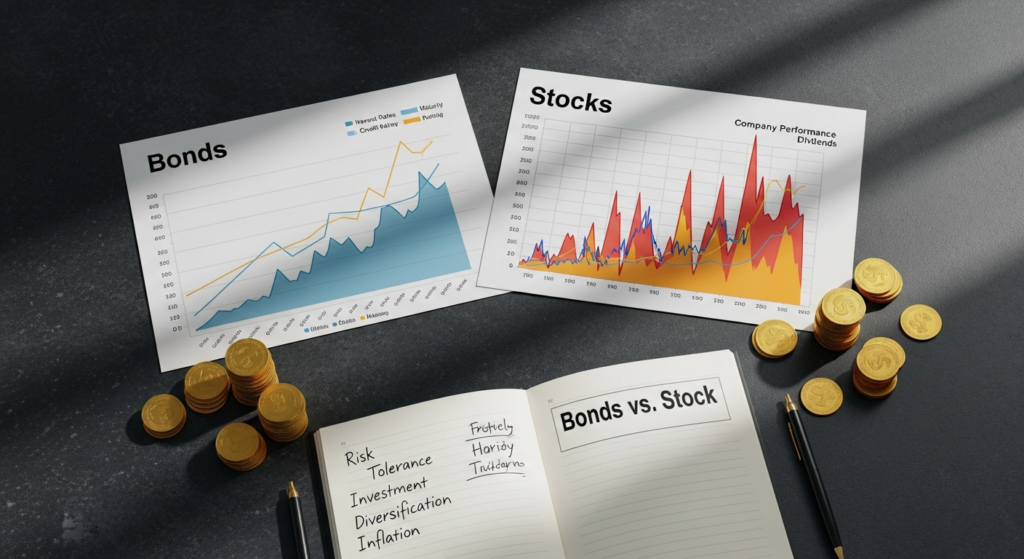
In the vast and often complex world of personal finance and investment, few debates are as enduring and central to portfolio construction as the choice between stocks and bonds. For investors navigating the economic landscape of 2026 and beyond, understanding the fundamental characteristics, risks, and potential returns of these two primary asset classes is not merely academic; it is critical for building a resilient and goal-oriented investment strategy. Whether you’re a seasoned investor looking to rebalance your portfolio or just embarking on your financial journey, perhaps even exploring resources like “How To Start Investing Little Money 2026,” the decision of “bonds vs stocks what to choose” will profoundly shape your wealth accumulation trajectory. This comprehensive guide aims to demystify these core assets, providing you with the insights needed to make informed decisions tailored to your unique financial situation, risk tolerance, and long-term aspirations.
Understanding the Fundamentals: Stocks
Related Articles: How To Start Investing Little Money 2026 · Impact Investing Esg Guide 2026 · How To Get Out Credit Card Debt
Stocks, also known as equities, represent ownership shares in a company. When you buy a stock, you become a part-owner of that business. This fundamental characteristic underpins both their immense potential for growth and their inherent volatility. Companies issue stocks to raise capital, which they then use to fund operations, expand, or invest in new projects. As an owner, your fortunes are directly tied to the performance and prospects of the company you invest in.
The Allure of Equity Ownership
- Capital Appreciation: The primary appeal of stocks is their potential for significant capital appreciation. As a company grows, becomes more profitable, or develops innovative products, its stock price tends to rise. Investors can then sell their shares for a profit, realizing a capital gain. Over the long term, stocks have historically outperformed most other asset classes, making them a cornerstone for wealth creation.
- Dividends: Many companies distribute a portion of their profits to shareholders in the form of dividends. These are typically paid quarterly and can provide a regular income stream for investors. While not all companies pay dividends, those that do can offer a dual benefit of potential capital appreciation and recurring income.
- Voting Rights: Common stock shareholders often have voting rights, allowing them to participate in important company decisions, such as electing board members or approving major corporate actions. This gives investors a voice in the company’s governance, albeit often a small one for individual shareholders.
Types of Stocks
- Common Stock: This is the most prevalent type of stock, granting owners voting rights and the potential for capital appreciation and dividends. It carries more risk but also greater potential reward.
- Preferred Stock: Preferred stockholders typically do not have voting rights but receive fixed dividend payments before common stockholders. In the event of liquidation, preferred stockholders also have a higher claim on assets than common stockholders. They often behave more like bonds due to their fixed income nature.
- Growth Stocks: These are stocks of companies expected to grow at an above-average rate compared to the overall market. They often reinvest profits back into the company, so they may pay little to no dividends.
- Value Stocks: These are stocks that appear to be trading below their intrinsic value. They often belong to mature companies with stable earnings and may pay regular dividends.
Recommended Resources
For more on bonds vs stocks, see How To Build A B2B Sales Funnel Step By Step on Kacerr.
Learn more about this topic in What Is A Business Model And How To Choose One at AssetBar.