
The Indispensable Role of an Emergency Fund in Financial Stability
An emergency fund is a dedicated pool of readily accessible cash specifically set aside to cover unexpected life events without derailing your financial progress. Think of it as your personal financial first aid kit, ready to be deployed when unforeseen circumstances arise. Without this crucial buffer, a job loss, a medical emergency, an unexpected home repair, or a sudden car breakdown could force you into a precarious position, potentially leading to debt, the liquidation of long-term investments at an inopportune time, or even bankruptcy.
The importance of an emergency fund extends far beyond merely covering costs. It acts as a psychological buffer, significantly reducing stress during challenging times. Knowing you have a financial safety net allows you to approach crises with a clearer head, making more rational decisions rather than being pressured into hasty ones. For instance, if you lose your job, an emergency fund provides the breathing room to conduct a thorough job search without the immediate panic of rent or mortgage payments looming. This can lead to finding a better-fitting position rather than taking the first offer out of desperation.
From an investing perspective, an emergency fund is non-negotiable. One of the cardinal rules of successful investing is to avoid selling assets when the market is down, or worse, liquidating assets prematurely to cover unexpected expenses. Imagine having to sell a portion of your diversified portfolio, perhaps even at a loss, to pay for an emergency roof repair. This not only sets back your long-term growth but also locks in losses that could have otherwise recovered. By having an emergency fund, your investment portfolio remains untouched, allowing it to compound and grow over time, insulated from life’s unpredictable moments.
Furthermore, in an economic landscape that can shift rapidly, as we’ve seen in recent years and as we anticipate continued evolution into 2026, job security is never an absolute guarantee for everyone. Industries transform, companies restructure, and technological advancements can alter demand for certain skills. An emergency fund provides a crucial bridge during these transitions, ensuring that your basic needs are met while you adapt to new opportunities or retrain for emerging roles. It empowers you with financial resilience, allowing you to weather storms rather than being capsized by them. This fundamental security is what allows you to then confidently explore avenues like How To Start Investing Little Money 2026 or even delve into more advanced strategies like those discussed in an Options Trading Beginners Guide, knowing your baseline financial health is secure.
Deconstructing the “Standard” 3-6 Month Rule: Is It Enough for You?
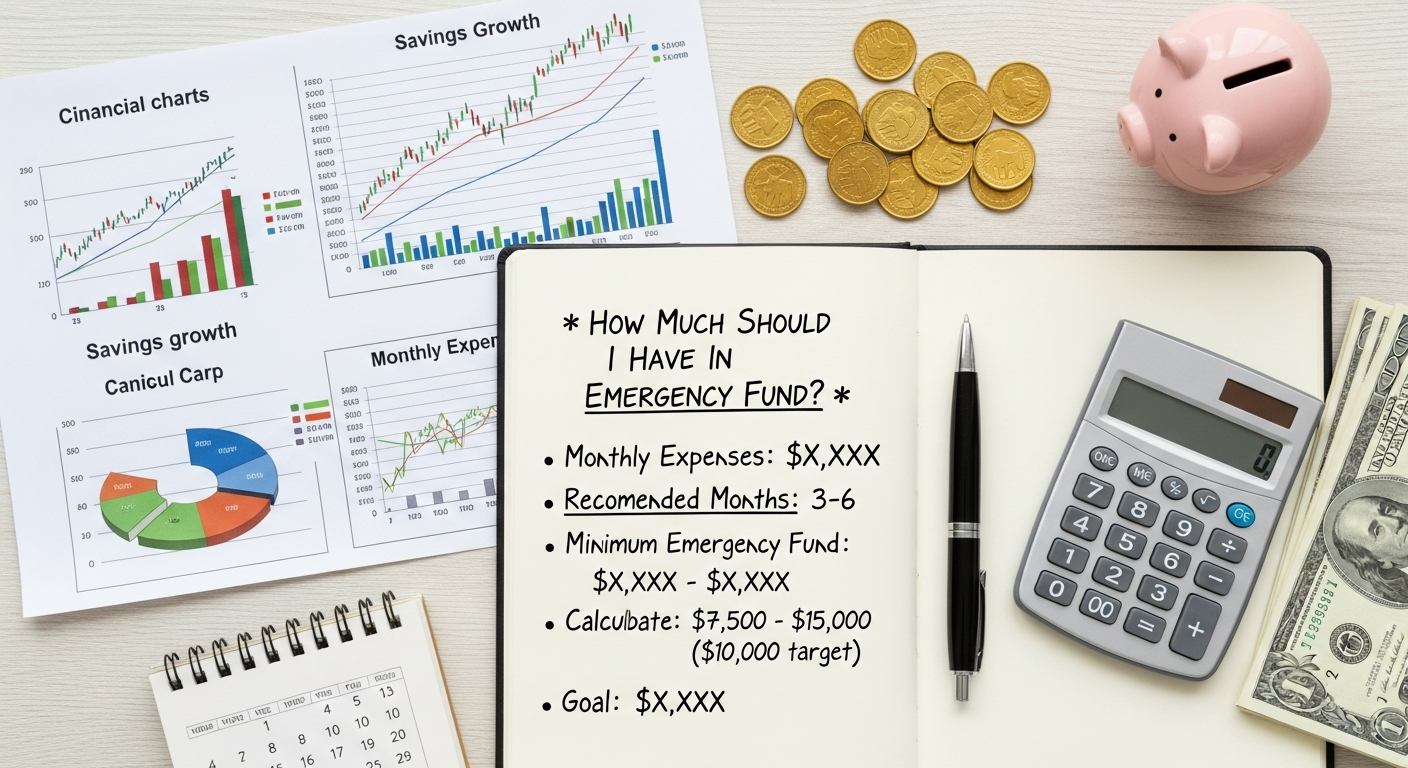
The conventional wisdom often suggests having 3 to 6 months’ worth of essential living expenses saved in an emergency fund. While this is an excellent starting point and a widely accepted benchmark, it’s crucial to understand that it’s a generalization. The “ideal” amount for how much you should have in an emergency fund is profoundly personal and depends on a multitude of individual circumstances. What might be sufficient for one person could be dangerously inadequate for another. Let’s delve into the factors that should influence your specific emergency fund target.
Factors Influencing Your Ideal Emergency Fund Amount:
- Job Security and Industry Volatility:
- Highly Stable Job (e.g., government, tenured professor): You might lean towards the lower end of the 3-6 month spectrum, perhaps 3-4 months.
- Volatile Industry (e.g., highly commission-based sales, project-based contract work, industries prone to rapid technological disruption): You should aim for 6-12 months, or even more. The greater the risk of job loss or income fluctuation, the larger your buffer needs to be.
- Household Income and Dependents:
- Single Income Household with Dependents: This scenario carries higher risk. If the sole income earner loses their job, the financial impact is immediate and significant for the entire family. Aim for 6-12 months.
- Dual Income Household without Dependents: If one income is lost, the other can help cushion the blow. You might be comfortable with 3-6 months, especially if both incomes are stable.
- Single Individual without Dependents: You have fewer financial obligations, so 3-6 months might be appropriate, depending on other risk factors.
- Health and Insurance Coverage:
- Excellent Health and Robust Insurance (low deductible, comprehensive coverage): You might need less dedicated cash for medical emergencies, allowing you to target the lower end of the range.
- Pre-existing Conditions or High-Deductible Health Plans (HDHP): If you have an HDHP, you should certainly factor in at least your maximum out-of-pocket expense for the year into your emergency fund, in addition to living expenses. Health emergencies can be incredibly costly, even with insurance.
- Homeownership vs. Renting:
- Homeowners: You face potential costs for major home repairs (roof, HVAC, plumbing, appliances) that renters do not. It’s wise to add an extra cushion (e.g., $5,000-$15,000) specifically for these types of emergencies on top of your living expenses.
- Renters: While you don’t have home repair costs, you might still face unexpected moving expenses or security deposit needs if a lease isn’t renewed or circumstances change.
- Debt Load:
- High-Interest Debt (e.g., credit card debt): Some financial experts advocate for a smaller, initial emergency fund (e.g., $1,000-$2,000) to cover minor emergencies, then aggressively paying down high-interest debt, and only then building a full emergency fund. The rationale is that the interest saved can be more impactful than the marginal benefit of a larger fund at that stage. However, you still need some buffer.
- Low-Interest Debt (e.g., mortgage, student loans): These are typically more manageable, allowing you to prioritize the full emergency fund first.
- Personal Risk Tolerance and Peace of Mind:
- Ultimately, your comfort level plays a significant role. If having 12 months of expenses allows you to sleep better at night, then that’s your ideal number. The purpose of an emergency fund is to provide security and reduce anxiety.
Considering these nuances, a self-employed individual with a family and a high-deductible health plan might reasonably need 9-12 months of expenses, plus a buffer for home repairs, whereas a single person with a stable government job and good insurance might find 4-5 months perfectly adequate. The key is to honestly assess your personal situation, risks, and responsibilities to determine a truly personalized target for 2026.
Calculating Your Emergency Fund Goal: A Step-by-Step Guide
Step 1: Track and Identify Your Essential Monthly Expenses
This is the most critical step. An emergency fund is designed to cover your needs, not your wants, during a crisis. Therefore, you need to differentiate between what is absolutely essential for survival and what is discretionary.
- Gather Financial Statements: Pull up bank statements, credit card statements, and utility bills from the last 3-6 months. This provides a realistic picture of your spending habits.
- Categorize Expenses: Go through each transaction and categorize it.
- Essential Expenses (Needs): These are costs you cannot avoid.
- Housing: Rent/Mortgage, property taxes, homeowner’s insurance (if not escrowed).
- Utilities: Electricity, gas, water, internet (often essential for job searching/remote work).
- Food: Groceries (focus on basic necessities, not dining out or gourmet items).
- Transportation: Car payment, insurance, fuel, public transport costs (for essential travel).
- Healthcare: Insurance premiums, necessary medications, an allowance for co-pays if you have frequent doctor visits.
- Debt Minimums: Minimum payments on student loans, car loans, credit cards (only minimums to avoid default, not extra principal payments).
- Childcare/Dependent Care: Absolutely essential for working parents.
- Basic Communication: A phone plan.
- Discretionary Expenses (Wants): These are things you can cut or significantly reduce during an emergency.
- Dining out, entertainment subscriptions (Netflix, Spotify, gym memberships), travel, new clothes, hobbies, excessive shopping, most personal care services.
- Essential Expenses (Needs): These are costs you cannot avoid.
- Calculate Your Average Essential Monthly Spending: Sum up all your essential expenses for each month and then calculate an average. This figure is your baseline. For example, if your essential expenses were $3,000, $2,800, and $3,200 over three months, your average is $3,000.
Step 2: Determine Your Desired Coverage Period
Based on your personal risk assessment from the previous section (job security, dependents, health, etc.), decide on your target coverage period: 3, 6, 9, or 12 months. Remember, for homeowners, it might be 6 months of living expenses plus an additional buffer for potential home repairs.
Step 3: Multiply Your Essential Monthly Spending by Your Coverage Period
This simple calculation gives you your initial emergency fund goal.
- Example: If your essential monthly spending is $3,000 and you decide on a 6-month coverage period, your initial goal is $3,000 x 6 = $18,000.
Step 4: Account for Non-Monthly but Essential Expenses (Annual/Semi-Annual)
Some essential expenses don’t occur monthly but are critical. Ignoring these can leave gaps in your fund.
- Annual Insurance Premiums: If you pay car or homeowner’s insurance annually or semi-annually, factor this in. Divide the annual cost by 12 to get a monthly equivalent, or simply ensure your fund is large enough to cover the lump sum when it’s due.
- Vehicle Maintenance/Registration: While not a monthly certainty, a reasonable annual estimate for maintenance (oil changes, tire rotations) and registration fees should be included.
- Medical Out-of-Pocket Maximums: As mentioned, if you have a high-deductible health plan, ensure your fund can cover your deductible and potentially your annual out-of-pocket maximum.
Add a reasonable estimate for these to your total. For instance, if your annual non-monthly essentials total $1,200, you might add an extra $100 per month to your essential spending calculation, or simply add the full $1,200 to your final fund target.
Step 5: Add a Buffer for Unexpected Home or Car Repairs (Homeowners/Car Owners)
For homeowners, it’s wise to have a dedicated sub-fund or an increased emergency fund to cover major repairs. A good rule of thumb is to budget 1-3% of your home’s value annually for maintenance, or simply aim for a fixed amount like $5,000-$15,000 depending on the age and condition of your home. Car owners should also consider a buffer for major repairs beyond routine maintenance, perhaps $1,000-$3,000.
By meticulously following these steps, you’ll arrive at a precise and personalized figure for how much you should have in an emergency fund, tailored to your unique financial situation and risk profile for 2026. This concrete goal makes the task of saving much more manageable and less abstract.
Beyond the Basics: Advanced Considerations for a Robust Safety Net
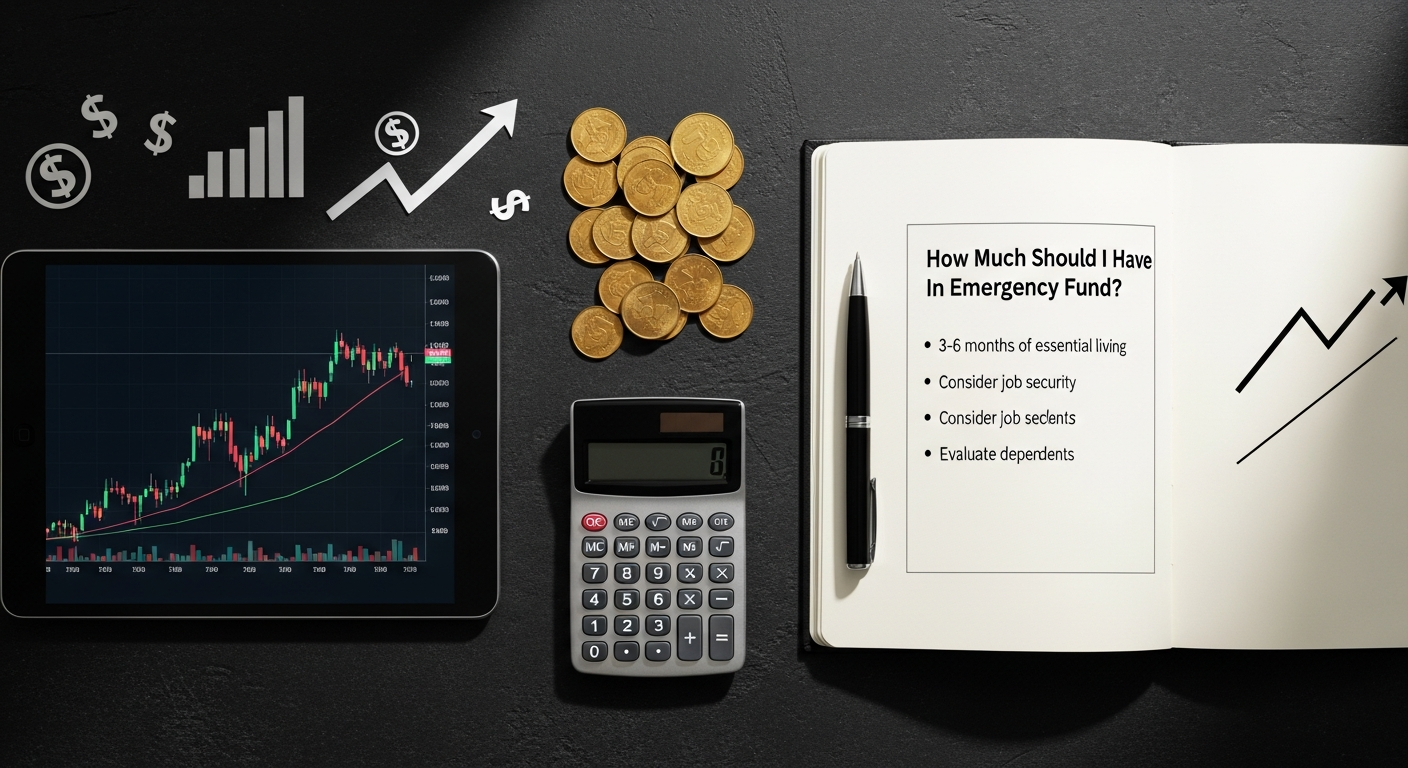
While the fundamental calculation of 3-12 months of essential expenses provides a strong baseline, a truly robust emergency fund strategy considers additional layers of financial foresight. For those deeply engaged in their financial journey, looking beyond immediate needs can further fortify their position and offer superior protection against unforeseen economic shifts or personal crises into 2026 and beyond.
Inflationary Pressures and Cost of Living Increases
The cost of living isn’t static. Inflation erodes purchasing power over time, meaning that $10,000 today might not cover the same expenses in three or five years. As we look towards 2026, it’s prudent to consider how inflation might impact your future essential expenses. While you shouldn’t constantly recalculate and add to your fund based on minor fluctuations, it’s wise to periodically review your essential spending every 1-2 years and adjust your fund target upwards if costs have significantly increased. For example, if your rent or food costs have risen by 5-10% since your last calculation, your emergency fund should reflect that new reality.
Navigating Economic Downturns and Market Volatility
An emergency fund is your first line of defense against personal financial crises, but it also provides a crucial buffer during broader economic downturns. In recessions, job loss can be more widespread, and the duration of unemployment can be longer. Moreover, market downturns often coincide with recessions, making it a terrible time to sell investments. A larger emergency fund (e.g., 9-12 months) provides enhanced security during these periods, allowing you to weather a prolonged period of job searching or income reduction without touching your long-term investments. This foresight is especially critical for those considering more volatile investment strategies like options trading, as it ensures you’re not forced to make emotional, market-driven decisions with your core assets.
High-Deductible Insurance Plans (HDHPs) and Medical Maxima
As discussed, HDHPs are increasingly common, often paired with Health Savings Accounts (HSAs). While HSAs are excellent for medical savings and often tax-advantaged, your emergency fund should still be prepared to cover your deductible and potentially your out-of-pocket maximum for a given year if you face a significant medical event. HSAs can be part of this strategy, but having readily accessible cash in your primary emergency fund ensures you don’t deplete your HSA prematurely, especially if you’re using it as an investment vehicle. Review your insurance policy annually for 2026 to understand your maximum potential liability.
Major Life Events and Contingency Planning
Beyond the typical job loss or medical emergency, consider other significant life events that could necessitate a large sum of cash:
- Major Home Repairs/Renovations: For homeowners, a burst pipe, foundation issues, or a failing HVAC system can cost tens of thousands. Having a dedicated “home repair” sub-fund within or alongside your emergency fund is highly recommended.
- Car Replacement: If your primary vehicle is essential for work and suddenly becomes irreparable, having funds to cover a down payment or even the full cost of a reliable replacement can prevent significant disruption.
- Family Emergencies: Unforeseen travel for family illness or funerals, or providing temporary financial support to close family members in crisis, can quickly drain resources.
- Pet Emergencies: For pet owners, veterinary emergencies can be incredibly expensive, often running into thousands of dollars.
While you can’t plan for every single scenario, categorizing these potential larger outlays and setting aside an additional buffer for them means your primary emergency fund for living expenses remains intact for its intended purpose. It’s about building layers of financial resilience.
By incorporating these advanced considerations, you move beyond merely surviving an emergency to truly thriving through it, maintaining your financial trajectory and investment goals even when facing significant challenges. This proactive approach ensures your financial plan is robust enough to handle the complexities of life in 2026 and beyond.
Building Your Emergency Fund: Practical Strategies and Smart Tools
Once you’ve determined precisely how much you should have in an emergency fund, the next step is to actually build it. This journey requires discipline, consistency, and the right strategies. Fortunately, there are numerous practical approaches and modern financial tools that can significantly accelerate your progress.
1. Create a Detailed Budget (and Stick to It!)
Budgeting is the cornerstone of all sound financial planning, and it’s absolutely essential for building an emergency fund. You need to know exactly where your money is going to identify areas where you can save.
- Track Everything: For at least a month, meticulously track every dollar you spend. Many people are surprised to find how much goes to discretionary items.
- Categorize and Analyze: Use your tracking data to categorize expenses (housing, food, entertainment, etc.) and identify “leakage” – areas where you can cut back without significantly impacting your quality of life.
- Set Realistic Limits: Allocate specific amounts for different categories. Be honest with yourself about what you can realistically spend and save.
To streamline this process, consider leveraging technology. Many digital tools offer intuitive ways to monitor your spending and create budgets. For cutting-edge financial management in 2026, researching the Best Money Apps Budgeting 2026 can provide you with powerful resources to track expenses, set savings goals, and visualize your progress, making the budgeting process much more efficient and engaging.
2. Automate Your Savings
This is arguably the most effective strategy for consistent saving. Treat your emergency fund contribution like any other bill – a non-negotiable expense.
- Set Up Automatic Transfers: Schedule a recurring transfer from your checking account to your dedicated emergency fund savings account on payday. Even a small amount consistently saved adds up quickly.
- “Pay Yourself First”: Make this transfer immediately after your paycheck hits, before you have a chance to spend the money on other things.
3. Cut Expenses Ruthlessly (Initially)
To jumpstart your emergency fund, consider a period of aggressive expense reduction.
- Temporary Sacrifices: For a few months, consider temporarily cutting out all non-essential spending – dining out, subscriptions, new clothes, excessive entertainment.
- Negotiate Bills: Call your internet, cable, and insurance providers to see if you can get a lower rate.
- Shop Smarter: Meal plan, use coupons, buy generic brands, and avoid impulse purchases.
- Downsize (if feasible): Could you move to a slightly cheaper apartment, or sell an expensive car for a more economical one, even temporarily?
The goal here is to create a significant surplus that can be funneled directly into your emergency fund, building it rapidly.
4. Boost Your Income (Side Hustles and Windfalls)
If cutting expenses isn’t enough, or if you want to accelerate your savings, focus on increasing your income.
- Side Gigs: Explore freelancing, part-time work, or leveraging a skill for extra cash. The gig economy offers numerous opportunities in 2026.
- Sell Unused Items: Declutter your home and sell items you no longer need on online marketplaces.
- Windfalls: Direct any unexpected income (tax refunds, bonuses, inheritances, cash gifts) directly into your emergency fund. Resist the temptation to spend it.
5. Where to Store Your Emergency Fund
The location of your emergency fund is critical. It must be:
- Liquid: Easily accessible without penalties or delays.
- Safe: Protected from market fluctuations and insured (e.g., by FDIC).
- Separate: Not commingled with your daily spending money to avoid accidental use.
Ideal options include:
- High-Yield Savings Accounts (HYSAs): These offer better interest rates than traditional savings accounts, helping your money grow slightly (though not enough to beat inflation significantly, its primary purpose is safety). Shop around for the best rates in 2026.
- Money Market Accounts: Similar to HYSAs, offering competitive interest rates and liquidity.
- Short-Term Certificates of Deposit (CDs) (Laddered): For a portion of a very large fund, you could consider a CD ladder where different amounts mature at different intervals, offering slightly higher rates while maintaining some liquidity. However, this is generally for funds exceeding 12 months of expenses.
Avoid: Investing your emergency fund in the stock market, even in conservative instruments. The primary purpose of this fund is capital preservation and immediate access, not growth. Market volatility means you could lose a portion of your fund right when you need it most.
By combining these strategies, you can systematically build your emergency fund, transforming an abstract goal into a tangible reality. The peace of mind and financial security it provides are invaluable, paving the way for more advanced financial endeavors.
The Intersection of Emergency Funds and Investing: A Balanced Approach
For readers of a trading and investing blog, it’s crucial to understand how an emergency fund fits into the broader spectrum of financial growth. Often, there’s a temptation to jump straight into investing, especially when market opportunities seem abundant or when driven by the desire for quick returns. However, neglecting your emergency fund in favor of investments is a significant misstep that can undermine your entire financial strategy.
Why an Emergency Fund Comes Before Aggressive Investing
Imagine building a magnificent skyscraper on a foundation of sand. That’s what investing without an emergency fund is like. When an unexpected expense arises, without that cash buffer, you’re forced to look for money elsewhere. For many, this means dipping into investments.
- Avoiding Selling Investments at a Loss: The most significant risk of not having an emergency fund is being forced to sell your investments when the market is down. If your stocks or other assets have depreciated, liquidating them means locking in those losses, permanently damaging your portfolio’s growth potential. An emergency fund allows your investments the time they need to recover from downturns, adhering to the fundamental principle of “buy low, sell high” (or at least, don’t sell low out of necessity).
- Preventing Debt Accumulation: Without an emergency fund, unexpected costs often lead to high-interest credit card debt. The interest payments on this debt can quickly negate any investment gains you might be making, effectively creating a financial treadmill where you’re constantly running but getting nowhere.
- Maintaining Long-Term Investment Goals: Your investment goals – whether for retirement, a down payment on a house, or a child’s education – are long-term commitments. An emergency fund acts as a firewall, protecting these goals from being derailed by short-term crises. It ensures your investment strategy remains intact, allowing compounding to work its magic uninterrupted.
- Peace of Mind for Better Decision-Making: Financial stress can lead to poor investment decisions. A secure emergency fund reduces this stress, allowing you to approach your trading and investing activities with a clear, rational mind, rather than making emotional choices driven by panic or immediate need.
How to Pivot to Investing After Your Fund is Built
Once your emergency fund is fully funded according to your personalized goal for 2026, you’ve achieved a critical milestone. This is when you can confidently shift your focus to more aggressive wealth-building strategies.
- Prioritize Retirement Accounts: Max out tax-advantaged accounts like 401(k)s and IRAs. The tax benefits and long-term growth potential are unparalleled.
- Explore Diversified Portfolios: Begin building a diversified investment portfolio that aligns with your risk tolerance and financial goals. This could include a mix of stocks, bonds, and exchange-traded funds (ETFs). For those just starting out with limited capital, resources like How To Start Investing Little Money 2026 can provide excellent guidance on getting started without needing a large initial sum.
- Consider Advanced Strategies: For those with a solid financial foundation and a strong understanding of market dynamics, exploring more advanced strategies like those detailed in an Options Trading Beginners Guide can be a next step. However, it’s crucial that this is done with money you can afford to lose, well beyond your emergency fund and core investments.
- Continue Monitoring and Replenishing: Even after your fund is complete, periodically review your emergency fund amount. Life changes, inflation occurs, and your needs might evolve. Replenish any amounts used as quickly as possible to maintain your financial fortress.
In essence, an emergency fund is not a barrier to investing; it is the essential prerequisite. It provides the stability and security necessary to allow your investments to thrive over the long term, protecting your financial future from the inevitable bumps in the road. By establishing a robust emergency fund first, you are building a financially resilient future that can withstand unexpected challenges while still pursuing significant wealth creation.
Frequently Asked Questions
Recommended Resources
Related reading: Ai Writing Tools For Content Marketing (Page Release).
You might also enjoy How To Create A Personal Budget That Works from AssetBar.