What is Peer-to-Peer (P2P) Lending and How Does it Work in 2026?
Peer-to-peer lending, often abbreviated as P2P lending, is a method of debt financing that enables individuals to borrow and lend money directly to one another, bypassing traditional financial institutions like banks. In essence, it connects borrowers seeking loans with investors (lenders) willing to fund those loans, all facilitated through an online platform. By 2026, this model has become a well-established segment of the fintech industry, powered by sophisticated algorithms, robust data analytics, and an increasing focus on user experience and regulatory compliance.
The Core Mechanics of P2P Lending
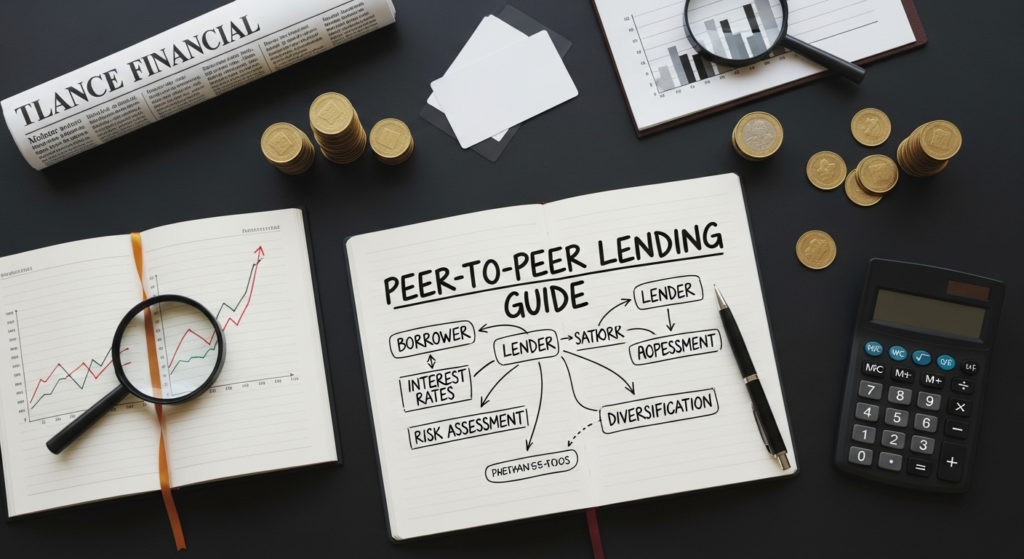
At its heart, P2P lending involves three primary participants:
- The Borrower: An individual or business seeking a loan. They apply through a P2P platform, providing financial information, credit history, and the purpose of the loan. Loans can range from personal loans for debt consolidation, home improvements, or medical expenses, to business loans for expansion, or even real estate development loans.
- The Lender (Investor): An individual or institutional investor looking to earn returns by funding loans. Lenders browse available loan listings on the platform, review borrower profiles and creditworthiness, and decide which loans to invest in. They typically invest in fractions of many loans to diversify risk.
- The P2P Platform: This is the online marketplace that acts as an intermediary. The platform performs several critical functions:
- Loan Origination and Underwriting: Platforms assess borrower creditworthiness using proprietary algorithms, credit scores, and financial data. They assign a risk grade to each loan, which dictates the interest rate charged to the borrower and the potential return for the lender.
- Matching: The platform connects borrowers with lenders, presenting loan requests to potential investors.
- Servicing: Once a loan is funded, the platform manages the monthly payments from the borrower, distributes principal and interest payments to the lenders, and handles collections for delinquent loans.
- Regulatory Compliance: In 2026, P2P platforms operate under increasingly stringent regulatory frameworks designed to protect both borrowers and investors.
Technological Advancements Shaping P2P in 2026
The P2P landscape in 2026 is significantly more advanced than its early iterations. Key technological drivers include:
- Artificial Intelligence (AI) and Machine Learning (ML): These technologies are extensively used for more accurate credit scoring, fraud detection, and personalized loan matching. AI can analyze vast datasets to identify patterns and predict borrower behavior with greater precision, leading to better risk assessment for lenders.
- Blockchain Technology: While not universally adopted, some platforms are exploring blockchain for enhanced security, transparency, and immutable record-keeping of loan contracts and transactions. This can reduce administrative costs and improve trust.
- Automated Investing Tools: For lenders, auto-invest features have become standard. These tools allow investors to set specific criteria (e.g., loan grade, interest rate, term) and automatically invest in loans that meet those parameters, facilitating diversification and passive income generation.
- Data Analytics and Reporting: Platforms provide sophisticated dashboards and reporting tools, giving lenders deep insights into their portfolio performance, risk exposure, and projected returns. This empowers investors to make data-driven decisions.
Unlike traditional banking, where banks profit from the spread between deposit rates and lending rates, P2P platforms earn revenue primarily through fees charged to both borrowers (origination fees) and lenders (servicing fees). This model often allows for more competitive interest rates for borrowers and potentially higher returns for lenders compared to traditional savings accounts or even some fixed-income investments.
The Evolving Landscape of P2P Lending Platforms for Lenders in 2026

The P2P lending market in 2026 is diverse, with platforms specializing in different types of loans and catering to varying investor appetites. Choosing the right platform is paramount to a successful P2P lending strategy, especially for those looking at how to start investing little money 2026, as some platforms have lower minimum investment thresholds.
Types of P2P Lending Platforms
Platforms can generally be categorized by the type of loans they facilitate:
- Consumer Lending Platforms: These are perhaps the most common, focusing on unsecured personal loans for individuals. Borrowers use these loans for purposes like debt consolidation, medical bills, weddings, or home improvements. Examples might include platforms similar to what LendingClub or Prosper offer, though specific names and features evolve.
- Business Lending Platforms: These platforms provide loans to small and medium-sized businesses (SMBs) for working capital, equipment purchases, or expansion. These loans can be secured or unsecured and often involve more complex underwriting processes.
- Real Estate P2P Platforms: Specializing in property-backed loans, these platforms allow investors to fund various real estate projects, from residential flips to commercial developments. These loans are typically secured by the underlying property, which can offer a layer of security, but also come with their own set of risks related to property valuation and market fluctuations.
- Invoice Financing/Supply Chain Finance Platforms: These platforms allow businesses to get immediate cash by selling their outstanding invoices to investors at a discount. This is a shorter-term lending model.
- Emerging Niche Platforms: As the market matures, niche platforms focusing on specific sectors (e.g., green energy projects, student loan refinancing) are also gaining traction.
Key Features to Look for in a P2P Platform in 2026
When evaluating P2P platforms as a potential lender, consider these essential features:
- Robust Underwriting & Risk Assessment: Investigate the platform’s methodology for vetting borrowers. How do they assess creditworthiness? What data points do they use? A transparent and rigorous underwriting process is crucial for minimizing default risk.
- Diversification Tools: Look for platforms that allow you to invest small amounts across many loans (e.g., $25 per loan). Automated investing tools with customizable criteria are invaluable for effortless diversification.
- Secondary Market: A secondary market allows lenders to sell their loan parts to other investors before the loan term ends. This significantly enhances liquidity, which is often a concern in P2P lending. Without a secondary market, your capital can be tied up for the entire loan duration (e.g., 3-5 years).
- Historical Performance Data: Reputable platforms provide detailed statistics on past loan performance, default rates, and investor returns. Analyze this data carefully to gauge the platform’s track record.
- Fee Structure: Understand all fees charged to lenders, such as servicing fees, collection fees, or withdrawal fees. These directly impact your net returns.
- Customer Support and Transparency: Good customer service and clear communication about platform changes, loan performance, and potential issues are vital.
- Regulatory Compliance: Ensure the platform operates within the relevant regulatory framework in your jurisdiction. Regulations help protect investors and ensure fair practices.
Regulatory Environment Changes Impacting Platforms
By 2026, many countries have implemented or updated regulations specifically for the P2P lending sector. These regulations often focus on:
- Investor Protection: Mandating clearer disclosures of risks, ensuring platforms have adequate capital, and sometimes restricting who can invest (e.g., only accredited investors for certain high-risk loans).
- Platform Conduct: Requiring platforms to have robust risk management systems, data security protocols, and fair debt collection practices.
- Transparency: Demanding greater transparency in loan performance reporting and fee structures.
These regulatory shifts, while sometimes increasing operational costs for platforms, ultimately foster a more stable and trustworthy environment for investors. For individuals exploring how to start investing little money 2026, P2P platforms often present a lower barrier to entry compared to traditional investment vehicles requiring larger capital outlays, making them an attractive option for portfolio diversification.
Benefits and Risks of P2P Lending for Investors in 2026
Key Benefits of P2P Lending
- Potential for Higher Returns: Historically, P2P lending has offered returns that can exceed those of traditional savings accounts, certificates of deposit (CDs), and even some bond funds. This is largely due to bypassing the traditional banking intermediaries and taking on a higher level of risk.
- Diversification: P2P lending provides an alternative asset class that can diversify an investment portfolio beyond stocks, bonds, and real estate. Its performance may not always correlate directly with traditional markets, offering a hedge during market volatility.
- Accessibility: Many P2P platforms allow investors to start with relatively small amounts, sometimes as low as $25 per loan part. This makes P2P lending accessible for individuals looking at how to start investing little money 2026 and build a diversified portfolio gradually.
- Monthly Income Stream: Unlike growth stocks, P2P loans typically generate monthly interest and principal payments, providing a steady stream of passive income.
- Transparency and Control: Lenders often have access to detailed information about individual loans and borrowers, allowing them to make informed decisions. Auto-invest tools also provide a degree of control over the types of loans funded.
- Social Impact (Optional): Some investors appreciate the direct impact of P2P lending, knowing their money is directly helping individuals or small businesses achieve their financial goals, rather than going into a large corporate pool.
Inherent Risks of P2P Lending
Despite the attractive benefits, P2P lending is not without its risks. It’s crucial for investors to be aware of and plan for these:
- Default Risk (Credit Risk): This is the primary risk. Borrowers may fail to make their loan payments, leading to a loss of principal and interest for the lender. While platforms use credit scoring, defaults are an inherent part of lending. This is a fundamental difference compared to the market risk in an Options Trading Beginners Guide, where the risk is tied to price movements of an underlying asset.
- Liquidity Risk: Unlike publicly traded stocks or ETFs, P2P loan investments are generally illiquid. Your capital is typically locked up for the duration of the loan term (e.g., 3-5 years) unless there’s an active secondary market where you can sell your loan parts. Even with a secondary market, selling at a desirable price isn’t guaranteed.
- Platform Risk: If the P2P platform itself fails or goes out of business, your investments could be at risk. While most reputable platforms have contingency plans (e.g., a backup servicer), there’s no guarantee that you’ll recover all your funds.
- Interest Rate Risk: If prevailing interest rates rise significantly after you’ve invested in long-term, fixed-rate loans, your existing investments may become less attractive compared to new opportunities.
- Regulatory Risk: Changes in regulations can impact the profitability or even the legality of certain P2P lending models, potentially affecting your investments.
- Inflation Risk: If the rate of inflation outpaces your net returns from P2P lending, the purchasing power of your investment gains will diminish.
Strategies to Mitigate Risks
While risks cannot be entirely eliminated, they can be managed:
- Aggressive Diversification: This is the most critical strategy. Spread your investment across as many different loans as possible, ideally hundreds, and across different loan grades, industries, and even platforms. This minimizes the impact of any single loan defaulting.
- Start Small and Learn: Begin with a modest amount that you are comfortable losing. Gain experience and understanding before scaling up your investments.
- Due Diligence on Platforms: Thoroughly research platforms, their track record, underwriting processes, and financial stability before committing funds.
- Understand Loan Grades: Invest primarily in higher-grade loans (e.g., A or B grades) for lower risk, even if they offer slightly lower returns. Balance these with a smaller allocation to higher-risk, higher-return loans if your risk tolerance allows.
- Reinvest Returns Wisely: Reinvesting your monthly payments into new loans can compound your returns, but always maintain diversification.
- Monitor Your Portfolio: Regularly check the performance of your loans and the overall health of your portfolio.
- Only Invest What You Can Afford to Lose: P2P lending should only constitute a portion of your overall investment portfolio, specifically capital you can afford to lose without impacting your financial stability.
By carefully considering both the attractive potential returns and the inherent risks, investors can approach P2P lending in 2026 with a balanced and informed perspective, integrating it thoughtfully into their broader financial strategy.
A Step-by-Step Guide to Getting Started with P2P Lending in 2026

Embarking on your P2P lending journey in 2026 can be a straightforward process, especially for those who are just beginning to explore how to start investing little money 2026. This guide will walk you through the essential steps to become a P2P lender.
Step 1: Research and Choose a Reputable P2P Platform
This is arguably the most critical initial step. Don’t rush into the first platform you find. Consider the following:
- Platform Type: Decide what kind of loans you want to fund (consumer, business, real estate, etc.). Some platforms specialize, while others offer a broader range.
- Track Record and Reputation: Look for platforms with a history of stable operation and transparent reporting. Read reviews, check financial news, and look for any red flags.
- Underwriting Process: Understand how the platform assesses borrower risk. A robust underwriting process is key to minimizing defaults.
- Minimum Investment: If you’re starting with a small amount, ensure the platform’s minimum investment per loan part (e.g., $25) and overall account minimum aligns with your budget.
- Fees: Be clear on all fees charged to lenders, as these will impact your net returns.
- Liquidity Options: Does the platform offer a secondary market? What are the terms for selling loan parts?
- Regulatory Compliance: Verify that the platform is properly licensed and regulated in your jurisdiction.
Spend time comparing a few platforms before making a decision. Transparency and a strong commitment to investor protection should be high on your list.
Step 2: Account Setup and Verification
Once you’ve chosen a platform, the next step is to open an investor account. This typically involves:
- Registration: Providing basic personal information like your name, address, email, and phone number.
- Identity Verification (KYC – Know Your Customer): As part of anti-money laundering (AML) regulations, you’ll need to verify your identity. This usually involves uploading a government-issued ID (driver’s license, passport) and sometimes proof of address (utility bill, bank statement). This process is standard across financial services in 2026.
- Linking a Bank Account: You’ll need to link your primary bank account for funding your P2P account and for withdrawing any earnings. This usually involves micro-deposits or a secure third-party verification service.
The verification process can take anywhere from a few hours to a few days, depending on the platform and the completeness of your submitted documents.
Step 3: Funding Your Account
After your account is verified, you’ll need to deposit funds. Most platforms allow you to transfer money via:
- ACH Transfer (Automated Clearing House): This is a common and usually free method for transferring funds from your linked bank account. It can take 2-5 business days for funds to clear.
- Wire Transfer: Faster than ACH but often incurs a fee from your bank.
- Debit Card/Credit Card: Less common for initial funding due to fees and limits, but some platforms may offer it for smaller deposits.
Start with an amount that allows for meaningful diversification without overcommitting. For those focused on how to start investing little money 2026, remember that even a few hundred dollars, diversified across multiple loans, can be a good starting point.
Step 4: Selecting Loans and Investing
This is where you begin putting your capital to work. P2P platforms typically offer two main ways to invest:
- Manual Investing: You browse individual loan listings, review borrower profiles, credit scores, loan purposes, and interest rates. You then manually select which loans to fund and how much to allocate to each. This gives you maximum control but can be time-consuming, especially for diversification.
- Auto-Invest (Automated Investing): This is highly recommended for most investors, particularly for achieving diversification. You set specific criteria (e.g., loan grade, interest rate range, loan term, industry, minimum investment per loan) and the platform automatically invests your available funds into loans that match your preferences. This is efficient and crucial for spreading your risk across many loans.
For beginners, starting with auto-invest and focusing on higher-grade loans (lower risk, lower return) is often a prudent strategy. Gradually, as you gain experience, you can fine-tune your auto-invest settings or explore manual investing for specific opportunities.
Step 5: Monitoring and Managing Your Portfolio
Once you’ve started investing, your work isn’t over. Regular monitoring is essential:
- Track Performance: Most platforms provide dashboards showing your portfolio’s overall return, the status of individual loans (current, late, defaulted), and projected earnings.
- Reinvest or Withdraw: Decide whether to reinvest your monthly principal and interest payments into new loans (compounding your returns) or withdraw them to your bank account.
- Adjust Strategy: Periodically review your investment strategy. If your risk tolerance changes, or if market conditions shift, adjust your auto-invest settings or manual selections accordingly.
- Diversify Continuously: As new funds become available (from repayments or new deposits), continue to diversify into new loans to maintain a healthy risk spread.
By following these steps, you can effectively navigate the P2P lending landscape in 2026 and build a diversified portfolio that aligns with your financial goals, even if you are just learning how to start investing little money 2026.
Optimizing Your P2P Lending Strategy for Maximum Returns and Risk Management in 2026
To truly succeed in P2P lending in 2026, a proactive and strategic approach is essential. It’s not just about picking loans; it’s about building a resilient portfolio that maximizes returns while meticulously managing risk. This holistic approach also benefits from sound financial planning, much like understanding how to leverage the Best Money Apps Budgeting 2026 for overall financial health.
Advanced Diversification Strategies
While basic diversification across many loans is fundamental, optimizing your strategy in 2026 involves more nuanced approaches:
- Diversify by Loan Grade: Don’t put all your money into the highest-grade (lowest-risk, lowest-return) loans, nor into the lowest-grade (highest-risk, highest-return) ones. A balanced approach, often called a “barbell” strategy (heavily weighted to high-grade with a smaller, calculated allocation to high-yield), can optimize your risk-adjusted returns.
- Diversify by Loan Term: Mix short-term and long-term loans. Short-term loans offer quicker access to capital, while long-term loans might offer slightly higher interest rates but tie up capital longer.
- Diversify by Borrower Demographics/Geography: Some platforms allow you to see borrower location or other demographic data. Spreading investments across different regions or borrower types can reduce concentrated risk.
- Diversify by Loan Purpose: Invest in loans taken for various reasons (debt consolidation, home improvement, business expansion) to avoid overexposure to a single economic factor.
- Diversify Across Multiple Platforms: This is a powerful strategy. By investing in 2-3 different reputable P2P platforms, you mitigate platform-specific risks (e.g., if one platform fails) and gain exposure to different underwriting models and loan pools.
Think of diversification not just as spreading money across many loans, but across different dimensions of risk.
Reinvestment vs. Withdrawal: The Power of Compounding
One of the most effective ways to boost your returns in P2P lending is through the power of compounding. When you receive principal and interest payments, you have a choice:
- Reinvest: By automatically reinvesting these funds into new loans, your earnings start earning more, creating an exponential growth effect. This is particularly potent over longer investment horizons. Most auto-invest features facilitate this seamlessly.
- Withdraw: If you need the income or want to de-risk, you can withdraw your earnings. However, understand that this sacrifices the potential for compounded growth.
For long-term investors aiming for wealth accumulation, consistent reinvestment is generally the preferred strategy. For those using P2P as an income stream, regular withdrawals might be appropriate.
Understanding Credit Scoring and Underwriting in 2026
While platforms handle the complex task of credit assessment, as an investor, having a basic understanding of their methodology can empower your decisions:
- Proprietary Algorithms: Platforms use sophisticated algorithms that go beyond traditional FICO scores. These often incorporate alternative data points (e.g., banking transaction data, employment history, even social media activity for some models) to build a more comprehensive borrower profile.
- Loan Grades: Each loan is assigned a risk grade (e.g., A, B, C, D, E, F, G or similar). “A” loans are the lowest risk, lowest interest rate, while “G” loans are the highest risk, highest interest rate. Understand the historical default rates associated with each grade on your chosen platform.
- Debt-to-Income (DTI) Ratio: This is a crucial metric indicating a borrower’s ability to manage monthly payments. A lower DTI is generally better.
- Loan Purpose: While not a direct risk factor, understanding the loan’s purpose can sometimes provide insight into a borrower’s financial situation or motivation.
Don’t blindly trust the platform’s grading. Use their data, combined with your own understanding of risk, to inform your auto-invest settings or manual selections.
Tax Implications of P2P Lending
The interest you earn from P2P lending is considered taxable income. It’s crucial to understand your tax obligations:
- Income Tax: All interest earned is typically subject to income tax at your marginal tax rate. Platforms usually provide a Form 1099-B or similar statement detailing your earnings.
- Losses: If a loan defaults and you incur a loss, this loss may be deductible against other investment income or ordinary income, subject to specific tax rules in your jurisdiction. Keep meticulous records.
Consult with a tax professional to understand the specific tax implications for your situation and jurisdiction in 2026. Proper tax planning can significantly impact your net returns.
The Role of Budgeting and Financial Planning
P2P lending is one component of your overall financial strategy. Its effectiveness is amplified when integrated with sound budgeting and financial planning. Utilizing the Best Money Apps Budgeting 2026 can help you:
- Determine Investable Capital: Clearly define how much money you can realistically allocate to P2P lending without jeopardizing your emergency fund or other critical financial goals.
- Track Returns and Expenses: Monitor your P2P income alongside other income streams and manage your overall spending.
- Set Financial Goals: P2P lending can contribute to specific goals, such as saving for a down payment, supplementing retirement income, or diversifying your long-term portfolio.
By combining a well-researched P2P lending strategy with robust personal finance management, you can optimize your investment journey in 2026 and beyond.
Frequently Asked Questions
Recommended Resources
Check out Content Repurposing Strategy Guide on Page Release for a deeper dive.
Explore How To Develop A Growth Mindset for additional insights.