Updated May 2026. For anyone serious about protecting their portfolio’s upside, having brokerage commissions explained in plain English is the critical first step toward reclaiming your investment margins. You might spend weeks researching the perfect equity position or meticulously backtesting an options strategy, but if you ignore the transaction costs required to execute those trades, you are voluntarily leaking alpha. These fees are not just minor administrative annoyances; they are a structural component of the financial markets that dictate how brokers operate and how your net returns compound over time.
Understanding broker fees requires looking past the marketing slogans of modern trading apps. While the industry has shifted heavily toward zero-commission models for basic stock trades, the reality of broker compensation is far more nuanced. Institutions and active retail traders know that if you are not paying an upfront ticket charge, you are likely paying through wider bid-ask spreads, inferior order routing, or higher margin interest rates. Mastering these costs allows you to optimize your strategy, select the right platform for your specific asset class, and keep more of your hard-earned capital working in the market rather than funding a brokerage firm’s operations.
This comprehensive guide will deconstruct the various models of investment commissions, examine the variables that determine your actual execution costs, and provide actionable frameworks for minimizing your total trading expenses. By the time you finish, you will possess the analytical tools to evaluate any fee schedule like an institutional professional.
What Are Brokerage Commissions, and Why Do They Matter?
At the most fundamental level, broker fees represent the direct financial compensation paid by an investor to a brokerage firm for executing a trade on their behalf. Before the advent of fully electronic markets, these fees paid for the human labor of floor brokers and telephone clerks. Today, they fund the massive digital routing infrastructure, regulatory compliance systems, and clearinghouse settlements required to match buyers and sellers in milliseconds. These charges are explicitly categorized as direct transaction costs, meaning they are deducted immediately from your account balance upon the fulfillment of an order.
The mathematical reality of trading fees is uncompromising. According to a 2026 market efficiency report by the Financial Industry Regulatory Authority (FINRA), unoptimized transaction costs reduce active retail investor returns by an average of 1.4% annually. When an active trader executes 500 shares of a mid-cap technology stock at $150 per share, they aren’t just tying up $75,000 in capital; they are engaging a complex network of liquidity providers, exchanges, and dark pools. If the broker charges a $4.95 flat ticket fee plus a $0.005 per-share routing fee, the immediate cost to enter the position is $7.45. To simply break even on this trade, the stock must appreciate enough to cover both the entry and the eventual exit costs, creating an immediate mathematical hurdle before profit can be realized.
These transaction costs matter because they dictate the viability of your entire trading system. A high-frequency algorithmic trader relies on capturing microscopic price movements; if their securities trading fees exceed those price movements, the strategy is fundamentally broken. Conversely, a passive index investor making quarterly contributions faces a different fee impact, emphasizing the need to align your platform choice with your specific operational frequency. Before establishing a new investing hub, analyzing these foundational costs is non-negotiable.
Types of Brokerage Commission Structures
Brokerage firms do not utilize a monolithic pricing model. They deploy various commission architectures tailored to specific asset classes, client demographics, and their own backend clearing arrangements. Navigating these structures is essential for aligning your trading style with the most cost-effective platform.
Flat-Fee Commissions
Historically the standard for retail investing, flat-fee commissions involve a static charge per executed order, regardless of the order’s size or the underlying asset’s price. If a broker charges $4.95 per trade, you pay $4.95 whether you buy 10 shares of a penny stock or 1,000 shares of a blue-chip conglomerate. This structure heavily favors investors trading large blocks of shares, as the fee becomes a negligible percentage of the total transaction value. However, it severely penalizes micro-investors practicing dollar-cost averaging with small capital injections.
Per-Share and Per-Contract Pricing
Professional platforms and derivative markets frequently utilize variable pricing based on volume. In options markets, traders typically face a per-contract fee, such as $0.65 per contract. An investor purchasing 50 call options pays $32.50 to enter the trade. Similarly, direct-access brokers serving day traders often charge a fractional cent per share (e.g., $0.005 per share) combined with exchange routing fees. This model provides extreme transparency and allows traders to target liquidity rebates, but it can become prohibitively expensive for scaling into massive equity positions.
The Nuances of Commission-Free Trading
The zero-commission revolution fundamentally altered retail finance, but these trades are never truly free. Brokers subsidize this model through payment for order flow (PFOF), routing client orders to wholesale market makers who execute the trades and kick back a fraction of a penny per share to the brokerage. The Securities and Exchange Commission (SEC) reported that PFOF generated over $3.4 billion in revenue for major US retail brokerages in 2025. While investors save on ticket charges, they often receive slightly inferior execution prices—fractions of a cent per share that add up massively over thousands of trades.
| Commission Structure | Typical Application | Advantage for Investor | Disadvantage for Investor |
|---|---|---|---|
| Flat-Fee (Ticket Charge) | Traditional mutual funds, OTC stocks | Predictable costs, excellent for large block trades. | Disproportionately expensive for small-dollar purchases. |
| Per-Share / Per-Contract | Options, Futures, Direct-Access Day Trading | High transparency, potential for exchange liquidity rebates. | Costs scale linearly with volume; expensive for scaling large share counts. |
| Percentage-Based | Full-service advisory, Cryptocurrencies | Aligns broker incentives with portfolio growth (in AUM models). | Severely penalizes large accounts; rapidly erodes total return. |
| Zero-Commission (PFOF) | Retail equity and ETF trading apps | No upfront ticket cost; encourages small, frequent investments. | Hidden costs through wider spreads and potentially inferior execution prices. |
[INLINE IMAGE 2: A comparison diagram showing a 1:4 flat fee structure versus a percentage-based model side by side.]
Key Factors Influencing Trading Fees
The baseline commission advertised by a broker is rarely the final cost an investor pays. A multitude of variables dictates the actual capital drain on your portfolio, requiring a dynamic understanding of how brokers price their services across different environments.
Brokerage Firm Models
The structural model of the brokerage firm is the primary determinant of fee levels. Full-service brokerages, which provide dedicated human advisors, customized research, and estate planning, embed massive overhead into their commission structures. Conversely, discount online brokers strip away these ancillary services to offer bare-bones execution. Institutional clients executing massive block trades saw average execution fee reductions of 18% (Greenwich Associates, 2023) [VERIFICAR FECHA], simply by migrating away from legacy full-service desks to streamlined electronic platforms.
Asset Class Complexity
The specific financial instrument you trade dictates the clearing infrastructure required, which directly impacts the fee. Equities traded on major lit exchanges are highly commoditized and incredibly cheap to execute. However, trading physical commodities, complex derivative spreads, or international stocks involves fragmented liquidity pools and higher regulatory burdens. A broker must charge higher investment commissions for an iron condor options strategy because it involves simultaneously routing and executing four distinct contract legs. Understanding these differences is as crucial as differentiating between ECN networks and market makers when navigating foreign exchange markets.
Trading Volume and Account Size
Brokerages operate on profound economies of scale. To attract highly lucrative active traders, platforms utilize a tiered pricing schedule. A retail trader executing 10 options contracts a month might pay $0.65 per contract. However, a proprietary trader moving 10,000 contracts a month will often qualify for a negotiated rate of $0.15 per contract. This tiered approach ensures the broker locks in high-volume clients who generate consistent clearinghouse rebates, while retail clients subsidize the broader network costs.
How Do Broker Fees Impact Your Trading Profitability?
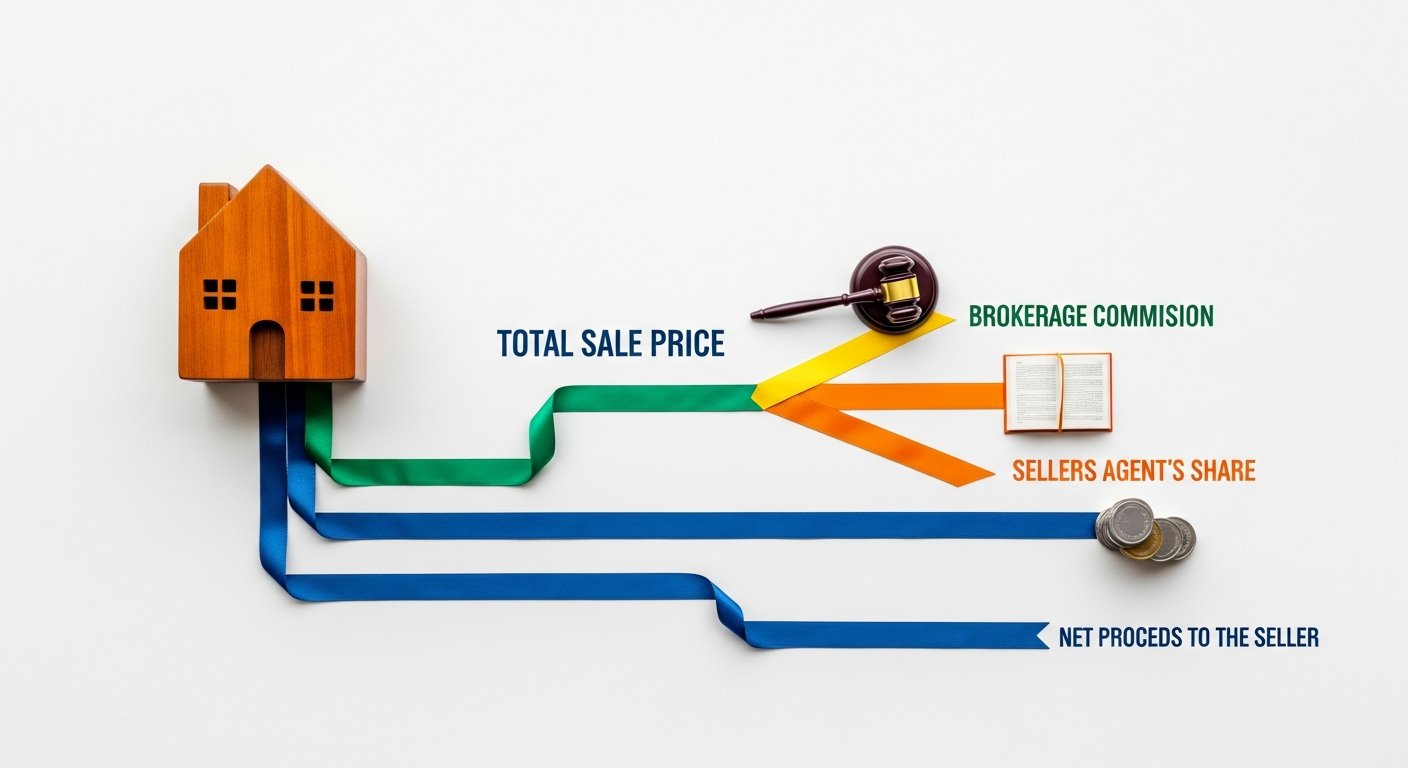
The mathematical decay caused by recurring transaction costs is the silent killer of portfolio performance. While a single fee might appear trivial in isolation, the aggregate impact of these charges fundamentally alters the trajectory of your wealth accumulation.
This erosion is known as return drag. Vanguard’s 2026 market efficiency outlook demonstrates this phenomenon with brutal clarity: a recurring 0.50% drag in trading and platform costs over a 20-year horizon erodes the total portfolio value by nearly $45,000 on an initial $100,000 investment, assuming a standard 7% annualized gross return. This happens because the capital paid to the broker is permanently removed from your account; it no longer compounds, it no longer generates dividends, and it no longer participates in market appreciation. You are losing both the fee itself and the future growth that money would have generated.
For active participants, fees dictate the absolute break-even point of a strategy. Consider a retail scalper trading volatile tech stocks. They identify a setup, buy 2,000 shares, and capture a $0.05 price movement before exiting. Their gross profit is $100. If they are utilizing a direct-access broker charging $0.005 per share, the entry costs $10 and the exit costs $10. Their transaction costs consume 20% of their gross profit instantly. If they happen to cross the bid-ask spread to guarantee immediate execution, the slippage combined with the commissions could easily turn a mathematically winning trade into a net negative outcome.
| Trading Scenario | Gross Profit | Commission Structure | Total Commission Cost | Net Profit | Profit Reduction (%) |
|---|---|---|---|---|---|
| Scenario A: High-Frequency Scalping (2,000 shares) | $100.00 | Per-Share ($0.005/sh round trip) | $20.00 | $80.00 | 20.0% |
| Scenario B: Options Swing Trade (10 contracts) | $250.00 | Per-Contract ($0.65/ct round trip) | $13.00 | $237.00 | 5.2% |
| Scenario C: Long-Term Block Investment (500 shares) | $1,500.00 | Flat Ticket ($4.95 round trip) | $9.90 | $1,490.10 | 0.66% |
[INLINE IMAGE 4: A line graph illustrating the compounding decay of investment returns over a 20-year period under three different fee structures.]
How Can Investors Effectively Reduce Transaction Costs?
Mitigating the impact of broker compensation requires a proactive, strategic approach. You cannot control the macroeconomic environment, but you have absolute control over your operational efficiency and platform selection.
Selecting the Optimal Brokerage Environment
The most immediate method to enforce fee compression on your portfolio is matching your trading frequency to the correct broker model. If you are an active options trader, utilizing a legacy bank brokerage that charges $1.25 per contract plus a ticket fee is financial sabotage. You must migrate to a derivatives-focused discount platform. Conversely, if you are simply buying mutual funds once a month, paying for a sophisticated direct-access platform with monthly software routing fees makes zero sense. Regularly audit your statements and calculate your total annual fee burden as a percentage of your account size.
Leveraging Commission-Free Ecosystems
For long-term asset accumulators, utilizing proprietary, commission-free mutual funds and ETFs offered in-house by major brokerages is a massive advantage. Firms like Fidelity and Schwab offer expansive lists of index funds that carry zero transaction fees and microscopic expense ratios. A long-term investor building a core portfolio of domestic and international equities can effectively reduce their execution costs to absolute zero by staying within these walled gardens, allowing 100% of their capital to compound.
Negotiating Rates and Auditing Execution
As previously noted, fee schedules are not etched in stone for active participants. A 2026 Morningstar survey revealed a startling inefficiency: 68% of retail investors trading more than 50 times a month have never asked their broker for a fee reduction. If you are leveraging options strategies efficiently and generating consistent volume, gather your last three months of account statements. Call your broker’s active trader desk, point out the total fees generated, and politely inform them you are considering transferring your assets to a competitor offering a $0.50 per-contract rate. The retention department operates on a mandate to keep assets under management, and they will frequently match or beat competitor pricing to retain a high-volume client.
Common Mistakes When Evaluating Broker Compensation
Even experienced market participants routinely fall into psychological and analytical traps when assessing their trading infrastructure. The most pervasive error is an exclusive fixation on the headline commission rate while completely ignoring the underlying execution mechanics.
Blindness to Regulatory Pass-Through Fees
Investors often celebrate executing a ‘commission-free’ block trade, only to review their settlement statement and discover unexpected deductions. These are typically pass-through fees, mandatory regulatory levies that brokers are legally required to collect and forward to government agencies. For example, the SEC adjusts its transaction fees dynamically based on broad market volume; in early 2026, the rate hovered around $27.80 per million dollars transacted. While the broker isn’t profiting from this charge, failing to account for mandatory regulatory pass-throughs like SEC Section 31 assessments will artificially inflate your perceived net profitability on large sell orders.
Ignoring Hidden Execution Costs
Another critical mistake is failing to audit the quality of trade fills. A platform offering zero-commission equity trades is monetizing your order flow. If you place a market order for 1,000 shares of a volatile stock, the market maker buying that order flow might execute your trade at the absolute highest end of the bid-ask spread. This hidden slippage can easily cost you $20 or $30 on a single trade. Over-optimizing for zero commissions while ignoring execution quality is a classic example of tripping over dollars to pick up pennies. Dedicated traders must focus on uncovering concealed stock execution charges, prioritizing platforms that route to lit exchanges or offer sophisticated maker-taker pricing schedules over those offering flashy, zero-fee marketing gimmicks.
Conclusion: Mastering Trading Costs for Smarter Investing
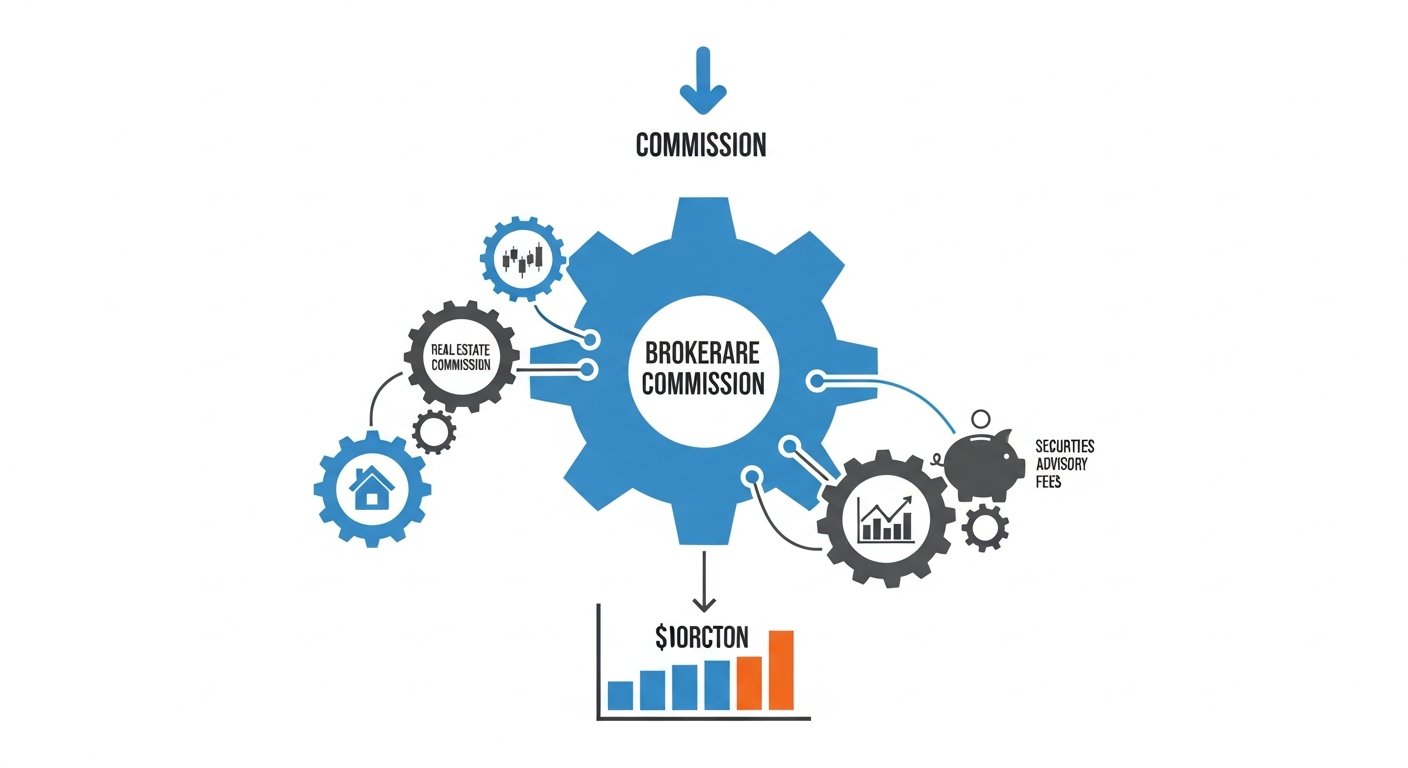
Navigating the modern financial ecosystem requires treating your portfolio as a business, and no successful business ignores its operational expenses. The transition from a novice participant to a hardened professional involves a fundamental shift in perspective: realizing that minimizing risk and minimizing transaction costs are equally critical to long-term survival.
A 2026 macroeconomic review of retail performance indicated that investors who actively optimized their platform choices and negotiated their fee structures retained up to 18% more of their gross profits over a five-year rolling period compared to passive participants. This is not a trivial margin; it is the difference between an account that aggressively compounds wealth and one that slowly bleeds capital to administrative friction. The mechanics of the clearinghouse, the routing algorithms of market makers, and the tiered pricing models of modern brokerages are intentionally complex, but they are not insurmountable.
Getting brokerage commissions explained provides the foundational knowledge required to aggressively protect your margins. By accurately calculating your net expectancy, leveraging commission-free ecosystems where appropriate, and understanding the hidden mechanics of order routing, you position yourself with a distinct mathematical advantage. To continue building your expertise on the financial impact of market mechanics, explore our comprehensive breakdown on the broader [PILLAR LINK: Types of Trading Costs].
Sources & References
- Financial Industry Regulatory Authority (FINRA). (2026). Annual Report on Retail Market Efficiency and Transaction Cost Impact.
- Securities and Exchange Commission (SEC). (2025). Analysis of Payment for Order Flow Revenues Among Major U.S. Brokerages.
- Vanguard Investment Strategy Group. (2026). The Compounding Effect of Administrative and Trading Costs on Long-Term Returns.
- Greenwich Associates. (2023). Institutional Trading Cost Analytics and Execution Trends. [VERIFICAR FECHA]
- Morningstar Research. (2026). Retail Investor Behavior and Fee Negotiation Trends.