
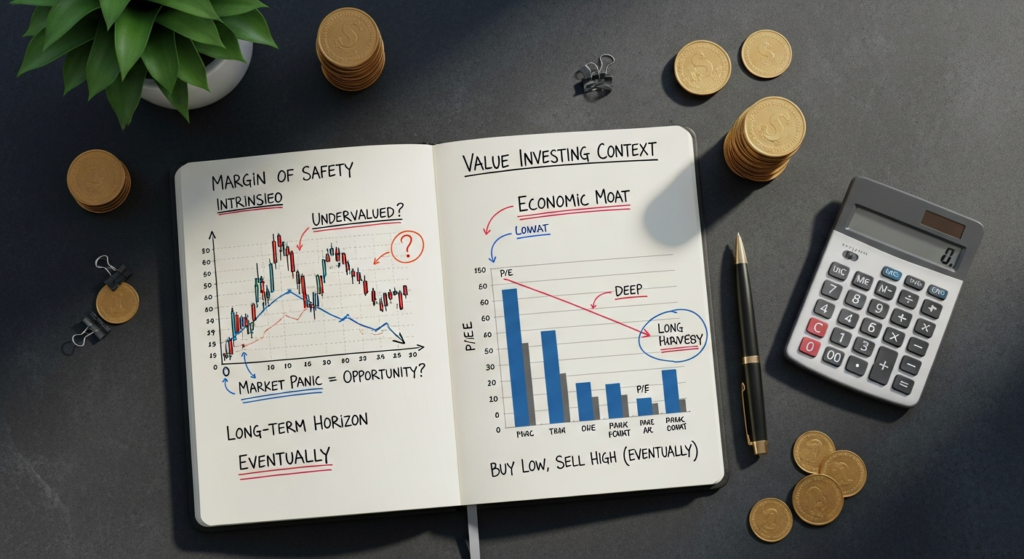
What is Value Investing? Unearthing True Worth
At its heart, value investing is the strategy of meticulously researching and purchasing securities (typically stocks) that appear to be trading for less than their intrinsic, or true, value. The premise is simple yet profound: every business has an underlying worth, independent of its current market price. When the market price falls below this intrinsic value, a value investor sees an opportunity to buy a “dollar for fifty cents.” This discrepancy often arises from market overreactions to temporary bad news, general pessimism, or a lack of understanding of the company’s long-term prospects.
The concept was formalized by Benjamin Graham and David Dodd at Columbia Business School in the 1930s, particularly through Graham’s seminal works, “Security Analysis” and “The Intelligent Investor.” Graham taught that a stock should be viewed not as a ticker symbol or a speculative gamble, but as a proportional ownership stake in a real business. His approach emphasized quantitative analysis, focusing on assets, earnings, dividends, and debt to determine a company’s fundamental value.
Unlike growth investing, which prioritizes companies with high growth potential, often regardless of their current valuation, value investing focuses on established companies or those with solid fundamentals that are simply out of favor. It’s a contrarian approach, demanding investors to think independently and resist the herd mentality that often drives markets to extremes. Value investors thrive when others are fearful, buying when prices are depressed, and waiting patiently for the market to eventually recognize the true value of their holdings. This long-term perspective is crucial, as market sentiment can remain irrational for extended periods, but eventually, fundamentals tend to prevail.
Understanding the distinction between price and value is paramount. Price is what you pay; value is what you get. A value investor’s primary goal is to minimize risk by buying assets at a significant discount to their estimated worth, thereby creating a “margin of safety.” This cushion protects against unforeseen business challenges or errors in valuation, making it a cornerstone of conservative yet highly effective investment management.
The Core Principles of Value Investing: A Foundation for Success
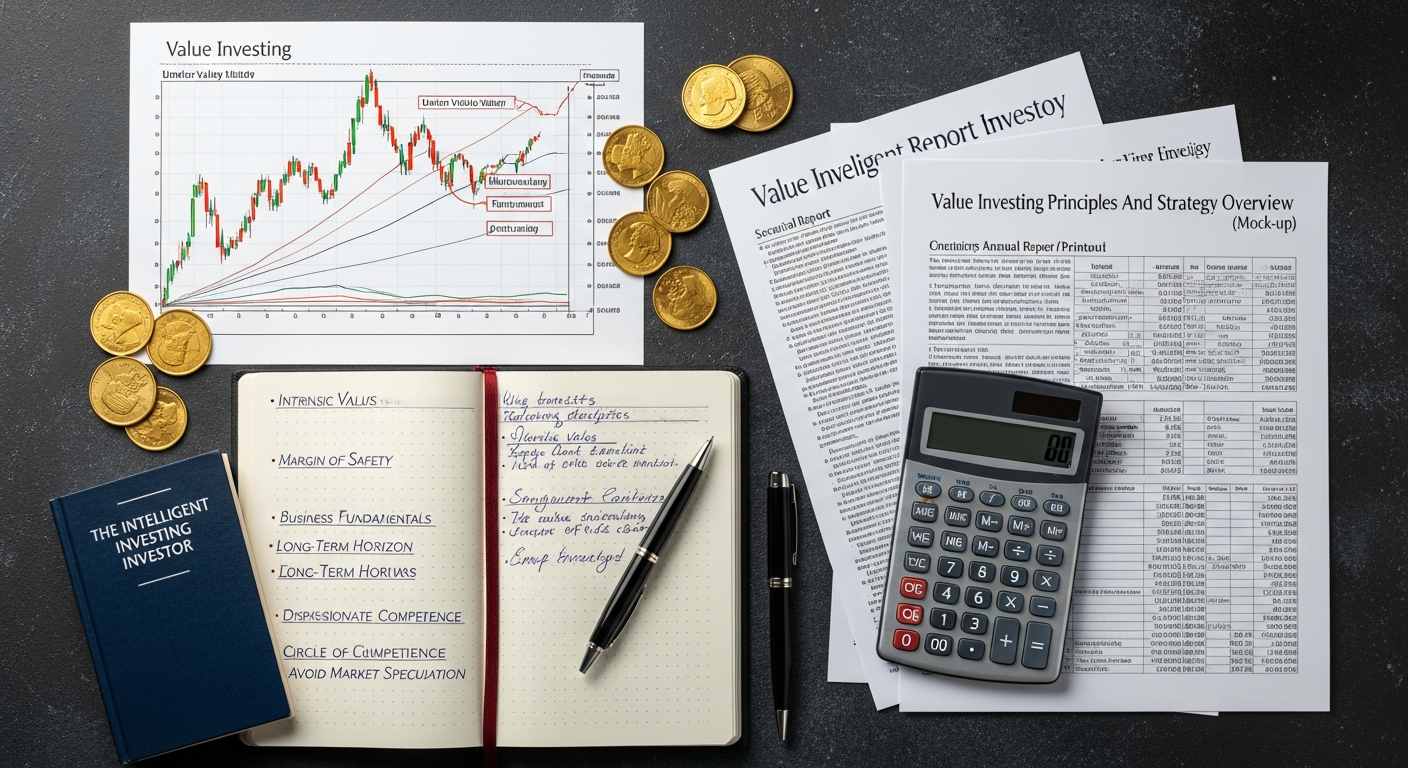
Implementing a successful value investing strategy requires adherence to several fundamental principles that guide decision-making and portfolio construction. These tenets form the bedrock upon which all successful value investors build their wealth.
- Businesses, Not Stocks: The most crucial principle is to view stocks as fractional ownership in a business. This shifts the focus from daily price fluctuations to the underlying economic reality of the company. A value investor asks: “If I were to buy this entire business, what would it truly be worth? What are its assets, liabilities, earnings power, and competitive advantages?”
- Intrinsic Value: Every company possesses an intrinsic value, which represents its true worth based on its assets, earnings, cash flow, and future prospects. This value is distinct from its market price. Value investors diligently work to estimate this intrinsic value through thorough fundamental analysis, aiming to understand what the business is truly capable of earning over time.
- Margin of Safety: Introduced by Benjamin Graham, the margin of safety is arguably the most vital concept in value investing. It means buying a stock only when its market price is significantly below your conservative estimate of its intrinsic value. This discount provides a buffer against analytical errors, adverse economic conditions, or unexpected corporate setbacks. It is the primary means of risk reduction for a value investor, ensuring that even if things don’t go perfectly, the investment still has a good chance of succeeding.
- Long-Term Horizon: Value investing is inherently a long-term strategy. The market can take a significant amount of time to recognize and correct mispricings. Impatient investors often sell too early, missing out on the eventual appreciation of undervalued assets. A long-term perspective allows compounding to work its magic and provides the necessary patience for the market to eventually reflect the true value of a business. This also minimizes the impact of short-term market noise and transaction costs.
- Market Volatility as an Opportunity: Rather than fearing market fluctuations, value investors embrace them. They see volatility as an opportunity to buy good businesses at bargain prices during downturns, and potentially sell them at fair or even overvalued prices during euphoric upturns. Warren Buffett famously refers to the market as “Mr. Market,” an emotional partner who offers to buy or sell your shares daily, sometimes at absurdly high prices and sometimes at ridiculously low ones. The intelligent investor takes advantage of Mr. Market’s irrationality.
- Independent Thinking and Contrarianism: True value investors resist the temptation to follow the crowd. They conduct their own research, form their own conclusions about a company’s intrinsic value, and are willing to go against prevailing market sentiment if their analysis dictates it. This often means buying when others are selling (when prices are low) and selling when others are buying (when prices are high). This contrarian stance requires significant conviction and emotional discipline.
Value Investing Strategy: A Step-by-Step Approach
Fundamental Analysis: The Bedrock of Value Investing
The journey begins with deep fundamental analysis. This involves dissecting a company’s financial statements, management quality, industry position, and competitive landscape.
-
Financial Statement Analysis:
- Income Statement: Examine revenue growth, gross margins, operating expenses, and net income. Look for consistency and trends over several years.
- Balance Sheet: Assess assets (cash, receivables, inventory, property, plant & equipment) against liabilities (payables, short-term and long-term debt). Pay close attention to debt levels, working capital, and shareholder equity. A strong balance sheet with low debt is a hallmark of a robust business.
- Cash Flow Statement: This is often considered the most important statement by value investors. It shows how much cash a company generates from its operations, investing, and financing activities. Positive and growing operating cash flow is vital. Free cash flow (operating cash flow minus capital expenditures) is particularly important as it represents the cash available to shareholders, debt repayment, or reinvestment.
- Management Quality: Evaluate the competence, integrity, and capital allocation skills of the management team. Look at their track record, compensation structure, and shareholder-friendly actions (e.g., sensible share buybacks, prudent reinvestment).
- Industry and Competitive Landscape: Understand the industry dynamics. Is it growing? Is it cyclical? What are the barriers to entry? Analyze the company’s competitive advantages (moats), such as brand strength, cost advantages, network effects, or proprietary technology. A strong, durable moat protects profitability and intrinsic value.
Valuation Techniques for Value Investors
Once the fundamental analysis is complete, the next step is to estimate the company’s intrinsic value using various valuation methods.
- Discounted Cash Flow (DCF) Analysis: This is arguably the most theoretically sound method. It involves projecting a company’s future free cash flows and discounting them back to the present using an appropriate discount rate (often the Weighted Average Cost of Capital, WACC). The sum of these present values gives an estimate of the company’s intrinsic value. This method is sensitive to assumptions, so conservative estimates are crucial.
- Comparable Company Analysis (Comps): This method involves comparing the target company’s valuation multiples (e.g., P/E, P/B, EV/EBITDA) to those of similar publicly traded companies. While useful for benchmarking, it’s important to adjust for differences in growth, risk, and profitability.
- Asset-Based Valuation: For certain types of companies, especially those with significant tangible assets, valuing the underlying assets (e.g., real estate, inventory) can provide a floor for the company’s intrinsic value. This is particularly relevant for distressed companies or those undergoing liquidation.
- Dividend Discount Model (DDM): For companies with a consistent dividend payout history, the DDM discounts future expected dividends back to the present. This is less applicable to companies that retain most earnings for growth.
After arriving at an intrinsic value estimate, the value investor applies the margin of safety. For example, if a company’s intrinsic value is estimated at $100 per share, a value investor might only consider buying it if the market price is $70 or less, providing a 30% margin of safety.
Building a Resilient Value Portfolio
Building a portfolio based on value investing principles involves careful selection and ongoing monitoring.
- Concentration vs. Diversification: While traditional finance often advocates for broad diversification, many successful value investors (like Buffett) prefer a more concentrated portfolio of their best ideas. They argue that extensive diversification leads to owning merely average businesses. However, for most individual investors, some level of diversification (e.g., 10-20 well-researched stocks across different industries) is prudent to mitigate idiosyncratic risk.
- Portfolio Monitoring: Once an investment is made, continuous monitoring is essential. This doesn’t mean checking stock prices daily, but rather staying updated on the company’s financial performance, industry trends, and management decisions. The goal is to ensure that the original investment thesis remains intact.
-
When to Sell: A value investor typically sells when:
- The stock price reaches or exceeds the estimated intrinsic value (the market has recognized its worth).
- The original investment thesis is fundamentally broken (e.g., a permanent deterioration in competitive advantage or management quality).
- A significantly more attractive investment opportunity arises, warranting a reallocation of capital.
Key Metrics and Ratios for Value Investors

While a holistic understanding of a business is paramount, several key financial metrics and ratios serve as crucial signposts for value investors in their search for undervalued opportunities.
- Price-to-Earnings (P/E) Ratio: This widely used ratio compares a company’s current share price to its earnings per share (EPS). A lower P/E ratio relative to its industry peers or its historical average often suggests undervaluation, assuming earnings are stable or growing. However, a very low P/E can also indicate underlying problems, so context is key.
- Price-to-Book (P/B) Ratio: The P/B ratio compares a company’s market price per share to its book value per share (shareholder equity divided by shares outstanding). A P/B ratio below 1 can indicate that the market values the company at less than the net value of its assets, which might signal a bargain, especially for asset-heavy industries.
- Debt-to-Equity (D/E) Ratio: This ratio measures a company’s financial leverage by comparing its total liabilities to shareholder equity. A high D/E ratio can indicate excessive risk, as the company might struggle to meet its debt obligations, particularly during economic downturns. Value investors generally prefer companies with manageable debt levels.
- Return on Equity (ROE): ROE measures a company’s profitability in relation to the equity invested by shareholders. A consistently high ROE indicates that management is effectively using shareholder capital to generate profits. Value investors look for businesses that can generate high returns on their capital.
- Free Cash Flow (FCF) and Free Cash Flow Yield: As mentioned, FCF is critical. A strong, consistent FCF indicates a healthy business that can fund its operations, pay dividends, reduce debt, or buy back shares without relying on external financing. Free Cash Flow Yield (FCF per share / share price) offers a way to compare the cash generation of different companies relative to their market price, similar to an earnings yield.
- Enterprise Value to EBITDA (EV/EBITDA): EV/EBITDA is a useful metric for comparing companies, especially across industries with different capital structures. Enterprise Value (EV) includes market capitalization plus debt minus cash, providing a more comprehensive view of a company’s total value. EBITDA (Earnings Before Interest, Taxes, Depreciation, and Amortization) is a proxy for operating cash flow. A lower EV/EBITDA can suggest undervaluation.
These metrics are powerful tools when used in conjunction with a deep understanding of the business. No single ratio tells the whole story, but together they paint a financial picture that can help identify potential value opportunities.
The Psychological Discipline of Value Investing
While the analytical aspects of value investing are rigorous, the psychological demands are arguably even greater. Success in value investing often hinges on an investor’s ability to maintain discipline, resist emotional impulses, and think independently.
-
Overcoming Behavioral Biases: Human beings are prone to numerous cognitive biases that can derail investment decisions. These include:
- Confirmation Bias: Seeking out information that confirms existing beliefs and ignoring contradictory evidence.
- Anchoring: Over-relying on the first piece of information encountered (e.g., initial purchase price).
- Herd Mentality: The tendency to follow the actions of a larger group, often leading to buying high and selling low.
- Loss Aversion: The psychological preference to avoid losses over acquiring equivalent gains, which can lead to holding onto losing investments too long or selling winning ones too early.
A successful value investor is acutely aware of these biases and actively works to counteract them through a systematic and rational decision-making process.
- Patience and Long-Term Vision: Value investing is not a get-rich-quick scheme. It requires immense patience to wait for the market to correctly price an undervalued asset. This often means enduring periods of underperformance relative to the broader market or popular growth stocks. The ability to hold onto a well-researched investment for years, even a decade or more, is a hallmark of true value investors.
- Independent Thinking and Conviction: Going against the crowd can be emotionally challenging. When the market is in a frenzy, it’s hard to resist buying into popular narratives, even if valuations are stretched. Conversely, during a market panic, it takes courage to buy when everyone else is selling. Value investors must develop the conviction in their own analysis to stand firm against market sentiment, understanding that the greatest opportunities often arise during times of widespread pessimism.
- Financial Prudence Beyond Investing: The discipline required for value investing often extends to one’s personal finances. Just as an investor meticulously analyzes a company’s debt, an individual’s personal debt levels can significantly impact their financial well-being and ability to invest. Understanding how to get out credit card debt, for instance, requires a systematic approach to financial health, prioritizing high-interest debt repayment, and living within one’s means. This foundational financial discipline mirrors the disciplined mindset towards capital allocation and risk management that is essential for successful value investing. Before embarking on complex investment strategies, ensuring a solid personal financial foundation is paramount.
Value Investing in the Modern Era: Adaptation and Evolution
While the core value investing principles remain timeless, their application has evolved to meet the demands of a rapidly changing economic and technological landscape.
- Beyond Tangible Assets: Benjamin Graham primarily focused on tangible assets and current earnings. Today, many successful companies derive their value from intangible assets like brands, intellectual property, network effects, and proprietary technology. Modern value investors must adapt their valuation models to account for these qualitative factors, recognizing that a company’s “moat” might be less visible but no less potent.
- Global Opportunities: The rise of global markets has expanded the universe of potential value investments. Investors are no longer limited to domestic opportunities but can find undervalued businesses in emerging markets or developed economies abroad. This requires understanding different accounting standards, geopolitical risks, and cultural nuances.
- The Role of Technology: Technology has democratized access to financial data and analytical tools. Individual investors now have access to sophisticated screening tools, financial databases, and research reports that were once exclusive to institutional investors. This allows for more efficient screening of potential value candidates and deeper fundamental analysis. Furthermore, the rise of fintech platforms has made investing more accessible, particularly for those wondering how to start investing little money 2026. These platforms often allow fractional share purchases and low-cost entry points, enabling new investors to begin building a diversified portfolio based on value principles, even with modest capital.
- ESG Considerations: Environmental, Social, and Governance (ESG) factors are increasingly influencing investment decisions. Value investors are beginning to integrate ESG analysis into their fundamental research, recognizing that strong ESG practices can reduce long-term risks, enhance brand reputation, and contribute to sustainable profitability. A company with poor environmental practices or governance issues might face regulatory fines, reputational damage, or difficulty attracting talent, all of which can erode intrinsic value. For instance, the insights provided in an Impact Investing ESG Guide 2026 can inform a more holistic view of a company’s long-term sustainability and intrinsic value, moving beyond purely financial metrics to understand a company’s societal impact and operational resilience.
- Avoiding Value Traps: In the modern era, it’s crucial for value investors to distinguish between a truly undervalued company and a “value trap.” A value trap is a stock that appears cheap based on traditional metrics but remains cheap (or gets cheaper) because its underlying business is fundamentally impaired or in structural decline. Diligent qualitative analysis of competitive position, industry trends, and technological disruption is more important than ever to avoid these pitfalls.
Common Pitfalls and How to Avoid Them in Value Investing
While powerful, value investing is not without its challenges. Avoiding common mistakes is as important as understanding the principles themselves.
- Falling into Value Traps: As mentioned, a value trap is a company that looks cheap but is cheap for a good reason—its business model is broken, its industry is in secular decline, or it faces insurmountable competitive pressures. To avoid this, focus intensely on the company’s competitive advantage (moat), management quality, and long-term industry prospects, not just historical financial metrics. Always question why a stock is cheap.
- Ignoring Qualitative Factors: Over-reliance on quantitative metrics alone can be misleading. A company’s brand strength, corporate culture, innovation pipeline, and customer loyalty are vital but harder to quantify. Value investors must develop the ability to assess these qualitative aspects alongside the numbers.
- Lack of Patience: The market can remain irrational longer than you can remain solvent. Selling prematurely out of impatience, especially if a stock continues to underperform after purchase, is a common pitfall. Remember the long-term horizon and the power of compounding. Trust your research and the margin of safety.
- Over-Diversification: While diversification reduces risk, over-diversification can dilute returns and prevent an investor from truly understanding each business they own. Value investors often prefer a more concentrated portfolio of their best ideas, where they have done deep fundamental work. It’s better to own a few great businesses at a fair price than many mediocre ones.
- Failing to Understand the Business: Investing in companies whose business models you don’t fully comprehend is akin to gambling. Value investors stick to their circle of competence, focusing on industries and businesses they can thoroughly analyze and understand. If you can’t explain how a company makes money, you probably shouldn’t invest in it.
- Emotional Decisions: Reacting to daily market noise, media headlines, or the opinions of others can lead to impulsive and poor decisions. Maintain a dispassionate, analytical approach. Remind yourself that market volatility creates opportunities, not reasons for panic.
- Neglecting Macroeconomic Trends: While value investing focuses on individual businesses, ignoring broader macroeconomic trends (interest rates, inflation, recessions, geopolitical events) can lead to significant misjudgments. While you shouldn’t try to predict the market, understanding the macro environment helps in assessing a company’s resilience and future prospects.
Frequently Asked Questions
Recommended Resources
Check out Roth Ira Vs Traditional Ira Differences on Fin3go for a deeper dive.
Explore How To Scale Ecommerce Business 2026 for additional insights.