Master the Swing: How to Hedge Against Market Volatility as a Retail Investor
Market volatility is often viewed as the enemy of the retail investor, a chaotic force that erodes gains and triggers emotional decision-making. However, as we look toward the financial landscape of 2026, volatility should be viewed not as a threat to be feared, but as a structural component of the markets to be managed. For the retail trader, the primary challenge isn’t just finding protection; it is doing so without eroding capital through high fees, commissions, or complex derivatives that carry hidden costs. Hedging is essentially an insurance policy for your portfolio. Just as you wouldn’t drive a car without insurance, navigating the high-speed fluctuations of modern equity markets requires a strategic buffer. By utilizing low-cost exchange-traded funds (ETFs), strategic asset allocation, and disciplined behavioral shifts, investors can insulate their wealth. This guide explores the most effective, cost-conscious strategies to hedge against market volatility and ensure your long-term financial goals remain on track.
The Mechanics of Volatility: Why Hedging is Non-Negotiable in 2026
To effectively hedge, one must first understand what they are hedging against. In the context of 2026, market volatility is increasingly driven by algorithmic trading, geopolitical shifts, and rapid changes in central bank policies. Volatility is typically measured by the VIX (CBOE Volatility Index), often referred to as the “fear gauge.” When the VIX is high, uncertainty is rampant; when it is low, complacency often sets in.
For the retail investor, volatility presents two main risks: systemic risk and unsystematic risk. Systemic risk, or “market risk,” affects the entire market and cannot be avoided through simple stock selection. Unsystematic risk is specific to a company or industry. Hedging is primarily designed to mitigate systemic risk—the “black swan” events or economic downturns that drag all boats down.
Minimizing costs while hedging is crucial because many traditional hedging tools, like long-dated put options, can be expensive. If the cost of your “insurance” exceeds the potential loss of a market dip, the hedge is counterproductive. Therefore, a modern hedging strategy must prioritize “drag-free” or “low-drag” methods that provide protection without siphoning off your annual returns.
Strategic Diversification: Building a Fortress with Low-Cost ETFs
The most fundamental—and often most cost-effective—hedge is diversification. While it sounds basic, many retail investors suffer from “home country bias” or “sector concentration,” leaving them vulnerable when a specific industry or region falters. In 2026, a truly diversified portfolio transcends the traditional 60/40 stock-bond split.
To minimize costs, retail investors should utilize broad-market, low-expense-ratio ETFs. Instead of holding thirty individual stocks, which incurs higher transaction costs and requires significant research time, a single “Total World Stock” ETF provides exposure to thousands of companies across various jurisdictions. This ensures that if the domestic market experiences a localized spike in volatility, international holdings may act as a stabilizer.
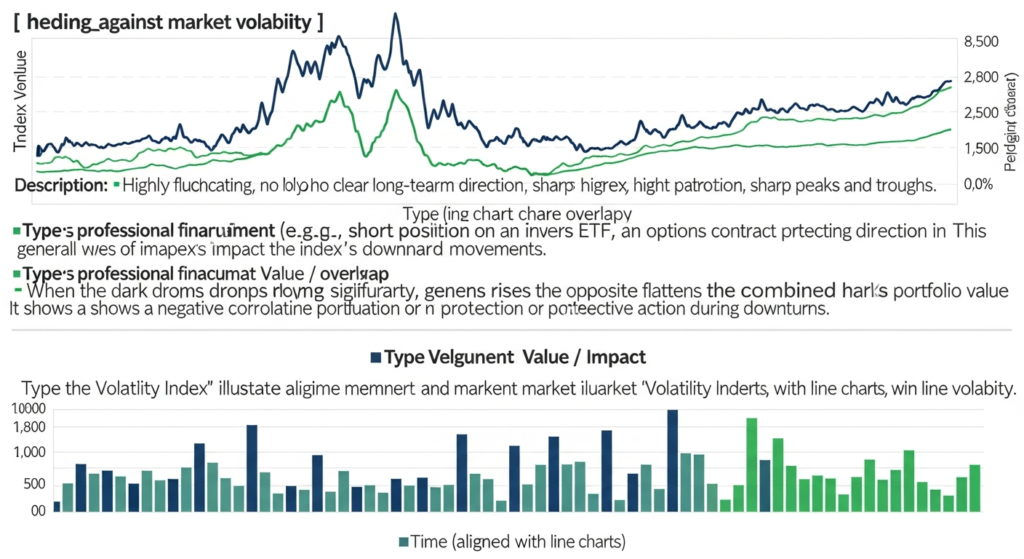
Furthermore, diversification should extend into non-correlated assets. Assets are non-correlated when their prices move independently of one another. By including assets like Real Estate Investment Trusts (REITs) or Treasury Inflation-Protected Securities (TIPS) within your portfolio, you create a structure where one asset’s decline is often offset by another’s stability. The goal here isn’t necessarily to maximize profit during a bull run, but to flatten the volatility curve during a bear market.
The Options Playbook: Protective Puts and Cost-Efficient Collars
For traders with a slightly higher risk tolerance, options provide a direct way to “lock in” prices. The most common strategy is the **Protective Put**. By purchasing a put option on an index or a specific stock you own, you gain the right to sell that asset at a predetermined price (the strike price), regardless of how low the market falls.
However, buying puts can be expensive due to “time decay” (theta). To minimize costs, retail traders often employ a **Cost-Efficient Collar**. This involves:
1. Owning the underlying stock.
2. Purchasing an out-of-the-money put option (to protect the downside).
3. Selling (writing) an out-of-the-money call option.
The premium received from selling the call option helps pay for the purchase of the put option. In many cases, this can result in a “zero-cost collar.” The trade-off is that you cap your potential upside if the stock rockets higher, but you effectively eliminate the risk of a catastrophic decline. For a retail investor looking toward the market realities of 2026, the collar is one of the most sophisticated yet accessible ways to stay protected without a net capital outlay.
Safe Havens and Defensive Sectors: Rebalancing for Stability
When volatility spikes, capital tends to flow into “safe haven” assets. Historically, this has meant gold, the US Dollar, and long-term Government Bonds. In 2026, the definition of a safe haven remains largely consistent, though the methods of accessing them have become much cheaper.
Investors can hedge by rotating a portion of their portfolio into defensive sectors—industries that provide essential services regardless of the economic climate. These include:
* **Consumer Staples:** People still buy groceries and soap during a recession.
* **Utilities:** Electricity and water remain necessities.
* **Healthcare:** Medical needs are generally inelastic.
Instead of trying to time the market by selling everything, a more cost-effective method is “defensive rebalancing.” When volatility indicators rise, you might shift 10-15% of your growth-oriented holdings into a low-cost Utilities ETF. This reduces your portfolio’s “beta” (its sensitivity to market movements). Gold, too, remains a powerful hedge against currency devaluation and geopolitical strife. By using gold ETFs with low management fees (some as low as 0.15% to 0.25%), retail investors can hold a proxy for physical bullion without the costs of storage and insurance.
Inverse ETFs and Tactical Hedging: Capitalizing on the Downside
Inverse ETFs are specialized financial instruments designed to move in the opposite direction of a specific index. For example, if the S&P 500 drops by 1%, an inverse S&P 500 ETF is designed to rise by approximately 1%. These are powerful tools for retail traders because they can be bought and sold just like a regular stock through a standard brokerage account.
The primary benefit of an inverse ETF is that it allows you to hedge your entire portfolio without selling your long-term core holdings. Selling your stocks to “sit out” a volatile period can trigger capital gains taxes—a massive hidden cost. Instead, buying a small position in an inverse ETF can offset the losses in your main account.
However, a word of caution: most inverse ETFs are designed for daily rebalancing. This means they are short-term instruments. If held for weeks or months, “volatility decay” can eat away at the returns. For the 2026 investor, inverse ETFs should be used tactically—as a temporary shield during periods of extreme high-conviction volatility—rather than a permanent “buy and hold” position.
The Psychological Edge: Maintaining Liquid Reserves and Discipline
Perhaps the most overlooked and truly “zero-cost” hedge is the maintenance of a cash reserve. In a high-volatility environment, cash is not just “trash” (as some critics claim); it is “optionality.” Having a portion of your portfolio in a high-yield savings account or a money market fund provides a psychological buffer that prevents panic selling.
When the market drops 10% in a week, the investor who is 100% invested often panics and sells at the bottom. The investor who has a 10% cash hedge sees a 10% discount on their favorite companies. This shift in perspective is the difference between wealth destruction and wealth creation.
Furthermore, **Dollar-Cost Averaging (DCA)** is a structural hedge. By investing a fixed amount of money at regular intervals, you automatically buy more shares when prices are low and fewer shares when prices are high. This removes the “timing risk” that often leads to retail losses. As we navigate the complexities of 2026, the ability to remain unemotional and stick to a pre-defined contribution schedule is the ultimate defense against the noise of market turbulence.
FAQ: Hedging Against Market Volatility
#
1. What is the cheapest way for a retail investor to hedge?
The most cost-effective way is through **strategic asset allocation and diversification**. Using low-cost, broad-market ETFs minimizes transaction fees and management expense ratios. Additionally, maintaining a cash reserve or using a “zero-cost collar” with options can provide protection without requiring a significant upfront cash outlay.
#
2. Should I buy gold to hedge against a 2026 market crash?
Gold has historically been a strong hedge against systemic risk and inflation. For retail investors, buying physical gold can be expensive due to dealer premiums and storage costs. A more efficient way to hedge is through **Gold ETFs**, which track the price of bullion and offer high liquidity with very low annual fees.
#
3. How much of my portfolio should be dedicated to a hedge?
There is no one-size-fits-all answer, but many experts suggest a “tilted” approach. This might involve keeping 80-90% in long-term growth assets and using **5-10% for active hedging** (such as inverse ETFs or protective puts) during periods of high volatility. The goal is to reduce drawdown, not to eliminate market exposure entirely.
#
4. Are inverse ETFs safe for long-term hedging?
Generally, no. **Inverse ETFs are designed for short-term tactical use**. Because they rebalance daily, the effects of compounding can work against you in a choppy market (this is known as “beta slippage” or decay). They are best used as a temporary insurance policy for a few days or weeks rather than a permanent portfolio fixture.
#
5. Does diversification still work when all markets are falling?
During a “liquidity crunch,” correlations often move toward 1.0, meaning almost everything falls at once. However, diversification still helps by **reducing the depth of the decline**. While stocks and real estate might fall, high-quality government bonds or cash usually hold their value or rise, providing a floor for your portfolio’s total value.
Conclusion: Navigating 2026 with Confidence
Hedging against market volatility is not about predicting the future; it is about preparing for a variety of outcomes. As we approach 2026, the tools available to retail investors have never been more powerful or more affordable. By moving away from high-fee products and toward a combination of low-cost ETFs, defensive sector rotation, and tactical options strategies, you can build a portfolio that is resilient in the face of uncertainty.
The key to successful hedging lies in balance. Over-hedging can lead to “drag,” where the cost of protection prevents you from reaching your financial goals. Under-hedging can lead to catastrophic losses that take years to recover. The most successful retail traders are those who view hedging as a dynamic process—one that requires regular rebalancing and a disciplined, unemotional mindset. By implementing these strategies today, you can stop reacting to the market’s swings and start capitalizing on the opportunities that volatility inevitably creates.