

Understanding Your Student Loan Landscape: The First Step to Accelerated Repayment
Before you can accelerate your student loan repayment, you must first understand the specific details of your debt. This isn’t just about knowing your total balance; it’s about dissecting the nuances of each loan, which will dictate the most effective repayment strategy. Think of this as performing due diligence on your debt portfolio, much like an investor would on a potential asset.
Identify Your Loan Types: Federal vs. Private
The distinction between federal and private student loans is paramount. Federal loans often come with more flexible repayment options, income-driven repayment plans, deferment, forbearance, and potential forgiveness programs. Private loans, issued by banks or credit unions, typically offer fewer protections and less flexibility, often with variable interest rates that can increase over time. Knowing which loans you have will inform your options for refinancing, consolidation, and even basic repayment adjustments.
Catalog Your Interest Rates and Balances
Create a detailed inventory of every single student loan you hold. For each loan, record:
- Lender: Who holds the loan?
- Original Balance: How much did you initially borrow?
- Current Balance: What is the outstanding principal?
- Interest Rate: Is it fixed or variable? What is the current rate?
- Loan Term: How many years is the repayment scheduled for?
- Minimum Monthly Payment: What is your required payment?
This comprehensive overview will highlight which loans are costing you the most in interest and should be prioritized for accelerated repayment. High-interest loans are like a drag on your financial engine, slowing down your progress towards other goals, including investing. Understanding these details is the bedrock of building a powerful strategy to pay off student loans fast.
Review Your Repayment History and Current Status
Access your loan statements and credit report to review your payment history. Are you current on all payments? Have you missed any? Understanding your payment history can influence your ability to refinance or consolidate. Furthermore, verify your current repayment plan. Are you on a standard plan, an extended plan, or an income-driven repayment (IDR) plan? While IDR plans can offer lower monthly payments, they often extend the repayment period and can lead to more interest paid over the life of the loan, counteracting the goal of accelerated repayment.
Aggressive Repayment Strategies: Attacking Your Debt Head-On
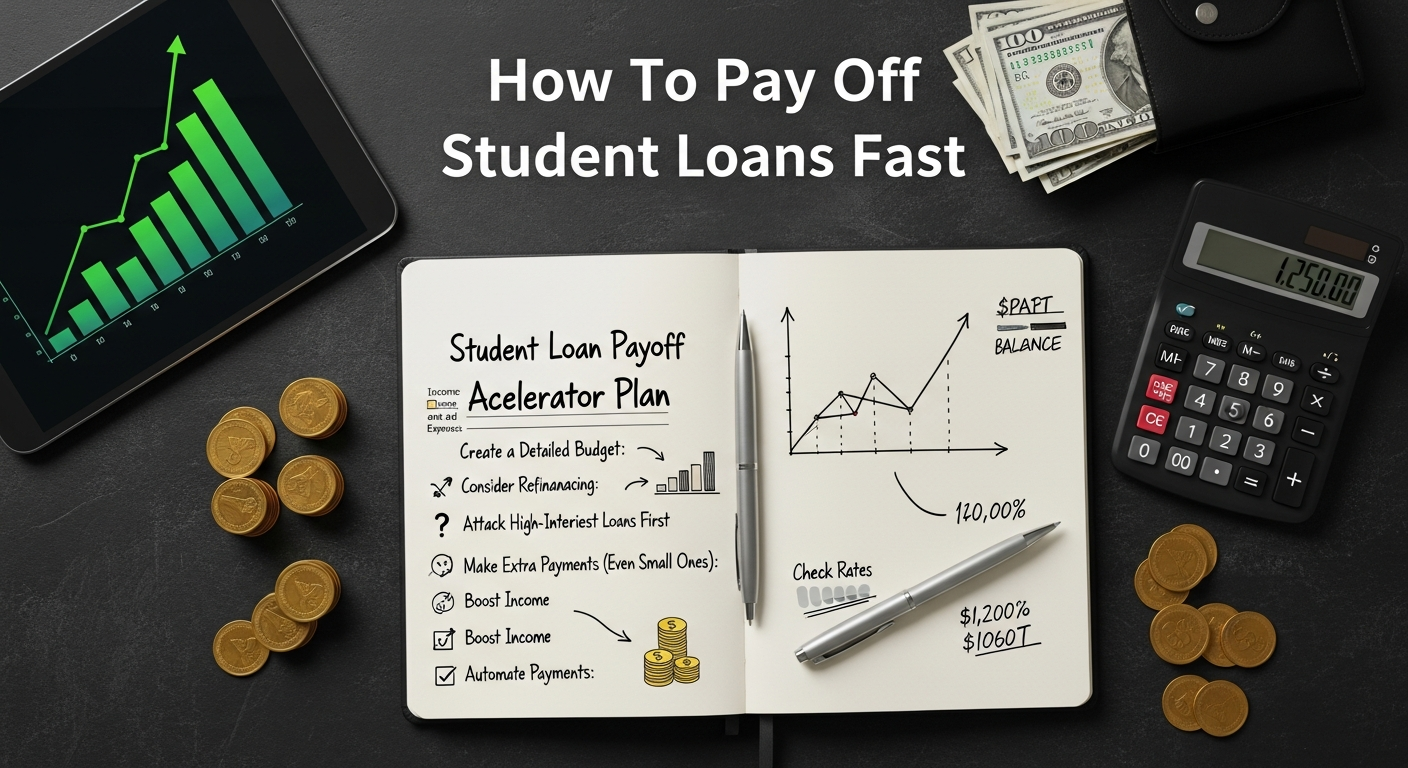
Once you have a clear picture of your student loan portfolio, it’s time to implement aggressive strategies designed to significantly reduce your principal balance and interest paid. These methods require discipline and commitment, but the reward is a faster path to being debt-free.
The Avalanche Method: Prioritizing High-Interest Debt
The student loan avalanche method is a financially optimized strategy that focuses on paying off loans with the highest interest rates first, regardless of their balance. Here’s how it works:
- Make minimum payments on all your student loans.
- Direct any extra money you have towards the loan with the highest interest rate.
- Once that loan is paid off, take the money you were paying on it (minimum payment + extra payment) and apply it to the loan with the next highest interest rate.
- Repeat until all loans are paid off.
This method saves you the most money on interest over the long term, making it the mathematically superior choice for those looking to pay off student loans fast and efficiently. The psychological boost comes with seeing your total interest paid diminish significantly.
The Snowball Method: Building Momentum
While the avalanche method is mathematically superior, the snowball method offers a psychological advantage that can be incredibly motivating. This strategy focuses on paying off your smallest loan balance first, regardless of the interest rate:
- Make minimum payments on all your student loans.
- Direct any extra money you have towards the loan with the smallest balance.
- Once that loan is paid off, take the money you were paying on it (minimum payment + extra payment) and apply it to the loan with the next smallest balance.
- Repeat until all loans are paid off.
The rapid succession of paying off smaller loans provides quick wins and builds momentum, helping you stay motivated on your journey to pay off student loans fast. For some, the emotional satisfaction of seeing loans disappear quickly outweighs the slightly higher interest paid compared to the avalanche method.
Making Extra Payments: More Than Just the Minimum
The simplest way to accelerate repayment is to consistently pay more than your minimum monthly payment. Even small, consistent extra payments can make a significant difference over time. Here are a few ways to implement this:
- Round Up Your Payments: If your minimum is $187, pay $200.
- Bi-Weekly Payments: Instead of one payment a month, pay half your monthly payment every two weeks. This results in 26 half-payments a year, which equates to 13 full monthly payments instead of 12.
- One Extra Payment Per Year: Budget to make an additional full monthly payment once a year, perhaps with a bonus or tax refund.
- Direct Extra Funds: Any windfalls, raises, or savings from cutting expenses should be directed towards your loans.
When making extra payments, always instruct your loan servicer to apply the additional amount directly to the principal balance of your chosen loan. Otherwise, they might apply it to future interest, which defeats the purpose of accelerating repayment.
Boosting Your Income to Fuel Faster Repayment
Explore Side Hustles and Freelancing
The gig economy offers countless opportunities to earn extra income outside of your primary job. Consider leveraging existing skills or developing new ones to bring in additional cash. This could include:
- Freelance writing, graphic design, or web development
- Driving for ride-sharing or food delivery services
- Tutoring or teaching online
- Consulting in your area of expertise
- Selling handmade goods or reselling items online
Every dollar earned from a side hustle, when strategically applied to your student loans, acts as an accelerant. This additional income stream is a powerful tool to pay off student loans fast, turning spare time into debt-free time.
Negotiate a Raise or Seek a Higher-Paying Job
Your primary employment is often your largest income source. If you haven’t recently, evaluate your market value and prepare to negotiate a raise at your current job. Highlight your achievements, contributions, and any new skills you’ve acquired. If a raise isn’t feasible or sufficient, consider seeking a higher-paying position within your industry or exploring new career paths. A significant increase in your base salary can dramatically impact your ability to make larger student loan payments consistently. This proactive career management is a long-term strategy for financial growth and debt freedom.
Monetize Your Hobbies or Skills
Think about what you enjoy doing or what unique skills you possess. Can you turn a hobby into a money-making venture? Perhaps you’re skilled at photography, baking, pet sitting, or home repairs. Even a few hundred extra dollars a month from a passion project can be channeled directly into your student loans, bringing you closer to your goal of being debt-free. For those interested in exploring more advanced financial strategies once debt is managed, resources like an Options Trading Beginners Guide could be a next step, but prioritizing debt repayment ensures a stable foundation first.
Smart Budgeting and Expense Reduction: Freeing Up Cash Flow
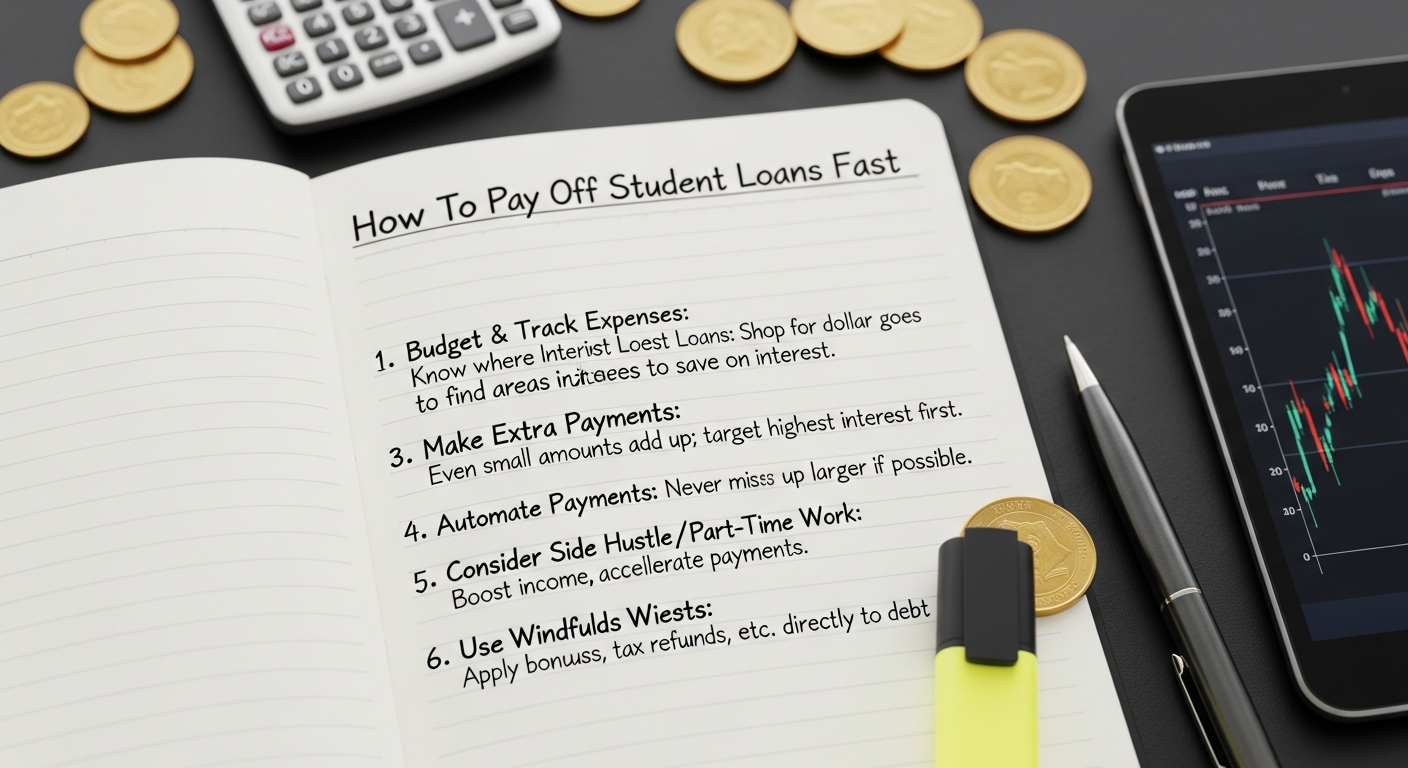
Increasing income is one side of the coin; controlling your outflow is the other. A meticulously crafted budget and a commitment to reducing unnecessary expenses can free up substantial funds that can be redirected towards your student loans. This isn’t about deprivation, but about intentional spending aligned with your goal to pay off student loans fast.
Create a Detailed Budget
The first step is to understand where every dollar goes. Use budgeting apps, spreadsheets, or even pen and paper to track all your income and expenses for at least a month. Categorize your spending into essentials (housing, food, utilities, transportation) and non-essentials (dining out, entertainment, subscriptions, shopping). This detailed overview will reveal areas where you can cut back.
Identify and Eliminate Unnecessary Expenses
Once you have your budget, critically evaluate your non-essential spending. Ask yourself:
- Are there subscription services I rarely use?
- Can I reduce my dining out frequency?
- Are there cheaper alternatives for my daily coffee or lunch?
- Can I cut back on impulse purchases or discretionary shopping?
- Are there opportunities to save on transportation (carpooling, public transit)?
Even small cuts in various categories can add up to hundreds of dollars a month. For example, packing your lunch instead of buying it five days a week could save you $100-$200 monthly, which can then be funneled directly to your student loans.
Optimize Your Fixed Costs
Don’t just focus on variable expenses; review your fixed costs too. Can you:
- Negotiate lower rates for your internet, phone, or insurance?
- Refinance your car loan if interest rates have dropped?
- Consider a roommate to split housing costs?
These larger, less frequent adjustments can unlock significant funds for student loan repayment. While focusing on student loans, it’s also important to manage other high-interest debt. If you’re struggling with credit card balances, parallel strategies found in resources like How To Get Out Credit Card Debt can be critical, as credit card interest rates are often much higher than student loan rates.
Embrace Frugal Living
Adopting a frugal mindset doesn’t mean sacrificing your quality of life; it means making conscious choices that align with your financial goals. This could involve:
- Cooking at home more often
- Finding free or low-cost entertainment options
- Buying used instead of new
- Delaying gratification on non-essential purchases
Every dollar saved is a dollar that can be put towards paying off your student loans fast, bringing you closer to financial freedom and the ability to pursue other financial goals, such as learning How To Start Investing Little Money 2026.
Strategic Refinancing and Consolidation: Lowering Your Cost of Debt
Refinancing and consolidation are powerful tools that can significantly alter the terms of your student loans, potentially saving you thousands of dollars in interest and accelerating your repayment. However, it’s crucial to understand the differences and implications of each.
Student Loan Refinancing: A Game Changer for Private Loans
Refinancing involves taking out a new loan from a private lender to pay off one or more existing student loans. The goal is typically to secure a lower interest rate, a shorter loan term, or both. This is particularly beneficial if:
- You have high-interest private student loans: Refinancing can often get you a significantly lower rate.
- Your credit score has improved: A strong credit score makes you eligible for better rates.
- You have a stable income: Lenders prefer borrowers with a solid financial history.
Important Consideration: Refinancing federal student loans into a private loan means you lose valuable federal protections, such as access to income-driven repayment plans, deferment, forbearance, and potential forgiveness programs. For this reason, refinancing is generally recommended primarily for private student loans, or for federal loans only if you are absolutely certain you will not need those protections and are solely focused on aggressive, accelerated repayment.
When considering refinancing, shop around with multiple lenders to compare rates and terms. Even a small reduction in your interest rate can translate into substantial savings over the life of the loan, directly contributing to your ability to pay off student loans fast.
Student Loan Consolidation: Simplifying Federal Loans
Federal student loan consolidation (Direct Consolidation Loan) allows you to combine multiple federal student loans into a single new federal loan. The primary benefits are:
- Single Monthly Payment: Simplifies your finances by having just one loan servicer and one payment.
- Fixed Interest Rate: The new interest rate is the weighted average of your original loans’ rates, rounded up to the nearest one-eighth of a percentage point. It does not typically lower your interest rate, but converts variable rates to fixed.
- Access to Federal Benefits: You retain access to federal protections and repayment plans.
Consolidation can sometimes extend your repayment term, which can lower your monthly payment but increase the total interest paid. If your goal is to pay off student loans fast, you would want to choose the shortest repayment term available when consolidating or make extra payments to counteract the extended term. Consolidation is less about saving money on interest and more about simplifying your federal loan management and potentially gaining access to certain income-driven repayment or forgiveness programs.
The Power of Hybrid Approaches
Sometimes, the best strategy is a hybrid approach. You might consolidate your federal loans to simplify them while simultaneously refinancing your high-interest private loans to get a better rate. This dual strategy can provide the best of both worlds: streamlined federal loan management and reduced interest costs on private debt, propelling you towards your goal of being debt-free sooner.
Balancing Debt Repayment with Future Financial Goals
While aggressively paying down student loans is a noble and often financially wise goal, it’s crucial for the Trading Costs reader to consider this strategy within the broader context of their overall financial plan. Ignoring other financial imperatives can create new vulnerabilities. The key is finding a balance that allows you to pay off student loans fast without completely derailing your other critical financial objectives.
Emergency Fund: Your Financial Safety Net
Before throwing every spare dollar at your student loans, ensure you have a robust emergency fund. This fund, typically 3-6 months’ worth of essential living expenses, protects you from unexpected job loss, medical emergencies, or unforeseen expenses. Without it, a financial setback could force you to take on new, potentially higher-interest debt (like credit cards) or even default on your loans, undoing all your hard work. Consider building your emergency fund to a comfortable level before going all-in on student loan repayment.
Retirement Savings: Don’t Underestimate Compounding
The power of compound interest works wonders over time, especially in retirement accounts like 401(k)s and IRAs. If your employer offers a 401(k) match, contributing at least enough to get the full match is often considered “free money” and should be a priority, even while paying off student loans. The guaranteed return from an employer match often outperforms the interest rate on many student loans, especially federal loans with lower fixed rates. Delaying retirement savings too long means missing out on years of compounding growth, which can be difficult to catch up on later. Finding the sweet spot between aggressive debt repayment and consistent, early retirement contributions is a hallmark of smart financial planning.
Other High-Interest Debt: Prioritize Wisely
As mentioned earlier, if you carry credit card debt or other high-interest consumer loans, these should often take precedence over student loans, particularly federal ones with lower fixed rates. The interest rates on credit cards can easily be 15-25% or higher, dwarfing typical student loan rates. Addressing these first, as detailed in guides like How To Get Out Credit Card Debt, can save you more money in interest and provide quicker relief from the most expensive forms of debt. A balanced approach might involve paying minimums on student loans while aggressively tackling credit card debt, then shifting focus to student loans once the high-interest consumer debt is cleared.
Investing for the Future: A Long-Term Perspective for 2026 and Beyond
For readers of Trading Costs, the question of when to start investing, even with student loan debt, is pertinent. While paying off high-interest debt is generally a priority, some argue for a balanced approach that includes investing small amounts consistently. For example, learning How To Start Investing Little Money 2026 can help you build an investment habit and take advantage of compounding, even if your primary focus is still debt. This could involve contributing to a Roth IRA or a taxable brokerage account with modest sums. The decision often boils down to the interest rate of your student loans versus your expected investment returns. If your student loan interest rate is low (e.g., 3-5%), and you anticipate average market returns (historically 7-10% annually), there’s a strong argument for balancing debt repayment with investing. However, if your student loan rates are high (e.g., 7% or more), paying them off quickly often provides a guaranteed “return” that is hard to beat with market investments, especially in the short term. It’s about risk tolerance and opportunity cost.
Leveraging Windfalls and Extra Cash Strategically
Unexpected injections of cash can be a powerful tool in your quest to pay off student loans fast. These windfalls, when managed strategically, can significantly reduce your principal balance and interest paid, propelling you towards debt freedom much quicker than through regular payments alone.
Tax Refunds: A Debt-Busting Opportunity
For many, a tax refund feels like a bonus. Instead of using it for discretionary spending, consider directing a significant portion, or even the entire amount, towards your student loans. A few hundred or thousand dollars can make a substantial dent, especially if applied to your highest-interest loan. To maximize this, consider adjusting your W-4 withholding to reduce your refund and instead get more money in each paycheck throughout the year, which you can then apply monthly to your loans. This turns a lump sum into consistent extra payments.
Work Bonuses and Commissions: Accelerated Payoff Power
If your job offers performance bonuses or commissions, treat these as opportunities to aggressively reduce your student loan debt. While it’s tempting to use these funds for a splurge, dedicating them to your loans can cut months or even years off your repayment timeline. Imagine receiving a $2,000 bonus and applying it directly to a loan with a 6% interest rate; that’s $2,000 that will stop accruing interest immediately, saving you money and accelerating your path to debt freedom.
Gifts and Inheritances: Long-Term Impact
While less common, gifts from family or an inheritance can be transformative. If you receive such a windfall, carefully consider its long-term financial impact. While a portion might be used for an immediate need or a small celebration, allocating a significant part to student loan repayment can provide immense financial relief and set you on a path to stronger financial health. This money, used wisely, can free up your future income for investments, savings, or other goals.
Selling Unused Items: Declutter and De-debt
Look around your home. Do you have electronics, furniture, clothing, or other items you no longer use or need? Platforms like eBay, Facebook Marketplace, or local consignment shops offer avenues to turn these unused assets into cash. While individual sales might be small, accumulated funds from decluttering can be surprisingly effective when consistently applied to your student loans. It’s a win-win: a tidier living space and less debt.
The “Found Money” Mindset
Cultivate a “found money” mindset. Any unexpected cash – rebates, small lottery winnings, birthday money, or even simply finding money in an old jacket – can be earmarked for student loan payments. While individually small, this habit reinforces your commitment to debt repayment and leverages every opportunity to accelerate your journey to financial freedom.
Frequently Asked Questions
Recommended Resources
Check out How To Find Coupon Codes That Actually Work on Gold Points for a deeper dive.
For more on how to pay, see Sinking Funds Personal Finance Guide on Fin3go.