
Technical Analysis for Stock Investors: Chart Patterns and Indicators
What is Technical Analysis for Stocks? How Does It Unlock Market Psychology?
Technical analysis is a trading and investing discipline employed to evaluate investments and identify trading opportunities by analyzing statistical trends gathered from trading activity, such as price movement and volume. At its core, technical analysis operates on three fundamental principles:
- Market discounts everything: This premise suggests that all publicly available information—company fundamentals, macroeconomic factors, market sentiment, and even geopolitical events—is already reflected in a stock’s current price. Technical analysts believe there is no need to ‘look behind the curtain’ because the price action itself is a summary of all known information.
- Prices move in trends: Technical analysis assumes that stock prices tend to move in trends, whether upward, downward, or sideways (sideways trends are also known as consolidation). The primary goal of a technical analyst is to identify these trends early and trade in alignment with them, anticipating that a trend will continue until evidence suggests otherwise.
- History repeats itself: Human psychology tends to be consistent over time. Consequently, chart patterns and price behaviors observed in the past are likely to recur in the future. Technical analysts look for familiar patterns to predict potential future price movements, understanding that collective investor psychology often drives these repeatable formations.
Unlike fundamental analysis, which focuses on a company’s financial health, management, industry, and economic conditions to determine its intrinsic value, technical analysis is purely about the supply and demand dynamics evident in price charts. For stock investors, it provides a valuable toolkit for timing trades, managing risk, and understanding the ebb and flow of market sentiment. It can be applied across various timeframes, from day trading to long-term investing, making it a versatile approach for different investment styles.
Actionable Tip: Start with the Basics of Chart Reading
Before diving deep into complex patterns and indicators, familiarize yourself with basic chart types (line, bar, candlestick) and the concept of trends. Observe how different stocks behave over time, noting periods of clear upward or downward movement versus consolidation. This initial observation builds your foundational understanding of price action.
How to Understand Candlestick Charts: Deciphering the Language of Price Action
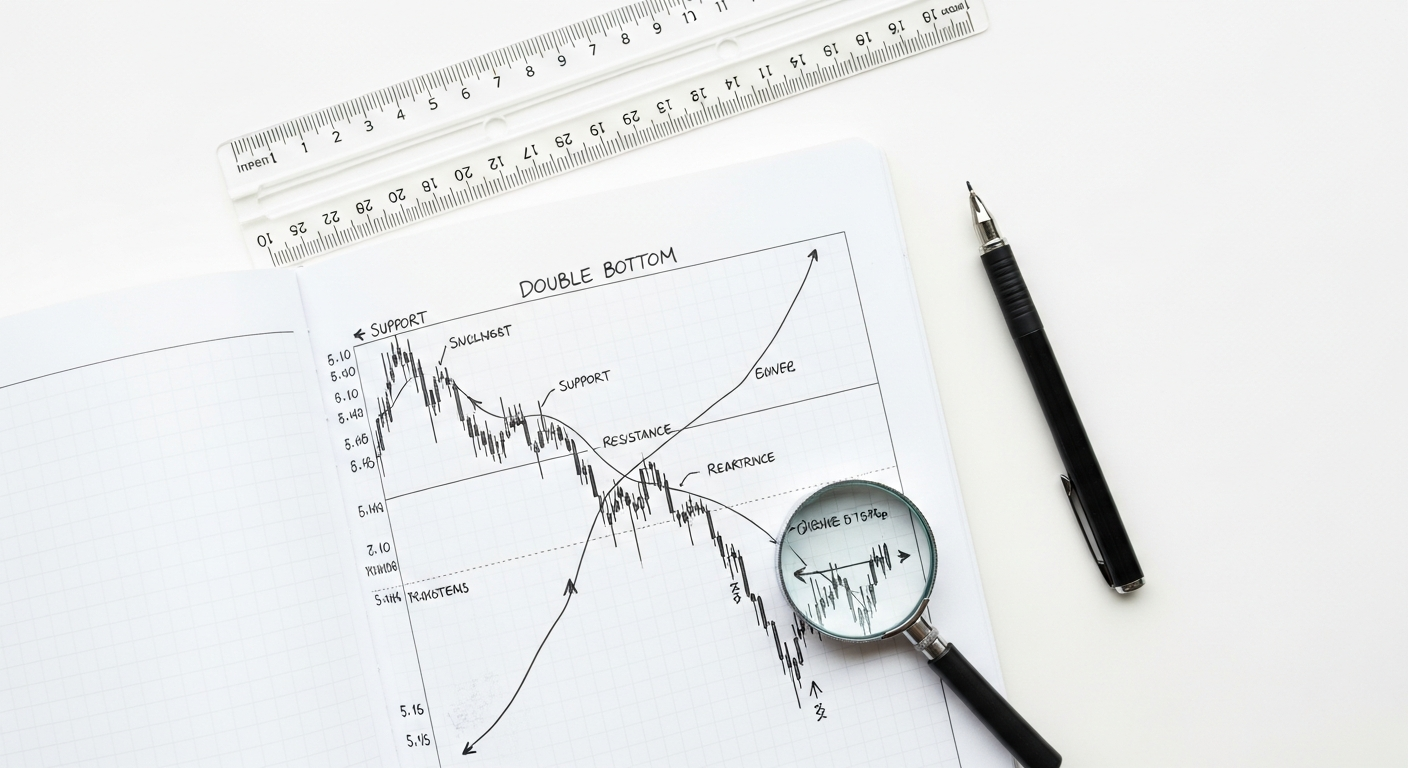
Candlestick charts are arguably the most popular and informative way to visualize stock price movements, offering more detail than simple line or bar charts. Originating from 18th-century Japanese rice traders, candlesticks provide a quick visual representation of price action within a specified timeframe (e.g., a day, a week, an hour).
Anatomy of a Candlestick
Each candlestick tells a story, composed of four key price points:
- Open: The first price traded during the timeframe.
- Close: The last price traded during the timeframe.
- High: The highest price reached during the timeframe.
- Low: The lowest price reached during the timeframe.
A candlestick has a “body” and “wicks” (or “shadows”):
- Body: The rectangular part of the candlestick, representing the range between the open and close prices.
- Wicks/Shadows: Thin lines extending above and below the body, indicating the high and low prices reached. The upper wick shows the high relative to the close/open, and the lower wick shows the low relative to the close/open.
The color of the body signifies the direction of price movement:
- Green/White (Bullish Candlestick): The close price was higher than the open price. This indicates buying pressure and a price increase during the period. The bottom of the body is the open, and the top is the close.
- Red/Black (Bearish Candlestick): The close price was lower than the open price. This indicates selling pressure and a price decrease during the period. The top of the body is the open, and the bottom is the close.
Key Candlestick Patterns
Individual candlesticks and combinations of a few candlesticks can form patterns that signal potential reversals or continuations of trends:
- Doji: A candle with a very small or non-existent body (open and close are nearly the same). This indicates indecision in the market. Depending on its position within a trend, it can signal a potential reversal. For example, a “Gravestone Doji” at the top of an uptrend or a “Dragonfly Doji” at the bottom of a downtrend.
- Hammer & Hanging Man: Both have small bodies and long lower wicks. A Hammer (bullish) appears at the bottom of a downtrend, suggesting buyers stepped in to push prices up. A Hanging Man (bearish) appears at the top of an uptrend, indicating selling pressure.
- Engulfing Patterns: A two-candle pattern where a larger candle completely “engulfs” the previous smaller candle. A “Bullish Engulfing” pattern (large green candle engulfs a smaller red candle) at the bottom of a downtrend is a strong reversal signal. A “Bearish Engulfing” pattern (large red candle engulfs a smaller green candle) at the top of an uptrend suggests a reversal to the downside.
- Morning Star & Evening Star: Three-candle reversal patterns. A Morning Star (bullish) comprises a long bearish candle, a small indecision candle (like a Doji), and a long bullish candle, signaling a potential bottom. An Evening Star (bearish) is the inverse, signaling a potential top.
Actionable Tip: Focus on Candlestick Context
While individual candlestick patterns can offer clues, their predictive power significantly increases when viewed within the context of the overall trend and at key support/resistance levels. A Hammer pattern, for instance, is far more significant if it appears at a major support level after a prolonged downtrend than if it appears randomly in a choppy market.
What Are Key Chart Patterns for Stock Investors? How Do They Predict Price Movements?
Beyond individual candlesticks, prices often form larger, recognizable patterns on a chart over several days, weeks, or months. These chart patterns are fundamental to technical analysis for stocks, as they represent the ongoing battle between buyers and sellers and often precede significant price movements. They are typically categorized as either reversal patterns (indicating a change in trend) or continuation patterns (suggesting a trend will resume after a pause).
Reversal Patterns: Signaling a Shift in Momentum
Reversal patterns indicate that the prevailing trend is likely to end and reverse direction.
-
Head and Shoulders (and Inverse Head and Shoulders):
- Formation: This classic pattern consists of three peaks with the middle peak (the “head”) being the highest, flanked by two lower peaks (the “shoulders”). A neckline connects the lows between the shoulders and the head.
- Implication: It signals a potential reversal of an uptrend. Once the price breaks below the neckline, it’s considered confirmed, with a typical price target equal to the distance from the head’s peak to the neckline projected downwards from the breakout point. For example, if a stock peaks at $55 (head), pulls back to a neckline at $45, and then breaks the neckline, a minimum target could be $35.
- Inverse Head and Shoulders: The bullish counterpart, formed during a downtrend, indicating a potential reversal to the upside.
- Actionable Tip: Always wait for a clear break of the neckline with increased volume for confirmation before considering a trade. A retest of the neckline as resistance (after breaking down) can offer a lower-risk entry point.
-
Double Top/Double Bottom:
- Formation: A “Double Top” forms after an uptrend, with two distinct peaks at approximately the same price level, separated by a trough. A “Double Bottom” is its inverse, forming after a downtrend with two distinct troughs.
- Implication: These patterns signal a strong resistance (Double Top) or support (Double Bottom) level has been tested twice, and momentum is fading. The pattern is confirmed when the price breaks below the trough between the two peaks (Double Top) or above the peak between the two troughs (Double Bottom).
- Actionable Tip: The measured move for these patterns is usually the distance from the peaks/troughs to the pattern’s neckline (the mid-point between the two peaks/troughs) projected from the breakout point.
-
Triple Top/Triple Bottom:
- Formation: Similar to double tops/bottoms but with three peaks/troughs at roughly the same level, indicating an even stronger level of resistance or support.
- Implication: Confirms a significant struggle between buyers and sellers, leading to an eventual reversal once the neckline is breached.
Continuation Patterns: Pauses Before the Trend Resumes
Continuation patterns suggest that the current trend is merely pausing before it resumes in the same direction.
-
Flags and Pennants:
- Formation: These are short-term consolidation patterns that form after a sharp, almost vertical, price movement (the “flagpole”). A “flag” is a small, rectangular trading range that slopes against the preceding trend. A “pennant” is a small symmetrical triangle.
- Implication: They represent a brief pause as traders consolidate profits before the trend continues with renewed momentum. They typically resolve in the direction of the flagpole.
- Actionable Tip: The price target for a flag or pennant is often the length of the flagpole projected from the breakout point of the flag/pennant.
-
Triangles (Symmetrical, Ascending, Descending):
- Formation: Triangles are consolidation patterns where price ranges narrow over time, forming a triangle shape.
- Symmetrical Triangle: Both ascending resistance and descending support lines converge. Indicates indecision.
- Ascending Triangle: Flat top (resistance) and rising bottom (support). Bullish bias.
- Descending Triangle: Flat bottom (support) and falling top (resistance). Bearish bias.
- Implication: These patterns signal a build-up of pressure, and a breakout from the triangle often leads to a significant move in the direction of the breakout.
- Actionable Tip: Volume typically diminishes as the triangle forms and then increases significantly on the breakout.
- Formation: Triangles are consolidation patterns where price ranges narrow over time, forming a triangle shape.
-
Rectangles (Trading Range):
- Formation: Price consolidates between clear, parallel support and resistance levels.
- Implication: Represents a period of balance between buyers and sellers. A breakout above resistance or below support indicates a resumption of the previous trend or a new trend.
Actionable Tip: Practice Chart Pattern Recognition
The key to mastering chart patterns is extensive practice. Spend time reviewing historical charts of various stocks and actively identify these patterns. Draw the trendlines, necklines, and projection targets. This will train your eye to spot them more quickly and accurately in live trading environments.
What Are Essential Technical Indicators? How Do They Confirm Trends and Momentum?
While chart patterns provide a visual narrative of price action, technical indicators offer mathematical calculations based on price, volume, or open interest to help confirm trends, gauge momentum, and identify potential entry or exit points. No single indicator is perfect, so the most effective approach in technical analysis for stocks involves using a combination of indicators to cross-reference signals and build conviction.
Trend-Following Indicators: Riding the Wave
These indicators help identify and follow the direction of the market trend. They tend to be lagging, meaning they confirm a trend after it has already begun.
-
Moving Averages (MA):
- Concept: A moving average smooths out price data to create a continuously updated average price.
-
Simple Moving Average (SMA):
Calculates the average of a stock’s price over a specified number of periods.
-
Exponential Moving Average (EMA):
Gives more weight to recent prices, making it more responsive to new information.
-
- Application:
- Trend Identification: If the price is above a moving average, it suggests an uptrend; below, a downtrend.
- Support/Resistance: Moving averages can act as dynamic support (in an uptrend) or resistance (in a downtrend) levels.
- Crossovers: A shorter-term MA crossing above a longer-term MA (e.g., 50-day EMA crossing above 200-day EMA, known as a “Golden Cross“) is a bullish signal. The opposite (“Death Cross“) is bearish.
- Actionable Tip: Use multiple Moving Averages (e.g., 20-day, 50-day, 200-day) to get a comprehensive view of short-term, intermediate-term, and long-term trends.
- Concept: A moving average smooths out price data to create a continuously updated average price.
-
Bollinger Bands:
- Concept: Composed of a simple moving average (typically 20-period) and two standard deviation lines plotted above and below the MA.
- Application:
- Volatility: Bands widen during periods of high volatility and contract during low volatility. A “squeeze” often precedes a significant price move.
- Overbought/Oversold: Prices touching or exceeding the upper band can indicate overbought conditions, while touching or exceeding the lower band can signal oversold conditions. However, in strong trends, prices can “walk the bands.”
- Actionable Tip: Look for divergences between price and Bollinger Bands, or for price movements from one band to the other, often indicating trend shifts or continuations.
Momentum Oscillators: Gauging the Speed and Strength of Price Moves
Oscillators help identify overbought or oversold conditions and the strength of a trend. They typically fluctuate between fixed boundaries.
-
Relative Strength Index (RSI):
- Concept: A momentum oscillator that measures the speed and change of price movements. It oscillates between 0 and 100.
- Application:
- Overbought/Oversold: Readings above 70 typically suggest a stock is overbought (potential for pullback), while readings below 30 suggest it’s oversold (potential for bounce).
- Divergence: If a stock makes a new high but its RSI makes a lower high (bearish divergence), it can signal weakening momentum and a potential reversal. The inverse is true for bullish divergence.
- Actionable Tip: Use RSI in conjunction with price action. For example, an RSI breaking out of its own trendline or moving above 50 (for bullish reversal) can be a strong signal.
-
Moving Average Convergence Divergence (MACD):
- Concept: A trend-following momentum indicator that shows the relationship between two moving averages of a security’s price. It comprises the MACD line (difference between two EMAs), a signal line (EMA of the MACD line), and a histogram (difference between MACD and signal lines).
- Application:
- Crossovers: When the MACD line crosses above the signal line, it’s a bullish signal. When it crosses below, it’s bearish.
- Divergence: Similar to RSI, divergence between MACD and price can indicate a weakening trend.
- Histogram: Grows larger as momentum increases and shrinks as momentum fades.
- Actionable Tip: Pay attention to the MACD histogram’s direction and magnitude. A decreasing histogram (approaching the zero line) can indicate fading momentum even if the MACD lines haven’t crossed yet.
Volume: The Fuel Behind Price Movements
- Concept: The number of shares traded for a stock during a specific period.
-
Application:
- Confirmation: High volume confirms a price move’s validity. A strong breakout from a chart pattern on high volume is more reliable than one on low volume.
- Divergence: If a stock makes a new high on decreasing volume, it suggests weakening buying interest and could signal a reversal. Conversely, a new low on decreasing volume might signal selling exhaustion.
- Accumulation/Distribution: Periods of rising price on increasing volume (accumulation) are bullish, while falling price on increasing volume (distribution) are bearish.
- Actionable Tip: Always analyze price action in conjunction with volume. A price move without significant volume behind it often lacks conviction and might be a false signal.
Actionable Tip: Less is More with Indicators
Resist the urge to load your charts with dozens of indicators. Too many indicators can lead to conflicting signals and analysis paralysis. Focus on understanding a few key indicators thoroughly and how they complement each other. A common setup involves one trend-following indicator (like an EMA) and one momentum oscillator (like RSI or MACD).
How to Develop a Technical Analysis Strategy: Putting It All Together
Mastering individual chart patterns and indicators is the first step; the next is to integrate them into a cohesive trading or investing strategy. A robust strategy for technical analysis for stocks involves combining different tools, considering multiple timeframes, and, crucially, implementing sound risk management.
1. Combining Patterns and Indicators: Confluence
The power of technical analysis lies in finding “confluence”—when multiple technical signals align to point in the same direction, strengthening the conviction of a potential move.
- Example: Imagine a stock trading in an uptrend that forms a bullish flag pattern. As it breaks out of the flag, the 50-day EMA crosses above the 200-day EMA (Golden Cross), and the RSI moves out of oversold territory (above 30) and crosses above 50. This confluence of signals (trend, continuation pattern, moving average cross, and momentum shift) provides a much stronger buy signal than any single indicator alone.
- Practical Step: When you identify a potential trade setup, consciously list all the technical factors supporting your decision and those contradicting it. Aim for a high ratio of supporting factors.
2. Multi-Timeframe Analysis: Gaining Perspective
Looking at a stock on just one timeframe can be misleading. What appears as a strong uptrend on a 15-minute chart might just be a small bounce within a larger daily downtrend. Multi-timeframe analysis involves viewing a stock’s chart across different periods (e.g., monthly, weekly, daily, hourly) to gain a comprehensive perspective.
- Approach:
- Higher Timeframe (e.g., Weekly/Daily): Identify the primary trend. Are you in an uptrend, downtrend, or consolidation? This sets the context.
- Intermediate Timeframe (e.g., Daily/4-hour): Look for key support/resistance levels, major chart patterns, and overall market structure.
- Lower Timeframe (e.g., 1-hour/30-minute): Use this to fine-tune your entry and exit points within the context of the higher timeframes. For example, if the weekly chart shows a strong uptrend and the daily chart is pulling back to a key support level, you might look for a bullish candlestick pattern on the 1-hour chart to time your entry.
- Practical Step: Always start with the higher timeframe to understand the “big picture” before drilling down to find your entry. Avoid taking a short-term signal that goes against the prevailing long-term trend.
3. Risk Management: Protecting Your Capital
Even the best technical analysis cannot guarantee success, which is why robust risk management is paramount. It’s not about being right 100% of the time, but about managing your losses when you’re wrong and letting your winners run.
- Stop-Loss Orders: Always define your maximum acceptable loss per trade before entering. A stop-loss order automatically sells your position if the stock price drops to a predetermined level. This limits your downside. Place stop-losses logically, below key support levels or pattern necklines.
- Position Sizing: Determine how much capital to allocate to each trade. A common rule is to risk no more than 1-2% of your total trading capital on any single trade. If you have $10,000 and risk 1%, your maximum loss on any trade is $100. This dictates how many shares you can buy based on your stop-loss distance.
- Risk-Reward Ratio: Before entering a trade, assess the potential profit relative to the potential loss. Aim for a minimum 1:2 or 1:3 risk-reward ratio (e.g., risking $1 to make $2 or $3). This ensures that even if you’re right only 50% of the time, you can still be profitable.
4. Backtesting and Journaling: Learning and Refining
- Backtesting: Apply your strategy to historical data to see how it would have performed. This helps you understand its strengths, weaknesses, and profitability metrics without risking real capital.
- Journaling: Keep a detailed record of every trade. Note the stock, date, entry/exit prices, reasons for the trade (based on your technical analysis), your emotions, and the outcome. Reviewing your journal regularly helps you identify recurring mistakes, refine your strategy, and build discipline.
Actionable Tip: Develop a Comprehensive Trading Plan
Before executing any trade, have a clear plan. Your plan should include: what you’re buying/selling, why (based on technical signals), your entry price, your stop-loss level, and your profit target. Stick to your plan rigorously, avoiding impulsive decisions driven by fear or greed.
What Are the Limitations and Criticisms of Technical Analysis?
While powerful, technical analysis for stocks is not without its limitations and has faced criticism from various academic and professional circles. A balanced understanding requires acknowledging these drawbacks to use the discipline effectively.
- Subjectivity and Interpretation:
- Issue: Drawing trendlines, identifying patterns, and interpreting indicator signals can often be subjective. What one analyst sees as a Head and Shoulders pattern, another might see as simple price volatility. The “art” aspect of technical analysis means that different individuals can arrive at different conclusions from the same chart.
- Impact: This subjectivity can lead to inconsistent application and varying success rates, especially for novice investors who may struggle to identify clear patterns.
- Lagging Nature of Indicators:
- Issue: Many popular technical indicators, especially trend-following ones like moving averages, are inherently lagging. They derive their signals from past price data, meaning they confirm a trend or a move after it has already occurred.
- Impact: While useful for confirmation, lagging indicators might cause traders to enter a move late, potentially missing a significant portion of the profit or entering just before a reversal.
- Self-Fulfilling Prophecy:
- Issue: Critics argue that chart patterns and indicator signals work because so many people use them. For example, if enough traders place buy orders when a stock breaks above an ascending triangle, the collective buying action will indeed push the price up, fulfilling the pattern’s prediction.
- Impact: While this doesn’t negate the utility of technical analysis, it suggests that its effectiveness might be more due to market psychology and collective action rather than inherent predictive power.
- Ineffectiveness in Choppy or Sideways Markets:
- Issue: Technical analysis, particularly trend-following strategies, tends to perform best in trending markets. In sideways, range-bound, or choppy markets, signals can be frequent, unreliable, and lead to numerous false breakouts and whipsaws.
- Impact: Traders relying solely on trend analysis in such conditions may experience a series of small losses.
- Does Not Account for External Factors (News, Fundamentals):
- Issue: Technical analysis focuses purely on price and volume, intentionally disregarding fundamental data (earnings, economic reports, management changes) and sudden news events.
- Impact: A stock could be showing a bullish technical setup, only to crash suddenly due to unexpected bad news (e.g., an earnings miss, a lawsuit, a major scandal). Technical analysis provides no foresight for such events, which can override any technical pattern instantly.
- Backtesting Bias/Overfitting:
- Issue: It’s possible to “overfit” a technical strategy by continuously adjusting parameters or rules until it perfectly explains past data. Such a strategy might look incredibly profitable in backtesting but fail dramatically in live markets because it’s too specific to past noise rather than robust market dynamics.
- Impact: Leads to false confidence and significant losses when the strategy is applied in real-time.
Actionable Tip: Integrate Technical and Fundamental Approaches
To mitigate these limitations, many successful investors and traders integrate technical analysis with fundamental analysis. Fundamental analysis helps identify strong companies, while technical analysis helps time entry and exit points for those companies. For instance, you might identify a fundamentally sound company and then use technical analysis to find a good entry point after a technical pullback, or to exit if a critical support level breaks, indicating a shift in sentiment for even a good company.
Conclusion: How Technical Analysis Empowers Your Investment Journey
Technical analysis for stocks is a powerful and indispensable tool for investors seeking to gain a deeper understanding of market dynamics, predict potential price movements, and refine their entry and exit strategies. From the granular insights offered by candlestick charts to the broader narratives told by chart patterns and the corroboration provided by essential indicators, this discipline offers a structured approach to decoding market psychology and the supply-demand balance.
While mastering technical analysis requires dedication, practice, and continuous learning, the rewards can be significant. By combining a solid understanding of patterns like Head and Shoulders or Triangles with the confirmatory power of indicators such as Moving Averages, RSI, and MACD, investors can develop a more robust and responsive investment strategy. Remember to always apply these tools with sound risk management principles, utilize multi-timeframe analysis for perspective, and critically evaluate signals for confluence.
No analytical method is foolproof, and technical analysis has its limitations. Yet, when used judiciously—and ideally, in conjunction with fundamental analysis—it empowers you to make more informed, disciplined, and potentially profitable decisions. Begin by experimenting with these concepts on historical charts, develop your unique strategy, and continuously refine your approach. The journey to becoming a proficient technical analyst is ongoing, but the insights gained will undoubtedly elevate your prowess as a stock market investor.
Next Step: Start by choosing a few key stocks you follow and apply the candlestick and chart pattern recognition techniques discussed. Observe how price reacts at these levels. Then, layer in one or two of the mentioned technical indicators to see how they confirm or contradict your initial observations. Practice makes perfect!
Frequently Asked Questions