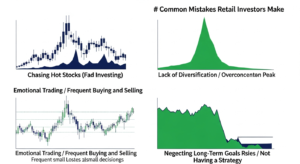
Understanding Portfolio Rebalancing: The Foundation
At its core, portfolio rebalancing is the process of realigning the weightings of a portfolio’s assets. Over time, due to market fluctuations, some of your investments will grow faster than others, causing their percentage of your total portfolio to increase. Conversely, underperforming assets will shrink in proportion. This drift can significantly alter your portfolio’s risk profile and deviation from your carefully constructed investment strategy.
Imagine you start with a target asset allocation of 60% stocks and 40% bonds, a common strategy for a moderate risk investor. If the stock market has a stellar year, your stocks might surge, increasing their value and, consequently, their proportion within your portfolio. Your portfolio might then shift to, say, 70% stocks and 30% bonds. While it might feel good to see your stock allocation grow, you’re now holding a portfolio that is significantly riskier than your initial intention. Rebalancing means selling some of those high-performing stocks and using the proceeds to buy more bonds, bringing your allocation back to the original 60/40 split.
This systematic adjustment helps maintain your desired level of risk. Without rebalancing, you might inadvertently become overexposed to volatile assets during bull markets, only to suffer larger losses when those markets inevitably correct. Conversely, you might miss out on opportunities by having too little exposure to assets that have recently underperformed but are poised for recovery. Rebalancing, therefore, isn’t about chasing returns; it’s about maintaining discipline, managing risk, and staying true to your long-term financial plan.
For new investors, especially those who are just figuring out How To Start Investing Little Money 2026, establishing and sticking to a target allocation, and then rebalancing, is incredibly important. It instills good habits from the start and prevents emotional decisions from derailing their financial journey. Even those venturing into more complex areas like options trading, as outlined in an Options Trading Beginners Guide, need to understand that these strategies operate within the context of an overall portfolio, which itself requires regular rebalancing to maintain its intended structure.
Why Rebalance? The Crucial Benefits

The benefits of regularly rebalancing your investment portfolio extend far beyond simply keeping your asset allocation in check. It’s a powerful tool that contributes significantly to long-term financial success and peace of mind.
-
Risk Management
Perhaps the most critical benefit of rebalancing is its role in risk management. As mentioned, market movements can cause your portfolio to drift, leading to an unintended increase in your exposure to certain asset classes, particularly volatile ones like stocks. If you initially decided on a 60/40 stock-to-bond ratio because it matched your risk tolerance, allowing it to drift to 80/20 means you’re taking on significantly more risk than you’re comfortable with. Rebalancing forces you to reduce your exposure to assets that have become overweight, bringing your risk profile back in line with your comfort zone. This proactive approach helps protect your capital during market downturns, preventing drastic losses that could otherwise severely impact your financial future.
-
Return Optimization (The “Buy Low, Sell High” Principle)
While not a guarantee of higher returns, rebalancing inherently encourages a “buy low, sell high” strategy. When an asset class performs exceptionally well, it becomes overweight in your portfolio. Rebalancing prompts you to sell a portion of these high-performing assets. Conversely, when an asset class underperforms, it becomes underweight, and rebalancing directs you to buy more of it. This counter-cyclical approach means you’re selling assets that have recently peaked (or at least performed strongly) and buying assets that are relatively cheaper, potentially positioning you for future growth when those underperforming assets rebound. This disciplined approach can, over the long term, lead to more consistent and potentially higher risk-adjusted returns compared to a portfolio that is never rebalanced.
-
Goal Alignment and Discipline
Your investment portfolio is a vehicle to achieve your financial goals, whether it’s retirement, a down payment on a house, or funding education. Rebalancing ensures that this vehicle remains on the correct path. It acts as a regular check-in, forcing you to review your goals, risk tolerance, and current market conditions. This systematic discipline helps you avoid emotional decision-making, such as chasing hot stocks or panicking during market downturns. Instead, you stick to a predefined strategy, which is especially vital for investors learning How To Start Investing Little Money 2026, as consistency is key when starting with smaller amounts.
-
Reduced Stress and Enhanced Confidence
Knowing that your portfolio is regularly checked and adjusted to align with your personal risk tolerance can significantly reduce investment-related stress. It provides a sense of control and confidence, knowing that you have a proactive strategy in place to navigate the ups and downs of the market. This psychological benefit is often underestimated but is crucial for long-term investment success, helping you avoid impulsive decisions driven by fear or greed.
When to Rebalance: Timing Your Strategy
-
Time-Based Rebalancing
This is the simplest and most common method. You choose a fixed interval—annually, semi-annually, or quarterly—and rebalance your portfolio on that schedule, regardless of market performance. Many investors find annual rebalancing to be a good balance between maintaining discipline and avoiding excessive transaction costs or over-management. Popular times include the end of the calendar year, the beginning of the new year, or around tax season (April in the US), as these times often coincide with other financial reviews.
- Pros: Simplicity, consistency, easy to remember, helps avoid emotional decisions.
- Cons: May not be responsive to significant market shifts between rebalancing periods, potentially missing opportunities or allowing risk to drift for extended periods.
For those just starting out with How To Start Investing Little Money 2026, a simple annual review is often the most practical and effective way to begin.
-
Threshold-Based Rebalancing
With this method, you rebalance only when an asset class deviates from its target allocation by a predetermined percentage (the “threshold”). For example, if your target is 60% stocks and 40% bonds, you might set a threshold of 5%. If your stock allocation rises to 65% (60% + 5%) or falls to 55% (60% – 5%), you would trigger a rebalance. This approach is more dynamic and responsive to market movements.
- Pros: More responsive to market changes, potentially more efficient in managing risk and capturing returns.
- Cons: Requires more frequent monitoring, can lead to more frequent trades and higher transaction costs, may be more emotionally challenging during volatile periods.
A common threshold is 5% or 10%. A tighter threshold (e.g., 2-3%) leads to more frequent rebalancing, while a wider threshold (e.g., 15-20%) leads to less frequent rebalancing.
-
Hybrid Approach
Many investors combine both methods. They might set a primary annual rebalancing schedule but also implement a threshold. This means they will rebalance at least once a year, but also at any point during the year if a significant market event causes an asset class to breach its threshold. This offers a good balance of discipline and responsiveness.
-
Life Event Rebalancing
Beyond scheduled or threshold-triggered rebalancing, it’s crucial to review and potentially rebalance your portfolio after significant life events. These can include:
- Marriage or divorce
- Having children
- A significant change in income or employment
- A large inheritance or windfall
- Nearing retirement
- Paying off substantial debt, like getting out of credit card debt, as discussed in a guide on How To Get Out Credit Card Debt, which can free up capital for investment or change your risk tolerance.
Each of these events can alter your financial goals, risk tolerance, and time horizon, necessitating a fresh look at your target asset allocation and a subsequent rebalance.
Regardless of the method you choose, consistency is key. Stick to your chosen schedule or threshold to maintain the discipline that rebalancing provides. This consistency is just as important for investors exploring an Options Trading Beginners Guide, as even tactical options strategies should align with the overall strategic asset allocation of their portfolio.
How to Rebalance Your Portfolio: Step-by-Step Methods

Once you’ve decided when to rebalance, the next step is understanding the practical “how.” The process can be broken down into clear, manageable steps, and there are a few methods you can employ to execute the rebalance.
Step 1: Determine Your Target Asset Allocation
Before you do anything, you need to know what your ideal portfolio looks like. This involves revisiting your financial goals, time horizon, and risk tolerance. Your target allocation is the percentage breakdown you aim for across different asset classes (e.g., 60% stocks, 30% bonds, 10% real estate). If you’re a beginner learning How To Start Investing Little Money 2026, this might be a simple 80/20 stock-to-bond split if you’re young, or a more conservative 50/50 if you’re closer to retirement.
Step 2: Assess Your Current Allocation
Log into your brokerage account(s) and calculate the current percentage of each asset class in your portfolio. Most modern brokerage platforms offer tools that show your current allocation. If not, you’ll need to sum up the total value of each asset class and divide by your total portfolio value.
Step 3: Identify Deviations
Compare your current allocation to your target allocation. Note which asset classes are overweight (above target) and which are underweight (below target). This comparison will tell you exactly what adjustments need to be made.
Step 4: Choose a Rebalancing Method
There are two primary ways to physically rebalance your portfolio:
Method A: Selling Overweight Assets and Buying Underweight Assets
This is the most direct way to rebalance. You sell a portion of the asset classes that have grown above their target weight and use the proceeds to buy more of the asset classes that have fallen below their target weight.
- Example: Your target is 60% stocks ($60,000) and 40% bonds ($40,000) in a $100,000 portfolio. After a strong stock market, your portfolio is now $110,000, with stocks at $77,000 (70%) and bonds at $33,000 (30%).
- New Target: 60% of $110,000 = $66,000 in stocks. 40% of $110,000 = $44,000 in bonds.
- Action: Sell $11,000 worth of stocks ($77,000 – $66,000). Use that $11,000 to buy bonds, bringing your bond allocation up to $44,000 ($33,000 + $11,000).
- Pros: Quickly brings your portfolio back to target, precise.
- Cons: Can trigger capital gains taxes (if in a taxable account) and incur transaction costs.
Method B: Directing New Contributions
If you regularly contribute new money to your investment accounts (e.g., through paycheck deductions, monthly transfers), you can use these new funds to rebalance your portfolio without selling any assets. Simply direct your new contributions towards the underweight asset classes until they reach their target allocation.
- Example: Using the same scenario as above (70% stocks, 30% bonds, target 60/40). Instead of selling, you plan to contribute $5,000 this month.
- Action: Direct all or most of the $5,000 contribution into bonds. This increases your bond allocation without selling stocks. Over several months, if you continue to direct new money to bonds, you can gradually bring your portfolio back to target.
- Pros: Tax-efficient (no capital gains), avoids transaction costs from selling, ideal for investors regularly adding new funds (especially beneficial for those following How To Start Investing Little Money 2026).
- Cons: Slower to rebalance, may not be sufficient for large deviations or if you don’t have regular new contributions.
Method C: A Combination Approach
Often, the most practical approach is a combination. First, use any new money to buy underweight assets. If this isn’t enough to bring the portfolio back into balance, then consider selling overweight assets as a secondary step. This minimizes taxes and transaction costs while still effectively rebalancing.
Step 5: Execute the Trades
Once you’ve decided on your method and calculated the amounts, execute the necessary buy and sell orders through your brokerage account. Be mindful of market hours and any specific trading rules your broker may have.
Step 6: Review and Record
After the trades settle, review your portfolio to ensure it’s now aligned with your target allocation. Keep records of your rebalancing activities, including dates, amounts, and any capital gains or losses, for tax purposes and future reference. This step is crucial for maintaining clarity and accountability in your investment journey.
Advanced Considerations and Common Pitfalls
While the basic principles of rebalancing are straightforward, there are several advanced considerations and potential pitfalls that investors should be aware of to optimize their strategy and avoid common mistakes.
Tax Implications
This is arguably the most significant consideration, especially for investors with taxable brokerage accounts.
- Capital Gains Tax: When you sell an asset for more than you paid for it, you incur a capital gain. If you’ve held the asset for less than a year, it’s a short-term capital gain, taxed at your ordinary income tax rate. If you’ve held it for more than a year, it’s a long-term capital gain, which typically has lower tax rates. Rebalancing often involves selling assets that have performed well, potentially triggering these taxes.
- Tax-Loss Harvesting: To mitigate capital gains, you can strategically sell assets that have incurred a loss. These capital losses can be used to offset capital gains and, to a limited extent, ordinary income. This is a sophisticated strategy often employed during rebalancing.
- Tax-Advantaged Accounts: Rebalancing within accounts like 401(k)s, IRAs, or Roth IRAs does not trigger immediate capital gains taxes. This makes these accounts ideal places to perform more aggressive rebalancing, as you can buy and sell without worrying about the tax implications until withdrawal (or ever, in the case of Roth accounts). When rebalancing, prioritize adjustments in your tax-advantaged accounts first to minimize taxable events.
Transaction Costs
Each buy or sell order can incur transaction costs, such as brokerage commissions or bid-ask spreads. While many brokers now offer commission-free trading for stocks and ETFs, mutual funds may still have fees. Frequent rebalancing or rebalancing with small amounts can lead to these costs eroding your returns. This is why many investors opt for annual rebalancing or use new contributions to rebalance, especially those learning How To Start Investing Little Money 2026, where every dollar counts.
Market Volatility and Timing
Rebalancing often means selling assets that have performed well and buying assets that have performed poorly. This can be emotionally challenging, especially during periods of high market volatility. For example, during a strong bull market, selling winning stocks can feel like leaving money on the table. Conversely, buying more of a falling asset class during a bear market can feel counterintuitive and scary. However, this is precisely when rebalancing can be most effective, forcing you to act against your emotional instincts and stick to your long-term strategy. Trying to “time the market” by delaying rebalancing in hopes of further gains or avoiding further losses is a common pitfall that undermines the discipline rebalancing aims to provide.
Behavioral Biases
Human psychology plays a significant role in investing. Behavioral biases like fear of missing out (FOMO), loss aversion, and confirmation bias can sabotage rebalancing efforts.
- FOMO: Investors might hesitate to sell an overweight asset because they fear missing out on further gains.
- Loss Aversion: They might be reluctant to sell an underperforming asset for a loss, even if it’s necessary for rebalancing.
Rebalancing acts as a systematic antidote to these biases, forcing rational decisions based on your predetermined strategy rather than emotional reactions to market movements.
Over-Rebalancing
While under-rebalancing can lead to significant risk drift, over-rebalancing (too frequently or with very tight thresholds) can also be detrimental. It can lead to excessive transaction costs and potential tax liabilities, diminishing the benefits of the strategy. Finding the right balance for your portfolio and financial situation is key.
Ignoring Risk Tolerance Changes
Your risk tolerance is not static; it can change with age, life events, or even personal experiences. A common pitfall is to rebalance without first reviewing whether your target asset allocation still accurately reflects your current risk tolerance and financial goals. For example, if you’ve successfully managed to How To Get Out Credit Card Debt, your overall financial stability might improve, potentially allowing for a slightly higher risk tolerance, or vice-versa if your financial situation becomes more precarious.
By being mindful of these advanced considerations and avoiding common pitfalls, you can ensure your rebalancing strategy is not only effective but also tax-efficient and aligned with your broader financial objectives.
The Psychology of Rebalancing and Long-Term Success
Investing is as much a psychological game as it is a mathematical one. The most meticulously crafted investment plan can be derailed by emotional decisions driven by fear and greed. This is where the psychological benefits of rebalancing truly shine, making it an indispensable tool for long-term success.
Emotional Discipline
Markets are inherently emotional. When stocks are soaring, there’s a natural urge to pour more money into them, fueled by optimism and the fear of missing out. Conversely, when markets plummet, the instinct is often to sell everything to stop the bleeding, driven by fear and panic. Rebalancing provides a crucial counter-narrative to these powerful emotions. It forces you to sell high (when an asset class has performed well and become overweight) and buy low (when an asset class has underperformed and become underweight). This systematic, unemotional approach helps you stick to your predetermined strategy, preventing impulsive decisions that often lead to buying at market tops and selling at market bottoms.
Think of it as having a financial autopilot. You set your course (your target asset allocation) based on rational assessment of your goals and risk tolerance. Rebalancing is the autopilot making the necessary small adjustments to keep your plane on course, even when turbulence (market volatility) tries to push it off. This discipline is paramount for all investors, especially those just beginning their journey with strategies like How To Start Investing Little Money 2026, where building consistent habits is key to wealth accumulation.
Staying the Course
One of the hardest parts of investing is simply staying invested, particularly during prolonged downturns. When your portfolio value drops significantly, it’s easy to lose faith and abandon your plan. Rebalancing, by prompting you to buy more of undervalued assets during such times, reinforces your commitment to your long-term strategy. It’s a tangible action that says, “I believe in the long-term recovery and growth of these assets,” even when the news is bleak. This commitment to the long game is a hallmark of successful investors.
Focus on Goals, Not Market Noise
Regular rebalancing forces you to periodically reconnect with your financial goals. Instead of being swayed by the daily headlines, quarterly earnings reports, or expert predictions, your focus shifts to whether your portfolio is still structured to get you where you want to be. This goal-oriented perspective helps filter out market noise and keeps your investment strategy aligned with your personal objectives, whether it’s retirement planning or saving for a child’s education.
For individuals exploring an Options Trading Beginners Guide, it’s easy to get caught up in the excitement of short-term gains or complex strategies. However, even these tactical approaches must ultimately serve the broader, long-term goals defined by your overall portfolio allocation. Rebalancing ensures that the foundation remains solid, regardless of the more speculative activities happening on the periphery.
Avoiding Market Timing
Many investors fall into the trap of trying to time the market – buying just before a rally and selling just before a crash. This is notoriously difficult, even for professionals, and often leads to worse returns than a buy-and-hold strategy. Rebalancing, by its very nature, is a systematic approach that explicitly avoids market timing. It’s about maintaining your desired exposure, not predicting market movements. By adhering to a rebalancing schedule or threshold, you remove the guesswork and the stress of trying to outsmart the market, allowing you to benefit from long-term market trends without succumbing to short-term volatility.
In essence, rebalancing is a powerful psychological tool that cultivates patience, discipline, and a long-term perspective—qualities that are far more valuable to an investor than attempts at market timing or chasing fads. It’s the silent guardian of your investment plan, ensuring you remain on track, even when your emotions might tell you otherwise.
Integrating Rebalancing into Your Overall Financial Plan
Rebalancing is not a standalone activity; it’s an integral component of a holistic financial plan. For it to be truly effective, it must be considered within the broader context of your financial life, including your debt, savings, and other investments. A well-integrated approach ensures that your portfolio always supports your overarching financial goals.
Holistic Financial View
Your investment portfolio is just one piece of your financial puzzle. Before you even think about rebalancing, ensure you have a clear understanding of your entire financial picture. This includes:
- Emergency Fund: Have you built up a sufficient emergency fund (typically 3-6 months of living expenses) in a high-yield savings account? This provides a crucial safety net, allowing your investments to grow undisturbed by unexpected expenses.
- Debt Management: Are you actively working on high-interest debt, such as credit card debt? As highlighted in articles like How To Get Out Credit Card Debt, tackling high-interest debt often yields a guaranteed “return” higher than what you might expect from investments. It’s often financially prudent to prioritize debt repayment before significantly increasing investment contributions.
- Other Savings Goals: Are you saving for other short-to-medium-term goals (e.g., a down payment on a house, a new car) in appropriate, lower-risk accounts? These goals might require different asset allocations than your long-term investment portfolio.
Rebalancing your portfolio makes the most sense when these other foundational financial elements are in place or being actively managed.
Regular Financial Reviews
Combine your rebalancing schedule with a broader annual (or semi-annual) financial review. During this review, you should:
- Reassess Goals: Have your financial goals changed? Are you still on track for retirement, or do you have new objectives?
- Update Risk Tolerance: Has your comfort level with risk shifted due to age, experience, or life circumstances?
- Review Income and Expenses: Are you still saving and investing enough? Are there opportunities to increase contributions, especially for those learning How To Start Investing Little Money 2026?
- Check Beneficiaries: Are your beneficiary designations up to date on all your accounts?
- Examine Estate Planning: Is your will or trust still current?
This comprehensive review ensures that your portfolio rebalancing is not just a mechanical adjustment but a thoughtful alignment with your evolving financial life.
Adaptability
Recommended Resources
For more on how to rebalance, see What Is Customer Lifetime Value And How To Increase It on Kacerr.
Learn more about this topic in How To Find Investors For Your Small Business at AssetBar.